Hungary’s new foreign policy strategy is taking shape, and it couldn’t differ more from what we’ve seen in the past fifteen years
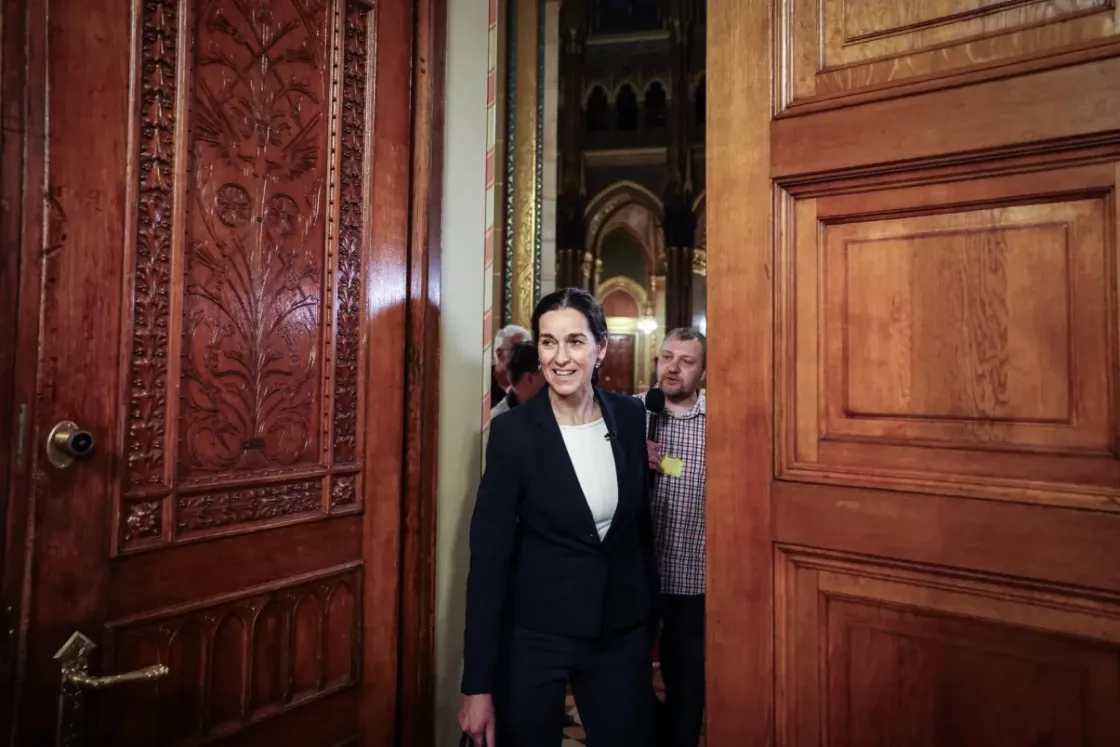


A strengthening of the V4; sorting out the relationship with Slovakia-especially with regard to the Beneš Decrees; Hungary’s place is in the EU and NATO, while also asserting Hungarian interests, and achieving all of this through diplomatic means rather than vocal opposition—these few goals could well serve as an introduction to Hungary’s new, longer-term foreign policy strategy led by Anita Orbán, but for now, these plans have only been voiced at her confirmation hearing.
The last time Hungary had a similar, publicly available foreign policy strategy was in 2011. Fifteen years ago, Viktor Orbán and his team promised a willingness to compromise, stronger cooperation with EU member states and solidarity, while Ukraine was at the “forefront” of the Foreign Ministry’s interests. During Péter Szijjártó’s years as minister of foreign affairs, no document summarizing goals and priorities was produced, and there has been nothing of the sort on the website of the ministry he used to lead.
Meanwhile, the foreign ministries of other EU member states have made it a habit to publish, in a clearly visible and accessible form, the policies they represent with regard to individual countries, regions, and even continents. From the Slovaks to the Poles and all the way to the French, governments generally provide detailed information on the foreign policies they pursue. It now appears that Anita Orbán’s foreign ministry will address this shortcoming, thereby committing to a more predictable approach, with plans to annually review the new foreign policy strategy currently being drafted.
How it started 15 years ago
In her confirmation hearing in Parliament, Anita Orbán announced that Hungary’s foreign policy strategy would be revised and that the Institute of Foreign Affairs would again be placed under the Ministry. In response, Zsolt Németh—who had been sidelined within Fidesz for years but had consistently advocated an Atlanticist stance—welcomed the fact that elements of the 2011 foreign policy strategy were reflected in the new minister’s thinking. Németh also mentioned that in the early 2010s, Anita Orbán worked for the Ministry of Foreign Affairs as ambassador-at-large.
In order to understand what strategy the new foreign minister intends to revive, we must go back quite a bit in time. It is quite striking that most of what was outlined in the document from that time can hardly be reconciled with the priorities of the ministry led by Péter Szijjártó since 2015 under the name Ministry of Foreign Affairs and Trade. An in-depth examination of the 2011 foreign policy strategy provides truly instructive insight into the path the Orbán regime travelled during the 16 years of the NER.
NER is short for Nemzeti Együttműködés Rendszere, meaning ’System of National Cooperation.’ The term was coined by the Orbán government after their election victory in 2010 to refer to the changes in government that they were about to introduce. It soon become a word in its own right, and has been used in colloquial Hungarian to refer to Fidesz' governing elite, complete with the politicians and the oligarchs profiting from the system.
“Ministry of Foreign Affairs”—reads the title page of the foreign policy strategy presented in 2011, which was drafted during János Martonyi’s tenure as foreign minister and titled Hungarian Foreign Policy After the EU Presidency. The document devotes 55 pages to policy issues. Martonyi himself described the strategy as intending to provide guidance and a starting point for Hungarian diplomacy and the public. “It is timely for us to review the main fundamentals of our foreign policy: our values, our position, our goals, and our plans.”
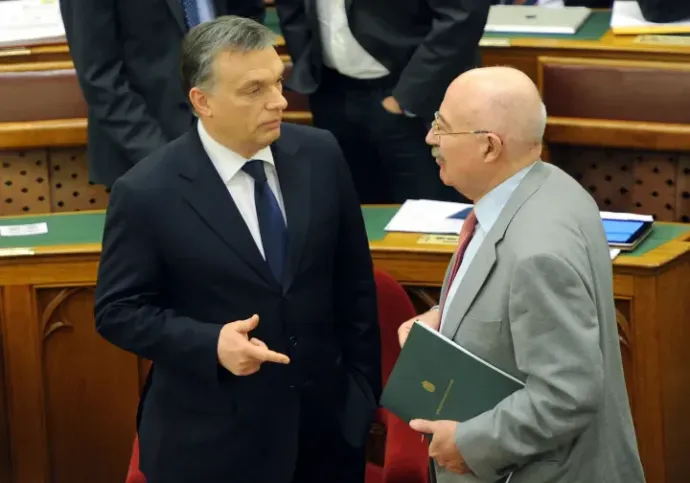
János Martonyi and his team planned a values-based foreign policy, and it was on this basis that they defined the objectives as well. However, according to their interpretation, this did not mean that relations should be restricted with countries that have a different interpretation of the values identified by the Hungarian Foreign Ministry.
And what might these values be? The Charter of the United Nations, the NATO Treaty, the Lisbon Treaty on the EU, and the Fundamental Law, which was newly adopted at the time. The priorities included regional policy, Euro-Atlantic orientation through a strong, united Europe, and global openness. EU and NATO membership were viewed as factors that strengthen the representation of the country’s national interests. “Our security is further strengthened by cooperation within the framework of the European Union’s common foreign and security policy and its common security and defense policy.” They also stated that
“Hungary’s attitude must be characterized by firm positions and a willingness to compromise. Hungary has an interest in the creation of a strong and united European Union.”
They wanted an EU that deepens cooperation among member states, promotes solidarity, and continues to move toward integration. “The nature of a crisis may require a temporary strengthening of intergovernmental cooperation, but we can accept this only if it is possible to return to decisions made within the framework of the EU treaties as soon as possible.” They considered the introduction of the euro to be among Hungary’s strategic goals. They regarded the promotion of the interests of the Central European peoples as particularly important. “This was reflected in the fact that our prime minister’s first official foreign trip was to Warsaw.” In addition, Austria, Romania, and the V4 countries were identified as strategic allies.
Russia was identified as a key strategic partner, and they sought to strengthen cooperation. They considered it a problem that the economic and political leadership of the West was in decline, while emerging economies (China, India, Brazil) had strengthened their economic positions. According to the strategy’s assessment, worsening economic and social problems, as well as the lack of a vision for resolving them, “cast a shadow” over Hungary’s reputation in the influential circles of international economic and political life. Even at that time, linking foreign trade and foreign policy was considered important, it was seen as an element that strengthened the country’s image.
Special emphasis was placed on securing energy supplies, and they recognised that the country was in a vulnerable position in terms of natural gas supply. They also wanted to prepare for potential energy supply crises in other areas.
They considered projects which establish connections with neighboring countries to be important, so that the country could secure energy at competitive prices.
“The situation in the region—especially Ukraine, Eastern Europe’s largest country and our country’s biggest neighbor—is at the forefront of our foreign policy concerns,” they wrote. Resolving conflicts with Eastern European countries (including Ukraine) and fully securing the territorial integrity of these states were also listed among the goals.
Starting in 2014, the Martonyi strategy was replaced in the Orbán governments by the general promise that “we will continue” in the same vein. It is quite certain, however, that the foreign policy strategy drafted in 2011 was not continued. Initially, Tibor Navracsics served as foreign minister for a short time, and then during Péter Szijjártó’s 12-year tenure in the position, no such publicly available strategic document was produced, so there isn’t really much to hold him accountable for. In 2011, János Martonyi described the document they had drafted as: “an important step toward developing a foreign relations strategy to be formulated later.” That “later” never materialised under the NER.
Strengthening the V4, a sovereign policy, and anchoring Hungary alongside the West
It is not yet officially known what will be included in the country’s future foreign policy strategy. However, based on Anita Orbán’s statements and committee hearings, one can infer the general direction, and it is certain that the document's creation will be preceded by important professional consultations. It is also clear that many issues will be handled differently than they were under Péter Szijjártó’s leadership.
Already in her first public statement as the Tisza Party's foreign policy expert, Anita Orbán made it clear that she wants to put an end to Hungary's status as a "ferry country": based on the legacy of St. Stephen, Hungary belongs to the West. In contrast to her predecessor, she is critical of Hungary's dependence on Russian energy and would prefer to see greater diversification. The Ministry of Foreign Affairs, now freed from the burden of foreign trade, intends to pursue a sovereign foreign policy, and it is also a significant move that the Information Office has been transferred back to the ministry. The first trip by Péter Magyar and several members of the government was to Poland, so it is not surprising that they would place special emphasis on strengthening the V4.
At his press conference with Ursula von der Leyen in Brussels last Friday, Magyar announced that the V4 countries will meet at the prime ministerial level in Budapest on June 23. He spoke about how his government is working to improve Hungary’s relations with its neighboring countries, which is why he had already visited Austria and Poland. He also noted that it is time to open a new chapter in Hungary’s relationship with Ukraine, and the first step toward this could be what Magyar announced on Wednesday evening: an agreement has been reached with Ukraine concerning the rights of the Hungarian minority living in the country. This marks a complete turnaround compared to the previous Hungarian government’s approach, and in the relations between the two countries in general. The Prime Minister summed this up by saying, “In three weeks, we achieved what Viktor Orbán and his government were unable to do in 10 years.”
According to the Prime Minister, Ukraine’s commitments will also be included in Ukraine’s action plan for its accession to the European Union. If this happens, the Hungarian government will support the opening of the first cluster of accession negotiations with Ukraine. Early Thursday morning, Ukrainian Prime Minister Yulia Svyrydenko announced that all member states of the European Union had agreed to begin accession negotiations with Ukraine and Moldova.
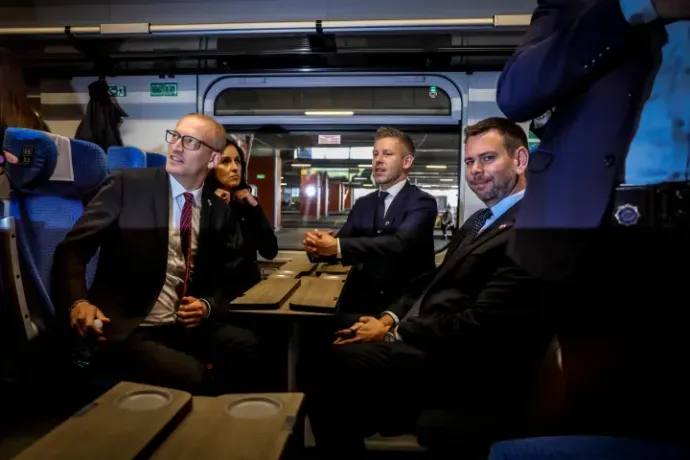
In addition to the cooperation with Poland, Anita Orbán also spoke about placing cooperation with the Czech Republic and Slovakia on a new footing. In her view, protecting the rights of ethnic minorities is essential in cross-border policy. “We cannot deepen our relations with a country that judges its minorities based on collective guilt,” Anita Orbán stated regarding Slovakia, referring to the Beneš Decrees. In her view, maintaining such laws “completely contradicts EU law, values, and fundamental, universal human rights.” She previously cited resolving the issue of the Beneš Decrees as the government’s most important task during its first hundred days.
During her confirmation hearing, the new foreign minister also emphasized that Hungary’s place is in the EU and NATO, and that asserting Hungarian interests remains a fundamental principle—though she would ensure this through diplomatic means rather than vocal opposition. “We will anchor ourselves in the Western alliance system,” she declared in her very first interview, given on Péter Magyar’s YouTube channel, and she has since spoken countless times about how
“We do not want to be a stick between the spokes, but rather a spoke on the wheel.”
The new foreign minister also touched on the possibility of further EU sanctions against Russia, noting that Hungary would certainly not veto such measures “in the interest of a third country,” but would keep in mind the interests of Hungarian companies and the energy sector. At the same time, the sharp shift in Hungarian diplomacy was also evidenced by the fact that in mid-May, Anita Orbán summoned the Russian ambassador to the Ministry of Foreign Affairs after Transcarpathia was hit by a Russian drone attack of greater intensity than ever before. Under the Fidesz government, this firm tone of accountability was reserved primarily for countries within its own alliance system and Ukraine.
As for EU enlargement, Anita Orbán promised continuity with the approach of the previous Hungarian government. In her view, the integration of the Western Balkan countries into the EU is in Hungary’s interest, and she is prepared to provide both professional and political support for this, though naturally, every country involved should meet the accession criteria. This applies to Ukraine as well.
Another novel approach might be that the new foreign ministry would not measure their success in terms of kilometers traveled: According to Anita Orbán, they do not plan to travel to countries 7,000 kilometers away to represent perceived or actual Hungarian interests until Hungary's relations with neighboring countries are sorted out.
Elsewhere, it's completely normal
In the European Union—and in many cases even further afield—it’s almost a given that the strategies pursued by a country’s foreign ministry are prominently displayed on its website. The Polish Ministry of Foreign Affairs does not hide its strategy either; in fact, it has published a document which extends beyond the current government cycle, and is expected to last until the fall of 2027. In Poland, the development and publication of these guiding principles is actually required by law. Additionally, they also have a long-term strategy, as part of which the priorities of Polish foreign policy for the period between 2026 and 2030 have been outlined.
In the medium-term strategy, they state that the current document was drafted for a much more complex and unpredictable international environment than usual-citing, among other things, the Russia-Ukraine war, escalating hybrid and cyber threats, and the fact that “hard-line,” autocratic governance is becoming increasingly popular even in fundamentally democratic states. Among its objectives, the strategy outlines a desire to strengthen the country’s position within NATO and the EU. By 2030, Poland aims to play a key role in ensuring regional stability.
In the case of Germany, one can learn about the current government’s foreign policy on a subject-by-subject basis. Among others, international organizations, Europe, Latin America, transatlantic relations and security policy each have their own section on the ministry’s website. For the EU, each member state can be looked up individually, and there are even general overviews, which are up-to-date; for Hungary, for example, the results of the 12 April election are already included.
The German Foreign Ministry’s website details the country’s security policy strategy, covering everything from NATO membership and disinformation to national security strategy. By clicking on different continents and regions, anyone can find concise summaries on relevant subjects, such as the German government’s policy on China through 2030 or its policy on the Pacific.
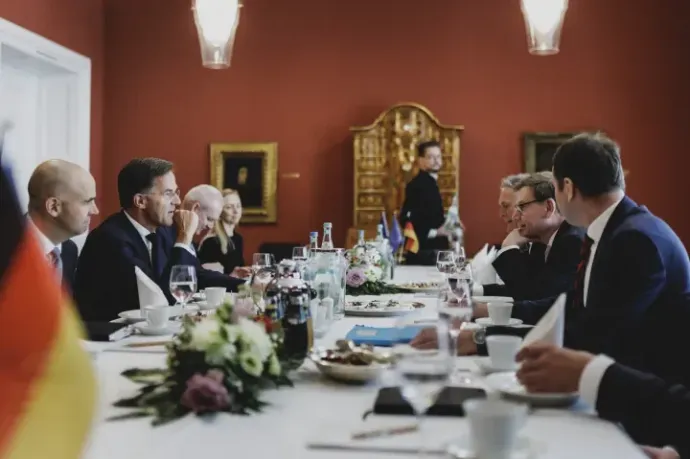
But one does not have to go as far as Germany to find a similarly detailed, topic-based foreign policy strategy. On the website of the Ministry of Foreign Affairs of neighboring Slovakia, under the heading "Diplomacy," documents prepared during Robert Fico’s term, which began in 2023, detail their approach to European stability and security policy. They discuss where they believe Slovakia’s place in European politics lies and also address competitiveness. In their strategy on stability, they discuss the effects of Russian aggression and the irreversible consequences that would result if Russia were able to alter national borders through the use of force.
The current Slovak government also outlines their European policy in detail: among other things, they write about the Recovery Fund, Slovakia’s participation in EU debates, migration, and green policy. In addition to their participation in international organizations (NATO, UN) and the presentation of human rights, a separate page is dedicated to explaining international sanctions. Here, one can learn about the different types of sanctions and their potential effects.
Under the heading “Priorities and measures”, the French outline what the French Ministry of Europe and Foreign Affairs considers its priorities: efforts towards peace and human rights, support for a sovereign Europe, support for French companies, the promotion of French culture abroad, and contributing to sustainable globalization. They also highlight key issues, including France’s G7 presidency this year, French diplomatic efforts in Ukraine, and humanitarian activities in the Palestinian territories.
French President Emmanuel Macron has made it a priority to assert that Europe can only be free if it is also feared, and that this requires a nuclear deterrent. It is thus no coincidence that the website of the French Ministry of Foreign Affairs outlines, among other things, the current government’s position on European defense policy. The French also explicitly state that they primarily intend to use their military to support countries and initiatives that contribute to Europe’s common defense within the frameworks of the EU and NATO.
Magyar's trips a clear indication of the direction
While it will likely take time to develop a detailed Hungarian foreign policy strategy, the new government has definitely laid the groundwork for it in the form of promises and the concepts shared. Additionally, Péter Magyar and his team have already set to work on its implementation: after his visits to Poland and Austria, the Prime Minister signed an agreement in Brussels last week on the release of €16.4 billion in EU funds. On Tuesday, he held talks with Friedrich Merz in Berlin, and on Wednesday with Emmanuel Macron in Paris.
“We will continue working to strengthen Hungary’s position in Europe, within the Western alliance system,” Magyar said in his speechaddressing Parliament on Monday, referring to his two upcoming trips. He believes they will have a lot of work to do to ensure that Hungary is again seen as a strong ally both in bilateral relations and within the EU. “Through hard work and negotiations, we can regain trust as a strong, sovereign partner in foreign policy,” he declared.
The European Council’s first summit at which Péter Magyar will represent Hungary as prime minister will be held on June 18–19. Thanks in part to the recent series of bilateral visits, he will already be able to greet many of the other 26 heads of state and government as acquaintances.
For more quick, accurate and impartial news from and about Hungary, subscribe to the Telex English newsletter!