Tisza's latest addition, Anita Orbán hails from Fidesz's now defunct pro-Euro-Atlantic wing
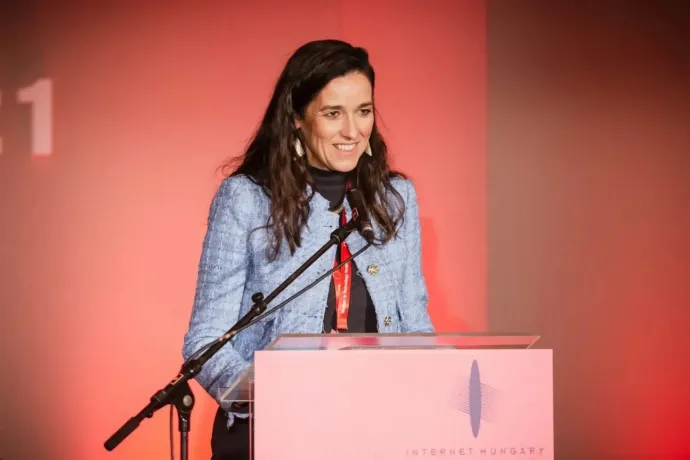



On Saturday morning, the leader of the Tisza Party, Péter Magyar introduced Anita Orbán (no relation to the Hungarian prime minister) as their head of foreign affairs and the new face of Hungarian diplomacy in a video posted on his Facebook page. The first thing highlighted about the economist, who has been included in Forbes Hungary’s list of the most influential Hungarian business figures for the past five years, was that she is a mother of three and was born in Berettyóujfalu (population: 14,000). "My name is Anita Orbán, and I'm a true countryside girl," the expert said about herself.
Not only is this announcement from Fidesz's challenger interesting because she is another executive (similarly to István Kapitány who was introduced last week as the party’s head of economic development and energy policy and is Shell’s former global executive VP) who reached the top in the business world, but also because Anita Orbán was once part of Fidesz's pro-Euro-Atlantic inner circle.
Her joining the party is not entirely unexpected though, as it has been known for months that the global director of Vodafone Group's London HQ has been in contact with the Tisza Party. According to our information, it was not Anita Orbán who initiated the contact, but the Tisza Party.
After graduating with a degree in economics, Anita Orbán worked as a financial controller at Matáv before moving to the United States. She earned two master's degrees in Boston, one in history and one in diplomacy, and then went on to earn her doctorate at the internationally renowned Fletcher School of Law and Diplomacy.
In the 2000s she worked as an editor at the weekly, Heti Válasz, followed by several years as a regular columnist there, covering public affairs and politics. Within Fidesz, during the first and second Orbán governments (1998-2002 and 2010-2014), she was considered part of the circle of János Martonyi, who served as foreign minister at the time.
In the early to mid-2000s, readers could regularly come across her name as a foreign affairs expert in various capacities, whether as a senior researcher at the Béla Hamvas Institute for Cultural Research, as editor of Budapest Analyses, or as a researcher at the Visegrád Institute.
During this period, Anita Orbán appeared at Fidesz's summer camp, the Bálványos Free University in the company of György Schöpflin and Zsolt Németh. Given that she is an expert on the United States, she also published a book on how anti-communism became one of the main unifying forces of the American neoconservative movement.
From the mid-2000s, she was quite critical of the Gyurcsány government's (2004-2009) foreign policy, but she also opposed Russian energy dependence and urged diversification. At the time, these views were entirely in line with the mainstream position of Fidesz: in 2008, even Viktor Orbán insisted that Hungary must not become Gazprom's most devoted customer.
She considered Gyurcsány's foreign policy unpredictable
Based on her statements and writings at the time, Anita Orbán mostly took issue with the unpredictability of Ference Gyurcsány's foreign policy, while also supporting the EU-backed Nabucco project. The Nabucco project was a large-scale plan for a European natural gas pipeline that would have transported natural gas from the Turkish-Bulgarian border through Romania and Hungary to Austria, with the ultimate goal of reducing the EU's dependence on Russian gas.
“Thanks to the prime minister's flip-flopping, we have no influence in matters relating to gas pipelines, not only in Washington but by now, even in Moscow. And in other matters, we simply do not exist. There is nothing to prevent Slovakia, for example, from walking over the Hungarian foreign minister, or Romania from lecturing the Hungarian president. Today, no one fears us and nobody respects us. Ferenc Gyurcsány's strategy of "ending foreign policy" has reached its logical conclusion. Hungary has no foreign policy," she wrote in an article published in Heti Válasz in 2009.
Already at that time, Anita Orbán was among the experts who feared that Russia would use energy as a weapon to achieve its geopolitical goals. She wrote about this in her book Power, Energy, and the New Russian Imperialism, published in English in 2008 and first introduced in Washington. She wrote that Russia was exploiting the EU's dependence on crude oil and natural gas.
In 2009, when it became clear that Fidesz would win the next election, Anita Orbán urged a change in energy policy. She called it a misconception that our dependence on Russian gas could not be reduced and said that the country had room for maneuver. Among the examples in support of this, she mentioned the EU-initiated Nabucco gas pipeline and the terminal under construction on the Adriatic at the time, which would convert liquefied natural gas (LNG) and transport it to Hungary via a short pipeline.
Before the 2010 parliamentary elections, it seemed that after her activities in public life as a foreign affairs and energy expert, she would embark on a classic political career when Fidesz nominated her as a candidate for the National Assembly in Budapest's 16th constituency. However, this ended up not happening, as she unexpectedly withdrew before the elections, citing "health reasons."
As ambassador-at-large, she wanted to reduce Hungary's dependence on Russian energy
Although she did not become a member of parliament, she took on a role in economic diplomacy within the government: between 2010 and 2015, she served as ambassador-at-large responsible for energy security. She held this position at a time when the Orbán government was – at least in its statements – trying to diversify its energy sources due to the country's dependence on Russian gas.
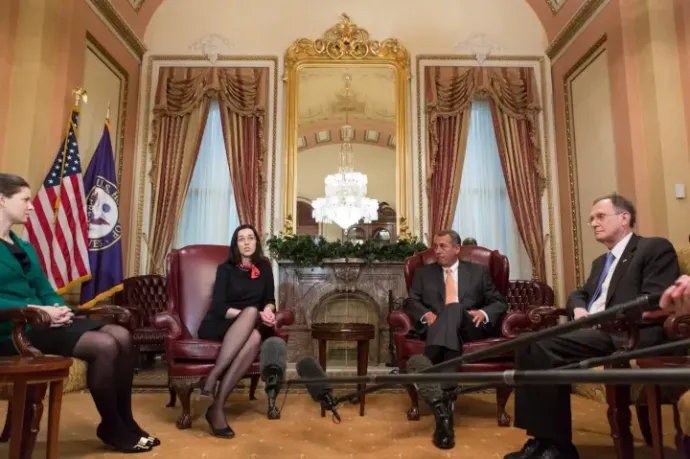
As ambassador-at-large she actively lobbied for liquefied natural gas (LNG), but in the end, the Orbán government did not pursue diversification and instead began to strengthen its ties with Russia starting in 2017. According to sources familiar with the internal processes at the time, Viktor Orbán had already ruled out diversification after 2010, but this only became clear to government officials working to reduce energy dependence on Russia in early 2014, when the prime minister announced that Paks 2 would be built by the Russians. It later emerged that negotiations with the Russians about the project had already been underway in secret since 2013.
Sources close to Martonyi's circle attribute this to the fact that after 2010, Viktor Orbán was no longer serious about reducing Hungarian dependence on Russia, and the "Western" wing of Fidesz was only needed for appearances' sake.
The fact that Viktor Orbán entered into an agreement with Putin and no longer wanted to strengthen diversification came as a shock to many in the foreign ministry. Martonyi left his post as foreign minister and was replaced by Tibor Navracsics, but the one who ultimately took over the ministry was Péter Szijjártó. Of all those who have been in this office since the regime change, he has maintained the closest ties with Putin's people.
Given that Anita Orbán belonged to Martonyi's circle and has always opposed energy dependence on Russia, she left the government in 2015.
From diplomacy to the top of the corporate sector
After her career in state diplomacy, she first became a senior advisor at Cheniere Marketing in London, then ended up at Tellurian LNG's London office. Although these are companies with interests in LNG, Hungary was not regarded as a target market for them, so there was no conflict of interest involved.
Similarly to István Kapitány who had a successful career at Shell and has now joined Tisza, Anita Orbán has a strong network of international contacts. At Tellurian, she held the position of vice president for international relations, in which capacity she performed commercial tasks in several countries.
In 2021 she became head of corporate relations at Vodafone Hungary, and then went on to become global director at Vodafone Group, one of the world's largest telecommunications providers, in London. She was responsible for the company's public and government relations, as well as social responsibility and sustainable development. At the same time, she has also been a member of the board of directors at the Draslovka chemical company in Prague.
While István Kapitány's only connection to NER was that Péter Szijjártó spoke appreciatively of him in 2023 and awarded him the Officer's Cross of the Hungarian Order of Merit, Anita Orbán actually has a history with Fidesz, even though this "Western-oriented" wing of the ruling party has long been a thing of the past. Although a few of those who used to belong to this camp (such as Zsolt Németh) are still around, they have now become politically insignificant.
Why is she beneficial for Tisza?
By signing Anita Orbán, Tisza wants to kill several birds with one stone. The arrival of István Kapitány already indicated that Magyar wants to surround himself with figures who are well-known on the international economic and political scene. This is his way of countering Fidesz's claim that, unlike the ruling party, Tisza does not have any serious, internationally recognized experts who would be capable of running the country.
In signing Kapitány and Anita Orbán, the Tisza is therefore targeting voters who are uncertain about the party’s ability to govern, but it may also appeal to those who preferred the foreign policy of the first and second Orbán governments, which were more Western-oriented than the current one. In addition, this might also deflect accusations that the Tisza party is just a one-man show. This would especially be so if the party were to keep unveiling more names in addition to Kapitány and Anita Orbán.
Fidesz is also sensing this danger. And they have of course also noticed that unlike the opposition did in the run-up to the 2022 elections, the Tisza is not selecting its leading figures from among the experts of the leftist-liberal elite.
How might Fidesz respond to this?
Fidesz is likely going to integrate Anita Orbán's appearance into the narrative it has already been pushing, just as it did in the case of István Kapitány. According to this, there is the Fidesz government, which resists Brussels and the globalist elite, i.e. the colonizers, and there is Tisza (and the opposition in general, except for Mi Hazánk), which is eager to serve Brussels and the financial world. Fidesz is interested in making voters believe that if this pro-Brussels group came to power, Hungarians' money would go to support Ukraine and we might even get dragged into a war.
Anita Orbán is also an easier target than Kapitány. The Fidesz-affiliated paper Magyar Nemzet had already labeled her as a "Soros agent" in 2020 when they wrote an article about the NGO, the Council on Foreign Relations (CFR). Their "exposé" noted that "of course, George Soros is also a member" of the organization. The author of the article also provided a list of those representing Hungary in the European branch of the CFR: in addition to Gordon Bajnai (PM of Hungary between 2009-2010) Dávid Korányi, Alexander Soros, and George Soros, they did not forget to include Anita Orbán.
The ruling party also holds it against Anita Orbán that she is a member of Globsec. This is a non-governmental organization founded in 2005 and based in Bratislava, focusing primarily on matters of security policy, geopolitics, defense, foreign policy, and technology. There are two Hungarians on the board of Globsec, one of whom is Gordon Bajnai.
The Fidesz-friendly press will probably blame Anita Orbán for this as well. However, the fact that another Hungarian joined Bajnai on the board of Globsec was precisely due to the fact that Hungarian society is politically divided. The leadership wanted to counterbalance Bajnai, who is considered left-wing, with a Hungarian who is considered right-wing, whom the Hungarian government accepts and for whom they might even "pick up the phone" in Budapest. This is how Anita Orbán joined the organization whose events are regularly attended by Viktor Orbán's political director, Balázs Orbán as well.
How she sees the future of Hungarian foreign policy
The day Anita Orbán returned to the political limelight, there were two interviews published with her. In a live interview with Péter Magyar, she broadly outlined her foreign policy ideas. Among others, she stressed that restoring the thousand-year-old Polish-Hungarian friendship would be one of her first tasks. She believes that the damage inflicted in recent years must be repaired, which is also essential to the functioning of the V4. She also intends to strengthen relations with neighboring countries and settle disputes with them.
"We will not welcome and harbor Polish criminals wanted by the authorities here in Hungary,"
she said, in reference to the fact that, with the help of the Hungarian government, a few Polish right-wing politicians subject to several arrest warrants at home have already been granted political asylum in Hungary.
Later that afternoon, she gave a 15-minute interview to the television station, RTL.
Here, she said that as foreign minister, her first trips would not be to the major powers, but to neighboring countries, because when you move somewhere new, it is important to first introduce yourself to your neighbors.
"I would knock on their door, introduce myself, and tell them that we have taken over the house, but we will be doing a lot of renovations and refurbishments. I would ask for their patience."
Regarding Russia, she said that it will always remain a very important country for Hungarian diplomacy. "We will seek to shape Russian-Hungarian relations into a transparent relationship between two sovereign countries which respect each other's interests and one that is free of hidden backroom deals. All other European Union countries have succeeded in this, and so will we."
As for Hungary's dependence on Russian gas, she said that they would like to end it. Any energy policy must meet three criteria: competitive prices, secure supply, and sustainability. According to Anita Orbán, putting together the Hungarian energy mix would be the task of the Ministry of Economy, but being an expert on the subject, she noted that there have been many new players entering the market in recent years, who are able to enter the Hungarian market, and our infrastructure connections with neighboring countries are so good that Hungary will have plenty of opportunities to secure cheap energy.
She said that it is clear that the United States is tentatively beginning to withdraw from Europe. Therefore, our place is in a strong Europe, given that the US-Hungarian relationship will also be framed by the US-European relationship. For this reason, they want a constructive relationship with the European Union and want to see the EU26 become the EU27.
"We will be constructive, but we will not surrender our principles; we also see which are the proposals we will not support,"
she said, citing as an example that just this past week, Tisza MEPs did not participate in the European Parliament's vote on the motion of no confidence against Ursula von der Leyen, which resulted in disciplinary action from the parliamentary group of the European People's Party.
For more quick, accurate and impartial news from and about Hungary, subscribe to the Telex English newsletter!