Russian ambassador felt effect of Hungarian government change within a single day
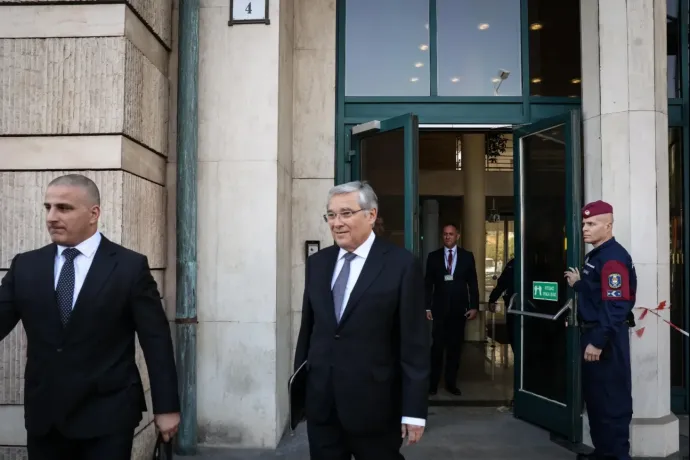


Barely a day after the new Hungarian Foreign Minister took office, what would have been unimaginable in recent years under Péter Szijjártó happened: last Thursday, Anita Orbán summoned the Russian ambassador to the Hungarian Foreign Ministry after Ukraine's Transcarpathia region was hit by a Russian drone attack of unprecedented intensity.
Anita Orbán’s move in itself signals a dramatic shift in Hungarian diplomacy, which under the Fidesz government had tended to reserve its firm tone of reckoning for Ukraine and countries within its own alliance system. Speaking on behalf of the government on Wednesday, Prime Minister Péter Magyar also strongly condemned the attack and said they would seek information on “when Russia and Vladimir Putin plan to finally end this bloody war that began more than four years ago.”
From Ukraine to the United States, they summoned everyone
In the past few years, previous foreign minister Péter Szijjártó has regularly made use of the tool of summoning—a means of expressing serious displeasure in diplomacy—against the ambassadors of Ukraine and allied countries. Ukrainian Ambassador Sándor Fegyir was summoned in both January and March of this year. On the first occasion, the message was that "Hungary will not tolerate" interference in the election and will "defend its sovereignty by all means"; on the second occasion, the Ministry of Foreign Affairs and Trade (KKM) protested against what Szijjártó claimed was the forcible conscription of two men of Hungarian descent in Ukraine.
The Swedish ambassador received a similar treatment when the head of his government stated that, in his view, Viktor Orbán had acted in the Kremlin’s interests in Georgia, whose government was moving increasingly closer to Moscow. Szijjártó also summoned the German ambassador because the diplomat claimed that Hungary was simply putting on a show when it delayed Sweden’s NATO accession.
Szijjártó, who led the ministry—which had during his time been expanded to include foreign trade as well—for nearly 12 years, had raised objections against the ambassador of an EU member state as early as 2017. At that time, he even suspended relations at the ambassadorial level with the Netherlands for a while because of the outgoing Dutch ambassador's criticism of the Orbán government having used the migration issue to create an image of migrants as enemies. Two years ago, during Joe Biden’s presidency, they also summoned U.S. Ambassador David Pressman—who had been given a cool reception from day one—to reject the U.S. President’s statement according to which Orbán himself had spoken about democracy being ineffective, which is why he was considering solutions leaning toward dictatorship.
As dramatic as the summons of the allies was each time, the absence of such a move was just as striking when the foreign minister of a government that placed great emphasis on protecting ethnic Hungarians living in neighbouring countries passively accepted that Slovakia, under the leadership of Robert Fico—who maintains a good personal relationship with Orbán—was confiscating land from farmers of Hungarian ethnicity located along the route of a planned highway in the country, citing the Beneš Decrees.
Szijjártó justified the decision to refrain from any major protest by arguing that there is no point in raising an issue unless there is a chance of resolving it; otherwise, the progress achieved so far would also be jeopardized. During the election campaign, Péter Magyar promised that if the Tisza Party came to power, it would deliver the strongest possible diplomatic response to the new Slovak legislation—which, since the end of last year, has been threatening members of the Hungarian minority living in the country with imprisonment should they question the Beneš Decrees.
It's been a long time since Szijjártó’s indignation reached Moscow
The Russian ambassador was summoned in 2016 after Russian state television suggested that Western powers, specifically the United States, were behind the 1956 revolution in Hungary, which was referred to as a pogrom on the program. At the time, the Ministry of Foreign Affairs and Trade stated that “we will not tolerate anyone speaking in a disparaging manner about the 1956 revolution and its heroes.” When Russia launched a full-scale invasion against Ukraine on February 24, 2022, Szijjártó summoned the Russian ambassador again to inform him that “Hungary stands by Ukraine’s territorial integrity and sovereignty and will be part of the joint EU response.” Since then, however, he couldn’t bring himself to do anything remotely similar.
Szijjártó, who placed great emphasis on national security and sovereignty in his statements on behalf of the Hungarian government, did not deem it necessary to summon the Russian ambassador to lodge a protest even when it became obvious that Russian hackers had breached the security defenses of the computer network of the Hungarian Ministry of Foreign Affairs. Nor did he do so when the new edition of the official Russian state-approved history textbook was published, claiming that in the 1956 Hungarian revolution, “quite a few of the fighters had previously been members of the armed units of the former fascist Hungary,” and that Moscow “had every reason to assume that the catalysts of the Hungarian crisis were Western intelligence agencies supporting the internal opposition,” which is why “the Soviet Union sent troops to Hungary to help the Hungarian authorities suppress the uprising.” Unlike with the incident in 2016, Szijjártó dismissed concerns by saying there was no need to summon the Russian ambassador, since the fact that 1956 was a revolution “is not up for debate”.
But it was even more striking when the Hungarian government—which claims to represent a pro-peace policy and has accused the EU and the Hungarian opposition at the time of being pro-war—did not summon the Russian ambassador even after a Russian drone attack struck Mukachevo in the summer of 2025.Szijjártó only posted about an attack, and the word "Russian", which had appeared in the first version of President Tamás Sulyok’s post—which otherwise condemned the attack—was removed soon afterwards. Admittedly, the change brought about by the new government is an indication that, after last Wednesday’s drone attack, Sulyok posted a message in which he wrote about a “Russian attack.”
Statements of Péter Magyar and Anita Orbán signs of a radical shift
In less than a week, Péter Magyar’s government, which officially took office in its entirety last Tuesday, has already signalled a radical shift compared to the reactions of Viktor Orbán’s government. At a press conference held during a break in the first cabinet meeting in Ópusztaszer, Magyar said that Wednesday’s attack was the most intense Russian drone strike to reach Transcarpathia since the outbreak of the war, with Mukachevo, Uzhhorod, Soliv, and several smaller settlements having been hit. The management of the Hungarian State Railways (MÁV) also informed Minister of Transport Dávid Vitézy that employees of the Hungarian railways who were staying at the station in Chop across the border at the time of the attack had to go to a shelter, but were later brought over to Hungary.
“The Hungarian government deeply condemns the Russian attack against Transcarpathia, which is also inhabited by Hungarians. Anita Orbán, the new government’s Minister of Foreign Affairs, has summoned the Russian ambassador to the Hungarian Ministry of Foreign Affairs for 11:30 a.m. tomorrow; she will convey the same message to him and request information on when Russia and Vladimir Putin plan to finally bring an end to this bloody war that began more than four years ago,” Magyar said.
On Thursday, Ambassador Yevgeny Stanislavov attended the roughly 25-minute meeting, which was reportedly cool in tone due to the nature of the summons and it also marked his first meeting with the new Hungarian Foreign Minister. Anita Orbán afterwards said that Hungary finds the attack on Transcarpathia unacceptable, and Russia must do everything in its power to secure a ceasefire as soon as possible. In its response, the Russian Embassy claimed that there are no Russian attacks against civilian targets in Ukraine.
Not every summons is that kind of a summons
The mere fact that a country’s Foreign Minister wishes to discuss a matter with the ambassador of another country is, of course, not necessarily a sign of tension. A summons can also be a consultation on certain issues; this is part of the normal course of diplomatic processes. It is of particular significance if the public is informed of the summons, which was the case last week.
An ambassador could technically choose not to comply with such a summons, but this would signal an even stronger conflict than the public summons itself, so such a move is extremely rare in the world of diplomacy. In Stanislavov's case, it never occurred to him not to show up at the Ministry of Foreign Affairs to meet with Anita Orbán, a source with insight into Russian diplomatic processes told Telex.
The Russian ambassador—who did not answer reporters' questions as he was leaving the Foreign Ministry – stated in a press release that, according to the Russian side, the drone attack on Ukraine targeted exclusively transportation and energy infrastructure used by the Ukrainian military, as well as buildings linked to the activities of the defense industry.
In Transcarpathia, however, the attack also struck infrastructure which provides electricity to the general public. The reference to military targets is part of the Russian side’s routine commentary in the event of missile and drone attacks against Ukraine, even though in numerous instances the attacks have demonstrably targeted civilian infrastructure, heating, water, and power supply networks, and even residential buildings during the Russian-Ukrainian war, which has now been going on for more than four years.
For more quick, accurate and impartial news from and about Hungary, subscribe to the Telex English newsletter!