Magyar vows to bring EU funds home and release clemency scandal files
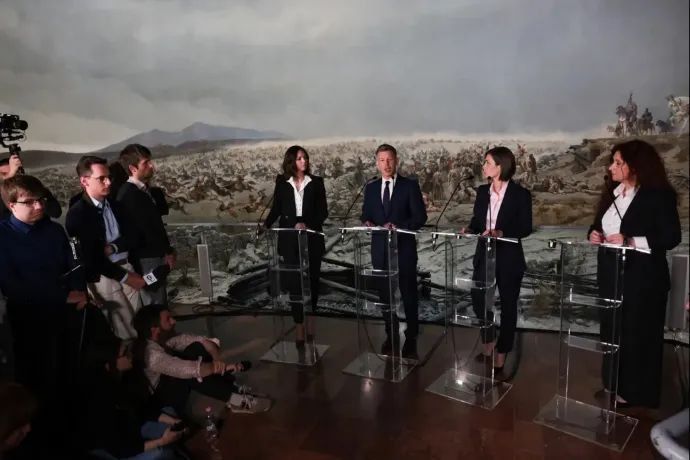



Instead of Budapest, the freshly formed Hungarian government held its first official meeting on Wednesday at the National Heritage Park in the southern-Hungarian village of Ópusztaszer, where the monumental panoramic painting called “The arrival of the Hungarians” by Árpád Feszty, which depicts the Hungarian tribes conquering the Carpathian Basin is displayed.
Prime Minister Péter Magyar said that one of the reasons for the government meeting there was the extreme drought which has been affecting that region of the country for several years. In his announcement, Magyar said that prior to the meeting, they would consult with water management and agricultural experts to assess the present situation, so that they could then decide on the necessary short-term measures as well as order the development of medium- and long-term water management solutions and improvements.
The other reason for choosing Ópusztaszer was that according to Hungarian tradition, this was the location of the first great assembly of the conquering Hungarian tribes when they came to the area. Although historians maintain that the details of the specific events cannot be proven with absolute certainty, Ópusztaszer nevertheless remains a symbolic landmark of the founding of the Hungarian state.
Strong condemnation of the Russian attack on Transcarpathia
The press conference began shortly after six o’ clock, and Péter Magyar started by announcing that Hungary has strongly condemned Wednesday’s Russian drone strikes against Transcarpathia, Ukraine’s region which is home to a sizable Hungarian minority, and added that the Foreign Minister has already summoned the Russian ambassador for the next day. Anita Orbán is in contact with the Consul General in Uzhhorod, Magyar said, and the Hungarian government has offered its assistance as soon as the first reports of the drone attack in Transcarpathia came in. The Consul General is working with local Hungarian organizations and churches, and has conveyed their offer that, like every Hungarian government, they are ready to provide any assistance in the shortest possible time. First, in consultation with local Hungarian leaders, the consul will assess exactly what has been damaged; and if there is a problem that directly affects Hungarians living there, the Hungarian government will provide help.
First trip: Poland and Austria
As previously announced, he will be traveling on two official visits next week, first to Poland, starting in Krakow, and then, after holding talks there, he will continue by train to Warsaw. There, he will hold bilateral talks primarily with Donald Tusk, but will also meet with the Polish president before proceeding to Gdansk to meet with the former leader of the Solidarity Movement. From Warsaw, he will continue on to Vienna for meetings with the Austrian chancellor and the Austrian president, and will return to Budapest from Vienna by train.
Tackling the drought
József Gacsályi, the Deputy Technical Director of the National Water Management Directorate spoke briefly about the drought affecting the region where the press briefing was held. According to him, the situation is very serious because a whole year’s worth of average rainfall is missing "from the system". “We’re no longer talking about an annual drought, but a drought that has dragged on for years.”
Péter Magyar then announced that in response to this, the government will spend 257 billion forints on water management projects thanks to the EU’s Environmental and Energy Efficiency Operations Program. He added that no EU funds had been allocated to this sector during the current funding cycle due to the previous government’s failures. The aforementioned amount will be spent with the involvement of water management experts.
The Minister responsible for agriculture and food management will declare a force majeure situation this week due to the drought, which will also provide opportunities for Hungarian farmers in the region.
Bringing EU funds home
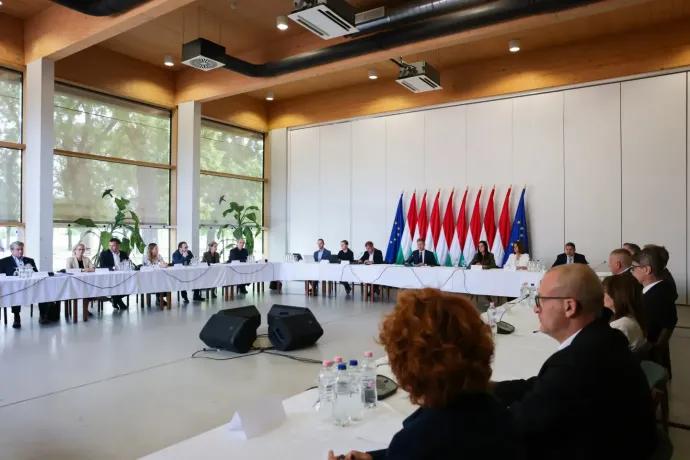
Magyar said that they would be adopting 17 government resolutions before the end of the day (the meeting is expected to last until late at night). He noted that they had discussed bringing the EU funds "home" and that he had requested updates from several ministers on this matter, adding that negotiations with EU leaders are ongoing.
A high-level delegation from the European Commission will arrive in Hungary next week to continue negotiations; the clear goal and expectation is to advance the talks to a point where Magyar can travel to Brussels during the week of May 25 to sign an agreement with Ursula von der Leyen.
The Prime Minister explained that some details related to the super milestones and certain conditions still need to be worked out. The main problem is related to the projects to be funded; the deadline is tight, as these must be implemented by August 31, and these funds must be utilized. It is in the interest of Hungary, as well as the European member states and institutions that this money arrives so that the Hungarian economy can finally pick up, Magyar said. In response to a question from the press later on, he added that he would soon be writing a letter to Ursula von der Leyen to find out where there might be some room for flexibility with the conditions imposed on Hungary, so that we can more easily access the EU funds we are entitled to.
Péter Magyar said that his government is taking over the country in a very, very poor and disgraceful state. According to him, under the governance of Viktor Orbán, Hungary’s national debt has increased by 44 trillion forints.
Clemency scandal files to be made public
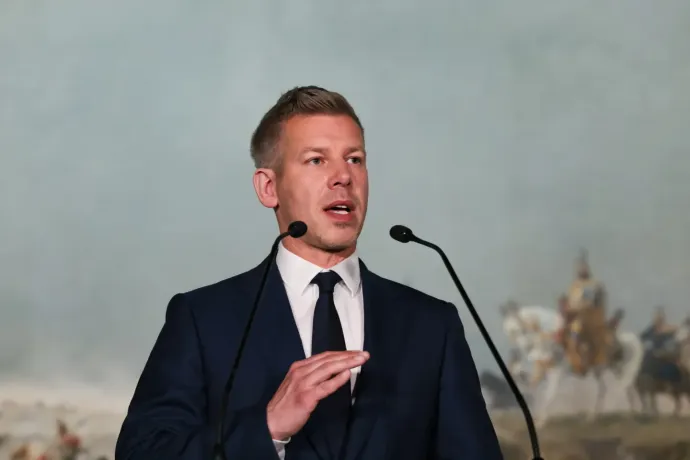
Magyar announced that the government will order a full public investigation into the violations that occurred at the Zsuzsa Kossuth Children’s Home in Bicske. The clemency scandal which broke in 2024 is connected to this institution and it eventually led to the resignations of President Katalin Novák and former Justice Minister (and Péter Magyar’s ex-wife) Judit Varga, as well as Magyar’s entry into politics. To this day, the country has received no explanation for why Novák had granted a presidential pardon to the deputy director of the children's home who had blackmailed several residents of the home to force them to withdraw their testimony against the paedophile director who had sexually abused them.
Now, Magyar announced that the government will instruct the Minister of Justice to make the files on the Bicske clemency scandal available to the public. He also said he had asked the Minister of Social and Family Affairs to conduct a comprehensive review of the state of child protection in the country. They hope a decision on opening the case files will be made as early as next week. In his view, this will allow the government to settle an old debt.
Hungary joining the EPPO is on the agenda
The government will task the Foreign Minister and several other ministers with reviewing and making public classified international treaties, and they will do the same with regard to decisions which the Orbán governments had declared classified, Magyar said.
Discussing Hungary’s accession to the European Public Prosecutor’s Office is also on the agenda of the new government, and they will also address the process of Hungary’s withdrawal from the International Criminal Court – which was initiated by the previous government, and which the Tisza government would like to revoke.
The minutes of government meetings held between 2010 and 2026 will also be made public, Péter Magyar announced. He said this would take a long time, but he believes there will be lessons to be learned.
For more quick, accurate and impartial news from and about Hungary, subscribe to the Telex English newsletter!