Why Ukrainian corn could keep the Hungarian agricultural sector running smoothly


Hungarian Prime Minister Péter Magyar and Ukrainian President Volodymyr Zelensky held their first official meeting in Transcarpathia this week. At the press conference held following the meeting, it was mentioned that-as expected-the subject of Ukrainian corn was also discussed during the visit. Péter Magyar said that the two countries’ ministers of agriculture would soon be holding talks on Hungary importing corn from Ukraine, while Zelenskyy noted that Ukraine might be able to supply "certain quantities" of corn to Hungary, as they are aware that this year’s harvest had been low.
It may seem like the subject of Ukrainian corn has little impact on the daily lives of Hungarians, but it is in fact crucial for the entire Hungarian food industry.
Among other things, corn shortage poses a threat to Hungary’s production of isoglucose, alcohol, and animal feed-all of which are competitive at the European level-and, through the latter, to cattle and pig farming as well as dairy production. Not only is there a risk of price increases, but also of shortage in general: after all, there can be no finished products without raw materials.
Nevertheless, this is a highly divisive subject in Hungary. As we shall see, there is strong opposition to importing Ukrainian corn within the Fidesz camp, largely due to the desire to protect Hungarian farmers, opposition to GMOs, and concerns about alleged contamination, while Tisza voters-although they do share some of the same concerns-are much more likely to attribute the ban to Fidesz’s anti-Ukrainian stance. Most of them would support the import of Ukrainian grain because of the expected lower retail prices and the ability to better supply the food processing industry.
The agricultural sector has traditionally lined up on both sides of the issue, with field crop farmers opposed to importing Ukrainian grain because they fear competition will drive down prices. A significant portion of the Hungarian economy, however-livestock farmers, feed producers, and industrial processors-firmly believe that keeping Ukrainian grain out would be self-defeating and would create serious problems for the country's economy.
A nearly 20-year low
Magyar Mezőgazdaság summarized the situation across Europe, based on data from a Polish study.
In 2026, corn production in the EU fell to just 50.2 million metric tons, a nearly 20-year low; the average yield over the previous 10 years was 61.3 million metric tons.
Climate change-more specifically, drought and heat-is clearly to blame. Under such circumstances, the role of imports naturally increases, while the fact that one of the key starting points for imports-namely, Ukrainian shipments departing via the Black Sea destined for Spain, Italy, and France, among other countries-has become unreliable due to Russian attacks, hasn't helped the situation.
The dry, hot weather caused the biggest losses in Hungary, France, Romania, and Germany. Due to the weaker European harvest, imports may reach a record 23.5 million metric tons, and Ukraine has traditionally been the most important supplier on the seller’s side of EU imports. Due to logistical costs, it is rather unfortunate that the next countries on the list are the United States and Brazil. The biggest importers of corn in the EU were Spain, the Netherlands, and Italy. These countries purchase several million metric tons of Ukrainian corn annually.
The situation in Hungary
In Hungary, corn shortage has affected the feed and processing industries the most. The Hungarian figures are well known: According to Zoltán Reng, CEO of Hungrana Starch and Isoglucose Manufacturing Ltd. (Hungrana Keményítő- és Izocukorgyártó Kft.)-one of Europe’s leading corn processors-this year’s corn harvest was exceptionally low in Hungary, totaling just 1.4 to 1.5 million metric tons. Meeting domestic demand would require at least 1.7–2 million metric tons of imports, even with certain sectors striving to utilize all available substitute products.
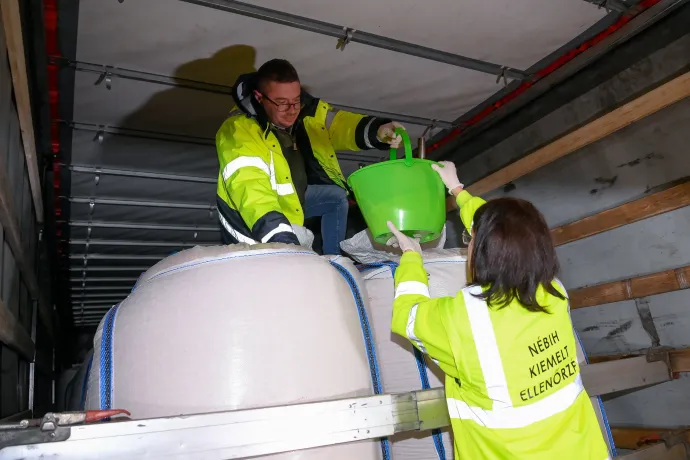
According to the Grain Association (Gabonaszövetség), securing 800,000 metric tons remains unresolved. This was also confirmed to us by Zoltán Reng. According to him, while there indeed are other sources of corn in Poland, Slovakia, and Romania, the logistics of importing them remains unresolved-there simply isn’t enough transportation capacity via rail or road, nor are there enough proper transshipment facilities. Germany, the Netherlands, and France are now also competing for these goods, which has created a “first come, first served” sort of situation.
Utilizing additional road and rail capacity from Ukraine would be possible, especially since the Ukrainians are heavily dependent on rail exports to Europe because-as previously mentioned, they are unable to use their maritime capacity. In other words, there is a classic balance of supply and demand, but due to existing Hungarian regulations, we are unable to import.
In our background interviews, we heard that while the Ministry of Agriculture is aware of the problem, proposals to relax existing regulations have not yet been approved by the Tisza government’s top leadership. Professional consultations are, of course, ongoing. It is interesting to note that even former Central Bank Governor György Surányi has addressed this self-inflicted economic hardship in his presentation on evaluating the budget.
According to Zsombor Wagenhoffer, director of the Hungarian Livestock Breeders’ Association (Magyar Állattenyésztők Szövetsége), the problem stems from the fact that domestic corn production used to be around 6.5 million metric tons annually, which consistently placed Hungary among the top five exporters in Europe.
In response to the abundant supply, several processing plants sprang up, but then the trend reversed, and the lean years began.
Livestock farmers are now faced with a situation where all feed is expensive, while the prices of end products (beef, pork, poultry) have plummeted. Feed accounts for 50–70 percent of the costs in livestock farming, so this greatly affects profitability. According to Wagenhoffer, shielding an entire sector (crop farmers) from European competition is not possible, especially not while putting other sectors (livestock farmers) at a disadvantage—all while watching Spanish-raised pigs, fattened on Ukrainian grain, drive Hungarian farmers out of business.
To make matters worse, due to the drought, a considerable percentage of Hungarian grain is contaminated with toxins. The most serious risk associated with corn in the EU is aflatoxin: it occurs naturally as a fungal toxin (mycotoxin), and is produced by certain types of mold. Heat and drought contribute to a sharp increase in contamination.
Livestock farmers still have some stockpiles, but these may run out towards the beginning of next year, at which point they will need to purchase corn immediately. However, since the harvest was also down in Ukraine, countries without import restrictions could end up buying their entire export quota of 10–20 million metric tons.
Farmers are holding on
The government would like everyone to compromise, but the price is a major concern for crop farmers. They argue, among other things, that Ukrainian produce is uncertified and of poor quality, and that “Hungary is an agricultural nation” capable of producing what it needs. Another argument is that Ukrainian grain is the product of a large American-Ukrainian agribusiness lobby.
Farmers are not the only ones who have been making these claims in recent years. Fidesz also managed to persuade the public that Ukrainian grain is of poor quality, will ruin Hungarian farmers with its low prices, and is genetically modified.
As things stand, it seems that no matter how popular the Tisza Party is, it does not dare speak out against the messages Fidesz drilled into the public consciousness: lower utility bills for everyone, keep Ukrainian grain out, and curb inflation through pricing regulations.
Another reason why continuing with the policy of banning Ukrainian grain is hard to understand-even though Péter Magyar sometimes speaks out against “EU funds being freely handed out to Ukraine” and considers MOL’s fuel storage facility on the country's eastern border rather risky-is that bilateral meetings have begun, there have been gestures of goodwill, and Ukraine has also taken some steps, for example, in the area of minority rights.
Fidesz voters aren’t satisfied with “Ukrainian quality”
So let us take a look at the figures mentioned above! According to a survey conducted by the 21 Research Center (21 Kutatóközpont) via telephone, Hungarians are divided on the issue of Ukrainian grain imports, and their opinions are in a correlation with their party preferences. The survey was commissioned by chemical engineer László Rácz and was conducted by telephone with 1,000 respondents in the final days of September 2026.
According to the survey, Fidesz voters are primarily worried about the quality of Ukrainian grain and the interests of Hungarian farmers; as a result, most of them would still not allow Ukrainian grain imports. Tisza voters tend to suspect that Fidesz's ban on Ukrainian grain imports was driven by political motives, anti-Ukrainian sentiment, and propaganda, and they believe that the move has led to higher food prices. Most of them would allow imports, although they, too, typically express concern for Hungarian farmers.

Seventy percent of Hungarians have heard there is a grain shortage in the country, and 85 percent are aware that the Fidesz government banned Ukrainian grain imports in 2023. Respondents were also asked about why this was done; the most frequently cited answers were the protection of domestic farmers (14 percent) and genetic modification (14 percent), Ukraine’s lack of compliance with EU standards (12 percent), with several respondents citing food safety (11 percent) and political reasons (11 percent), while anti-Ukrainian sentiment (10 percent) was also mentioned.
Overall, more people are opposed to importing grain from Ukraine (51 percent) than would allow it (42 percent). Political affiliation played a very strong role on this issue: the overwhelming majority of Fidesz supporters-87 percent-would not allow such imports, while the majority of Tisza supporters (65 percent) would.
But how can farmers be protected?
Processors argue that, when it comes to corn imports, the government shouldn't necessarily consider opening the market entirely if it deems this to be politically risky. Rather, this could be a temporary, quantitatively limited, and strictly controlled system designed to make up for the confirmed domestic shortfall-for example, based on transparent quotas tied to actual usage.
The question is, whether farmers would accept that opening the market might also be in their best interest? It seemed to us that they would not-or at least not everyone would. This is likely so because devising a mechanism that would prevent imports from flooding the market, one that would ensure that imports only enter the scene once Hungarian products were sold out is quite difficult.
And yet, the longer-term stakes of this subject could very well have an impact on the farmers too. If domestic livestock farming and the processing industry experience a permanent loss of capacity due to the current shortage of raw materials, Hungarian farmers themselves could end up losing part of their guaranteed domestic market the next time there is a good harvest. This could further increase both the uncertainty of their earnings from the market and their dependence on agricultural subsidies.
Furthermore, fears of Ukrainian dumped prices do not seem entirely justified, since the price of corn is primarily determined by the global market, and not by Hungarians or Ukrainians; everyone sets their prices based on the prices quoted by the major stock exchanges.
The processing industry also has other arguments to make, such as the fact that the fate of the domestic processing industry is important for the entire agricultural sector (since there is little domestic value-added production in agriculture, but a strong segment has developed in this area specifically). In fact, the issue may even extend beyond agriculture: biorefineries, and even biogas plants can help reduce the country’s dependence on energy imports.
Meanwhile, of course, the entire European agricultural sector is relying on subsidies and the protection of markets; in other words, protecting the interests of local farmers is by no means a uniquely Hungarian phenomenon.
If Hungary did not protect its farmers in an environment where everyone else does, it would indeed be impossible for them to survive.
One way to address this would be to ensure that the subsidy system does not replace modernization, improving efficiency, and adapting to geographical conditions. The latter is particularly important in Hungary’s case, since climate change has been making it increasingly difficult to cultivate crops in certain areas while staying profitable.
And if the farmers’ concern that Ukrainian grain will drive prices down is justified, then there needs to be some form of reasonable cross-subsidization. If imports drive the price down by 20 euros, that could amount to as much as 30 million euros in losses for farmers (20 times 1.5 million metric tons). Unfortunately, however, a shortage of raw materials leads to much bigger losses for processing companies, the dairy industry, feed manufacturers, livestock farming, bio-refineries, and isoglucose producers.
Some kind of mechanism should definitely be found to avoid this, but there is no suitable method yet. The main reason for this is that Hungarian farmers are not satisfied with the current price either, and they feel that they cannot afford to go any lower. Although the current price of corn (80,000–87,000 forints per metric ton) is higher than last year’s (70,000 forints per metric ton), its cultivation is still unprofitable.
Food safety is no joke
Of course, if there are concerns about toxin contamination, they should be taken seriously. The problem, however, is that the doubts surrounding this issue were also part of a deliberately orchestrated political campaign. Until 2023, the Fidesz government had no concerns about the quality of Ukrainian corn. After the 2022 drought and the unprecedented levels of aflatoxin contamination, it was specifically Ukrainian corn which helped improve the Hungarian harvest. Concerns about the quality of Ukrainian corn over the past five years have not appeared to be well-founded at all; rather, they seemed to be nothing more than false fear-mongering. Would other EU countries with a high standard of food culture (Italy, Spain) allow risky raw materials into their markets? It’s unlikely, but on this too, let’s hear what the experts have to say!
The main purpose of the European Commission’s RASFF food safety system is to enable Member State authorities to share information on food and feed safety risks with one another. The public RASFF database contains searchable notifications dating back to 2020, including for products from third countries.
GMP+ International is the organization that operates the world’s leading nonprofit feed safety and sustainability certification system (the GMP+ Feed Certification Scheme). In 2026, Ukraine was classified as a country with a low aflatoxin risk with regard to corn production, while Hungary was classified as a country with a high aflatoxin risk. This classification is not set in stone, however; it is regularly reviewed based on weather conditions during harvest and laboratory monitoring results.
At the beginning of the 2026/2027 harvest (in September 2026), for example, Ukraine’s classification was temporarily set to “medium risk” due to weather-related concerns, and then, following an evaluation of the October data, it was returned to the “low risk” category. The same October 2026 list classified Hungary as being “high risk.” Although this is not an official, government-issued classification, it is based on a significant amount of laboratory data.
As for Fidesz’s propaganda, let us consider an example from the past. Back in April 2023, the government announced that tests on grain imported from Ukraine had revealed toxin and GMO contamination in several instances. Átlátszó, however, had its suspicions and sued to obtain the test results. It turned out that during the period under review-from January 2022 to March 17, 2023-the regulatory authority carried out 33,946 tests for chemical residues or other harmful substances, and found problems in two of those cases.
Of course, one could argue that even “two” is “too many.” However, if one considers that during the same period-the 2022–2023 season-market and laboratory monitoring revealed that, due to the extreme drought, approximately 30–40 percent of the domestic corn crop was found to contain more aflatoxin than allowed, or contained enough to limit industrial purchase, then it starts to look more like a misrepresentation and an attempt to stir up sentiment.
Unfortunately, according to our sources, the situation is not expected to improve next year-quite the contrary. The area dedicated to corn cultivation is expected to continue to decline. Some estimates suggest that from the current level of just under 580,000 hectares, corn planting could shrink to as low as 300,000 hectares. Even in a year with exceptionally good rainfall and a yield of 8-10 metric tons per hectare, this would amount to only 2.5-3 million metric tons of corn, which is still well below domestic demand. From this point on, the Hungarian feed and processing industries will have to continually rely on imports.
For more quick, accurate and impartial news from and about Hungary, subscribe to the Telex English newsletter!