Ukraine's historic minority education rights law paves way for Magyar-Zelensky meeting
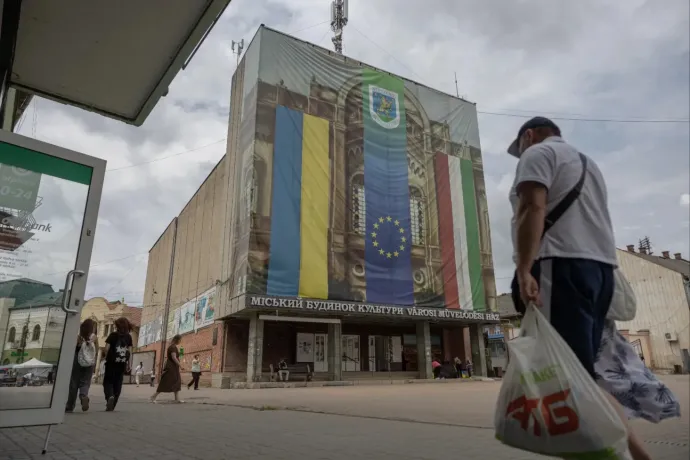


On Monday, the Ukrainian parliament passed a law that includes provisions on education in the native languages of the country's national minorities, thereby paving the way for a genuine settlement of Hungarian-Ukrainian relations, which have been fraught with conflict for more than a decade. Upon her arrival at the meeting of EU foreign ministers in Luxembourg on Monday, speaking ahead of the Rada’s vote, Hungarian Foreign Minister Anita Orbán stated: “It is important that everything we have discussed” actually be implemented and that the Ukrainians honor their commitments.
After the law was adopted in Ukraine, Péter Magyar emphasized in the Hungarian Parliament that the Ukrainian side had fulfilled its commitment ahead of the planned year-end deadline, which is a positive sign for rebuilding relations between the two countries. He then addressed the Fidesz representatives present and pointed out the previous Hungarian government’s responsibility for the two countries' strained relations. “Although there is much to be put right—after all, your ousted leader did many things and sacrificed much, above all the safety of the Hungarians in Transcarpathia.”
The Hungarian PM also noted that as prime minister, Viktor Orbán last visited Ukraine in 2015, which means he had not gone to Transcarpathia since the outbreak of the war either. “Much needs to be done to restore trust on both sides, and the leadership of both countries has now taken the first steps towards resolving the situation—not exclusively, but primarily for the sake of our Hungarian brothers and sisters in Transcarpathia,” said Péter Magyar.
Later that evening, Magyar and Anita Orbán both posted on Facebook that Ukrainian President Volodymyr Zelensky had already signed the amendment, which had been promulgated and would take effect on Tuesday. László Zubánics, president of the Hungarian Democratic Alliance of Ukraine (UMDSZ), also praised the law in a statement to Telex.
The adoption of the law is also important because it could be crucial in terms of the long-planned high-level bilateral meeting between Magyar and Zelensky, which still has mot taken place. It is not yet known when a meeting between the two leaders might take place in Ukraine, but Magyar did address the subject in an interview with the Finnish newspaper Helsingin Sanomat published on Sunday.
He also said that, similarly to Orbán, he does not intend to provide military aid to Ukraine, nor will he allow arms shipments to be transported through Hungary. At the same time, he would like to restore relations between the two countries through small steps. An important milestone in this process is the upcoming EU summit on Thursday and Friday, where he is expected to meet with Ukrainian President Zelensky.
The 2017 language law was not just an excuse
The primary reason the Orbán government publicly cited for not supporting the launch of Ukraine's EU accession talks was the absence of a law guaranteeing education in their native language for the Hungarian community in Transcarpathia. However, in 2022, it actually urged the launch of those talks, and in 2023 it even approved granting Ukraine candidate status. It was also the reason why Péter Magyar’s government has been cautious in its support for the accession negotiations.
And yet, even before the law passed on Monday, there had been a significant difference between the previous and current Hungarian governments’ attitudes toward Ukraine. In recent years it seemed that the absence of legislation on minorities served as a point of reference for the Orbán government, because the progress made by Ukraine, which was evident even during their time—for example in the withdrawal of the disputed 2017 law, which never actually took effect—was not followed by an improvement in relations or by Hungary’s principled support for Ukraine’s EU membership.
This cast suspicion on Orbán’s government, suggesting that ensuring the linguistic survival of the minority was less important than maintaining the tension for the sake of various political gains. In doing so, they also did a favor for Russia, which is at war with Ukraine, as this signaled that the EU is not united in its support for Ukraine.
However, when Péter Magyar took office, the Ukrainian negotiators saw that the new Hungarian government was genuinely seeking to resolve the issue of the Hungarian minority's language use, making it clear that this could indeed lead to an improvement in Hungarian-Ukrainian relations and allow Ukraine to begin negotiations with the EU through the standard procedure rather than an expedited one.
Then, in early June, the two sides reached a political agreement described as a breakthrough. However, the leadership in Kyiv was forced to face the fact that this did not mean an unprecedented acceleration of EU accession negotiations: at first, the Hungarian side agreed to begin negotiations on only two of the first six clusters—each comprising a major section of the 35 negotiation chapters covering the legal system, economic, and political structures required for accession—on the decade-long path toward accession.
But it continued to withhold its consent on four others—presumably in part due to a disputed language use review—even after the political agreement between the two countries was reached, indicating that the remaining clusters could only be addressed once visible progress had been made in passing laws guaranteeing the Hungarian minority’s right to use its language. Nevertheless, the process of rebuilding the relationship was not without tension; most recently, the two countries found themselves embroiled in a war of words that broke protocol over the organization of the Carpathian Eight (C8), an initiative launched by Ukraine.
The Ukrainian president initially announced that Hungary was also a member of his new initiative, but Hungary then made it clear that this was not the case. “We find the Hungarian prime minister’s unnecessarily confrontational statements toward Ukraine surprising,” wrote Ukrainian Foreign Minister Andrii Sybiha in response to the news. Magyar responded in a statement: “It is completely unacceptable to claim that a sovereign country is a member of an international cooperation initiative (Carpathian Integration) without having consulted with the country in question beforehand or having sought its consent.” At the same time, the Hungarian Ministry of Foreign Affairs indicated that this should not be interpreted as a rejection of regional cooperation or constructive relations with Ukraine.
Once it became certain that the bill, which had been coordinated with the Hungarian side, would be submitted to the Ukrainian parliament on Monday, the Hungarian government no longer opposed the preparatory steps for opening two additional clusters with the EU. However, a final decision on this matter was only reached at the meeting of the EU Foreign Ministers' Council in Luxembourg after the Ukrainian law guaranteeing education in minority languages was adopted. It is customary to open and close these chapters at intergovernmental conferences, but on Monday morning, no such conference had yet been scheduled with Ukraine—or with Moldova, which is politically linked to Ukraine and has been moving in tandem with it so far—among the events of the Council of Ministers. These were only added to the agenda in the afternoon.
“Drafting the text was a lengthy process, and it was precisely this that enabled the committee to unanimously support the bill, thus allowing the Ukrainian Parliament to pass it in a single reading without further amendments,” Roman Hryshchuk told Telex. According to the member of the Ukrainian Parliament’s education committee, the law demonstrates that Ukraine considers national minorities a value worth preserving. The law applies to national minorities whose language is one of the official languages of the EU; in Ukraine, this includes the Hungarian community—numbering between 70,000 and 100,000—as well as the smaller Slovak, Romanian, Bulgarian, and Polish communities.
The newly passed law ensures that national minorities can use their languages in education. According to the political agreement reached in June, the implementation was to take place by the end of this year, but the legislative process is not yet finished. In 2027, the Ukrainian legislature will need to address additional issues affecting other areas of language use.
Even with representation below 51 percent, minority language use is still provided for
"Every school where the proportion of students representing the minority exceeds 51 percent shall be granted national status,” said Hrischuk. This means that in these schools, documentation is prepared in the minority language, classes are conducted in that language, and there are no restrictions on the use of the minority language during breaks between classes. The latter may seem self-evident, but it was not before, as there had previously been a parliamentary motion that would have required communication between teachers, students, and staff outside of class to take place exclusively in Ukrainian.
If the school does not meet the 51 percent threshold, an ethnic minority class may still be established with the same language rights as those in ethnic minority schools: there are no restrictions on the use of the minority language; instruction is conducted in that language; documentation may also be prepared in that language; and there are no restrictions on the use of the minority language between classes—that is, the regulation governing the use of the Ukrainian state language in public institutions does not apply to such classes.
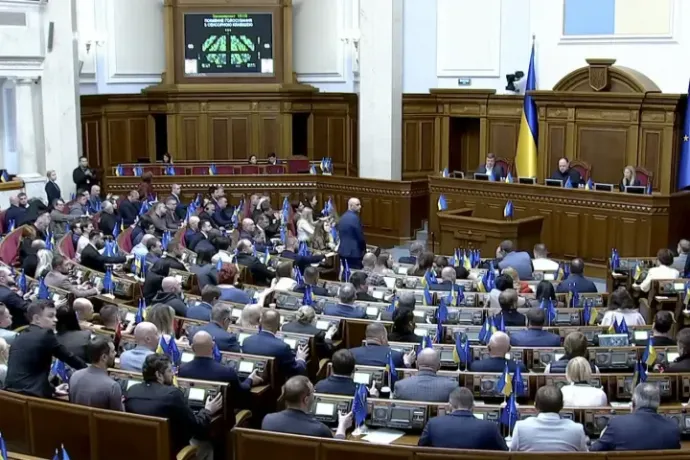
Subjects such as Ukrainian language and literature, as well as civil education may be taught in ethnic minority schools or ethnic minority classes in Ukrainian. According to Hryshchuk, while preserving the values represented by national minorities is important, it is also crucial for the students in question to master the official language, without which they would become isolated and find it difficult to succeed in society outside their immediate community. However, this falls outside the scope of this law.
At first glance, the 51 percent threshold may seem like a loophole through which the primacy of the Ukrainian state language could still be imposed on the national minority in question. According to László Zubánics, president of the Hungarian Democratic Alliance of Ukraine, however, the situation is reassuring, despite the fact that the number of Hungarians in Transcarpathia has been steadily declining over the past 20 years—and is now falling even more rapidly due to emigration caused by the war launched by Russia. As he said,
“once a school is granted ethnic minority status, it can keep that status as long as the proportion of students from that ethnic group does not fall below 20 percent.”
Zubánics, a professor at the University of Uzhhorod, witnessed the drafting of the bill firsthand and has followed the decades-long dispute over the issue of minority language use. He said that of the 100 schools attended by Hungarian students, only eight do not meet the 51 percent threshold. The previously mentioned ethnic minority classes will thus also allow ethnic Hungarian students in these schools to receive education in their mother tongue. In ethnic minority schools, it will be mandatory for either the principal or the vice principal to speak the language of the given ethnic minority.
According to Zubánics, the adopted law “is a historic document in its own right” because it regulates the use of minority languages in a way that lawmakers had previously shied away from. The UMDSZ president noted that while these recommendations were included in the report of the Venice Commission, it still took three years to successfully enshrine them in law. Thus, the path from the 2017 law—which he also considers to have been of a restrictive nature and which the Hungarian side had previously and justifiably objected to—to the current regulations has been a long one.
The new law, which provides long-term guarantees for education in Hungarian in Ukraine’s affected region, also gives the parents' community a meaningful say in the matter. Classes can only be conducted in Ukrainian at a national minority school—or in a national minority class—if two-thirds of the parents support it. According to Zubánics, the Ukrainian Ministry of Education was particularly flexible when drafting the law, and it genuinely kept the interests of national minorities in mind.
The election law still needs to be amended
When speaking in Parliament, Péter Magyar also noted that some parts of the law will enter into force immediately, while others will be implemented gradually. As previously mentioned, there are certain laws that the Ukrainian parliament will still need to adopt in 2027.
These include regulations on the political representation of minorities, which also involve constitutional amendments. The timeline is set out in the Action Plan for Minorities, which calls for the alignment of minority rights with European standards. According to Zubánics, Ukraine is now clearly interested in opening the clusters as soon as possible and is willing to expedite the enactment of the commitments it has undertaken.
This is reflected in the draft legislation on elections currently being prepared by the Ukrainian Ministry of Justice: it is quite possible that, instead of being addressed by the end of 2027, the 11 points specified by the Hungarian side with regard to guaranteeing the use of languages by national minorities will be addressed as early as the first half of that year. The Ukrainian side has already received the relevant proposals from the EU on this.
Hungarian students will be able to take their high school graduation exams in Hungarian, including the subject “History of Ukraine”—which will at higher levels be taught in Ukrainian—and there is no longer any mention of the previously specified 2030 deadline, after which the exams would have had to be taken in Ukrainian. The option to take the high school graduation exam in Hungarian is therefore open-ended. Furthermore, a draft bill is in the works that would allow Hungarian to be selected as an elective subject for the graduation exam. According to Zubánics, this could be implemented within a year and a half. He noted that
Ukraine’s ambition to join the EU played a major role in the implementation of these measures and in the passing of the law on Monday, because this meant that ensuring the rights of minorities was no longer just a bilateral issue between Ukraine and Hungary, but a matter between Ukraine and the EU as a whole.
Cluster No. 1, which has already been opened, devotes a separate section to these rights. Based on previous enlargement experiences, however, the prerequisite for completing the accession process—which takes at least ten years—is that all clusters be closed, and this can only happen with the unanimous consent of all member states, which is also the case for accession to the EU itself.
For more quick, accurate and impartial news from and about Hungary, subscribe to the Telex English newsletter!