Russian Foreign Ministry announces expulsion of Hungarian diplomats
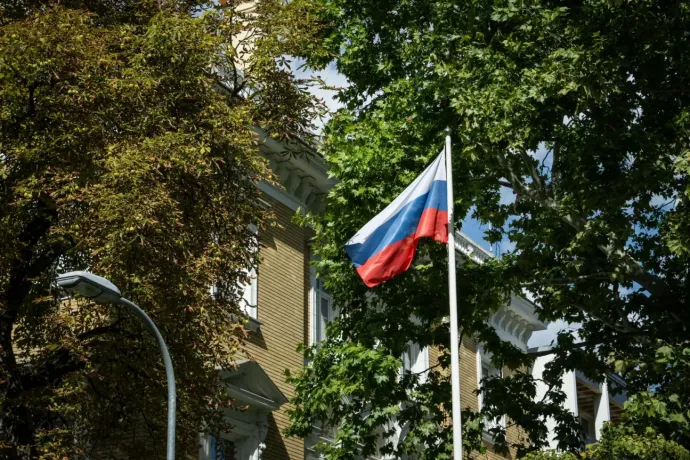


The Russian Foreign Ministry announced the expulsion of several Hungarian diplomats on Thursday in response to Hungary’s recent expulsion of 10 Russian diplomats from the country, according to the Russian state news agency. Hungary’s temporary Chargé d’Affaires was summoned to the Russian Foreign Ministry on Thursday morning, where he was informed of the Russian government’s retaliatory measures. The statement did not specify how many Hungarian diplomats would be affected.
According to a statement from the Russian Foreign Ministry, the Hungarian Chargé d'Affaires, Gábor Gergics, was informed that, as a retaliatory measure, several diplomats at the Hungarian Embassy in Moscow and Hungary’s Consulates General in St. Petersburg and Kazan would have to leave Russia within two weeks.
Foreign Minister Anita Orbán announced on September 8 that 10 staff members of the Russian Embassy in Budapest would be expelled from Hungary because they had engaged in activities which “are deemed unacceptable for diplomats under the Vienna Convention.” Never before had so many Russian diplomats been expelled from Hungary at once. Because of this, it was likely that Russia would respond with at least a reciprocal measure—that is, by expelling Hungarian diplomats working in Russia.
The Russian Foreign Ministry responded on the very day of the expulsions: Ministry spokeswoman Maria Zakharova said that “the response to the Russophobic lobby in Budapest will be harsh and painful”. In response to a question about when Russia’s retaliatory measures could be expected, Zakharova said at the time that “they will soon find out”. Russian President Vladimir Putin’s spokesperson Dmitry Peskov chose more measured language. He said that Russia would provide an “appropriate response” to the Hungarian Foreign Ministry’s move. “We are open to further developing our relations. This is in our interest, and we are not in favor of causing any harm to the-shall we say-valuable legacy and experience of Russian-Hungarian bilateral relations,” Peskov said.
Although this has not been officially acknowledged, it is clear that the Hungarian Foreign Ministry made this decision because the Russian diplomats were, in fact, engaged in espionage. Deputy Director General of the Hungarian Institute of International Affairs, András Rácz said that the justification for the expulsions—in which the foreign minister cited activities incompatible with diplomatic status—has traditionally indicated intelligence activities.
There may have been several political messages behind the Hungarian Foreign Ministry’s decision to expel this many Russian diplomats from the country. The Hungarian Foreign Ministry may have taken this step to signal to Russia that a new era is dawning and that Hungary will no longer go easy on Russian intelligence agents. The essence of the other message is the same, but is not directed at the Russians, rather at Hungary's Western allies who have not been able to trust Hungary for years.
Incidentally, this is not the first time that Russian diplomats have been expelled from Hungary since the Tisza Party’s election victory in April. According to VSquare, such an expulsion took place in May as well, but it was carried out quietly, without informing the public. Under the Orbán governments between 2010 and 2026, only one Russian diplomat was expelled from Hungary—in 2018. At that time, following the example of numerous Western countries, Hungary decided to show solidarity with the United Kingdom in response to the poisoning of Sergei Skripal, a former Russian spy living in Great Britain, and expelled a Russian diplomat.
In response to Skripal's poisoning, European countries began expelling Russian diplomats en masse and in full public view for the first time. Following the launch of Russia's full-scale invasion against Ukraine in February 2022, however, expulsions escalated to an unprecedented level. In April 2022, more than 200 Russian diplomats were expelled from Europe over the course of two days as part of a coordinated response to the Bucha massacre.
The Hungarian reaction
“The Hungarian government has taken note of the Russian side’s decision, which we regard as a response to Hungary’s previously announced measures. Hungary has no interest in escalating diplomatic tensions, but at the same time, it stands by its previous decision, which was based on considerations of national security” — the Hungarian Ministry of Foreign Affairs wrote in a statement, reacting to the Russian announcement.
Anita Orbán’s ministry added: “The operation of our missions in Russia remain uninterrupted, and Hungary’s diplomatic presence in Russia will continue.”
For more quick, accurate, and impartial news from and about Hungary, subscribe to the Telex English newsletter!