Hungary to expel ten Russian diplomats, FM Anita Orbán announces
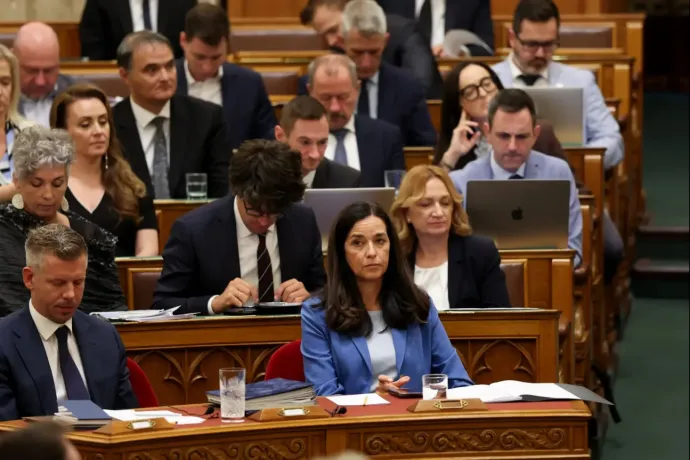


“Acting on my instructions, on Tuesday the relevant official from the Ministry of Foreign Affairs informed the Russian ambassador to Hungary that, according to the assessment of the Hungarian authorities, 10 members of the Russian mission had engaged in activities in Hungary that are unacceptable for diplomats under the Vienna Convention. The Hungarian side has therefore called on the individuals in question to leave Hungary. This decision protects Hungary’s security and sovereignty”-- Hungarian Foreign Minister Anita Orbán announced on her Facebook page. An expulsion of this magnitude is unprecedented; never before have so many Russian diplomats been sent home from the country.
The Minister added that the move “does not imply breaking off diplomatic relations with Russia. Hungary intends to continue the necessary dialogue, based on mutual respect and adherence to the rules.” The Russian Ministry of Foreign Affairs responded to the news by saying:
Russia will respond to the expulsion of 10 of its diplomats from Hungary. According to Maria Zakharova, the spokeswoman for the Russian Foreign Ministry,, “the response will be harsh and painful”.
Prime Minister Péter Magyar read out Anita Orbán’s statement in Parliament, and said that the Tisza government would defend the country’s sovereignty.
We have sent questions to the Ministry of Foreign Affairs to find out when it was that the Hungarian authorities realized that the 10 embassy staff members were engaging in activities "unacceptable for diplomats". In its response, the Ministry of Foreign Affairs stated that for the time being, they do not wish to share any further information about the expulsions. We also contacted the Russian Embassy in Budapest to ask for their comment on the decision of the Hungarian Minister of Foreign Affairs, and inquired whether a diplomatic response is expected.
Compared to her predecessor Péter Szijjártó, Anita Orbán has maintained a much more reserved diplomatic relationship with Russia. In the early days of her tenure as minister, on May 13, after Moscow launched a drone attack against Transcarpathia (Ukraine’s region home to a significant Hungarian ethnic minority) she summoned the Russian ambassador to Budapest. In comparison, the last time Szijjártó had summoned a Russian diplomat was in February 2022.
Also in May, VSquare reported that after the Hungarian election, a Russian intelligence officer working under diplomatic cover was quietly expelled from Hungary. Artur Sushkov left Hungary on May 4; according to the VSquare article, Hungary expelled him after the Constitution Protection Office (AH) discovered that, as an intelligence officer working under diplomatic cover at the Russian Embassy in Budapest, he had for years been gathering information on institutions close to the government. According to VSquare's sources close to the government, Hungarian intelligence had recommended Suskov's expulsion as early as February, but the Orbán government blocked the move.
In a post reacting to the fresh expulsion, investigative journalist Szabolcs Panyi wrote that, to his knowledge, there had only been a few “quiet expulsions” under the previous Hungarian government. In addition to Artur Sushkov, the other quiet expulsion—which is only now coming to light—took place on June 20, 2024, when Andrei Tarakanov, a third secretary and GRU officer operating under diplomatic cover, was sent back to Moscow. According to Panyi, Tarakanov barely spent a year in Hungary—he arrived in August 2023—and, according to a source familiar with his activities, he was not involved in Russian influence operations targeting Hungary, but rather ones aimed at other EU member states.
The Orbán government expelled a Russian diplomat in 2018, but neither side’s interests were harmed
In 2018, the Orbán government was among the countries which expelled a Russian diplomat; however, as Direkt36 discovered, there was no real tension behind the scenes. Like many Western countries at the time, Hungary also decided to show solidarity with the United Kingdom following the poisoning of Sergei Skripal, a former Russian spy living in Britain, and to expel a Russian diplomat. This was not only remarkable because of the two countries’ good relations, but also because several other European Union member states did not expel anyone. Moreover, there had been no precedent in Hungary for the official expulsion of a Russian diplomat under the Orbán governments which had been in power since 2010.
However, an investigation by Direkt36 revealed that Hungary’s response to the Skripal case was in fact deliberately orchestrated so as not to jeopardize the special relationship between the two countries.
At that time, Direkt36 learned from several diplomatic sources that the GRU (military intelligence) officer Hungary had expelled was working under diplomatic cover at the Russian Embassy in Budapest, and their posting would have expired within a few months anyway. In return, Moscow decided to send home a Hungarian foreign economic attaché who held a position of no particular importance.
European countries started expelling Russian diplomats in large numbers and very publicly beginning in 2018, following the poisoning of Sergei Skripal. At that time, 25 EU and NATO member states expelled more than 125 Russian diplomats within a month. Three years later, following the 2014 ammunition depot explosion, the Czech Republic sent 18 staff members of the Russian embassy home and six other countries subsequently expelled more than 25.
Following the launch of Russia’s full-scale invasion of Ukraine in February 2022, European countries moved to expel Russian diplomats in unprecedented numbers. In April 2022, more than 200 Russian diplomats were expelled from Europe within just two days as part of a coordinated response to the Bucha massacre.
Over the course of two months, 25 EU and NATO countries ordered more than 400 diplomats to leave, with Poland, Germany, and France expelling the most—40 each. Only a handful of NATO member states did not participate in the effort at the time, some—such as the United Kingdom—because they had already expelled large numbers of Russian diplomats beforehand. By mid-May, more than 450 Russian embassy staff members had been expelled.
According to an August article in the German newspaper Bild, Berlin has expelled 80 Russian diplomats since February 2022, the last one in January of this year; according to the article, most of them were agents disguised as diplomats. This year, Austria expelled three Russian diplomats suspected of espionage, bringing the total number of Russian diplomats expelled by Austria since 2020 to 14. In July, the Italian Foreign Minister announced that two Russian military attachés had been expelled on charges of espionage.
Polish Foreign Minister Radek Sikorski stated last week that the EU should expel even more Russian diplomats following the attempted drone-bomb attack at the Leipzig Airport. After a meeting with the French and German foreign ministers last Thursday, Sikorski said that there are too many Russian diplomats in the European Union, noting that, according to their estimates, roughly 40 percent of the more than 2,000 Russian diplomats are “performing tasks that are incompatible with their diplomatic status,” adding that “they work for agencies that also carry out terrorist acts in our countries.”
For more quick, accurate and impartial news from and about Hungary, subscribe to the Telex English newsletter!