I'm not racist, but I don't rent to Roma



“Dear homeowners! We are a family with three children, seeking a long-term rental starting June 1, 2026. A little bit about us: I have been working as a chef at the […] Turkish restaurant for three years, and my partner works there as a kitchen assistant. […] We are a family of Roma descent who take good care of ourselves and our surroundings; we are calm and quiet. We are looking for a landlord for whom our background is not an issue and who is seeking trustworthy, long-term tenants.”
Richárd and his partner posted this ad in early May in a Facebook group about rentals; they also uploaded a photo of themselves along with the detailed description. When asked why they were looking to move, the man said they want to move out of their current rental because the 270,000 forints plus utilities they are paying is too expensive given the condition of the apartment, and they are hoping to find something better for that price. According to Richárd, they felt it was necessary to highlight their Roma background in the ad because they had found themselves in uncomfortable situations on several occasions before.
“We went to look at the property, and when they saw us at the entrance, some landlords simply turned around and left—we weren't even given the chance to look at the property. This happened five times out of ten; the other five times we were able to go inside, but then we’d receive a text message saying it was no longer available.” According to Richárd, they wanted to avoid such situations with their ad, and he paid special attention to the spelling so that “they couldn’t find fault with that either.”
In the first large-scale study of this kind in Hungary, researchers from CEU and ELTE—Luca Váradi, Gábor Simonovits, and Bori Simonovits—sought to measure the extent of the difference between the responses property owners gave to prospective tenants of Roma and non-Roma backgrounds. In the nationwide study conducted in January 2025 involving 2,000 private advertisers and real estate agents, they responded to apartment listings via text message. Some of the messages included the statement
“I would like to add that I am of Roma origin,”
while others did not include this statement. The researchers then examined in which cases prospective tenants were given the opportunity to view the apartment in person. “We found that while a person who was not Roma had to send two messages to receive a positive response from the landlord, a person with Roma background had to send nine. Even though the text of the messages was exactly the same, except that the Roma applicant revealed that they were Roma. And this still didn’t mean that the property was eventually rented to them, only that they could at least go see it,” sociologist Luca Váradi explained.
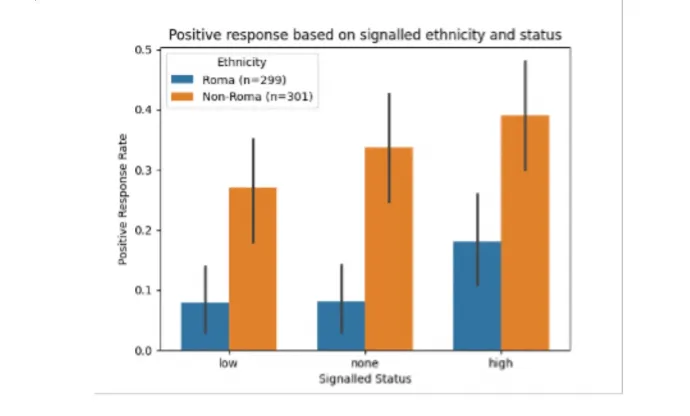
The next phase of the research was conducted among a smaller group of private advertisers in Budapest, with the difference that, compared to the previous study, the message now also included the prospective tenant’s occupation. They found that while those in high-status jobs (in this case, dental technicians and IT specialists) generally received more positive responses than those in low-status jobs (cleaners, warehouse workers), but Roma apartment seekers were still at a disadvantage compared to non-Roma with a similar social status. In other words, even if a Roma person looking for a rental stated that they were a well-paid dental technician, they still received fewer positive responses than non-Roma dental technicians.
In a follow-up study, landlords were asked to describe the characteristics of an ideal tenant and a less-than-ideal tenant. When it came to the non-ideal tenant, they almost immediately began talking about the Roma, listing all the stereotypes associated with them: that they are unreliable, that they don’t have jobs, that they have too many children, and that they are too loud. The ideal characteristics were the exact opposite of the above: the tenant should be reliable, hardworking, take good care of the apartment, and pay the rent on time. The situation is further aggravated by the fact that the other group which is most discriminated against in the rental market is that of parents with young children, who cannot be evicted during certain months of the year even if they are not paying rent, and one of the main stereotypes against the Roma is that they have lots of children.
“Landlords have also made it clear that they consider it natural to expect a Roma person to pay more. This is easy to do in an unregulated sector like property rental: on average, Roma are charged an additional 10 percent. This is essentially an “ethnic tax.” According to Luca Váradi, it is not uncommon for landlords to charge up to 20 percent more in rent after recognizing the applicant’s background during a face-to-face meeting.
“They are living on less money, but they have to pay more for the same service,”
added Gábor Simonovits, raising the point that even if there were no discrimination at all, it would still be harder for the Roma to find housing. “Since people prefer to rent their apartments to those of higher social status who can put down a bigger deposit, Roma are already at a disadvantage due to lower levels of education or income poverty. To give them an equal chance in this arena, they would need to be subject to positive discrimination. Instead, it is more common for real estate agents to offer Roma renters homes that are in worse condition and in worse locations, at higher prices,” explained Gábor Simonovits.
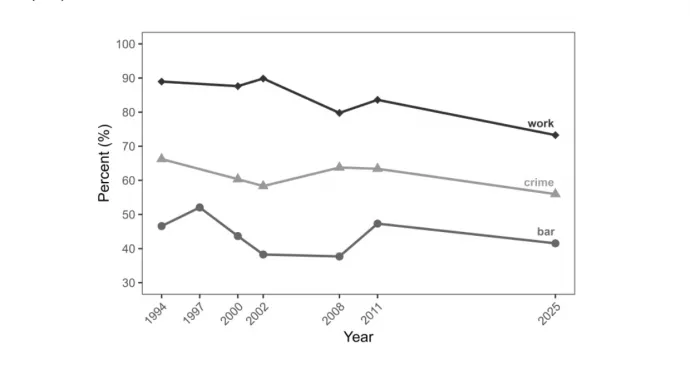
The social science research group Tárki used to conduct research about the level of anti-Roma sentiment in Hungarian society once every one or two years since 1994; Bori Simonovits was also a member of the research team, and according to her, the last study was conducted in 2011. After more than ten years, there is now fresh data, as the research team conducted a new, representative survey in 2025 on the Hungarian society’s attitudes toward the Roma people and the discrimination they face. According to their research, three-quarters of those surveyed agreed with the statement that “the Roma’s problems would be solved if they started to work”, and more than half agreed that “the tendency towards crime is in the blood of the Roma” Forty-two percent of respondents did not see a problem with the fact that “there are entertainment venues that do not allow Roma to enter.” “When we compare this with Tárki’s series of data, it shows that the acceptance of openly anti-Roma views has not declined significantly over the years; these views continue to be widespread in Hungarian society,” the researcher pointed out.
They also explored the extent to which members of Hungarian society condone discriminatory behavior in various situations. “The most widely accepted form of discrimination is related to housing, at 60 percent, followed by approval that mayors are allowed to issue local regulations prohibiting Roma from moving into their municipalities based on the Self-Identity Act—the latter is considered acceptable by 40 percent of the population. This is worrisome because it has become law, and laws end up shaping social norms,” said Luca Váradi.
Gábor Simonovits gained experience on the subject in the United States, the home of research into racism. In his opinion, since openly racist views have now been marginalized in the United States and people are ashamed to be seen as racist, it is more difficult to gauge the phenomenon overseas. In contrast, Hungarian research suggests that prejudiced views in Hungary are not only widespread but are also considered acceptable by the public.
“Our colleagues from other countries envy us because it’s easy to conduct this kind of research here—Hungarians are open about their opinions.”
Bori Simonovits, however, noted that when they asked Hungarians to justify their views on discrimination, many began their sentences with “I’m not racist, but…,” only to follow that up with statements that fully embodied the concept of racism. In her view, Hungarian social norms are far more accepting of prejudiced and discriminatory remarks against Roma.
“Many people consider anti-Roma statements perfectly acceptable, which, for the time being, makes it harder to bring about positive change.”
According to the researchers, when landlords explained how they select their tenants, they very quickly got to talking about how they screen out Roma tenants, even though they hadn’t been told that this was the subject of the research. “They weren’t ashamed of it; in fact, they were proud of it: several real estate agents even described themselves as having been hired to act as a kind of gatekeeper who filters out Roma applicants so that the owner wouldn’t have to deal with it.”
Richard’s strategy—informing potential landlords in advance about his family’s ethnic background—is commonly used among the Roma community in Hungary. “Since this information will ultimately come to light anyway, they want to avoid the added emotional and other costs that a face-to-face meeting might entail. This way, they don’t have to unnecessarily take time off work or spend money on a bus ticket,” said Luca Váradi. Strategies for combating discrimination are varied anyway; interviews with Roma intellectuals revealed that in some situations they try to conceal their identity. “Some reported that sometimes they start conversing with each other in English or Spanish in nightclubs so that the security guard will let them in. They also doctor their CVs in clever ways, for example, by listing an upper-middle-class sport as a hobby. In extreme cases, they even change their last names,” explained Bori Simonovits.
The research stemmed from a CEU project in which Hungarian Roma made films about the challenges they face in their communities, and several of them documented their struggles with finding a place to rent. After that, in collaboration with a real estate advertising platform, Váradi and his team conducted a small-scale test to see how these films affected private landlords, which they then examined on a larger scale in the summer of 2024 with the involvement of several real estate agents. They found that the films reduced discrimination by 9 percentage points, and Roma people were more likely to find an apartment with an agent who had seen these films.
“Suddenly, these otherwise likable people who had suffered discrimination had faces and names,”
explained Luca Váradi.
Since the Hungarian real estate agent certification course makes no mention of prohibiting discrimination, the researchers initiated background discussions with the local authorities in the capital and market players about developing an alternative training program for real estate agents. “The primary way to reduce prejudice is to foster natural connections between the majority and the minority. One form of doing this is through housing, because if Roma families can move into an apartment building where no Roma have lived before, being neighbors allows for the development of relationships of trust, which then facilitate their entry into the labor market and offer their children new prospects.”
According to the researchers, while Hungary does have a forward-looking anti-discrimination law in line with EU principles, there is minimal effort to enforce it. In addition, the Orbán government abolished the Equal Treatment Authority (Egyenlő Bánásmód Hatóság) in 2021, which had previously handled such cases.
However, according to them, anti-Roma sentiment is quite widespread across all social groups and political camps, and while there have been attempts to take action since the fall of communism, no government has managed to effectively address the problem. Luca Váradi said they are curiously waiting to see what specific measures the Tisza party—which has already spoken more openly than previous governments about taking this issue seriously—will take. “A government plays a significant role in whether it talks about toilet brushes in relation to the Roma or whether it invites Roma children to Parliament. But the real question will be what specific measures the new government will take beyond the symbolic gestures. We are curious to see what these will be.”
The research program continues; they are currently looking for participants of Roma origin who would like to find a rental apartment in Budapest in the near future and would be willing to share their experience with the researchers.
For more quick, accurate and impartial news from and about Hungary, subscribe to the Telex English newsletter!