Orbán quietly sidesteps his last EU summit after years of envisioning major battles at each one
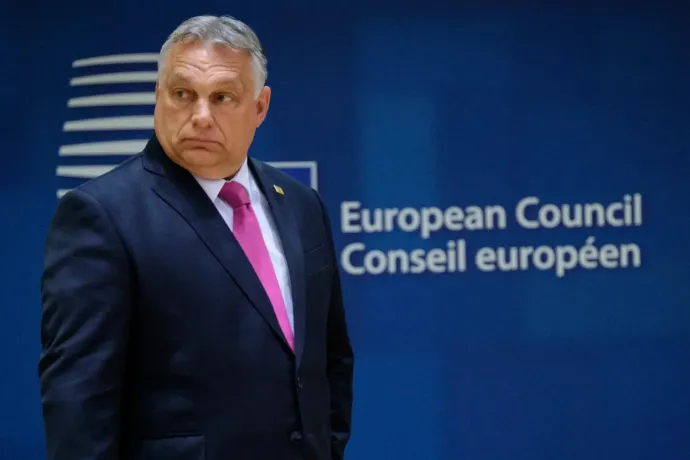


Viktor Orbán will not be attending this week’s informal European Council meeting in Cyprus, which will take place on Thursday and Friday. The Hungarian Prime Minister, who lost the election, is thus departing from the body of heads of state and government without a proper farewell, even though he is stepping down as one of its longest-serving members of all time and has, in years past, always gone to the Brussels summits with grand plans. Foreign Minister Péter Szijjártó will also miss Tuesday's meeting of the Foreign Affairs Council, which shares a similar name but is held at the ministerial level.
In the past, the outgoing Prime Minister’s statements ahead of summits have typically focused on confrontation and battle. He used to talk about setting out to “fight three great battles,” preparing for a dangerous “cage fight,” going for "a showdown", and once even mentioned a “nuclear-level blow to the chest.” Prior to the latest – and, as it turns out, final – meeting he attended, Orbán, who has regularly described himself as a street fighter, said he would count it a success even if he just made it home. “The ride was bumpy, there was some lurching, they threatened me a little,” but they eventually gave up, he remarked on his way out at the end of March.
Orbán is currently focusing on tasks related to the handover of power, János Bóka, Hungarian Minister for European Affairs said, explaining Orbán’s decision not to attend the meeting, where he would have likely received questions about the leaked conversations between Péter Szijjártó and Russian Foreign Minister Sergey Lavrov.
“It is unprecedented for the Hungarian prime minister not to attend,” prime minister-elect Péter Magyar said at a press conference on Monday about Orbán’s absence, adding that he would always be present at EU summits.
Just a framed photo
According to the European Parliament’s Research Service, Orbán was already the longest-serving member of the body comprising heads of state and government in 2024, and he would also be near the top of the list among leaders overall. Luxembourg’s Prime Minister Jean-Claude Juncker has served the longest in the European Council—whether counting only his time as head of government or including his tenure at the helm of the European Commission. The former period lasted more than 18 years, the latter 5 years. Other from him, only two German chancellors, Helmut Kohl and Angela Merkel served longer than Orbán.
In terms of the number of meetings attended, Orbán has already set an all-time record (at least excluding Juncker’s presidency of the European Commission). The March 2024 study listed 111 summits, putting him six meetings behind Angela Merkel at the time, but he has far surpassed her since then. The European Council calendar lists more than a dozen formal, informal, and video EU summits since April 2024.
According to Politico, outgoing leaders were previously bid farewell with a stylized replica of the egg-shaped Europa building—set in a glass cube—which serves as the venue for the summits in Brussels. Photographs show that Merkel, for example, received one of these when she retired from politics. This time, the farewell memento will be "a framed photo with the members of the European Council," signed by European Council President António Costa, an EU official told the publication. "It’s a symbolic gift," he replied when asked if at least the frame was valuable. According to the paper, due to Orbán’s non-attendance, the customary group photo at the closing press conference will also be omitted.
According to the compilation of Péter Magyari of Válasz Online, even Eurosceptic leaders have received gestures of goodwill at their final summits. For example, in the fall of 2023, Charles Michel, then President of the European Council, thanked Mateusz Morawiecki, the former Polish Prime Minister from Law and Justice (PiS), for their joint work, even though just a few months prior, Morawiecki had repeatedly and pointlessly blocked parts of the conclusions alongside Orbán.
This is how Angela Merkel was bid farewell in the midst of the Covid pandemic, according to a compilation by Deutsche Welle:
Also telling is the fact that even former British Prime Minister David Cameron made sure to attend his final EU summit in 2016 despite having lost the Brexit referendum just a few days earlier.
They certainly won’t be able to inquire about the Szijjártó-Lavrov phone calls
It is, of course unlikely that the outgoing Hungarian Prime Minister would have received a farewell filled with pleasantries alone. According to the official explanation, Orbán is skipping the meeting due to his duties related to the transition of power; this would indicate that his absence certainly has nothing to do with the fact that Ursula von der Leyen, President of the European Commission, had previously promised that she would like to raise the issue of the leaked phone calls and the Russian-Hungarian coordination at the leadership level, and that she expected “the government in question” to provide an explanation.
Commission spokesperson Paula Pinho indicated after the election that the Commission President had not necessarily planned this for the April 23–24 summit, but there would hardly be a more suitable time for this than the next meeting of heads of state and government—especially if they had also wanted to hear from their Hungarian colleague. The Commission president would not necessarily have been interested in hearing an explanation from Orbán himself, but even if she had wanted to, the body’s vice-president, Kaja Kallas, would not have been able to ask outgoing Foreign Minister Szijjártó about this at the ministerial level on Tuesday, given that the minister had decided not to attend the meeting of foreign ministers. Prior to Orbán's cancellation, the EU body's spokesperson had not ruled out the possibility of discussing the matter at the EU summit.
The leaked phone calls would not have been the only subject they could have pressured Orbán about at the Cyprus summit. The Hungarian government had blocked the implementation of Ukraine’s 90-billion-euro loan – which would not impose a financial burden on Hungary – until deliveries on the Friendship oil pipeline were resumed, even though the Hungarian Prime Minister himself had consented to the loan last December.
The outgoing Hungarian government had previously accused Volodymyr Zelenskyy of attempting to influence the April 12 Hungarian election by shutting down the pipeline, a claim the Ukrainian president rejected. The government then announced in mid-March that, in addition to blocking the loan, they would gradually suspend gas shipments to Ukraine until Ukraine reopened the Friendship oil pipeline. Zelenskyy has repeatedly said that the Friendship oil pipeline would be repaired by the end of April and operations would start up again. “We promised to repair it by the end of April. Not completely, but enough to make it operational,” he said.
Early Sunday afternoon, Orbán posted on Facebook that Ukraine had indicated, “via Brussels,” that crude oil shipments through the Druzhba pipeline could resume as early as Monday if Hungary were to subsequently lift its blocking of the €90 billion EU loan facility. “Hungary’s position has not changed: if there is oil, there is money. As soon as oil shipments resume, we will no longer block the approval of the loan facility. The disbursement of the loan does not represent a financial burden or liability for Hungary,” the Prime Minister wrote in his post.
But the pipeline's operations did not resume on Monday. At his press conference that day, prime minister-elect Péter Magyar called on Zelensky to open the pipeline – if it is fit for use – without imposing any further conditions.
The last time he attended, Orbán criticized the EU's intergovernmental institution and discredited his own word
At the European Council’s March meeting, Orbán faced criticism of unprecedented magnitude and severity concerning the €90 billion loan, even when compared to what he had received before. Right now, it seems that as a result of his election defeat, and since he decided not to attend the April summit, these were his farewells to the body.
“We had an agreement, and I believe he betrayed us,” said Finnish Prime Minister Petteri Orpo, for example, upon arriving at the meeting. “It is unacceptable for someone to block the implementation after leaders have made a decision,” Bart De Wever, leader of the N-VA—a member of the Eurosceptic ECR group— said in his capacity as Prime Minister of Belgium. He believed that this was part of the election campaign. Even Czech Prime Minister Andrej Babiš tried to distance himself from the matter, despite having been the first, alongside Orbán, to sign the founding declaration of the Patriots for Europe (PfE) party family, and being the only other—and soon to be the sole—member of the European Council from PfE. “I’m not going to be the one to convince Mr. Orbán; that’s his business, not mine,” he declared.
Previously, even politicians critical of him used to defend Orbán by saying that although he resists and obstructs, in the end, one can always reach an agreement with him and he is a man of his word. Right now, however, it seems that he managed to destroy that image at what was likely his last EU summit. If the Orbán government drops its blocking, because oil shipments on the Druzhba pipeline—which were suspended following the Russian attack—end up being restarted in the coming days, it will at most serve as a cosmetic measure.
The leaders critical of his move ended up reaching a similar conclusion as the European People's Party, from which Fidesz fled in 2021 to avoid its impending expulsion. In 2015, the group’s president, Joseph Daul, defended Orbán by saying that although he does like to provoke, they always find solutions in the end, and Fidesz always votes with them in the European Parliament.
According to António Costa, the President of the European Council, at the March meeting, leaders clearly condemned Orbán’s attitude. Based on information obtained by EUrologus, 20 of the other 26 leaders spoke out against him, and judging by the statements of those attending the meeting, this figure does not seem far-fetched.
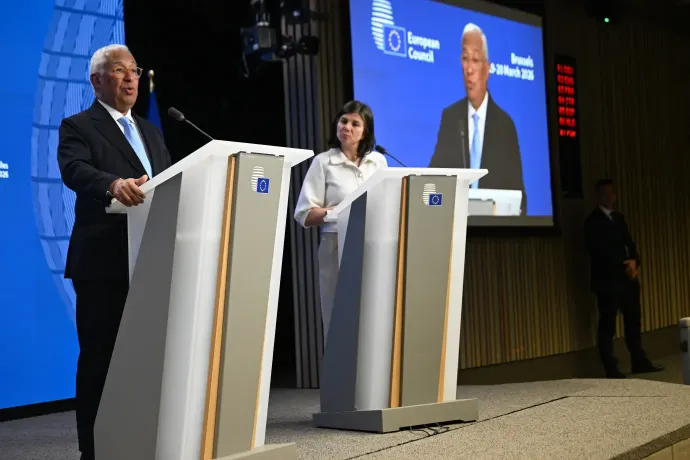
Costa himself criticized the Hungarian Prime Minister’s attitude both before and after the meeting. With this, Orbán managed to alienate the politician who, while still serving as Portugal’s prime minister, had become embroiled in a scandal for stopping to watch a soccer match with Orbán on his way home from a trip abroad. Despite being a left-wing socialist, Costa was the only one of the new EU leaders appointed after the 2024 European Parliament elections to receive a vote of approval from the Hungarian Prime Minister.
In the long run, this could push the EU away from unanimous decision-making
This is not simply a political dispute. Costa—like several other members of the European Council—called Orbán’s move unlawful blackmail. This has raised an issue that goes to the very heart of the European Council, and due to Orbán’s regular vetoes and blackmail, this is likely to remain one of his most significant legacies.
On paper, the European Council is the youngest of the EU’s core institutions, having been fully established only in 2009, but it has existed informally since the 1970s. It embodies the very intergovernmental cooperation, the “Europe of Nations,” which they even named a Digital Civic Circle after, and as a result of which, during the institutionalization of European integration, other organizations either predictably failed or were pushed into the background compared to the EU’s predecessors.
Some expanded to include non-European members and changed their names to reflect their specialisation (e.g., GATT and WTO, OEEC and OECD); others ceased to exist after transferring their roles to the EU (Western European Union); and still others saw their members partially migrate to the EU or partially submit to its common market (EFTA), or, perhaps with some federalist trappings, became insignificant—save for a court—merely to confuse everyone with their names (Council of Europe).
The European Council was not originally part of the classic legislative triangle, where the European Commission makes proposals, and the Council of the European Union—composed of ministers and operating as a separate institution despite its similar name—votes on legislation either together with the increasingly important European Parliament or on its own. However, as the number of areas requiring unanimity in the Council of Ministers has gradually declined, the European Council—the body of heads of state and government—has increasingly become the arena for purely intergovernmental cooperation. Here, issues can be discussed at the highest political level, even as part of a package covering various areas, and strategic direction can be set.
By the Hungarian government’s blocking of a bill requiring unanimity in the Council of Ministers on the implementation of an agreement reached at the European Council, Orbán discredited the conclusions of the heads of state and government. It would have been open to question how the EU Court of Justice would have ruled on this had Orbán remained in office and Costa had decided to take the matter to the judges to test whether such a move was indeed unlawful. Perhaps he skipped this legal process—which could have clarified the role of the European Council—for good reason, though given the urgency of the loan, the outcome, which would likely have taken years, would not have had much practical significance.
In fact, because of Orbán, for more than a year now, they have been unable to operate so that everyone agreed on all the conclusions.
The Hungarian Prime Minister also made a mockery of the institution by regularly attacking the joint, unanimous agreements.
On countless occasions, he criticized the sanctions—which he himself had previously welcomed multiple times in the texts of the European Council’s conclusions—or the phasing out of Russian energy, which was also agreed upon unanimously in 2022. There were even instances where he would in the morning “declare war” (in a video message shared with his followers -ed) on something he would then agree to in the conclusions issued that same evening. His 2023 manoeuvre of "going out for coffee" became a unique example of how unanimous decisions can be communicated as if they were not unanimous.
Vetoing has pushed EU institutions toward enhanced cooperation—which excludes some countries—and the use of qualified majorities, rather than unanimous decisions. In the latter case, a majority of 55 percent of member states, representing 65 percent of the EU’s total population, is sufficient. A perfect example of this is the own goal scored on the phasing out of Russian gas.
Although the decoupling from Russian energy was announced at the European Council's informal meeting in 2022, the Hungarian government later repeatedly stated that it would block any energy sanctions and would not even attempt to wean itself off Russian gas. Sanctions are only accepted for a limited time—typically requiring renewal every six months—and must be unanimously approved. In other words, if this approach had been taken on the phasing out of Russian gas, each government would have had the opportunity once every six months to single-handedly block the punitive measures.
Ultimately— the outgoing Hungarian government had said—the decoupling will be implemented as a trade policy measure rather than a sanction. Thus, a qualified majority sufficed, and the decision can only be modified in the same way. In this case, there is no six-month review. It would remain in effect even if Russia were to immediately withdraw from Ukraine and honour its territorial integrity, the violation of which is the legal basis for the sanctions.
According to Politico's March article, there were several methods under consideration if Orbán had remained in power. Due to his maneuvers, the idea of broadening the use of the qualified majority to new areas had been previously raised. It is ironic that Orbán, who has consistently emphasized the need for intergovernmental cooperation, may have been the one who ended up providing the impetus for this change. The idea of a multi-speed Europe, which has been raised several times, offers a different kind of solution to the problem of decision-blocking leaders
With regard to matters relating to the economy, it was suggested even before the most recent informal EU summit that, if necessary, there should be a more limited group of countries involved in the decision-making process going forward. This just happens to be a topic that is important to Orbán too, as that competitiveness was one of the central elements of the program for the 2024 Hungarian Council Presidency and the informal EU summit held in Budapest at that time. A document prepared for this week's meeting, which was also shared with Euractiv, states that “in the absence of sufficient progress, the institutions will consider using enhanced cooperation.” The draft would accelerate the adoption of 42 measures, and this would be supported by the leaders at the meeting—at least by the 26 who will be present.
For more quick, accurate and impartial news from and about Hungary, subscribe to the Telex English newsletter!