Hungarian Counter-Terrorism Center's office in Bosnian Serb entity upsets many in Bosnia-Herzegovina
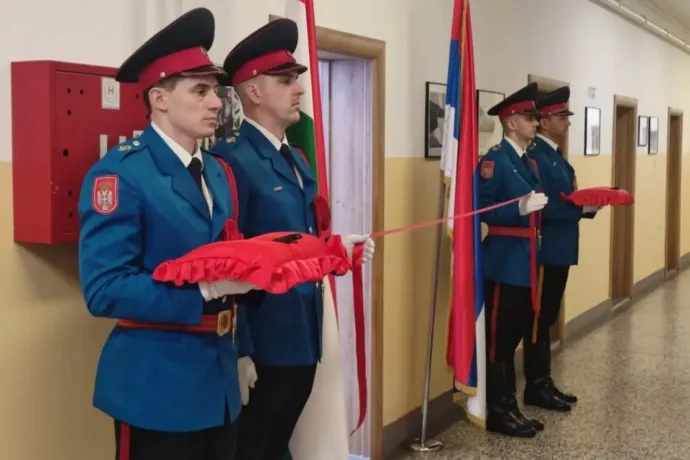


Several Bosnian politicians and experts expressed outrage last week over the opening of an office of the Hungarian Counter-Terrorism Center (Terrorelháritási Központ -TEK) in Zalužani, a suburb of Banja Luka, the capital of the Republika Srpska. According to the House Speaker of Bosnia and Herzegovina's House of Peoples, the office was established in an utterly unconstitutional manner, in circumvention of the federal state, and sevaral others have demanded investigations into the matter.
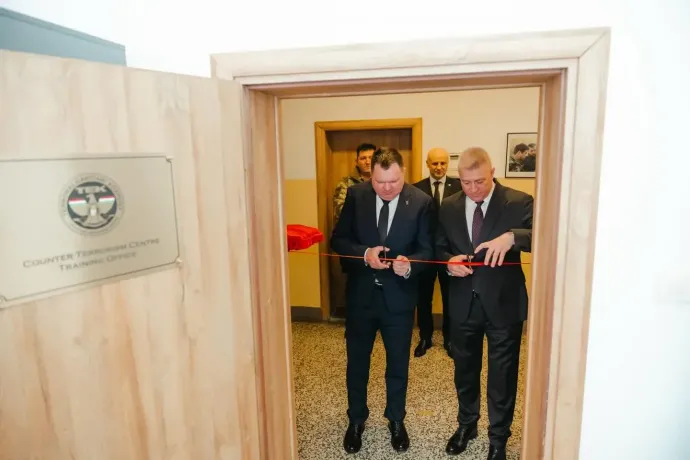
As the local news outlet, Klix reported, the liaison office at the training facility of the Ministry of Internal Affairs or Republika Srpska was ceremoniously inaugurated by Željko Budimir, Minister of Internal Affairs of Republika Srpska, and János Hajdu, the Head of TEK. Speaking at the ceremony, Budimir said that the goal was to exchange information and know-how in the field of training, which could contribute to the fight against terrorism.
The center was opened as part of a previously signed "memorandum of understanding" between Hungary and the Republika Srpska. On the occasion, Hajdus said that “routine cooperation is no longer enough if law enforcement agencies, especially counterterrorism services are to properly address all challenges posed by terrorism. It is essential to exchange different approaches and experiences, to learn about each other's areas of expertise, and to discuss professional issues of common interest.”
Bosnia and Herzegovina is made up of two entities: the Federation of Bosnia and Herzegovina and the Republika Srpska. In addition to a joint Council of Ministers, a common Parliament, and a common government, each entity has its own head of state, head of government, and parliament. Since the laws of the federal state take precedence, the laws and institutions of the member entities must first and foremost comply with them. And herein lies the catch: it's against the Bosnian constitution for either entity to station foreign police forces on its territory without the other's consent.
According to N1info, none of Bosnia and Herzegovina's security agencies were informed about the opening of the Hungarian Counter-Terrorism Centre's office in Banja Luka, and who approved it, on what basis, and when remains unclear. The news portal also described it as unusual that there has been no reaction from the official authorities of Bosnia and Herzegovina so far. They write that at the very least, the Ministry of Security and the Ministry of Foreign Affairs should have responded.
Kemal Ademović, the House Speaker of Bosnia and Herzegovina's House of Peoples said that he had contacted several institutions, but none of them appeared to have all the relevant information. "The fact is that this happened, and that this office was established in a completely unconstitutional manner," he told N1. In his opinion, Bosnia and Herzegovina has exclusive jurisdiction in this matter, given that the Dayton Peace Agreement, which ended the Bosnian war and which includes the country's constitution, stipulates that cooperation with foreign security agencies is the responsibility of the federal state.
According to Ademović, "this includes sharing intelligence and security information." He believes that if the TEK office is based on a previously signed memorandum, it should have been ratified first, which did not happen. "I have contacted all institutions on this matter because this situation must be clarified," he told N1.
Oslobodjenje also interviewed a Bosnian security expert. Ahmed Kico believes that this is actually a case of the presence of Hungarian intelligence services, who are in Bosnia and Herzegovina for the purpose of gathering information on events in the country. The expert called on Bosnian officials to start working on stopping this with the help of the international community. He emphasized that
Hungary does not have a similar office anywhere else and that there is no special justification for the office in Banja Luka.
In recent days, the Bosnian office of the German NGO Society for Threatened Peoples (Gesellschaft für Bedrohte Völker) has also spoken up, demanding complete transparency with regard to the mandate, tasks, and legal basis of the TEK office in Banja Luka. According to the organization, the institutions of Bosnia and Herzegovina, as well as the Council of Europe and the OSCE, should be involved in this.
Belma Zulčić, the head of the organization's local office said that the opening of the TEK office was unconstitutional and took place in the midst of a delicate political situation. In her opinion, the office being outside the jurisdiction of the federal state will allow for the use of police forces as a political tool. Zulčić summed it up as follows: “The presence of foreign security forces in the country under these circumstances raises important questions in terms of constitutional legitimacy, powers, and democratic control.”
Dodik still looking to secede
The president of the ruling Alliance of Independent Social Democrats (SNSD), and the entity's former president Milorad Dodik has in recent weeks held talks with both Israeli Prime Minister Benjamin Netanyahu and Hungarian Prime Minister Viktor Orbán. In an interview after the meetings, Dodik noted that both leaders strongly support his political agenda. The Serbian entity was also created under the Dayton Peace Agreement, but the distribution of power has proven to be quite a challenge in Bosnia-Herzegovina. Dodik's goal for several years has been the slow, institutional separation of the Serbian entity from Bosnia and Herzegovina and its eventual unification with Serbia, led by Aleksandar Vučić.
A few days after the opening of the TEK office in Banja Luka and the day after his meeting with Orbán, Dodik was interviewed on Bosnian Serb public television and said:
“My main goal is still the creation of an independent Serbian Republic, this has not changed, and I would like to achieve this through peaceful political processes, taking advantage of the currently unfolding international situation. After the declaration of independence, within just a few days, the Serbian Republic will be recognized by 15 countries.”
The German paper Frankfurter Rundschau also reported on the opening of the TEK office. The left-wing paper linked the events to the pro-Russian stance of the Hungarian and Bosnian Serb leadership. It recalled that this was not the first time TEK had appeared in the Bosnian Serb entity. In February 2025, Dodik, who was then still the Bosnian Serb president, was sentenced to one year in prison for failing to implement the decisions of the Office of the High Representative responsible for overseeing implementation of civilian aspects of the Dayton Peace Agreement.
Timed to coincide with the announcement of the first-instance verdict, 70 TEK operatives appeared in the Republika Srpska in February 2025, officially for training and joint exercises. The timing of the event caused a diplomatic storm, and VSquare suggested that it was quite possible that the forces of TEK had gone there to get Dodik out – should the need arise. However, a more realistic version is that the Hungarian Prime Minister simply wanted to use the operation to demonstrate his support for the Bosnian Serb politician. In any case, the incident was reminiscent of the 2014 visit of the 144-member Russian “dance troupe” to the Republika Srpska.
In the end, Dodik was not imprisoned, but got away with a fine and had to resign from the presidency. As a result, presidential elections had to be held in the Republika Srpska last November, which were won by Dodik's ally Siniša Karan by a margin of only 3 percent, with very low turnout. A month later, the election commission ordered a repeat vote in 136 polling stations in 17 municipalities due to severe violations. The repeat vote was held on Sunday, February 8. The candidate of Dodik's SNS came out as the winner once again, albeit not without repeated reports of multiple violations during the voting process.
Rundschau also points out that the strengthening of the Bosnian Serb institutions, for example through the presence of the TEK office actually weakens the state of Bosnia-Herzegovina and points towards secession. The paper quotes Deutsche Welle, which less than a year ago wrote about Viktor Orbán's affinity for the ethno-nationalist politics that Dodik also represents. We have previously written in detail about the factors that may be motivating Orbán to befriend Dodik, who was removed from the US sanctions list las recently as last October by Donald Trump, after having been placed on it during Joe Biden's administration on the grounds of corruption and separatism.
The Hungarian government's rapprochement with the Bosnian Serb leadership, which is vocal about its plans for secession has long angered the government in Sarajevo. Last November, Hungarian Foreign Minister Péter Szijjártó was not allowed to land in Banja Luka with a Hungarian military plane and had to use a private jet instead. The same thing happened to State Secretary of Foreign Affairs Levente Magyar last March.
The fraught relationship between the two countries was also evidenced by the fact that Hungarian private investigator György Baráth and his partner were detained by Bosnian police in October on suspicion of espionage. Baráth told Telex at the time: "We were not spying, we were conducting a confidential private investigation." Last March, Bosnia-Herzegovina announced that it no longer wanted to have Hungarian peacekeepers serving under the EUFOR framework. Members of the Bosnian Serb and Hungarian governments have continued their frequent visits to each other's countries, and Viktor Orbán has even received an award from Milorad Dodik.
We contacted TEK, the Hungarian Ministry of the Interior, the Hungarian Ministry of Foreign Affairs and Trade, as well as the Bosnian Ministry of Foreign Affairs, and the Ministry of the Interior of the Republika Srpska with our questions about the TEK office and will publish any answers we might receive.
For more quick, accurate and impartial news from and about Hungary, subscribe to the Telex English newsletter!