Anita Orbán: There are strategic interests which do not change with a change in government
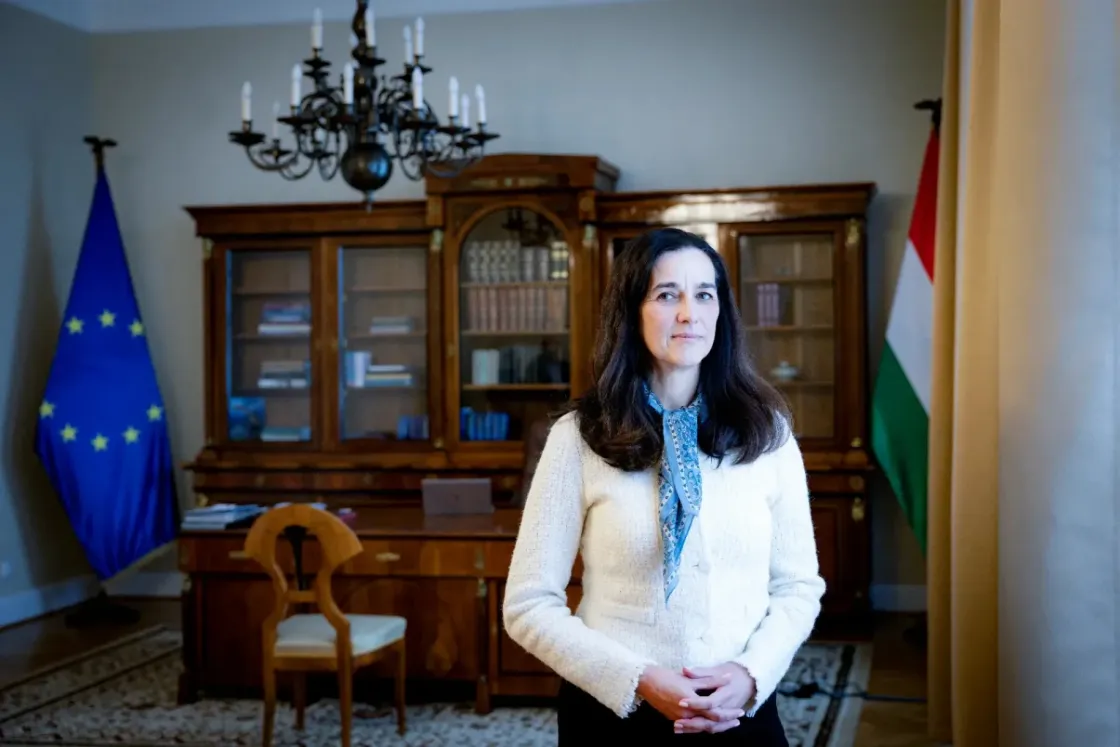


The first bilateral meeting between Hungarian Foreign Minister Anita Orbán and the U.S. Secretary of State took place six months after the Tisza government took office. They signed two memoranda of understanding: one related to energy security and the regional development of oil and natural gas infrastructure, while the other—a strong reflection of the Trump administration’s mindset—had to do with acting against far-left organizations and the information exchange necessary for this- in the name of the fight against terrorism.
In her first interview with Telex, Foreign Minister Anita Orbán discussed Hungary's relationship with the United States, its energy policy, its policy on the Western Balkans and Ukraine, as well as the country's relationship with Russia, Russian influence under the Fidesz government, and the investigation into the role of her predecessor, Péter Szijjártó.
This is an indication from both sides that we regard each other as strategic allies. But the same is also evident in the fact that I met with the Secretary of Homeland Security, the Deputy Secretary of the Treasury, and the President’s Senior Advisor on Energy as well. Additionally, there were expert meetings at the Department of Energy, a ceremony commemorating the 1956 revolution, and I visited the Museum to the Victims of Communism. All of this demonstrates that this was more than just a diplomatic visit, as it involved more than just a meeting between foreign ministers.
The United States, which generates 25 percent of the world’s GDP, is one of the most important countries from an economic, military, and energy perspective. These three fields alone were reason enough for meeting with our most important partner and ally as soon as possible. The fact that we were able to secure this meeting so quickly and at such a high level shows that the United States also views the Tisza government and Hungary as an ally and partner.
The United States is the third-largest foreign investor in Hungary, with 1,400 companies employing a total of more than 100,000 people here. It is also of paramount importance from a defense perspective, as it is the world’s strongest military power and the strongest member of NATO, which we are also part of. Through this military alliance, the United States serves as a guarantor of Europe’s—and thus Hungary’s—security.
As for the field of energy, the United States is the world’s leading exporter of natural gas and the third-largest exporter of crude oil. In other words, the United States is a key player in the energy market, while one of the most important determining factors for the success of the Hungarian economy is the price at which we purchase energy.
Indeed, we have had a decades-long partnership with the United States in the fight against terrorism. The reason we needed to highlight, reaffirm, and put this in writing is because these are new types of organizations which were not present before and therefore pose new challenges. But I would like to make it clear that our government completely condemns all forms of terrorism; we are fighting against all forms of terrorism equally, regardless of the ideology behind them, because protecting our citizens is our number one priority.
Terrorism is a threat that transcends borders, which is why it is important for us to closely cooperate with every country on this issue. The United States possesses such a wealth of information and has such a global perspective on terrorism and illegal migration—which, incidentally, was also one of the main topics of the visit—that this cooperation is certain to be beneficial for Hungary.
Indeed it may, but there are always new organizations emerging, and they are mentioned by name in this cooperation, which is why we found it necessary to reaffirm our stance on them and state these things clearly. But I would like to reiterate that we are fighting against all forms of terrorism.
This took place two years ago, and I would like to distinguish between what the party decided and how it voted back then, and what we, as the current government, have committed to. I do not feel it is my place, as foreign minister, to comment on a vote that took place in the European Parliament two years ago.
With regard to the agreement, it is important to note that it concerns the exchange of information and experience; it does not address extradition and has no implications for immunity.
The relevant authorities will certainly take the appropriate steps against any organization or individual we feel represents a security threat to Hungary.
We will always respond in a manner required by the situation at hand.
Yes, this was initiated by the United States. When we took office in May, we took stock of Hungary’s interests with regard to each of our strategic partners. Our partners did the same thing with us. This identified a great many shared areas of interest with the United States, on which we would like to cooperate. We were able to conclude agreements on some of these issues by this time, and continue to work on many others behind the scenes. It is thus important to recognize that one side initiates something, the other side reviews it, and if it also deems it important, cooperation can ensue.
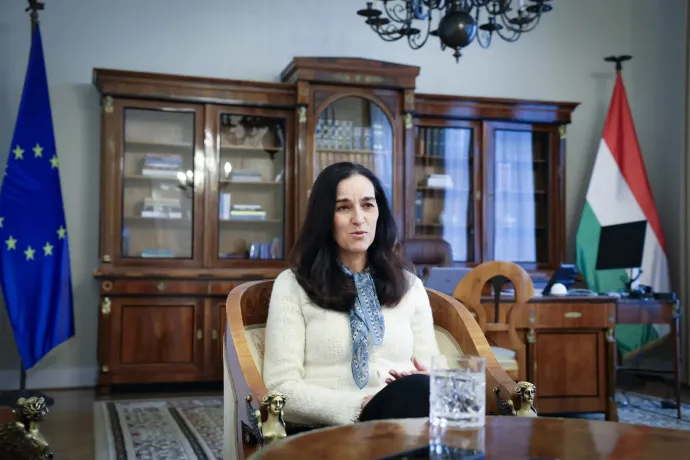
Yes, this is also part of building trust, but trust isn’t built on one element alone—it has several components, including the fact that the Tisza government stands by what it said during the election campaign. By doing so, we are ensuring that we are seen as a predictable partner. We have made it clear that our primary goals are related to our neighbors, the region we belong to, and our membership in Europe. Politically, we have returned to the European Union. But the fact that the government's first measures included reaffirming the Hague commitment—that is, as a member of NATO, pledging to raise its defense budget to 5 percent of GDP by 2035—is also part of building that trust.
This is in the interest of both the United States and Hungary. It is therefore part of a major confidence-building package, and my recent visit was the result of that. This in itself—even without a memorandum of understanding—sends a signal to the American business community that Hungary is a reliable ally worth investing in.
We are consistent in conducting our foreign and domestic policies, and the United States can count on us on issues where we have a common interest. We are proactive, as evidenced by our regional engagement, for example in the Western Balkans.
Yes, there are strategic interests which do not change with a change in government, such as the country’s security.
Although this wasn’t specifically mentioned, the Tisza administration had previously made it absolutely clear that we will not interfere in the domestic politics of other countries. What was discussed concerning the Western Balkans, however, was the stability of the region, which is in the interest of Hungary, the EU, and the United States alike. Hungary has long been one of the strongest supporters of EU enlargement, and we continue to advocate for this consistently. Incidentally, there is continuity on this as well with the previous administration. If anything, we are advocating for this goal even more strongly in political terms. Hungary has experts in every candidate country in the Western Balkans, working specifically with local governments and using their expertise to assist these countries in their integration. In addition, Hungary serves as an important stabilizing force in the Western Balkans by having played an active role for decades in military peacekeeping missions in Bosnia and Herzegovina and Kosovo.
While Hungary does have the necessary infrastructure, the capacity for gas to enter the country is not necessarily in place. Hungary does not exactly have access to all alternative entry points. For example, it may be necessary to increase the capacity of the LNG terminal in Croatia and the pipeline connecting to it.
We’re not yet at the point where we can discuss who would be involved in this development. But I’m sure companies are looking into the possibilities, and if it seems attractive, they’ll consider it. As for the JANAF crude oil pipeline, we must make sure that, under certain conditions, it can continuously and fully supply both the Százhalombatta and Bratislava refineries. In addition, there is the North-South Corridor, which could provide Hungary with access—via Greece—to both the LNG terminal and Azerbaijani natural gas. Finally, it is worth mentioning the Polish and Lithuanian LNG terminals, which could also increase Hungary’s room for maneuver, if certain regional constraints are resolved.
The EU has set a clear deadline for phasing out Russian natural gas: the fall of 2027.
The United States has granted Hungary an exemption until November 21 of this year from the tariffs it may impose on countries that import Russian crude oil. This applies to crude oil purchased from Lukoil and Rosneft, and Mol is already working on creating the conditions for a technological transition at its refineries so that it can potentially source non-Russian crude oil from other sources in the south via JANAF.
You will surely understand that I cannot comment on ongoing business negotiations, but according to the information I have, there is a strong intention on all sides—Serbian, Russian, and Hungarian—to finalize this transaction by December 11. As a recent development, I’d like to mention the Serbian elections: Péter Magyar was the first head of government to congratulate the new Serbian government, so we hope that we can take Serbian-Hungarian relations to the next level.
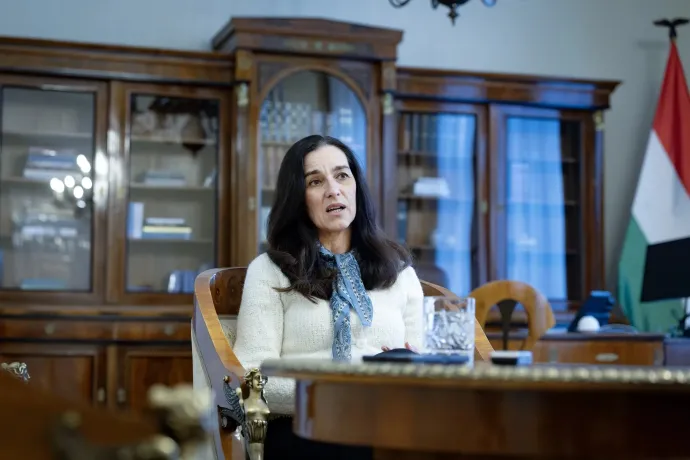
Hungary is a significant investor in the Western Balkans, with Mol leading the way as a key strategic player. Mol’s acquisition in Serbia—the purchase of the Russian stake in NIS—could also help Hungary’s negotiations related to JANAF, as the Pancevo refinery is supplied via this Croatian pipeline. So, when looking at the region’s energy infrastructure—specifically in terms of natural gas and crude oil—and energy security as a whole, it becomes clear that Hungary can play a very important stabilizing role; it can serve as a major transit country and distribution hub for both natural gas and crude oil. We have the most storage capacity, we are connected to six countries, and we are able to supply other countries as well; as far as the oil sector is concerned, MOL holds a decisive role in the region. We hope that, following the Serbian elections, Hungary will be able to serve as a strategic partner in the region even for a country as large as the United States.
It would be in Hungary’s interest to see the war end as soon as possible. We strongly support efforts to bring the war to a close and ensuring a lasting peace so that the region can stabilize and the reconstruction of Ukraine can begin.
The war has been going on for four and a half years, with no end in sight. We must seize every opportunity to bring it to an end. The EU’s most important tool is sanctions, which exert pressure on the Russian economy to make financing the war as costly for Russia as possible. We support this, just as we support any solution that does not harm Hungarian interests, and which we believe can encourage the aggressor to back down. These efforts have resulted in more than twenty sanction packages that have already been adopted.
There is a distinction to be made between EU, British, and U.S. sanctions packages. These sometimes operate in tandem, and sometimes they do not. This does not necessarily weaken the impact of European sanctions. The U.S. has recently made a decision concerning diesel. As a member of the EU, we have significant influence over decisions pertaining to EU sanctions packages, taking into account Hungarian interests.
It certainly cannot be sidelined. Just a few weeks ago, at a meeting of the Foreign Affairs Council, we adopted one of the biggest sanction packages to date, the full impact of which is not yet visible. Incidentally, if we look at the data, it’s clear that Russia’s diesel production is sufficient to meet its own needs; it cannot supply the global market with the kind of volume that would have any significant impact.
Yes, but there are many ways to stop the war. The approach may vary depending on whether it is a country, a group of countries, the United States, or Ukraine that is trying to bring this war to an end as soon as possible. In any case, there is basically only one country that can make this decision—and only one person specifically, named Vladimir Putin. He has the necessary tools at his disposal; he is the one who can decide to end this war. There are also efforts toward negotiations, and the next round of these talks may take place in Abu Dhabi between the United States, Ukraine, and Russia.
Who participates isn’t the point. What matters is that a peace that all parties accept is reached and a stable situation benefiting all parties, as well as the European Union comes about. That, we would be able to support. We’ve also seen efforts coming from Europe recently, when the Norwegian and Finnish presidents spoke at great length with Vladimir Putin. They were pushing the Russian president in the same direction—to bring the war to an end. French President Emmanuel Macron has made similar efforts as well. All of these are contributing to peace. But I would like readers to have a clear understanding that a great deal of behind-the-scenes coordination is underway, because there is so much in diplomacy that doesn’t happen in the public eye.
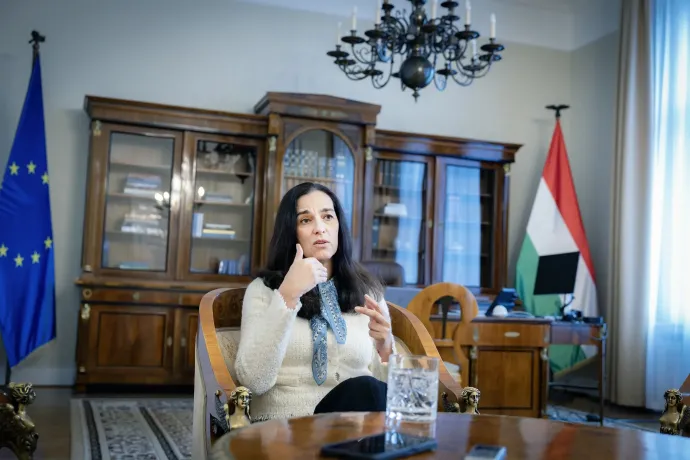
We do not exercise our veto in the EU on matters we agree on. This resulted in the 20th and 21st sanction packages. The previous Hungarian government had vetoed the 20th package, and not because of Hungary’s interest. It vetoed certain entities at the request of a third country. That is no longer happening, which is also a huge contribution. Similarly, although Hungary remains outside the European Peace Facility—which the previous government obstructed purely for its own purposes—we were able to lift our veto there as well. Our greatest contribution has been our predictable presence and our refusal to obstruct the EU’s collective action.
For now, all I can say is what has already come to light about the hacking attacks and the breaking into the servers of the Ministry of Foreign Affairs. As soon as the report on this is completed, we will publish it, but that will take several more weeks.
There has been quite a bit of coverage of this in the international press as well; I’m thinking specifically of the leaked phone conversations. Our partners have seen these as well. For example, Polish Foreign Minister Radosław Sikorski also remarked that Szijjártó’s subordinate role was evident in his phone conversation with the Russian foreign minister. Overall, I can say that the Ministry of Foreign Affairs has filed two criminal complaints so far—one relating to the purchase of the ventilators during the pandemic, and the other in connection with excessive travel expenses. There are additional investigations underway, which may lead to further criminal complaints. But the Ministry of Economy and the Prime Minister’s Office have also filed several complaints, so determining who is responsible for what and when is all part of this process.
As the Prime Minister previously indicated: we are reviewing the contract, we are looking at the status of its delivery, as well as what terms and obligations are in effect, and only then will we be able to comment on everything; nonetheless, this falls under the jurisdiction of the Ministry of Economy and Energy.
Hungary’s goal with this step was to restore its national security. These diplomats were engaged in activities that were not in compliance with the Vienna Convention. It was for this reason that we requested their departure, in accordance with standard diplomatic practice. The Hungarian government has thus made clear what it cannot accept. We acted in accordance with international law; as far as we are concerned, this matter is closed.
No, that has not come up.
We are not planning any further recalls unless the vetting process reveals an issue that would warrant it. Several new ambassadors have already taken up their posts or received their letters of approval, such as our ambassadors to Ankara, Belgrade, and Warsaw. Our nominee for ambassador to London has already been interviewed, and we have already requested the letter of acceptance – the agrément – for them as well. In accordance with diplomatic protocol, I wouldn’t want to disclose their name until we receive the British side’s approval. The appointment for Moscow has not yet been finalized, but we already have a nominee for that position.
No, it will not.
The fact that two top EU leaders—European Commission President Ursula von der Leyen and European Council President António Costa—were here is something I would certainly not call a failure, but rather a resounding success. There were 45 foreign delegations, including prime ministers, ministers, and house speakers. If any one of them had come to Hungary on their own, it would have already been newsworthy—let alone all of them together. It was a truly beautiful ceremony. I’d like to thank my colleagues at the Ministry of Foreign Affairs who did everything they could to ensure that countries from around the world were represented here at such a high level. George Pataky, the former governor of New York was here, as was Jens Stoltenberg, the former Secretary General of NATO, who shared his personal family story. This level of international participation is very much a success. Our embassies also worked to ensure that statues, buildings, or bridges were illuminated in most countries around the world as a special tribute to the Hungarian people.
The interview was conducted before the Ministry of Foreign Affairs announced that it had dismissed Botond Feledy from his position as director general of the Hungarian Institute of International Affairs with immediate effect, due to work he had previously done for a minister in the Fidesz government.
For more quick, accurate and impartial news from and about Hungary, subscribe to the Telex English newsletter!