"I want to officiate the first same-sex wedding in Budapest" – Karácsony at Budapest Pride
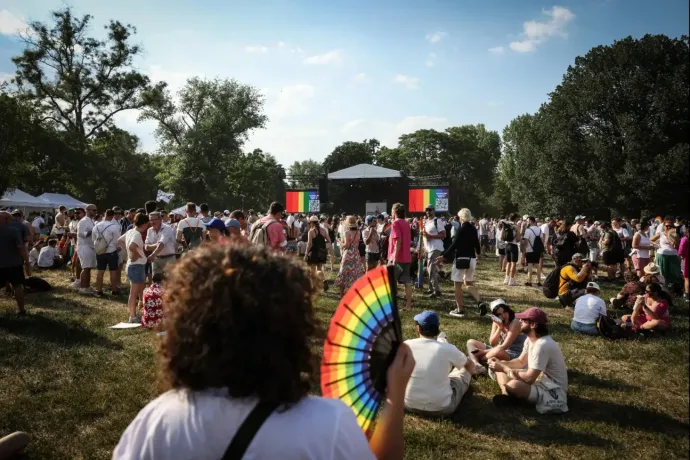



Budapest Pride 2026 went ahead as planned on Saturday, despite the extreme heat. Although the crowd was not as big as at last year’s event, which took place despite the ban imposed by the Fidesz-KDNP government, many participants saw this event as the first truly free Pride march in a long time, since the government which spent many years demonizing the LGBTQ community is no longer in power.
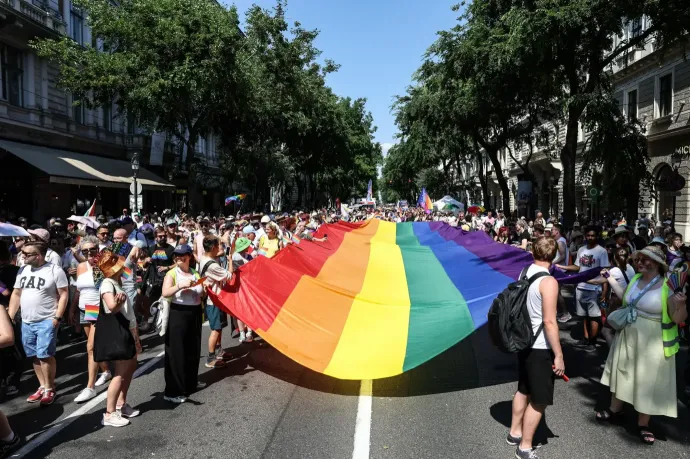
Participants gathered in the extreme heat in front of the Opera House and walked to Vérmező park, where a musical program and several speeches followed. Volunteers handed out free water along the route, public water fountains were opened in multiple locations, and more medical and other volunteers were present throughout the crowd so they could escort out anyone affected by the high temperatures. The spokesperson for Budapest Pride, Zita Hrubi told Telex that to her knowledge, no one had called for an ambulance, and there were no reports of anyone fainting either.
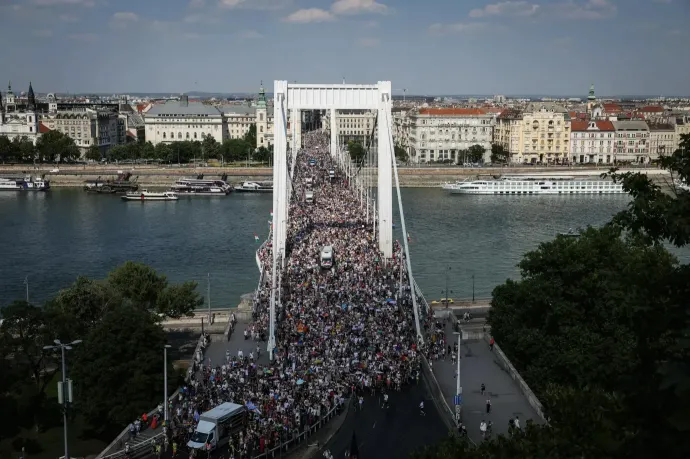
One of the speakers at the event was Budapest Mayor Gergely Karácsony, who has always been a vocal advocate for the rights of the Hungarian LGBTQ community. In fact, after the Orbán government passed a law banning “events which promote homosexuality” last year and threatened organizers and participants of such events with a fine of HUF 200,000, he responded by announcing that Pride would be organized as an event of the local government that year. Despite the police banning it-citing the law on public assemblies- the march ultimately took place under the protection of the police without any incidents, and ended up being the biggest Budapest Pride ever.
Karácsony was later charged with violating the freedom of association and assembly, and shortly before the start of this year’s Budapest Pride, he announced that the court had dismissed the criminal case brought against him for organizing last year’s event.
In his speech, he asked the audience if they still remembered when, a year ago, together they gave the finger to those in power at the time. When he noted that all power eventually comes to an end, the crowd erupted in cheers. From now on, we must hold fast to our principles, not only to protect them but also to ensure that they are upheld, he said, pointing out that the law under which the previous government had banned Pride last year is still in effect. He said: “It is time for us to discuss, wisely and peacefully, how we can build a shared homeland together.”
“A government worthy of our support is one that wants to build a country that will be everyone’s home,” he said, adding that he would like to be the one to officiate the first same-sex wedding in Budapest.
At a press conference on Saturday, the Mayor was asked whether, in his opinion, politicians from the Tisza Party should have been present at the parade. He pointed out that the government is out of town for a three-day cabinet meeting, and stressed that the expectation from the government and from politicians isn’t that they should come to the parade, but rather to build a society where “we can all live as equal citizens” every day of the year.
For him personally, it is important to be there: “I was there even before I became mayor, and I’ll still be there when I’m no longer mayor,” he said.
According to a recent representative public opinion poll by Medián, 68 percent of Hungarians agree that organizing protests in support of LGBT rights, including Pride should be allowed, while only 29 percent are opposed to the idea. Sixty percent agreed that the state should not regulate which social groups are represented in movies and TV shows aired during the day, while 36 percent disagreed with this view. Fifty-eight percent agreed that children should be able to learn about homosexuality and gender diversity in a manner appropriate for their age as part of the school curriculum. This question had the highest proportion of those who disagreed, at 39 percent.
One of the participants at this year’s Budapest Pride, Edina, told Telex that she has been attending Pride every year since 2021. She was thrilled last year to see hundreds of thousands of people there, but noted that it’s important to recognize that that particular Pride was also a protest. In her view, the new government’s most important task is to put an end to the demonization of LGBTQ people, to clean up public discourse, to stop linking them to pedophilia, and to refute false claims such as that they would encourage gender reassignment surgery on preschoolers. She already sees positive changes in the new government’s rhetoric.
“Obviously, there is still much to be done at the legislative level—for example, amending the law on assembly—but working on cleaning up public discourse is something we can already start doing now.”
For more quick, accurate, and impartial news from and about Hungary, subscribe to the Telex English newsletter!