Incoming Hungarian justice minister promises to re-establish rule of law and crack down on corruption
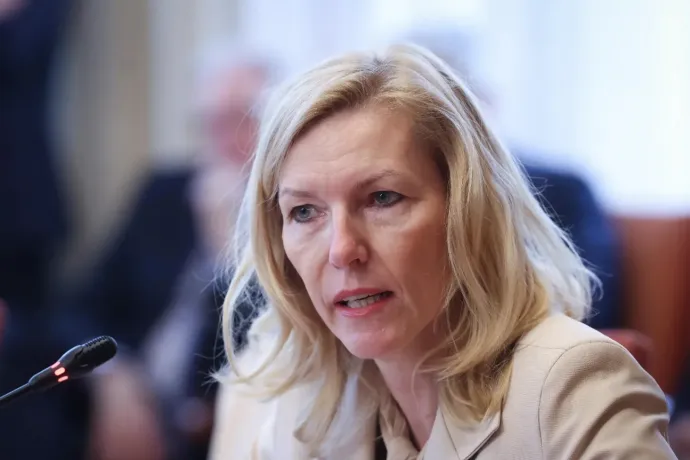



“The Ministry of Justice and the government will take all decisions within the framework of the rule of law, while upholding constitutional guarantees. Constitutional guarantees and guarantees of the rule of law shall be given priority,” — Márta Görög, the nominee for Minister of Justice said at Tuesday morning’s hearing before the Parliament’s Committee on Judicial and Constitutional Affairs. She was answering a question about how the Tisza government plans to remove the President of Hungary and the heads of other constitutional bodies from their positions while remaining within the constitutional framework. Several Fidesz politicians on the committee were particularly curious about this, given that Prime Minister Péter Magyar had repeatedly called for the resignation of President Tamás Sulyok and other heads of constitutional bodies.
At the committee hearing, the prospective Minister of Justice promised zero tolerance on corruption, setting as her top priority the strengthening of the independence of the courts and of the prosecutor’s office; she said that they would launch a process to amend the constitution, submit a new election law, and that Hungary would join the European Public Prosecutor’s Office. Bence Tuzson and János Bóka, two outgoing ministers of the Orbán government also attended the hearing. Right at the beginning, the former complained about MPs only having four minutes each to ask questions, noting that, in his view, there had been no precedent for this since 1990.
Márta Görög’s appointment as minister was supported by 8 members of the Tisza Party; 2 members of Fidesz voted against it, while István Apáti, a member of Mi Hazánk (Our Homeland), abstained.
Rule of law, legal certainty, transparency
At the beginning of the hearing, Márta Görög introduced herself . She said that her career has been dedicated to education, research, science, and nurturing talent; she has been working as a university professor at the University of Szeged since 2016, but she also listed several other professional positions she has held. She explained that her identity as a lawyer is fundamentally defined by the fact that, as a graduate of the Szeged Faculty of Law, she now comes from the position of dean of that faculty, and said that the values of Szeged’s law professors have always served as her guiding principle.
“The state of the judiciary in any country says a great deal about the true nature of that state,”
said Márta Görög, adding that her future ministry would work within the constitutional framework of the rule of law to achieve the government’s objectives and serve society, based on high-quality legislation and the strengthening of public trust.
She promised the restoration of the rule of law, legal certainty, transparency in lawmaking, and ongoing professional consultation.
According to Görög, Hungarian lawmaking cannot exist in isolation, without the enforcement of international and European legal standards. Among her ministry’s primary tasks she mentioned securing EU funds, which they aim to achieve in a non-ideological manner, guided by the interests of society as a whole.
According to her introduction, the future ministry’s scope of responsibilities will be based on three pillars:
- restoring the rule of law and constitutionality;
- rebuilding the independence and authority of the judiciary; and
- turning the tide on corruption and restoring public confidence in democratic institutions and in the exercising of public authority.
She believes that in recent years, the system of checks and balances has been eroded in Hungary, while the principle of the separation of powers and public trust in democratic institutions have been undermined, and the role of Parliament has been weakened; she also criticized governing in a continued state of danger which is due to expire on May 13.
“Exercising public authority in an unpredictable manner, devoid of the rule of law and thus without legal certainty, creates a climate of uncertainty for citizens, businesses, and Hungary’s international partners.”
She would like to restore constitutional stability, which is why they will prepare a broad constitutional reform process in cooperation with the Prime Minister’s Office. The ministerial nominee considers it necessary to review cardinal laws, as well as the way in which the legal professions operate and the electoral system. They will develop an electoral system that is “more transparent, fairer, and more proportionate than the current one.” She promised that the Ministry of Justice intends to carry out its work free from political interests and ideologies, guided solely by professional considerations.
She would like to reorganise the legal profession, strengthen the institutional independence of the courts and public prosecutor’s offices, and improve the working conditions and prestige of judicial staff. In addition, the enforcement system will be restructured; it will become a non-profit entity, and the bailiff and liquidation systems will fall under the supervision of the courts. She would also like to see a broad professional dialogue for the purpose of resolving the issues surrounding foreign currency loans.
“Corruption weakens the state, undermines competition, and creates uncertainty for honest investors and entrepreneurs,”
Görög said, moving on to the next topic, and declared a zero-tolerance policy toward corruption. She said that, working together with the Prime Minister’s Office and the Minister of the Interior, they will establish the legal framework for the Office for the Recovery and Protection of National Assets (Nemzeti Vagyonvisszaszerzési- és Védelmi Hivatal). The president of the new office will be elected by a two-thirds majority of the National Assembly. She promised that Hungary would join the European Public Prosecutor’s Office and expressed her desire to radically reduce the number of surveillance operations authorized by the Minister of Justice, returning them to the purview of investigators and judges. She announced that the ministry would have three state secretariats: political, public administration, and constitutional affairs.
Outgoing Minister of Justice Bence Tuzson said he agreed with much of Görög’s presentation, but there were details which, he claimed, shocked him and left him with doubts. One such example is her statement that the constitutional system needs to be reformed. What do you mean when you say that the justice system needs to be reformed? What makes you think that the independence of the judiciary has been compromised in the past?-Tuzson asked the nominee.
While elaborating at length on his own achievements as minister, he emphasized the size of the pay raise received by those employed in the judicial system. He did not mention the controversies over judges' salaries in 2024, when judges ended up filing a complaint with the European Commission against the Hungarian government due to their low wages. In 2025, days after the Hungarian judges’ protest, the EU Court of Justice ruled in a Polish-Lithuanian case that judges in member states must receive adequate pay, as this is an essential guarantee of their independence.
Tuzson went on to ask Márta Görög what she thought about Péter Magyar calling on President Tamás Sulyok and other public service dignitaries independent of the government to resign. “The Ministry of Justice and the government will make every decision within the framework of the rule of law, while upholding constitutional guarantees. Constitutional guarantees and guarantees of the rule of law shall be given priority,” Görög replied when asked how they plan to remove the heads of constituent bodies while upholding the constitution.
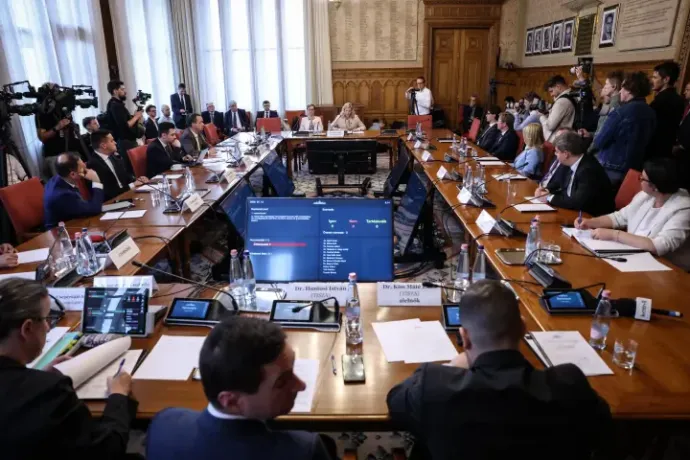
She also said that she does not intend to restructure the courts, but rather to strengthen their independence. To this end, she will initiate a broad professional dialogue involving all judicial organizations, and this consultation may even extend to the process of the appointment of judges. She would like to broaden the powers of the National Judicial Council (Országos Bírói Tanács-OBT). She considers the prohibition of retroactive legislation a constitutional principle and would like to see a longer-term, consensus-based constitutional process.
István Apáti, a representative of Mi Hazánk asked when the state would take control of the judicial enforcement system and whether there would be a moratorium on evictions until the matter of foreign-currency loans has been resolved. Mi Hazánk would prefer a Hungarian anti-corruption office to the European Public Prosecutor’s Office, as they believe the latter poses a national security risk. “Do you envision our relationship with the EU as a subordinate one or in equality?” asked Apáti, later clarifying the question: does the ministerial nominee believe in sovereign nation-states or a United States of Europe?
Görög responded: joining the European Public Prosecutor’s Office does not diminish the authority of Hungarian prosecutors. She intends to reform the judicial enforcement system in several phases, as she believes that following extensive professional consultations, it will be possible to tackle systemic problems at the systemic level. In response to the other question, she said that the case of foreign currency loans requires a responsible and sustainable legal solution, and since it affects multiple parties, extensive professional consultations will also be needed on this. She did state, however, that she would like a solution that supports the interests of the debtors.
Fidesz MP Gábor Szűcs asked whether the ministerial nominee knew of any European country where the prime minister had called on all public dignitaries to resign. In what areas would they amend the Fundamental Law? How would the court system, the Constitutional Court, and the legal status and role of the President of the Republic change? – the new MP, who previously worked as one of the pro-Fidesz influencers at Megafon asked, spending several minutes listing his questions. Csaba Latorczai of KDNP (Keresztény Demokrata Néppárt – Christian Democratic Party) read out questions from his Facebook followers: Will those with loans in foreign currency receive legal assistance? How does Görög intend to ensure that the country’s legal sovereignty remains intact? The KDNP politician said he had heard rumors that the Tisza Party wanted to remove President Tamás Sulyok in order to introduce a presidential system and appoint Péter Magyar as president. He also asked what the timeline was for setting up the Office for the Recovery and Protection of National Assets.
The ministerial nominee did not answer every question, which Bence Tuzson took issue with at the end of the hearing. She did reveal though, that the timeline for establishing the Office for the Recovery and Protection of National Assets will be decided during the new government’s first cabinet meetings. Görög also stressed that she would strengthen the powers of the Integrity Authority as well as the legal framework for public procurements. She considers reducing the concentration of power an important democratic value and sees the amendment to the Fundamental Law—which would limit the premiership to two terms—as an institutional guarantee of this. She also said that a legitimate correction of the law equating gays with pedophiles will be necessary, following the ruling of the Court of Justice of the European Union, since Hungary is a member of the European Union and the court has issued a binding decision.
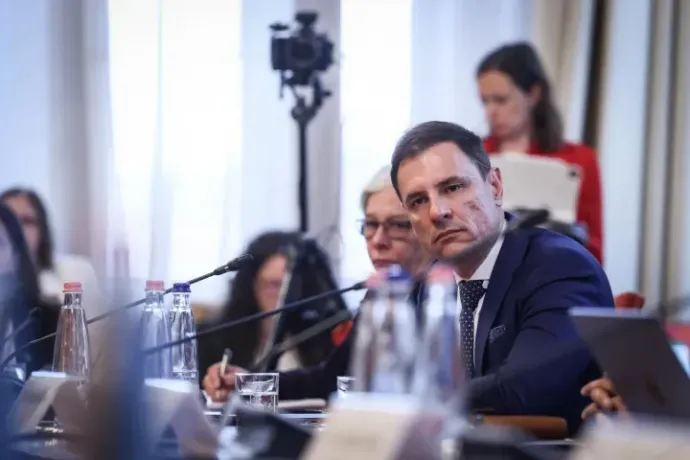
The conditions for EU funds have been set in terms of the rule of law, anti-corruption, and transparency and accountability, she said, adding that these three sets of conditions are also important to the Hungarian government. Among the specifics, Görög mentioned that the regulation of public-interest foundations managing assets must be thoroughly reviewed (according to the European Commission’s 2024 assessment, there are dozens of reasons why they fail to meet the conditions), as well as “integrity requirements”, the strengthening of the Integrity Authority’s safeguards, and the amendment of public procurement rules.
A change right before the ministerial appointment
“I have asked Dr. Márta Görög, the unofficial queen of the Hungarian legal profession and dean of the Faculty of Law and Political Sciences at the University of Szeged, to serve as Minister of Justice” —this is how Péter Magyar introduced Márta Görög last Friday, after his brother-in-law, Márton Melléthei-Barna, who was originally nominated for the post had withdrawn from the running the day before. Melléthei-Barna justified his decision by explaining that he did not want even the slightest shadow to be cast on the transition to democracy due to his family and personal ties with the Prime Minister. (He and Péter Magyar had known each other since college, and Melléthei-Barna married the PM's sister last year.)
Márta Görög is a member of the Executive Board of the Hungarian Lawyers’ Association and is also on the Committee of Political Science and Law at the Hungarian Academy of Sciences. Magyar said that as minister, her task will be to restore the professional quality of lawmaking, to ensure the transparency of the legislative process, and guarantee that the adoption of legislation is preceded by substantive professional and public consultation. “One of the most important goals for the coming period is to ensure that independent supervisory institutions and authorities operate on a professional basis, free from political interference, Magyar wrote.
The committee hearings for the ministerial nominees ahead of their appointment started at 8 a.m. on Monday. Once the expert committees have issued their opinions, the President of the Republic will appoint the ministers of the new government at 1 p.m. on Tuesday, and they will then take their oaths of office at the Parliament's plenary session beginning at 4 p.m. on the same day. The new government will hold its first cabinet meeting on Wednesday.
For more quick, accurate and impartial news from and about Hungary, subscribe to the Telex English newsletter!