It took a massive propaganda campaign to turn Hungarians into potato lovers
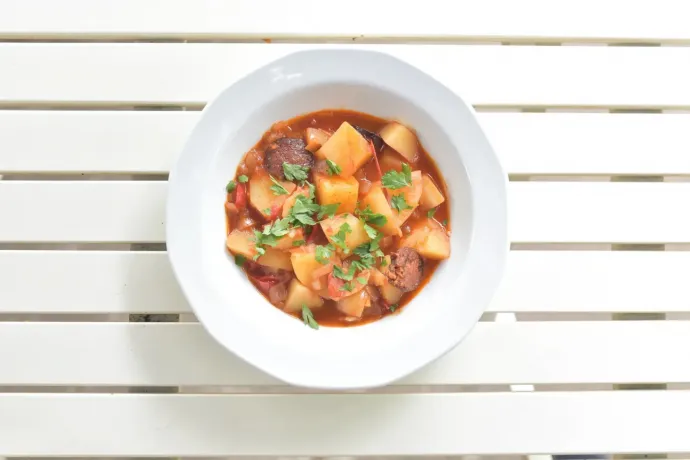


It would seem that the fact that Hungarians traditionally eat potatoes with meat-and even when there is no meat, we still tend to make something out of potatoes is an ancient, fundamental Hungarian habit. We have so many ways of preparing potatoes and so many words for them that it’s hard to imagine that any other nation could be as passionate as ours about this basic staple. It would be logical to assume that this is a long-standing Hungarian habit, that it has always been this way, but that’s not the case: in fact, Hungarians' love for potatoes is only a few hundred years old, and the story is full of twists and turns.
Most people are familiar with the fact that many ingredients now considered fundamental to Hungarian cuisine were originally unknown both in Hungary and throughout Europe, having been brought over from the other side of the world after the discovery of America. These include paprika, corn, tomatoes, and potatoes. Some of these quickly became part of everyday customs, while others took time to catch on. While potatoes were already known alongside corn as early as the mid-17th century, it actually took two hundred years for them to find their way into kitchens and cooking pots.
According to Magyar Néprajz, the reason for this lay primarily in its botanical characteristics, as it had to be cultivated using completely different methods than those used for crops grown before. Moreover, it appeared so unusual and novel at the time, that its appearance gave rise to all sorts of superstitions and people even believed it to be dangerous. This was not entirely unfounded, as its fruit and leaves are indeed poisonous, whereas its tuber is edible. Corn, which was cultivated according to the well-known methods used for other grains, spread much faster than the potato. At first glance there may not seem to be a connection between the two ingredients, but there are several traditional Hungarian dishes in which cornmeal, or the porridge made from it, has been replaced by potatoes. Examples include tócsni, which was originally a flatbread made from solidified leftover polenta, or potato bread, which used to be made with cornmeal. The popular corn porridges were consequently replaced by slambuc, dödölle,and vegetable stews.
There are references dating back to the late 18th century indicating that some people were growing it in Transylvania, though only sporadically. Agricultural writers were already promoting it at that time as an inexpensive, weather-resistant, easy-to-store and nutritious staple, which then gradually became more widely known, particularly during times of famine.
For it to become a staple food, however, deliberate, government-led promotion was necessary. During the reign of Joseph II, potato seed tubers were distributed for free, and potato farmers received tax exemptions. Western countries also resisted the potato; in Germany and France, they were only able to get farmers to grow potatoes by introducing strict measures, which is how they achieved results slightly sooner than Hungary. This may explain why the word “burgonya” ultimately entered Hungarian from French (likely from the word “Burgundy”), while “krumpli” (the other name used for it) came from German (from the Bavarian dialect form “Krumpel,” derived from “Grundbirne,” meaning “earth pear”).
In 1816, attempts were made to solve the recurring wheat shortage with potatoes; pamphlets and studies were prepared on how useful the plant was, but many people were still unfamiliar with it and didn’t know what to do with it in the kitchen. This led to the creation of a cookbook dedicated exclusively to potato recipes. Under the title Notes to Help in Times of Wheat Shortage, Zsuzsanna Rácz compiled 86 potato dishes in three booklets. The most important of these at the time, due to the grain shortage was the recipe for bread made with potato starch; they neither made side dishes nor potato casseroles from it yet. It was also suggested that people use it for distilling pálinka (Hungarian fruit brandy), but this never really caught on in Hungary. Households were slow to adopt it; at first, they ate it fried, boiled, or coated in fat, and later they made puliszka (a type of porridge) from it.
Although bread made from potato flour or potato brandy didn't end up becoming the most popular potato-based dishes, the efforts to make these tubers a favorite among Hungarians were not wasted. Even though it isn’t considered the healthiest ingredient from a dietary perspective (though it’s by no means unhealthy—it’s merely high in starch and carbohydrates), Hungarians still prepare and enjoy potatoes in a great many different ways.