Everyone deserves a public media that reports truthfully – Péter Magyar's first post-victory interview at Hungary's public broadcaster
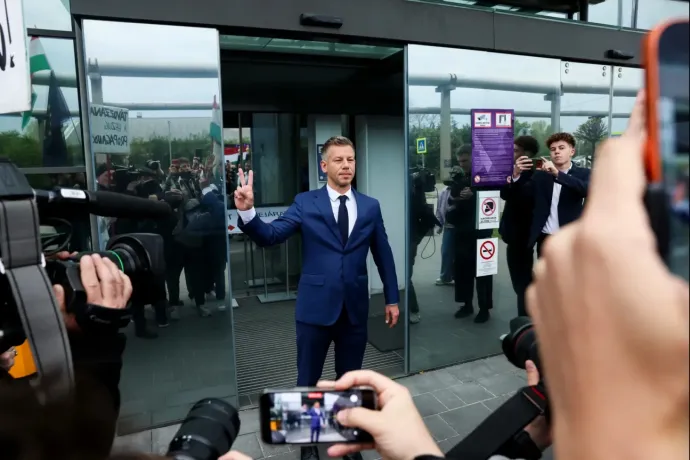

Hungary’s prime minister-elect, Péter Magyar was invited for an interview at the country’s public media service on Wednesday morning. This wouldn’t be news in most countries, but many in Hungary have described it as a historic event, given that during the past 16 years, the Hungarian public media service had been transformed into a mouthpiece for the ruling parties. As such, it didn’t provide an equal platform to all parties, in fact, it mostly ignored the existence of the opposition. Memorably, between 2018 and 2022, representatives of all opposition parties were invited by the public media service a total of eighteen times only. During the 2022 election campaign, they were each given a few minutes to present their program, shortly before 8 am – on one occasion.
This year, the public service only invited representatives of completely irrelevant opposition parties, which is why Péter Magyar made sure to comment on this both in his interview with the public radio and the public TV:
“There is something strange about the fact that the last time I appeared on public media was a year and a half ago, in September 2024. It took the votes and authorization of more than three million people for the leader of the strongest opposition party to be allowed back and given airtime” he began after the reporter’s greeting.
In the two days that have passed since the Tisza Party’s landslide victory, there have been some drastic changes in the public broadcaster’s news service, which probably had to do with the fact that Magyar made it clear at his international press conference on Monday that as soon as his government was inaugurated, they would halt the news programmes on public media until the media law is changed and until it is ensured that the service can provide truly unbiased, public service instead of the propaganda we have seen in the past sixteen years.
The chairman of the Tisza party made it clear that although for the past two days, the public media has been trying to pretend that it is free, what they promised in their program will still happen. He added that this is not rooted in any desire for revenge or his seeking personal retribution. “This isn’t about me, but about the fact that everyone deserves a public media that reports truthfully, " he stated.
As we previously reported, the European Commission launched infringement proceedings against the Hungarian government last year, as the Commission believes Hungary is in breach of certain provisions of EU legislation on freedom of the media and audiovisual media services. The proceedings are still in their early stages; and following an exchange of correspondence, they could lead to litigation and ultimately a fine. However, the initiation of these proceedings—and the fact that similar cases in Hungary have typically resulted in defeats—suggest that even if Fidesz–KDNP had won, changes to media regulations would have been necessary.
According to the European Commission, the Hungarian state has
“failed to comply with requirements relating to public service media, transparency of media ownership, assessment of media market concentrations, and the distribution of state advertising.”
The current Hungarian regulation also fails to meet the requirements set forth in the Audiovisual Media Services Directive about national media regulatory authorities.
The Hungarian government was the only one to vote against the Media Freedom Regulation in 2024; all other member states voted in favor of it.
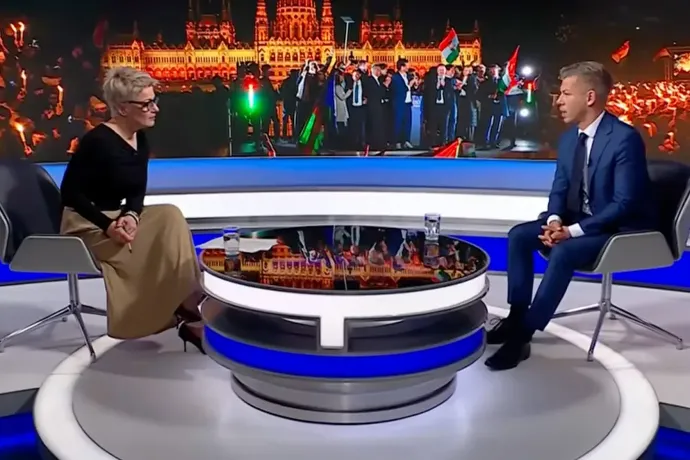
Magyar gave two consecutive interviews on Wednesday morning, one for the public radio, and one for the public television. Both reporters started by claiming that they had, in fact, sent multiple invitations to the Tisza Party during the past year and a half, which Magyar said wasn't true, but said he wouldn’t argue about that at this point. Instead, he thanked the Hungarian people for the strong mandate the Tisza Party received in the election. He said that they were going to prove that not a single word of what was said in the public media about them is true and would work to ensure that Hungary becomes a functioning and humane country.
Both reporters kept interrupting the prime minister-elect throughout the interviews, and they mostly asked similar questions. They wanted to know whether the Tisza government would keep the Orbán government’s family support programs, to which Magyar said that they would keep every good policy.
He was also asked how they plan to bring home the EU funds that had been blocked. Magyar stressed that this would be one of their priorities, but added that the Orbán government had four years to take care of this but did nothing. They will now have four months to do all that is required to bring back the first batch by the end of August. He said they would establish a National Asset Recovery and Protection Office, that the country would join the European Public Prosecutor’s Office, and they would restore the freedom of the press and academic freedom.
In both interviews, he noted that in the past 16 years, the Orbán government had made Hungary the poorest and most corrupt country in the EU, and the Tisza government would work hard to change this and to put the country back on a path of growth. He pointed to Poland and the Czech Republic as good examples when it comes to using EU funds the way they were supposed to be used, and also spoke about the sudden enrichment of the PM’s childhood friend, Lőrinc Mészáros, “who became five times as rich in ten years’ time as the British Royal family did in four hundred years”. He contrasted this with the low pensions in Hungary, and the hugely lacking welfare system in the country.
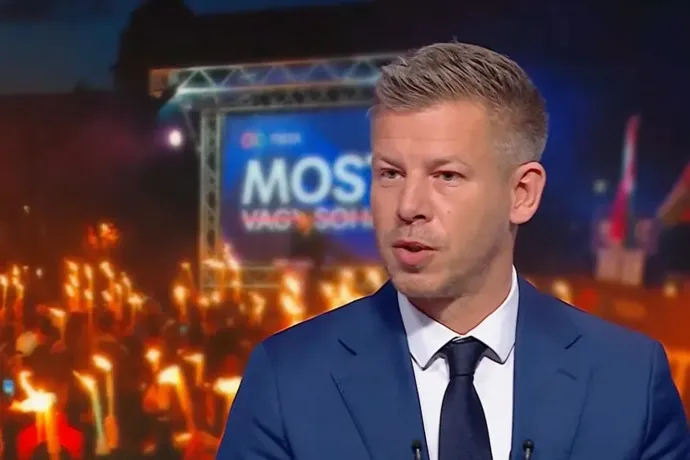
Magyar also spoke about the condition of the country’s healthcare system, making mention of the multiple hospital wards that had been closed due to staffing shortages and financial difficulties, and said that Tisza would reopen the hospitals in smaller towns which had been closed in recent years and would actually use the EU funds to renovate even more healthcare facilities.
The question of the country’s energy security was another one both reporters brought up. On this, Magyar recalled that the various Orbán governments had sixteen years to diversify the country’s energy supply, and if they had done so, then they wouldn’t have ended up in conflicts with the Croatians and the Ukrainians over energy-related issues. He said that his government’s goal would be to guarantee the country’s energy security by purchasing energy sources from multiple partners, which would then be delivered from multiple directions instead of just one, and the low prices would be guaranteed by having multiple companies compete against each other.
He also pointed out that the level of the country’s energy reserves has been drastically reduced recently and the government has failed to purchase crude oil via the operational Adria pipeline. He stressed that although Ukrainian president Zelensky has announced that the repairs on the Friendship pipeline will likely be completed by the end of April, making sure that the reserves are replenished would be the huge responsibility of the caretaker government, and what they do in the next 20-30 days will be extremely important.
Both reporters inquired about whether the Tisza Party would approve the 90 billion euro loan for Ukraine. When Magyar started answering this question, the reporter kept interrupting him. Magyar then requested to be allowed to finish his sentence, and explained the procedure, as well as that although he himself voted in favour of it in December (with Hungary being one of three countries opting out of it) Viktor Orbán had been blocking the final step needed before Ukraine could receive this in response to the closure of the Friendship pipeline from the direction of Ukraine.
Magyar had strong words of criticism for President Tamás Sulyok and said it is outrageous that he remained noticeably silent after revelations of serious child abuse in orphanages, as well as when it was revealed that the government had sought to use the secret services to dismantle the strongest opposition party. Previously, both in his victory speech and in his first press conference after the election victory, he had called on the president to resign as soon as the new government had been formed.
In closing, the host said that she hoped the Tisza Party’s experts would accept their invitations in the coming weeks, “so we can find out more about what plans you have for the next four years in our country’s life”. Magyar, who had stressed multiple times during the interview that their programme had been published long ago and was available for all to see, advised the reported that she should “be careful not to break into laughter here at the end”.
For more quick, accurate and impartial news from and about Hungary, subscribe to the Telex English newsletter!