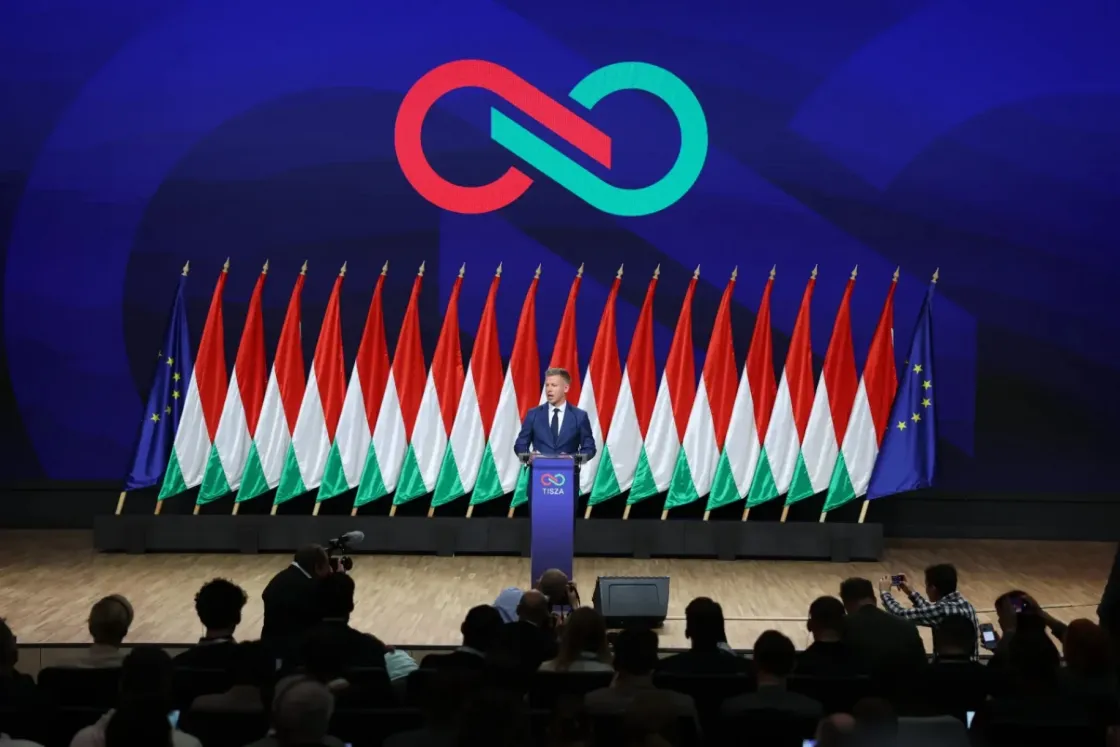

Péter Magyar held his first international press conference on Monday, the day after his party won a landslide victory in the elections, delivering a crushing defeat to Fidesz, which had been governing for 16 years. In his opening remarks, he thanked both the international and the Hungarian press for their interest. “Thank you for paying attention to our country,” he said.
Magyar noted that Hungarians fully grasped the gravity of yesterday's election; and said he believes this election will determine Hungary’s fate for a long time to come. Magyar thanked all voters for their participation and said that the election results will become final by May 4 at the latest.
“Perhaps the most important thing voters decided on yesterday was that Hungary’s place was, is, and will be in Europe”.
He called on President Tamás Sulyok not to wait until May 12, but to convene the inaugural session of the National Assembly and to ask him to form a government even sooner. “Our country has no time to waste,” he said. “It has been plundered, betrayed, indebted, and ruined—turned into the most corrupt country in Europe.”
The beginning of a new era
He emphasized that he would represent all Hungarians, both within and beyond the borders. “We will do everything in our power to ensure that this truly marks the beginning of a new era, as Hungarians not only voted for a new government but for a complete regime change,” he said. “Until now, our country has been run by an organized criminal group” where economic and political criminals mixed with the media elite, which is why a regime change is absolutely essential.
“The Tisza government has a huge number of tasks before it, and we would like to get to work as soon as possible,” Magyar said, before thanking international leaders for their congratulations.
“Beijing and the Kremlin have also spoken out; I thank them for respectfully accepting the Hungarian people’s decision and for being open to pragmatic cooperation,” he said.
Hungary will not interfere in the internal affairs of any country—neither in the Balkans, nor in Slovakia, nor in Spain—he promised, and asked other countries to view Hungary as a free, sovereign nation and a member of the two most important alliance systems, the EU and NATO.
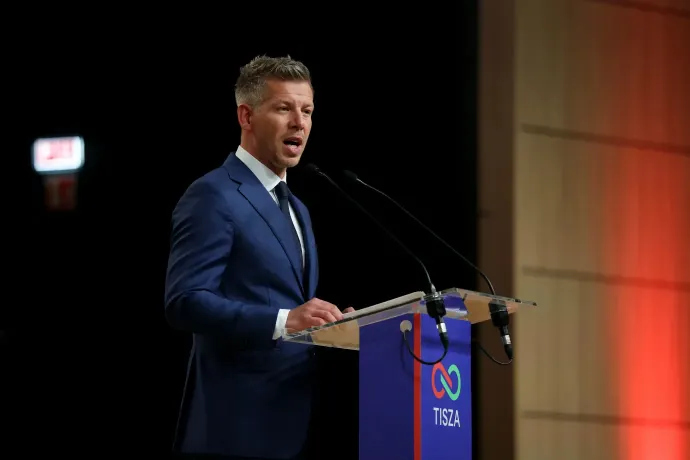
The first tasks ahead
Magyar also spoke about what his government’s first tasks would be: “We will amend the Fundamental Law and enshrine in it that the prime minister may only serve for two terms”. He later noted that based on this, Viktor Orbán would not be able to serve as prime minister again, as he has exceeded the two-term limit. The chairman of the Tisza Party said that Orbán had a tremendous opportunity but failed to seize it. “It’s his loss,” he said. He also vowed to restore the system of checks and balances.
“There are international treaties, secret government agreements, and classified documents about which we know nothing,” Magyar said. He noted that Viktor Orbán has taken out loans and signed international treaties costing enormous sums of money, the details of which we know nothing about.
After taking office, they will first need to obtain these documents, if they haven’t already been shredded by then. “This is what we’re preparing for with a team and plans already in place,” he said, adding that they had several plans for after the election, “but now, fortunately, we have to put the two-thirds majority plan into action.”
They will do everything they can to review these documents, “we will go through them, and whatever does not harm Hungarian financial and national economic interests, we will make public.”
They want everyone to see “what the thieves left behind.”
“We are counting on everyone who has done their job well and has remained true to their oath.” The Tisza is in dire need of good police officers, he said. In his view, many career diplomats and government officials have also watched the Fidesz government’s performance with dismay; their professional expertise will be needed as well.
Giving a hint about how his government would function, he said: I would like to reiterate here that a government is a team, and under the Tisza government, the prime minister will not be a Sun King, but rather a team captain relying on his ministers, his representatives, and the Hungarian people,” he said.
He explained that they will involve the people in decisions to the greatest extent possible; this could mean a referendum, but even local votes. “I believe this will give the government a mandate time and time again.”
Ready to root out corruption
When asked what their first anti-corruption moves would be, and when the National Asset Recovery Office he previously spoke about would be established, he said that they would establish an anti-corruption office, which will work on prevention, education, and will also have the role of a guardian. He said that corrupt leaders will have to go, and cited captain Bence Szabó who spoke about the political pressure the police have been under. Magyar believes that the political and operative leadership must be separate when it comes to the police, so politicians wouldn’t be able to influence the work of the police force.
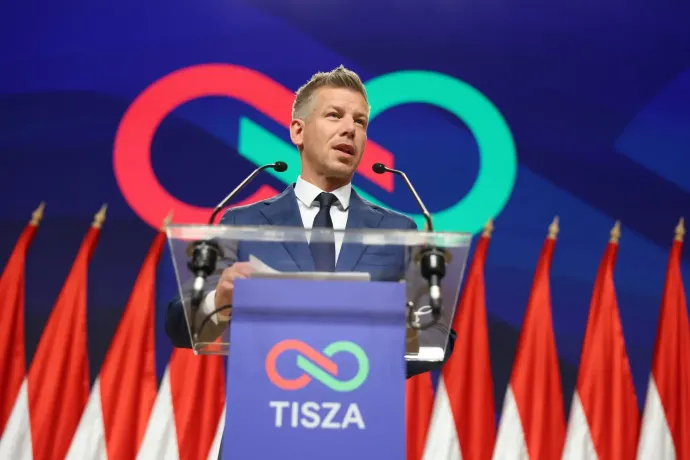
Leading the Asset Recovery Office will be an extremely difficult task, he said, but they already have candidates in mind. There are countless crimes to be uncovered, but this office will not be competing with the police, the prosecutor’s office, or the National Tax and Customs Administration; instead, they will work closely with them, and the government intends the office to play a primarily coordinating role.
There are also plans to conduct ex-post audits of all public procurements exceeding ten billion forints.
He hopes the office will be up and running by June, and he will do everything in his power to make this happen as soon as possible. He added that budgetary resources allocated to the Sovereignty Protection Office will also be “redirected” here.
They will also start the process of joining the European Public Prosecutor’s Office, but this could take up to six months.
“We are ready to root out industrial-scale corruption,” he said.
“Hungary will be a constructive partner”
According to Péter Magyar, Hungarians are proud of their European identity, and they have seen that regardless of what the propaganda claimed, the European Union is a peace project. The Tisza chairman continued by noting that there has been no war within the EU. He added that it is partly thanks to NATO and the EU that there is peace in Hungary today.
He noted that while working in Brussels as a diplomat before, he became familiar with how the European bureaucracy operates. In his view, compromise is possible, and Hungary is ready to make compromises. “We will have our disagreements,” since every member state represents its own interests within the Union, “but we are not going there to fight.” “I can promise that I will represent Hungarian interests in Strasbourg, Brussels, Moscow, and Washington,” he said.
In his view, every country’s leader expects disputes to be discussed and resolved jointly, and he believes Hungary will be a constructive partner in this regard. “We are here now, and we are going to try to help,” even if it means making the existing structure “more streamlined,” he said regarding the EU and the handling of the Russian-Ukrainian war. “We will help ensure that Europe has a strong voice,” he said.
To a question from an Austrian journalist, he said: “Austria is a very important economic partner for Hungary, and we have a very good relationship, although it has slightly deteriorated in recent times,” Magyar said. “I would like to see a very strong cultural and economic relationship between us once again,” he said, adding that he intends to expand the Visegrád Group’s cooperation and invite other member states to join the alliance.
“I would like to see a strong Central Europe within a strong European Union.”
In his view, this is in the interest of every country in the region.
“If Vladimir Putin calls me, I will answer the phone”
Magyar said he was pleased with the Kremlin’s statement that they would honour the election results. In his view, many countries maintain pragmatic relations with Russia, given their exposed position. “If Vladimir Putin calls me, I’ll answer the phone,” he said. But if they were to speak, he would tell him to stop the killing in Ukraine, so it would most likely be a short conversation.
On the subject of phasing out Russian oil, he said that the Tisza government will diversify its energy sources because energy security is a top priority in Hungary; moreover, those who source energy from multiple locations will be able to obtain it more cheaply because they can make suppliers compete with one another.
“We cannot change geography,” but we will do everything we can to diversify our sources of supply, he said.
“This does not mean we will stop buying Russian oil”; we will strive to always procure energy from the cheapest source.
According to Magyar, as soon as the Russian-Ukrainian war ends, Europe will lift the sanctions, because it is not in Europe’s interest to procure fuel at a higher price. He understands the principles involved, but we should not “shoot ourselves in the foot,” he said.
Hungary will not be a safe haven for internationally wanted criminals
Questions from the international press followed, with the Polish media getting to ask first. Magyar said he had spoken by phone with Polish Prime Minister Donald Tusk, and said his first trip abroad after taking office would be to Warsaw. As he put it, this is a thousand-year-old alliance, and while he believes Orbán has done a great deal of harm to Polish-Hungarian friendship, he is very pleased that the two countries can once again establish good relations. Hungary will not be a safe haven for internationally wanted criminals, he stated. He also said that if Polish politicians residing in Hungary have nothing to hide, they should come forward and clear up the allegations made against them.
“Everyone in Hungary knows that Ukraine is a victim in this war”
In response to a question from The Kyiv Independent, Péter Magyar outlined the Tisza government’s expected policy regarding Ukraine.
“The Tisza government will strive for an ally-like, and if possible, friendly relationship with every neighboring country,” if only because “Hungary is surrounded by Hungarian people,” and therefore “it is in our best interest to maintain good relations with the countries around us.”
“We will certainly meet, if not elsewhere, then at the European Council,” he said of Zelensky.
“Everyone in Hungary knows that Ukraine is a victim in this war,” and no one has the right to interfere from the outside regarding the terms under which Ukraine should make peace at the end of a four-year war. In his view, this is “outrageous, hypocritical rhetoric,” since in the reverse situation, no one would give up Hungarian counties.
He emphasized that a prerequisite for normalizing relations with Ukraine will be the resolution of the rights of the Hungarian minority living there, but in his view, this is clear to the Ukrainian leadership as well, since there has been a willingness on both the Ukrainian and Hungarian sides to address this issue, though they have not been able to resolve it jointly.
As for Ukraine’s 90-billion-euro loan, he said this had already been approved in December on the condition that it does not apply to Hungary. He personally agrees that Hungary should be excluded from this because the country is in a very difficult economic situation, although he does not fully understand why Orbán’s government has even brought this issue up once again, given that the decision has already been made. “We simply cannot afford to take out new loans right now,” he added, noting that the priority right now is to secure the return of the EU funds that have been withheld.
They do not support Ukraine’s accelerated EU accession, since it is still at war; and as such, this matter is not relevant at the moment, because accession negotiations cannot be properly conducted. In his view, many member states share a similar position. If it becomes relevant, there will be a referendum on this in Hungary, he said.
“We welcome foreign investors”
Deutsche Welle asked Péter Magyar about the relationship between Hungary and Israel, as well as German-Hungarian relations.
They cannot reverse the process of the country leaving the International Criminal Court, but they will submit Hungary's application again, Magyar said. Among other things, he noted that Hungary has a zero-tolerance policy toward all forms of anti-Semitism, that Israel is an important economic partner for the country, and that they are striving for a pragmatic relationship. They will assess what is in their interest and make decisions accordingly regarding Israel at the EU level as well.
He noted that German-Hungarian relations have also deteriorated, but they will strive for a close relationship. Magyar said that Chancellor Friedrich Merz would like to host him in Berlin as soon as possible. According to the Tisza chairman, there are German investors who have been unfairly persecuted in Hungary, and he added: “We welcome foreign investors.” Magyar said he looks forward to cooperation with the Germans and loves Germany, having studied in Hamburg as well.
The BBC asked what the world can expect from Péter Magyar. He replied that
“Hungary will be a state governed by the rule of law, a reliable ally and partner. They will see a Hungary much like the one they saw decades ago,”
he said, adding that Hungary would be a “model student.” “We want to restore Hungary's place at the fore of Central Europe,” he said. “We will always be there reliably when there is trouble, and we will communicate honestly.”
When asked about Hungary's relationship with the United States the future Tisza government would like to have, he said: “I don’t think the way it works is that I just call Donald Trump up,” he said. In his view, every leader has the right to throw their weight behind someone, but the situation is different after an election.
Since the United States is the leading power in NATO, it is a very important task for the Tisza to “maintain good, close relations with the U.S.”
He will not call Trump, but if anyone from the U.S. administration contacts the Tisza government, they are at their disposal and would gladly welcome them in Hungary.
He recalled that during his visit to Budapest, U.S. Vice President J. D. Vance stated that they would cooperate with the Hungarian government regardless of who wins the election. He then added that the government would not finance CPAC Hungary or similar events, and that they would investigate the funding of think tanks that have been sponsored by the government.
I would say, “I’m glad he called, because Hungary and the United States are close allies in NATO. I would say that we are ready for this close alliance to continue to develop, and I would invite the president to the 70th anniversary of the 1956 Revolution,” Péter Magyar replied when asked what he would say to Donald Trump if the U.S. president called him.
“Europe handled the migration crisis very poorly”
“Until now, some European far-right leaders have viewed Hungary as a ‘laboratory for the far right.’ What will change now?” France 24 asked. Magyar said that he believes when extremism is on the rise, what’s needed isn’t a Band-Aid solution, but one needs to look into the real causes, because it’s no coincidence that these extremist movements—whether on the left or the right—are gaining strength in Europe.
He added that he doesn’t like it when they’re labeled as left-wing, because they would describe themselves as patriots – if the word weren’t already taken.
He spoke about how dealing with extremism requires honesty and recognizing the problems.
For example, in his opinion, Europe handled the migration crisis very poorly; they failed to recognize the genuine fears of their own citizens. In his view, the EU did not approach this issue correctly, “not because we shouldn’t help people in distress,” but because we need to help where the problem is, rather than resorting to token measures. According to Magyar, we must communicate directly with people and care for them.
“If Europe is in trouble, we must say so and seek a solution, while also respecting the differences among member states,” he said. “We shouldn’t try to force things on each other.”
The Irish Times asked Magyar about their approach to the Orbán government's rejection of the EU migration pact. In his view, there is a third option: helping countries strengthen their defense capabilities, for example by providing border guards. “We won’t pay any money, nor will we accept any relocated migrants,” the president of Tisza said.
He said that Russia does pose a security risk, but emphasized that he is not talking about the Russian people. Hungary has experienced this repeatedly; we know exactly that “Europe, and the member states individually, need to be able to prepare for this.” They will under no circumstances do what the previous government did, he said.
“It’s not acceptable in any team for me to go into the opponent’s locker room to reveal our tactics,” which is basically what Szijjártó did, he said.
The Slovak and Hungarian heads of government must strive to cooperate
In response to a question from the Slovak news portal 360tka, Péter Magyar said that he had spoken with Robert Fico, who congratulated him on his victory. Fico had previously supported Viktor Orbán’s campaign; commenting on this, Magyar said, “We can consider this campaign support.” Fico was a close ally of Viktor Orbán and likely will remain so; nevertheless, the Slovak and Hungarian heads of government must make efforts to cooperate, especially for the sake of Hungarians living in Slovakia.
“Even if I didn’t want to be on good terms, I would still have to be on good terms with the Slovak leadership.” But to achieve this, certain issues must be resolved, he emphasized.
“It is unacceptable in any respect in the European Union in 2026 to take land away from Hungarians and then to not offer them compensation, to discriminate between Slovak citizens, or to threaten those who dare criticize the Beneš Decrees with prison, he said. In his view, the majority of Slovak citizens feel the same way. “That era is over; it belonged to the twentieth century,” he said.
“I do not want to, and I will not, compromise on this. If we manage to reach an agreement, relations between the Slovak and Hungarian governments will be the best possible, but even if we do not succeed, we will still maintain excellent relations with the ethnic Hungarians living there and the Slovaks,” he said.
“We welcome Chinese investment”
"China is one of the world's most important and powerful countries; I am happy to visit Beijing, and we are happy to welcome officials from Beijing to Hungary," Magyar told a Hong Kong newspaper.
They also welcome investment from China, as long as they comply with EU and Hungarian laws, as well as health and safety regulations.
“We will prioritize Hungarian-owned small and medium-sized enterprises,” he said, adding that they would like to give them a competitive edge when foreign companies invest here.“ We welcome investors; we just need to find common interests,” he said. As a counterexample, he cited the Budapest-Belgrade railway line, which was developed using a giant loan from China. In his view, it would also be in China’s interest if both countries benefited mutually from the investments.
Towards the end of the press conference, the British Telegraph asked him, what his position was as a conservative politician on Pride and abortion.
“In Hungary, everyone has the right to free assembly, period. And the issue of abortion is settled, he said.
For more quick, accurate and impartial news from and about Hungary, subscribe to the Telex English newsletter!