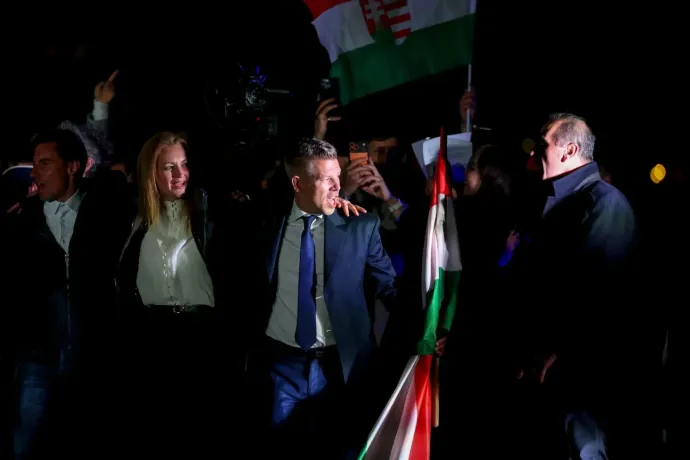

On Sunday, an overwhelming majority of Hungarian voters entrusted Péter Magyar and the Tisza Party with leading the country for the next four years; no other party has received such a strong mandate since the country transitioned to democracy. However, nothing at all will change in a legal sense for a while; we will have to wait several weeks for the new parliament and the new government to be formed. During this transitional period, Fidesz’s two-thirds parliamentary majority can accomplish a great deal, and the government’s room to manoeuvre remains unrestricted until the inaugural session of the new Parliament. In this article, we’ll walk through what happens from election day until the new government is formed, and what to watch for during this period.
According to Hungary's Fundamental Law, the President of the Republic must convene the inaugural session of the new parliament within thirty days of the election, that is, no later than May 12. It is up to Tamás Sulyok to decide when, within those thirty days, the inaugural session will take place, but he will most likely wait for the final, legally binding results of the election. This may take a few more weeks, as the National Election Committee (NVB) must determine the final results by May 4 at the latest, according to a decree by the Minister of Justice. Four years ago, the election was held on April 3; the NVB announced the final results on April 16, and János Áder convened the inaugural session for May 2.
At this session, the President of the Republic will submit a proposal to Parliament about the appointment of the Prime Minister. Nóra Novoszádek, head of the Rule of Law Program at the Hungarian Helsinki Committee, told Telex that there is no legal restriction requiring Tamás Sulyok to nominate the candidate of the party that won the most seats. The only rule is that the future prime minister must have a clean criminal record and be eligible to run in the parliamentary election. The President may even nominate someone for the post who did not run in the election, but according to Novoszádek, he must obviously take political rationalities and the stability of the country and the government into account when making his decision.
Following the Tisza Party’s two-thirds victory, it is hard to imagine that Sulyok would not ask Péter Magyar to serve as prime minister; the President has already congratulated the Tisza Party in a Facebook post on Sunday.
“Since 1990, there has never been a case where the Parliament did not elect the prime ministerial candidate nominated by the President of the Republic,” a lawyer from the Hungarian Helsinki Committee noted. If, for some reason, this were to happen now, the Fundamental Law stipulates that the President of the Republic must submit a new nomination within 15 days. “He could try the same candidate again, but this cannot go on indefinitely, because there is a rule that if a new prime minister is not elected within forty days of the first nomination, the President may dissolve Parliament.” In this case, new elections must be called.
According to renowned political analyst Gábor Török, the head of state has little room to manoeuvre when the situation is clear and an absolute majority emerges in parliament; in reality, he is merely a “ceremonial figurehead.” “Since he is the foremost guardian of the democratic functioning of the state, any manoeuvring or stalling would run counter to his constitutional duty. There is no doubt: nowhere is it written in detail that he must proceed this way, but if he acted differently, he would step out of his role—it is no coincidence that no head of state has taken this path since 1990,” he wrote in his Facebook post.
“The President of the Republic will make his decision in full compliance with the Fundamental Law, based on the final election results, and will inform the parties concerned and the public of this decision.”
— the Presidential Palace replied to the news portal HVG in response to the question of what legal considerations, provisions of the Fundamental Law, or other regulations President Tamás Sulyok will take into account when he issues the mandate to form a government and nominates the prime minister.
During Sunday’s election night event, Magyar called on Tamás Sulyok to immediately nominate him as prime minister and then step down from his post. He also sent a message to the government urging them not enter into any agreements during this transitional period that would tie the hands of the next government.
In a previous interview with Telex, Magyar said that once the final election results are in, he will ring the doorbell or knock on the door of the President’s office at the Sándor Palace and urge Tamás Sulyok to appoint him as prime minister as soon as possible and convene the new parliament. The president of the Tisza Party wants the handover to take place as quickly as possible, “so that this government can cause as little damage as possible to our country, and can indebt or sell off our country as little as possible.” He also said that they have a specific list of what data will be needed for the handover so that the current government cannot obstruct the functioning of the state.
Until the inaugural session, the Fidesz parliamentary majority can pass any legislation
The prime minister is elected by the new parliament with the votes of more than half of all members of parliament, while ministers are appointed by the president of the republic upon the prime minister’s recommendation; parliament has no say in this matter. The new government is formed with the appointment of ministers. This usually happens quite quickly; four years ago, Orbán took the oath of office as prime minister on May 16, and the new government was formed eight days later.
But what happens in the meantime? According to Nóra Novoszádek, the transition period can be divided into two phases. “Until the new parliament is formed, it’s as if everything were continuing as before. Members of parliament and the government can do the same things they’ve been doing until now.”
During this period, they can amend any law, including legislation requiring a two-thirds majority, such as the Fundamental Law, the election law, or the budget law.
If they were to do this, the changes would not last long. Since the Tisza Party received a two-thirds majority in Sunday’s election, they could reverse the decisions made by the current Fidesz-majority parliament after election day, as early as the inaugural session.
The next key date in the transition period is the inaugural session of Parliament. From that point on, the Orbán government will serve as a caretaker government until the new one takes office. During this period, the cabinet’s powers will be limited: it cannot enter into international treaties, and it may only issue government decrees if authorisation by law and only in “cases of urgent necessity.”
According to a lawyer from the Helsinki Committee, this means that the government may only issue regulations that Parliament has authorised by law. This typically occurs when the government is required to draft the detailed provisions of a specific law. What happens if this is not followed? The Constitutional Court has the authority to invalidate a regulation that, in the Court’s view, does not comply with the constitutional restrictions on the executive branch.
The caretaker government is led by the caretaker prime minister, who, during this period, may no longer propose the dismissal of ministers or the appointment of new ones, and whose authority to issue decrees is just as limited as that of the caretaker government. In all other respects, however, he exercises the powers of the prime minister.
The transitional period leading up to the formation of the new government will be particularly unique because the state of emergency declared due to the threat of war remains in effect until May 13, meaning the government can still issue emergency decrees until then. Orbán’s administration has been making frequent use of this authority since 2020.
“We have seen in recent years that, in many cases, emergency decrees are issued on matters that have nothing to do with the grounds for declaring a state of emergency,”
Novoszádek said. According to her, this is problematic because the special legal regime is designed for exceptional, temporary situations.
The government can revoke the state of emergency at any time, meaning that Orbán’s administration could even lift it the day before the new parliament’s inaugural session. Under current rules, the new government may declare a state of emergency for 30 days, which it may extend by up to six months at a time with the authorisation of a two-thirds majority in parliament.
However, the 15th amendment to the Fundamental Law, adopted last year, restricted the government’s scope of action during a state of emergency: as of this January, a separate two-thirds parliamentary authorisation is required for the government to suspend laws by decree or to deviate from statutory provisions. The government may receive authorisation from the parliament for up to six months at a time, either for specific matters or on a general basis. So far, the Orbán government has received this authorisation from parliament.
Péter Magyar told Hvg.hu that, in order to potentially lift the state of emergency after a change in government, they must first assess “what the reality is, and what risks and threats exist,” and only then can they make a decision on the matter.
For more quick, accurate and impartial news from and about Hungary, subscribe to the Telex English newsletter!