Szijjártó sent a strong message, but Hungary may be shooting itself in the foot by not supplying diesel to Ukraine
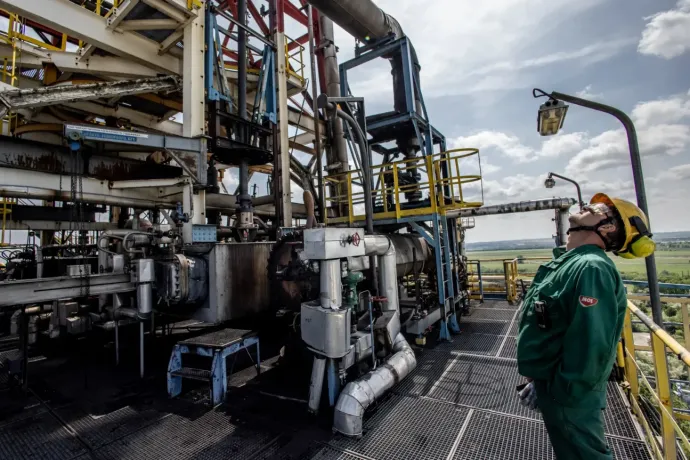


Hungary's top politicians have repeatedly said that the issue of gas and oil supplies shouldn't be muddled up with political stuff like sanctions, because it's a matter of geography and security of supply. Now, however, the situation has reversed, and Péter Szijjártó, Minister of Foreign Affairs and Trade, has sent a political message when announcing that Hungary would not transport diesel to Ukraine until the Ukrainians resume crude oil shipments to Hungary through the Druzhba pipeline.
The Slovak government made a similar announcement shortly afterwards, though it should be noted that Slovnaft is also part of the Hungarian Mol Group. As of 27 January, when Russia hit the pipeline, no crude oil has been delivered to Hungary and Slovakia via the Druzhba pipeline, and deliveries have still not resumed.
Szijjártó said that it is because of the Ukrainians' "political blackmail" that no oil is arriving in Hungary, and claimed that "all the technical, physical, and logistical conditions for the resumption of oil deliveries via the Druzhba pipeline are in place". Slovakian Prime Minister Robert Fico said that although all he can do is speculate, this would not be the first time that Ukrainian President Volodymyr Zelensky has made a political decision which is harmful for Slovakia. He claimed that the information received from Slovakian special services also supports this theory, since to their knowledge, the damaged section of the pipeline has already been repaired. On Wednesday, the European Commission also urged the Ukrainians on account of the restoration of the Druzhba oil pipeline.
"Hungary has certainly been aware of the reason for the oil pipeline shutdown from day one," Heorhij Tihij, spokesperson for the Ukrainian Ministry of Foreign Affairs said in response to Szijjártó's announcement. According to him, the Hungarian statement lacks a precise description of the circumstances, "namely that the oil pipeline was hit by Russia…”.
This is not the first time that Hungary has restricted how much diesel it is selling, although in the past it did so for commercial rather than political reasons. It is not yet clear how the government's statements could restrict the activities of a privately-owned company, but it is possible that a decree will be issued citing the emergency situation, national security interests, or security of supply.
Our sources in the oil and fuel market, however, believe that it would be a serious business mistake to stop diesel deliveries to Ukraine because, although Hungary has a significant advantage in that market, other countries could quickly move in to take over the business. What's more, we have not had a dominant share in Ukraine's diesel supply so far, which means we would be giving up a marginal, but highly profitable business.
The dangers of escalation
During our background discussions with sources in the industry, we heard a few arguments that supported the government's position and Szijjártó's announcement. One such argument was that the Ukrainians had previously repaired similar pipeline damage faster, so it was reasonable to assume that their not rushing to do so now is deliberate. We also heard that there is an unspoken deal between Hungary and Ukraine, whereby the Ukrainians will not jeopardize the operation of the Druzhba pipeline and Hungary's oil supply, while Hungary will transport diesel into Ukraine via another, secure underground pipeline, but if the Ukrainian side does not comply, then the Hungarian government will not have to either. Not to mention that it would be strange to dip into strategic oil reserves while exporting diesel, a substance that the country is otherwise forced to import, as some of our sources have pointed out.
Szijjártó said that Hungary's crude oil supply remains secure, with three months' worth of reserves available, and the Ministry of Energy announced on Wednesday evening that it had made preparations for the partial release of strategic crude oil reserves.
Apart from the above arguments, we found that Hungarian industry experts view the escalation as a dangerous process. It is true that suppliers are in a stronger position in the Central and Eastern European diesel market due to a severe diesel shortage in the region. Previously, demand and supply were balanced by Russian imports (one million tons of diesel used to arrive from Russia annually), but this has completely disappeared due to sanctions. At the same time, experts believe that shutting off the diesel taps is the worst thing Hungary could do. There are two reasons for this:
- On the one hand, Ukraine is now a premium customer, meaning that we are not supplying diesel to the Ukrainians out of the goodness of our hearts, but because they pay a lot for it.
- On the other hand, Hungary also has a technological cost advantage in transportation, because we have an excellent underground pipeline system that allows us to transport diesel very safely and cheaply. However, if other countries, such as Poland, were to take our place in the Ukrainian diesel market, or if the current major sellers, India and Greece were to increase their market share, this business could be lost.
One of the reasons why it would not be a wise move to lose the attractive Ukrainian market is that Hungary has the great advantage of the old Eastern pipeline, which used to run from Tiszaújváros all the way to Samara. Even though it is no longer used for such long distances, this infrastructure has recently been used as a cheap form of transport from Mol's refinery in Százhalombatta to the Ukrainian section.
The history of the pipeline dates back to 1956. After Russian troops entered Hungary, Moscow decided to supply the Soviet army stationed in Hungary with fuel via a pipeline. Construction lasted from 1957 to 1966, and from then on, fuel could be transported to Hungary from the east via the pipeline, partly for military and partly for commercial purposes.
The reversed direction of the pipeline, which runs slightly above Kyiv, has recently been an excellent way to supply Ukraine with diesel fuel. This became one of the main routes for supplying diesel fuel to Ukraine, which has been very important on the front lines during the ongoing war with Russia. Although Kyiv had previously tried to import Azerbaijani diesel via the Black Sea, this did not work out, as Russia attacked the shipments very heavily.
As a Reuters article pointed out, Ukraine is not really dependent on Hungary. Before the war it mainly imported diesel from Russia and Belarus, but it also had its own refineries. Since 2022, Russian-Belarusian imports have ceased, as has its own refining due to the attacks. However, Ukraine does not rely exclusively on diesel from Hungary and Slovakia, but also on Greek and Polish diesel, and they have been importing a lot from India, which has typically been transported by international trading companies' ships to Constanta in Romania or a Turkish port, and from there to Ukraine. We understand that Hungary is the fourth largest exporter of diesel to Ukraine, after Poland, Greece, and India. At the same time, according to a Ukrainian paper, nearly four-fifths of Ukrainian diesel imports came from Poland and Greece last October.
Are the Ukrainians slowing things down on purpose?
It is impossible to judge from Hungary how much damage the recent Russian attack on the Ukrainian section of the Druzhba pipeline has caused, but it did involve a major fire. According to Hungarian estimates, the damage was not serious enough to justify the suspension of deliveries on January 27. But it is also possible that Ukrainian maintenance specialists are now focusing on working to ensure that people in big Ukrainian cities do not freeze, i.e., they are repairing power lines in Kyiv, Kharkiv, and Lviv, where Russian bombing has resulted in conditions reminiscent of the 16th century, with sub-zero temperatures in the middle of winter and hardly any heating in homes.
The Druzhba pipeline may no longer be so important to Ukraine,
given that its revenue from transit is now only around €200 million per year: the transit fee on the Ukrainian section is €21/ton, which amounts to €210 million if Hungary imports 10 million tons per year.
Mol did not initiate the release of strategic oil reserves until a few days ago. If 250,000 tons of oil (of the 650,000-ton reserves) really has to be released, that is not good news, but it does not necessarily have to present a problem with regard to security of supply. At the same time, it is almost certain that the special situation would justify a roughly 5 percent increase in the price of the final product. Tamás Pletser, the oil industry analyst at Erste Bank, has written an excellent analysis of this.
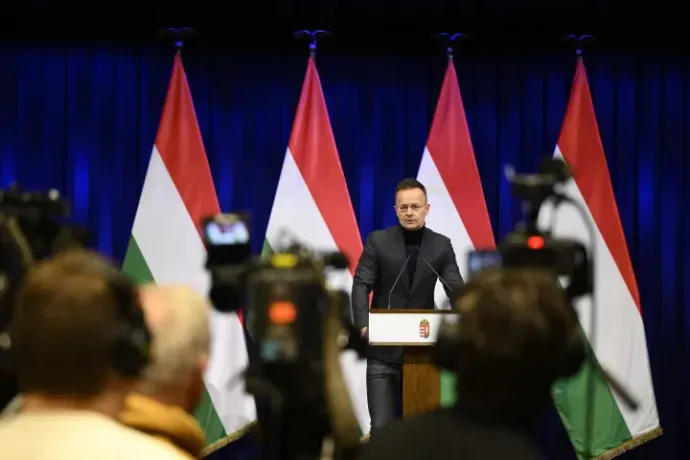
Hungarian experts already have some experience in dealing with similar major crises though. When the Hungarian government introduced a 480 forint price cap on petrol and diesel, there was a huge shortage of diesel in the country. Although it did not receive much publicity, during that time, Hungary only sold fuel in Transylvania and, on a smaller scale, in Slovakia, while Serbia, the Czech Republic, and Austria did not receive any diesel from us, despite repeated requests.
The problem is that even in peacetime, the annual production of 300,000 tons at Mol's Százhalombatta refinery is not enough to cover the entire Hungarian market, so we have to import diesel.
In fact, there has been a general decline in gasoline consumption throughout Europe, as well as an increase in diesel consumption. We produce about 40 percent more gasoline than we need and sell it on foreign markets, but almost every country has to import diesel. Of the many European refineries, the one in the best position was Slovnaft's (which also belongs to Mol) in Bratislava. It has been able to export diesel because its capacity was previously tailored to the needs of the former Czechoslovakia.
Based on all this, it might even be commercially justified to curb diesel sales. However, if the state intervenes in the business of a private company (diesel is sold by Mol and intermediary companies) with a ban, it is doing exactly what it has so often criticized: imposing sanctions on political grounds, which will affect a healthy and profitable business.
A lingering shortage
Europe continues to experience a shortage of diesel, which means that large quantities need to be imported (the port of Koper in Slovenia plays a key role in this regard), and recently, refined products from the US, the Middle East, and India have also arrived in the region, but Russian products are only available illegally, because refined petroleum products are subject to a full sanctions ban. At the same time – in theory – we can still buy oil, but Hungary is becoming very vulnerable.
In theory, Russian crude oil can be imported into Hungary, either via the Druzhba pipeline or, if there are technical obstacles, via the Adria pipeline, but since this is a Croatian port and a Croatian pipeline, the goodwill of the Croatians is also needed for this to happen – and this is hardly the case, given the recent communication of the Hungarian government on this. In other words, the Croatians are happy to have Janaf take on a bigger role in supplying Hungary, but they don't want it to be with Russian oil. And we can be sure that the US, a big friend of the Hungarian government, will also be backing the Croatians in this.
Russian oil, on the other hand, would be important for Mol and for the Hungarian state. Partly because it is cheaper, and partly because it is easier to use in Mol's refineries (in Százhalombatta and Bratislava), both of which are optimized for Russian oil, so there is no need to blend it. By contrast, Mol can only use offshore oil to a limited extent, and only after blending it.
Naturally, it would not be good if the capacity of the two refineries were to be reduced, but the big question is whether Mol has the leverage to force the Croatians to allow Russian oil to pass through. Mol may well be right in theory, but the Croatians can always say that they do not want to allow the transport of Russian raw materials through their pipeline because of the Russian shadow fleet, the sanctions, environmental concerns, and the like.
And then we haven't even touched on the question of whether Janaf can actually transport 10-12 million tons of oil per year, which would mean transporting 40,000 tons per day on some summer days. Admittedly, the Duna Refinery in Százhalombatta is currently only operating at 70 percent of its capacity due to the fire that broke out there last year, which somewhat paradoxically means that the accident is partly solving the crude oil supply problem. Another open question is what the new pricing agreement between Mol and Janaf will be, given that the current contract is only for 2 million tons per year.
For more quick, accurate and impartial news from and about Hungary, subscribe to the Telex English newsletter!