It's not just that there's no electricity and heating, but everyone is living in constant survival mode



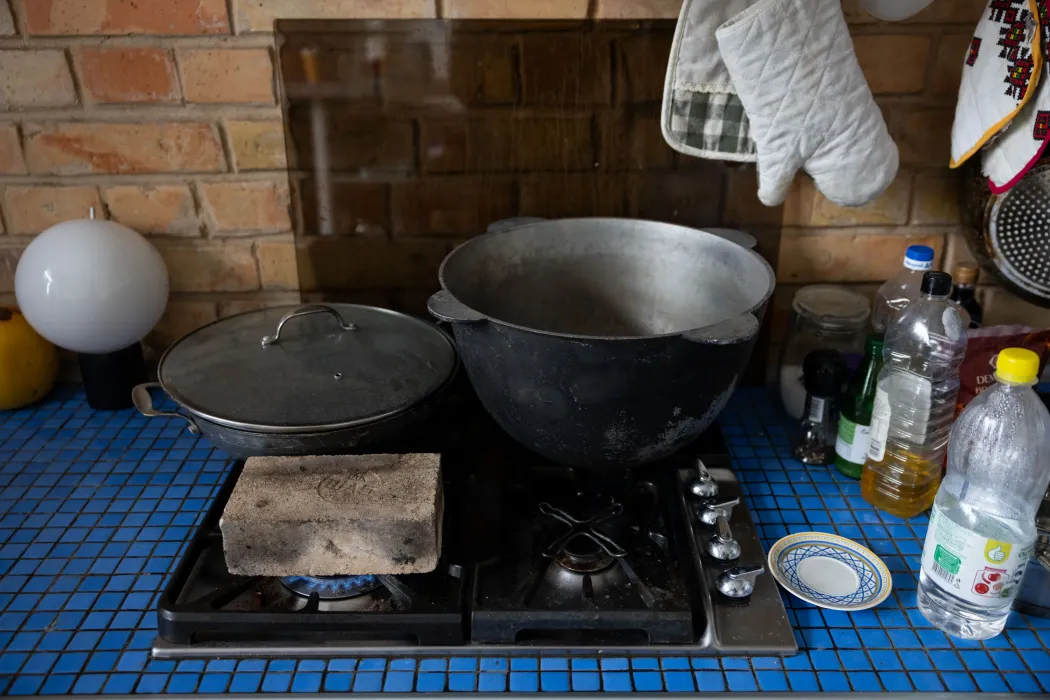
"It's not that cold here, is it? The thermometer is right there next to you, you can have a look. 33-year-old cameraman Andrii Tartisnyikov lives in a designer apartment in a brick building not far from downtown Kyiv. Similarly to most residents of the Ukrainian capital, these days his kitchen also features a large brick. He had placed it on the gas stove a few minutes before so that it would heat up the room as much as possible. He was now asking me to check the temperature. I looked at the thermometer and reported that it was 10.8 degrees Celsius. “See? It's not that bad. I feel like those who have small children or pets are suffering much more than I am. Especially because I have somewhere to go.”
Since the outbreak of the Russian-Ukrainian war in February 2022, which then spread to the whole of Ukraine, this has been the hardest winter for those living in Kyiv. There have only been a few days when the temperature reached 0 degrees since Christmas, with occasional lows reaching -10, -15, and sometimes even -20 degrees Celsius, while Russia has been systematically attacking Ukraine's energy infrastructure with drones and missiles since the beginning of January – Telex was in Kyiv during one of the most recent intense attacks.
Due to the attacks, the power supply to residential buildings in Kyiv became critical. By the end of January, it was no longer surprising if someone in the capital did not have electricity, heating, or water, but rather if they did. The situation became so serious that in mid-January, Kyiv's Mayor Vitali Klitschko asked residents who were able to leave Kyiv to do so, so that the supply system could be relieved. However, according to a January 22 poll by Gradus Research Company, the vast majority of the capital's residents (82 percent) remained in their homes.
In our previous report from the scene, we showed how Ukrainians left without electricity and heating are trying to cope in crisis points and their apartments in Kyiv. In this article, we interviewed two young people from Kyiv about how the energy crisis caused by the Russian attacks is affecting their daily lives.
Over the weekend, Ukrainian President Volodymyr Zelensky reacted to Donald Trump's statement that Vladimir Putin had promised not to attack Ukrainian cities for a week due to the extreme cold. The Ukrainian president said there was no direct agreement between Kyiv and Moscow to halt attacks on energy infrastructure, but promised that Ukraine would suspend attacks if Russia did the same.
They bombed us last year too, but the situation wasn't this bad
Tartisnyikov has had no heating since the Russian attack on January 9, and power only comes back on for a few hours a day. After two days, the half-Ukrainian, half-Latvian man decided to move in with his father, who lives an hour away from Kyiv, to wait there until this season ends. Since then, he has been returning to Kyiv every few days to check on the house and heat up the apartment, which is slowly cooling down.
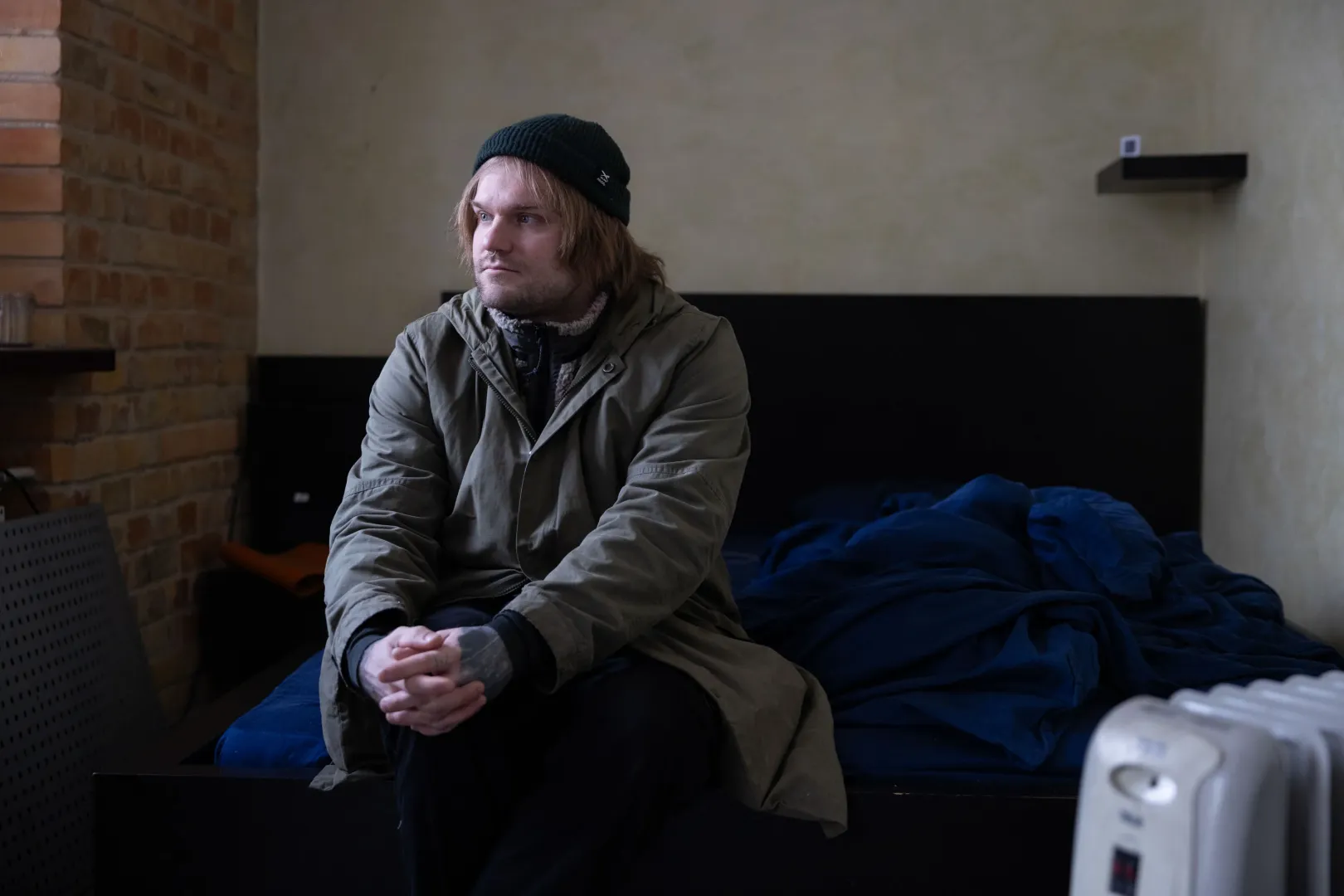
While we were there, the brick warming up on the stove raised the temperature in the kitchen to above 12 degrees, but as soon as we walked into the bedroom, it became clear why he had to move out. Since the electricity happened to be on and the electric heater was running, the thermometer there read 5 degrees, but according to Tartisnyikov, without it, the temperature next to his bed is usually around 1 degree. The situation in the house is further exacerbated by the fact that ice has formed in several places inside the heating system, so in order for the heating to be fully restored, this will also have to be repaired first.
"Last winter wasn't this cold, and there weren't as many problems with electricity. Of course, we were bombed then too, but the situation wasn't as bad as it is now," he said. “In recent weeks, several Kyiv friends have offered to let me stay with them temporarily, but I didn't dare accept any of the offers. It's not easy to live with friends for a long time, and you never know which building will be next to have its heating or electricity cut off.”
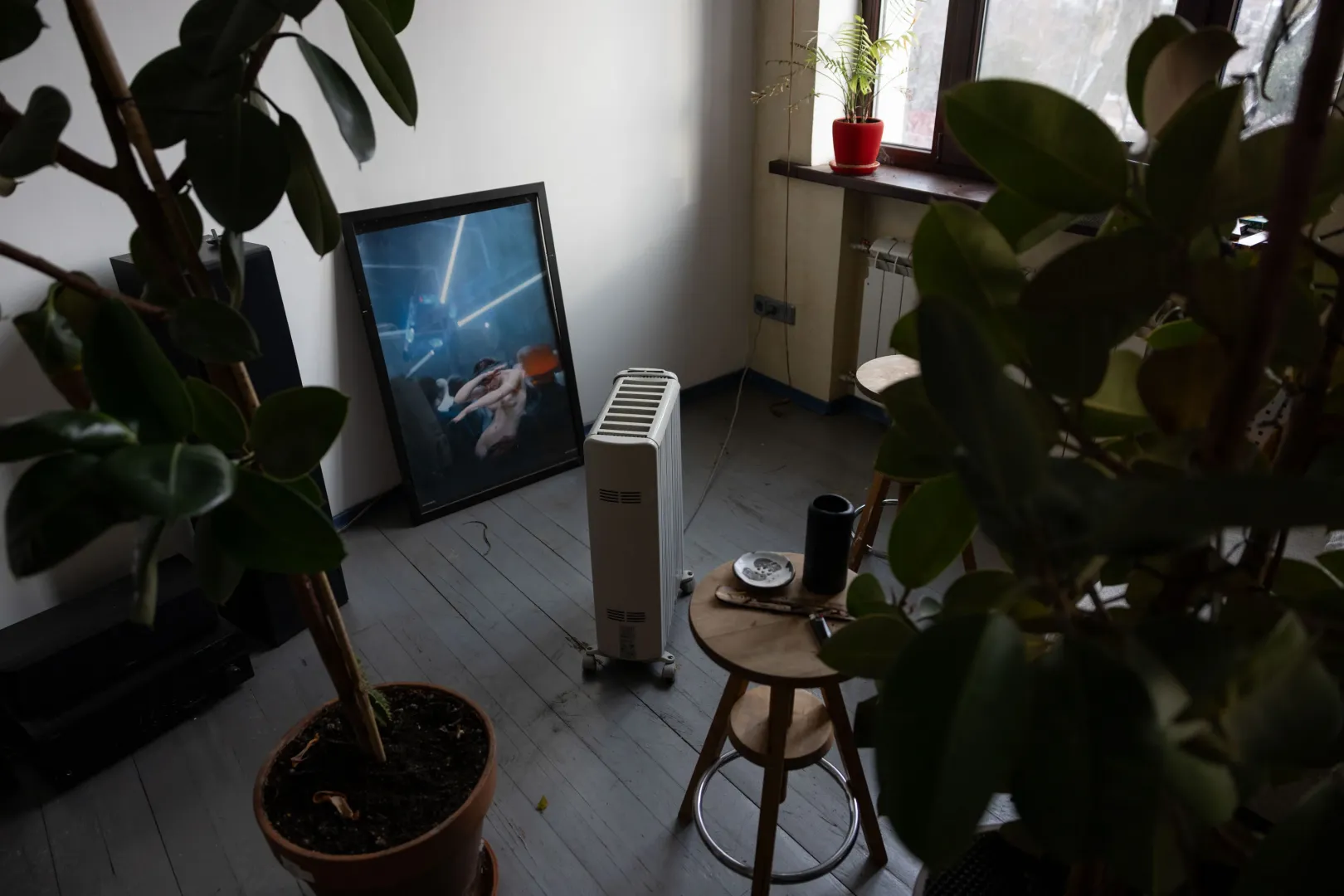
Two large houseplants stood in the middle of the cool apartment's living room, and Tartisnyikov pulled up a small electric radiator next to them so that they could get some warmth during the rare moments when the power came back on. He had loaded his other plants into his car a few days before and had taken them to his father's house. He had so many flowers that they filled the entire car. "There is no greater treasure than having your apartment full of plants. I had to leave these two here because they are too big to take with me. I really hope they will survive as well."
One of the Russians' goals in attacking infrastructure is to wear down Ukrainian civilians, but this strategy is not working, he said. “All they are achieving is that people are becoming increasingly angry, and this anger is directed at Russia. Meanwhile, Ukrainians have adapted to the circumstances, and life goes on: restaurants and cafes are still operating, just not on the grid, but on generators.”
The cameraman grew up in Riga and lived in Latvia until he went to university. When he was 20, he decided to move to the Ukrainian capital. His work took him to Germany, Latvia, and Lithuania, and after the Russian invasion in 2022, he spent the first two and a half years in Munich and Berlin. He returned to Ukraine just over a year ago. “It's just as difficult to get by abroad. Even though I have connections all over Europe, it wasn't at all easy to find work as a freelancer. Life abroad is not as easy as it may seem from the outside. In the end, I decided to come back to Kyiv because nowhere else in Europe do I feel at home the way I do here.”
Living in survival mode
“I recently realized that when I try to make plans with someone, I always add 'if all goes well' at the end of the sentence. 'Yes, let's have dinner together on Tuesday night, if all goes well,' or 'I'll watch a movie tonight, if all goes well. It took me a while to realize that I am constantly in survival mode because the ground keeps being pulled out from under my feet.”
25-year-old Andrii Usicky is a humanitarian aid worker in Kyiv, and he also writes for and edits the Ukrainian art magazine Solomiya. In mid-January, a week after Russia started systematically destroying Ukraine's energy infrastructure in the freezing cold, Usicky posted a short message on Instagram. In it, he tried to explain to his foreign friends how the Russian attacks, which have left the vast majority of homes without electricity, heating, or water for weeks, are affecting the residents of the Ukrainian capital.
"Over the past few days, I have felt the need to write about the times we are living in, because it somehow felt that it's not just about the lack of electricity," he continued in his post. “Russian attacks on critical infrastructure are not only disrupting the functioning of our cities, but also the very intimate, personal systems we have built to sustain our lives.”
A few days later, we met Usicky in person at a café in Kyiv. While we were talking, air raid sirens were sounding outside, but as is usually the case with daytime air raids in Kyiv, no one in the café moved; everyone continued reading, working, or chatting.
"With each Russian attack, it's not just the power supply and heating that collapses, but something else too," Usicky explained. "Each attack forces people to create a new kind of 'system' around themselves. But until these systems get established, there's nothing to rely on, so people are constantly living in survival mode.
We must constantly draw on new resources to remain strong, to start rebuilding again and again. And that is incredibly exhausting."
Unlike most people in Kyiv, he had electricity and heating for a relatively long time. He said that he was starting to think that he was lucky and that his block of flats must be connected to the same supply network as a critical piece of infrastructure in the neighborhood – until the situation changed for him too. In the early hours of January 24, Russia attacked Ukraine with nearly 400 drones and more than 20 missiles. After that, Andrii lost power, and two days later, on the morning of our meeting, his heating as well.
For us, future is not what comes after the "right now", it's just another "right now"
It was as early as 2022, that he noticed he was adding "if everything goes well" to the end of his sentences, but he also observed that the time frame for which this statement was valid was becoming shorter and shorter. At first, he only used it for a period of one year, but later he could only plan a few months ahead. “Now, however, the time frame in which I can think has literally been reduced to a day or two, because we can never know in advance whether there will be electricity, whether there will be water for showering, or whether we will be able to get from A to B. The way we perceive the future has become fragmented for quite some time now.”
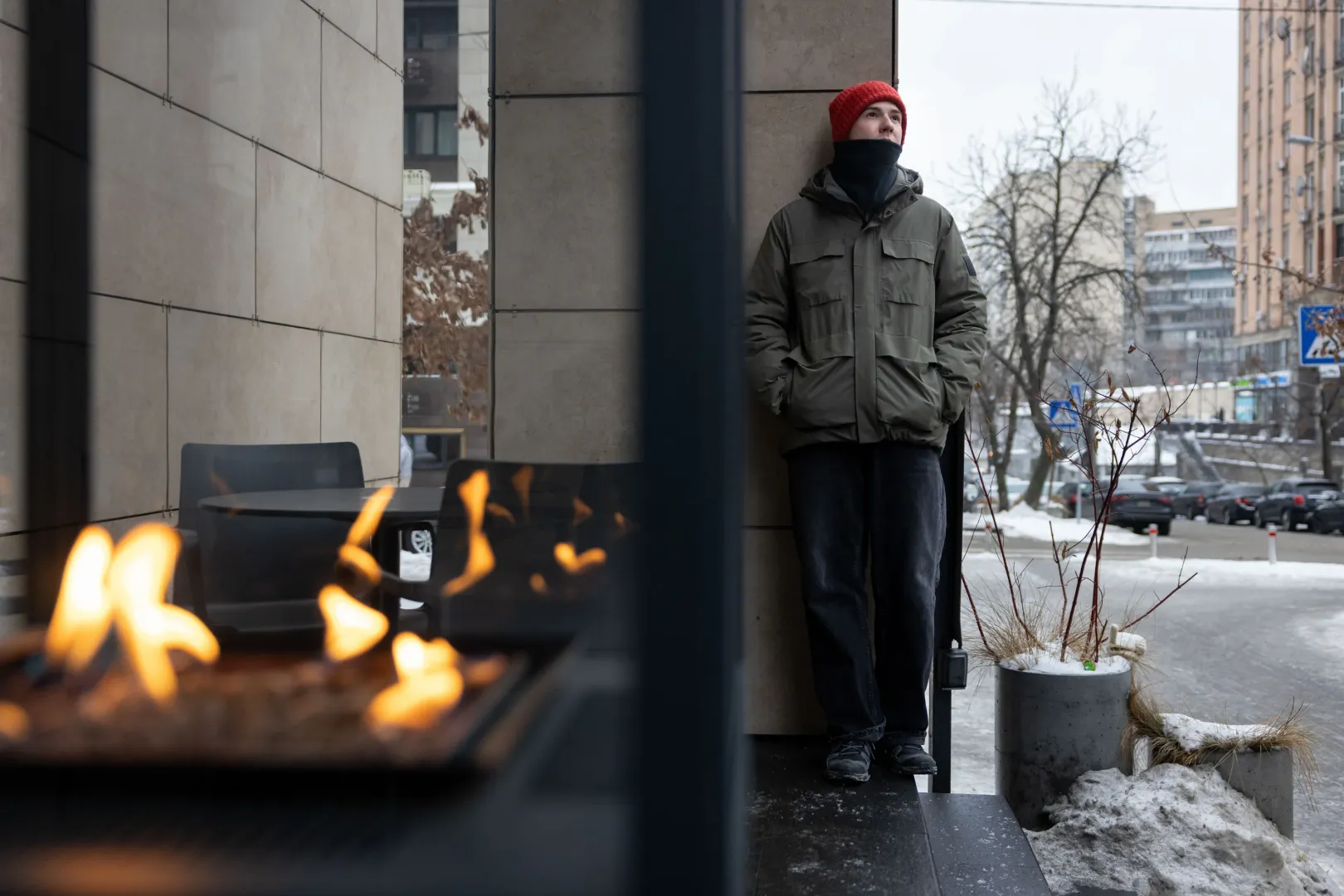
The magazine where he works recently published an issue titled After Now about how Ukrainians imagine the future. "We wanted to understand why no one in Ukraine is trying to build a vision for the future.
And we realized that it's because it's impossible.
The future basically consists of what is happening right now. And what comes after the present moment is just another moment that immediately becomes the present. For us, it’s not future that comes next after the present. It’s just another present."
Usicky is not only engaged with the social aspects of war as the editor of an art magazine, but is doing his master's in memory studies. “I like to say that memory is history interwoven with emotions. Memory studies deal with how we remember certain events, what meaning we attribute to certain events, and why it matters that we remember things in a certain way.”
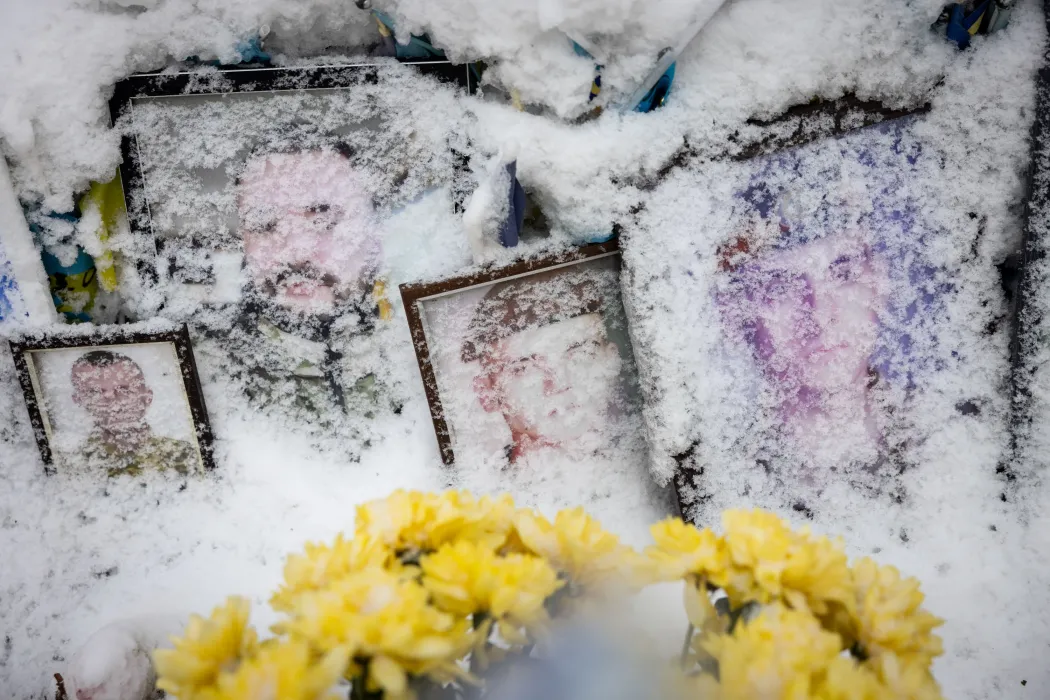
Since the current war is still ongoing, it is difficult to examine it from the perspective of memory studies, but he believes that it is already possible to reflect on certain shocking events of the war, such as the massacres in Bucha and Irpin. “The bridge that was destroyed in Irpin has become an important symbol of the city because, when it was rebuilt, the decision was made to leave the ruins of the old bridge and build the new one next to it. There are countless ways to commemorate those we must remember.”