Erasmus+ rapporteur: I didn’t expect Péter Magyar to make such quick progress
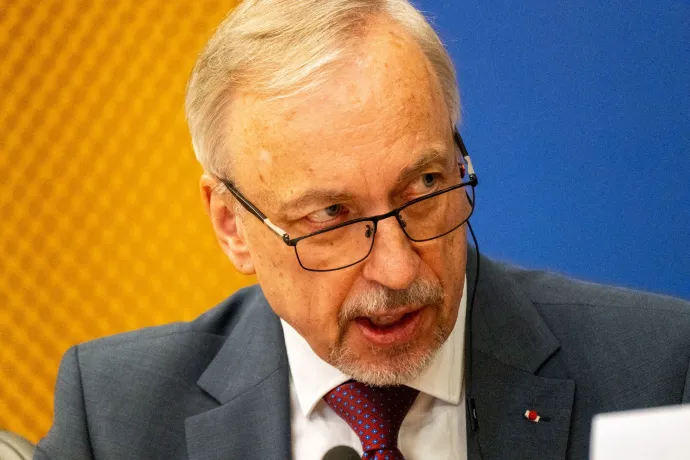


“I followed the takeover of universities, their political takeover-especially in the capital. It gave me cause for concern”- Bogdan Andrzej Zdrojewski said during a meeting with journalists in Brussels, where he also answered questions from Telex. The Polish Member of the European Parliament from the European People’s Party is the rapporteur for the Erasmus+ program for the period of the next seven-year budget, beginning in 2028.
Starting this fall, Hungarian universities which previously underwent a model change will fully return to the European Union’s Erasmus+ education and youth exchange program, after having been barred from all new EU funding by member state ministers in 2022. Although the previous Hungarian government had spent months negotiating its commitments with the European Commission, according to the Council, it failed to address the Commission’s objections raised months before, the institutions did not operate with sufficient transparency, and their boards were filled with political decision-makers, which represented a conflict of interest.
Under the conditionality procedure initiated due to rule of law concerns – alongside a partial freeze on grants – public-interest trusts (KEKVAs) and the institutions they operate, including KEKVA-backed universities which underwent a model change, were barred from entering into any new EU commitments. Due to this ban, by the fall of 2024, participation in the Erasmus program became impossible for anyone attending one of the affected universities.
At the end of May 2026, the new Hungarian government reached a political agreement with the European Commission on the steps required for meeting the conditions for-among other things-lifting the ban on KEKVAs’ ability to participate in the Erasmus+ program. Since then, the new government has not only restructured these foundations, but has also been gradually phasing them out-going beyond the originally requirements. The Commission eventually proposed that the conditionality procedure be terminated, and on October 13, member state ministers gave their unanimous approval, paving the way for the renewing of expired Erasmus agreements.
“I must say that I didn’t expect Péter Magyar to make such quick progress with the work,” said Zdrojewski. The politician previously served as chair of the European Parliament’s delegation on Belarus. Before 2020, the country led by Alexander Lukashenko also used to participate in the exchange program for a while. According to the MEP, however, they soon realized that the students coming from there were all from families with ties to the regime, thus depriving everyone else of the opportunity. “This was an argument that confirmed that universities which are run in a manner similar to the way they were run during the Orbán government's final years should not be rewarded with the opportunity to participate in the program.”
Negotiations about the European Union’s next seven-year budget, set to run from January 2028 are currently underway, so the MEP also touched on this when speaking with Hungarian journalists in Brussels. According to Zdrojewski, the circumstances are not favorable: they must allow for significant defense spending, which often pushes education to the sidelines. Despite this, they are trying to secure a more generous budget for Erasmus than before, and while the program’s budget for the current seven-year period was €26 billion, the European Parliament’s current proposal calls for more than €47.4 billion for the next seven-year period. The new budget not only aims to increase the number of places available through Erasmus but also seeks to address previously existing challenges.
According to Zdrojewski, their main goal was to make the grant amounts more flexible and better aligned with the constantly changing living costs in the various cities of the European Union. Simplifying the application process for the program was also important, so streamlining measures can be expected in this regard as well.
Besides the program’s budgetary framework, another important question is how these €47.4 billion are to be allocated. According to Zdrojewski, the European Commission would have liked complete flexibility in determining how the funds are allocated, but they decided that certain limits needed to be set. The rapporteur said that one of the key goals of their work was to identify mechanisms and solutions that would ensure that no one is excluded from the program. That is precisely why they included provisions in the proposal requiring the European Commission to allocate more than 20 percent of the funds to those who are disadvantaged due to their geographic location, those residing in smaller communities, as well as members of marginalized groups and people with disabilities.
Other percentage minimums have also been set: at least 4.1 percent would go toward sports, at least 15 percent toward youth programs and volunteer work, and nearly 75 percent would be spent on education and training. According to their proposal, young students will continue to be the main beneficiaries of the program, but there will also be opportunities for the participation of older individuals who were previously unable to apply for one reason or another, mostly due to their age. This is being called the “Universities of the Third Age” and is aimed at retirees who could also participate in short-term training courses and study programs. This opportunity was to a small extent already built into the current budget, but the goal now is to encourage more people to take advantage of it.
Up to now, 1.9 percent of the program’s funding has been allocated to sports, which went toward financing various nonprofit events and supporting collaboration between sports organizations. A new feature of the proposal would expand the scope of exchange programs to include athletes as well, whereas previously only coaches and professionals working in the field of sports were eligible to participate. “Does this mean, for example, that Mbappé will also go on such a scholarship program? Of course not.” It would primarily provide opportunities for athletes who compete at lower levels and who, with their scholarships of 200–300 euros, would otherwise not be able to afford to travel abroad for a few weeks. The MEP noted that while the European Parliament would support the sports-related proposals, the other co-legislator, the Council of the European Union, was not as enthusiastic about the idea. The two institutions still need to reach an agreement on the legislation.
Starting in January 2027, the United Kingdom will rejoin the program, with Switzerland also set to join; negotiations with them are also nearing completion.
It has previously been suggested that Canada could become an “associate member” of the European Union, and if that were to happen, Zdrojewski said the North American country could also join the Erasmus+ program. According to the MEP, Canada could join the program relatively fast—perhaps within a few months—after becoming an associate member, meaning that this could happen even before the beginning of the next budget period in 2028. If the three countries were able to join as planned, it would bolster the program financially as well.
According to Zdrojewski, during the consultations, various organizations pointed out that there are cities where Erasmus students are unable to make ends meet without financial support from their parents. One problem is that in some cities, housing costs have risen significantly since the pandemic, which is why there can now be considerable differences even within a single country when it comes to how much it costs for Erasmus students to live in a given town or city, while the fixed scholarships allocated to each country do not account for this. So, for example, if a Hungarian student goes to Germany on an Erasmus scholarship, they will currently receive 600 euros (not including any additional financial aid they may be eligible for), regardless of whether they go to a small town with affordable housing or to Berlin.
This is precisely why they are calling for more flexible funding in the upcoming period, which could then be tailored to the specific circumstances of each location. They also want to ensure that, in the next funding period, the amount of Erasmus grants tracks inflation in different countries, so that by the end of the seventh year, the grants do not lose their purchasing power and fall behind the actual local cost of living.
In mid-October, members of the European Parliament adopted the proposal for which Zdrojewski was the rapporteur. Armed with the EP’s position—the foundation of which was prepared by the Polish MEP—the EP, under Zdrojewski’s leadership, can now negotiate the final text with the other decision-maker, the Council, as well as with the European Commission, which submitted the original proposal. According to the MEP, there is broad political consensus within the EP on supporting Erasmus, but there are certain difficulties when it comes to the Council. Previously, for example, both the Cypriot and Irish presidencies attempted to place restrictions on the program.
For more quick, accurate and impartial news from and about Hungary, subscribe to the Telex English newsletter!