"They are treating us as if we were a colony" – The relationship between the Hungarian state and France's Vinci has soured
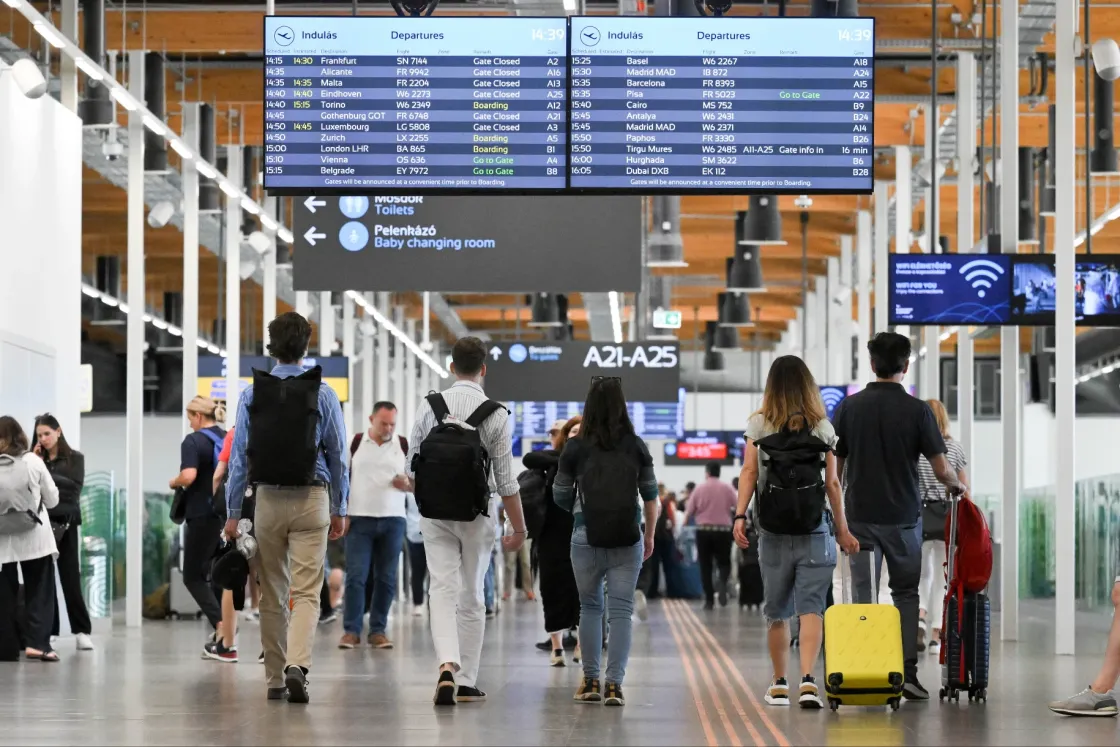


Based on its financial indicators, Budapest Airport Ltd. is performing exceptionally well: in 2025, it generated 183 billion forints (nearly €502 million) in revenue and recorded a remarkable after-tax profit of 71 billion forints (€174 million). This year's passenger traffic is also expected to set a record: more than two million passengers passed through the airport in both July and August, breaking the previous monthly record for both months. In the meantime, after some delay, representatives of the Tisza administration have also joined the board of directors.
Despite the strong results, however, our off-the-record conversations suggest that growing disagreements are emerging between the Hungarian state, which owns 80 percent of the company, and the French firm Vinci Airports, which holds a 20 percent stake, while also exercising management rights. Neither party wants to terminate the contract, and neither is willing-or at least able-to substantially alter the ownership structure at the other’s expense.
Based on our conversations, the owners’ positions diverge on several issues, ranging from terminal development and the construction of the airport rail link, to the operation of the shops and restaurants and the role of the airport in tourism. In its response to our questions, however, Budapest Airport emphasized partnership and close cooperation: “It is natural for differing viewpoints to arise from time to time in any partnership.” According to the company, these are discussed through open, constructive dialogue to ensure that the airport’s development serves the interests of the country, the passengers, and tourism. Our sources, however, were far less diplomatic in their descriptions of the differences of opinion between the owners.
For this article, in addition to official inquiries, we interviewed former and current decision-makers, as well as aviation experts. These interviews show that the Fidesz government was very proud to have bought back Budapest Airport and maintained good relations with its partner in the deal, the aforementioned Vinci. The Tisza government, however, is much more critical: in their view, it is not a true “reacquisition” if control and management rights are not in Hungarian hands.
Even the more reserved experts’ accounts made it clear that there is a fundamental conflict, which, from the government’s perspective, can be summarized as follows:
“Although there were many differences in opinion with previous foreign managers too-including the Germans and Canadians-, the French are only focused on squeezing every last bit of profit out of the airport; their long-term development plans are overly no-frills, they are treating us as if we were a colony.”
It would be embarrassing even in the Caribbean
What exactly are Hungarian critics-some of whom are government insiders-referring to? They are primarily referring to Budapest Airport’s one-billion-euro Terminal+ program, which they consider ambitious yet long overdue.
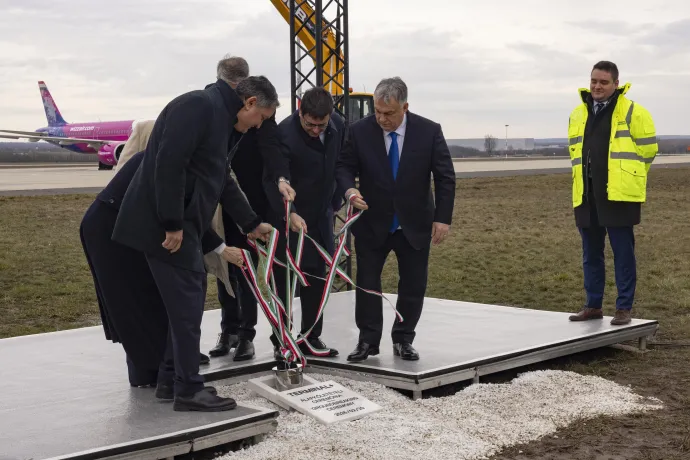
February's groundbreaking ceremony was still attended by Viktor Orbán, but the new administration's officials have already criticized the French for planning to build small spaces with overly basic amenities. In their view, the open-air solutions would be embarrassing even in a warm Caribbean country, but they are simply unacceptable given Hungary's climate.
Budapest Airport does not agree with this criticism. As they stated: “Preparations for the Terminal+ development program are proceeding as planned. For some of the investments related to the program, procurement documentation is being prepared, while for other projects, procurement procedures—and in certain cases, construction work—are already underway. We are engaged in ongoing and close technical consultations with the government about the development concept.”
Our sources described these negotiations as much more tense. According to them, the parties are exerting serious pressure on each other with regard to the design of the future terminal, and due to the government's objections, the plans may need to be modified. Moreover, meetings involving nearly all major domestic construction companies have become less frequent in recent times.
The tense situation also casts doubt on whether the French would undertake another massive investment, like building the airport rail link as part of the concession. An agreement between the Ministry of Transport and Investment and the Vinci-Strabag-Aberdeen consortium-the sole bidder in the tender-could still happen, but according to one of our sources, the ministry will only sign the contract if it succeeds in negotiating favorable terms.
Budapest Airport announced that it supports setting up a direct rail connection, which would provide fast, modern, and viable long-term access to the airport. It emphasized, however, that the project’s owner for both the railway connection and the renovation of the expressway is the Hungarian government. The airport is collaborating with government officials on the preparations for the railwork affecting the airport grounds, and both development projects are proceeding in a coordinated manner. As they stated: “Preparations for the rail project do not interfere with the progress of developments at the airport.”
The airport fears losing its parking lots, while the government is pushing for the railway connection
The chances of an agreement also depend on whether the government has a viable alternative. The railway could be built as a state investment, using EU funds, but according to our sources, the idea of a concession is also attractive to the Tisza government: unlike the Mészáros–Szíjj-style highway concession, in this case the state wouldn’t be the one paying out huge sums, but the investment of foreign parties would instead be financed by the passengers using the railway.
However, this does not mean that reaching an agreement on the details will be easy: according to a source close to a ministry, for example, the management of Budapest Airport is arguing that the railway line passing through the airport’s grounds would reduce the number of parking spaces—and thus lead to a loss of revenue. This has caused quite a stir on the government side: officials there feel that the airport is holding the government accountable for lost parking revenue from a project that would actually bring many more passengers to the airport.
Meanwhile, the process is going ahead; after the missing documentation has been submitted, negotiations with the sole bidder could theoretically start in January. The government is not worried, because it reckons that even if an agreement isn’t reached in the end, the preparatory work will not have been wasted: the concept developed during the negotiations could still be put to use in a future project.
Although the history of concession-based railroad construction in Hungary dates back to the Southern Railway—established in 1858—which received a concession from Emperor Franz Joseph, this solution would not be unprecedented in today’s context, as evidenced by the examples of Brussels and Prague.
The government is therefore open to the idea, but according to our sources, it would prefer to negotiate while having multiple offers to choose from, rather than having to settle on a single bidder-or walking away from the table without a deal.
Viktor Orbán, who repeatedly used to emphasize the importance of Hungary’s sovereignty, gave the French too much leeway when the airport was bought back, according to the new Hungarian leaders. They argue that Vinci, which has a 20 percent stake in the company, is managing it without giving sufficient consideration to the country’s long-term interests, and furthermore, based on the French interpretation of the agreement, it could increase its stake to as much as 49 percent.
According to our sources, it is Vinci’s Belgrade contract which currently prevents this: the company is not allowed to acquire a stake of more than 20 percent in any other airport within a 450-kilometer radius of the Serbian capital. We only learned of the restriction from our sources though, and have not seen the contract ourselves. However, even if Serbia were to grant an exemption, it would remain a matter of dispute whether, according to the Hungarian side’s interpretation of the law, the decision to increase the stake is solely up to Vinci.
The new Hungarian delegates are also taking issue with the fact that the French accepted Orbán’s rules of the game and brought in companies linked to the NER to provide cleaning and security services. According to what we’ve heard, there are no alternative suppliers proposed to replace them, but the Hungarians object to their presence at the company, which is 80 percent state-owned.
NER is short for Nemzeti Együttműködés Rendszere, meaning ’System of National Cooperation.’ The term was coined by the Orbán government after their election victory in 2010 to refer to the changes in government that they were about to introduce. By now, NER has become a word in its own right, and is used in colloquial Hungarian to refer to Fidesz' governing elite, complete with the politicians and the oligarchs profiting from the system.
The French side, however, does not see any serious conflict in this and considers its objectives to be in line with Hungarian interests. In its response to us, the company emphasized the strategic importance of its presence in Hungary, citing the sustainable growth of passenger traffic, international connections, competitiveness, and the strengthening of the airport’s regional role among its goals.
Who should do business, and who should travel?
So while Vinci is talking about long-term plans, the Hungarian side perceives an excessive focus on short-term profits behind its decisions. The French may have had a similar attitude in the past, and it could be that the differences in opinion simply did not come to the surface as much during a period of trust and good working relations.
One such point of contention is the operation of the airport’s retail stores. Vinci has primarily contracted with major service providers: the Hungarian Duty-Free Kft., which operates the duty-free shops, is 71 percent owned by the Hamburg-based Heinemann and 29 percent by Budapest Airport. The state thus indirectly benefits from the 34 billion forint in revenue and 1.7 billion forint of after-tax profit; however, certain Hungarian stakeholders argue that more domestic companies could be involved and allowed to compete. Similar objections have been raised with regard to the lower-revenue hospitality sector, where the main—though not exclusive—operator is the Hungarian subsidiary of the international SSP Group, which specializes in transportation hubs.
Some Hungarian stakeholders would also like to change the makeup of passenger traffic: they want more tourists who are willing to spend a lot in Hungary and are looking for cultural programs. In their view, Budapest's tourism industry is not only hampered by the proximity of the war and the strong forint, but also by the type of visitors and their motives for coming. From this perspective, they consider Scandinavian, Chinese, Japanese, or Arab guests more desirable than young Britons arriving on budget flights for bachelor parties.
The responsibility of the airport's operator is less straightforward here, but according to our sources, its decisions about airlines and routes also have an impact on the types of tourists who visit Budapest.

Our sources familiar with the French position consider the Hungarian objections exaggerated. In their view, while CEO François Berisot may seem to move at a slower pace, he is well-prepared and doing a good job. At the same time, one of our internal sources identified Emmanuel Menanteau as the key decision-maker: he is responsible for the interests of Vinci Airports in the United States, Northern and Eastern Europe, and Southeast Asia.
One of our sources summarized the difficulties in the two sides' relationship as follows:
“There could certainly be more chemistry. The ‘we need to check with Paris about this’ mentality isn’t really compatible with Dávid Vitézy’s (Minister of Transport and Investment in the Tisza government) ‘let’s get on with it’ approach.”
According to the corporate side, the management’s work should be evaluated based on jointly defined, measurable performance indicators. For this to happen, vague expectations citing long-term Hungarian interests should be translated into specific goals.
At the same time, parties independent of both sides have pointed out that, in a joint venture, profit alone is not enough for successful cooperation. The owners must also understand the other party’s priorities, identify areas where they can work together, and recognize where they need to compromise.
For more quick, accurate and impartial news from and about Hungary, subscribe to the Telex English newsletter!