Between 2010 and 2026, Hungary had a democracy matching that of any normal, decent EU member state-Tamás Deutsch
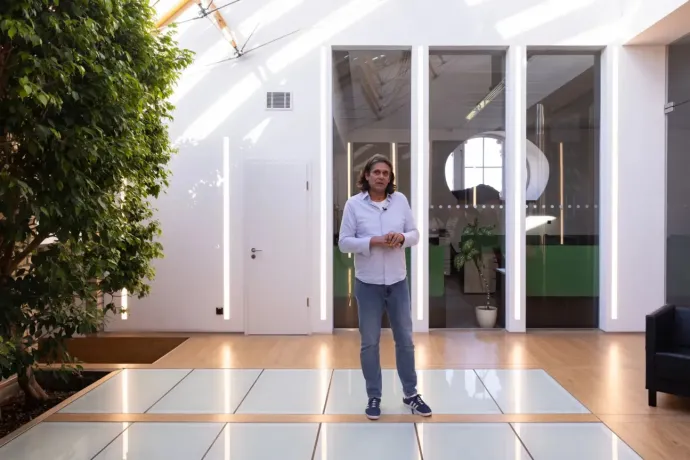


Cultural funding under Balázs Hankó was so permissive and liberal that even bands campaigning against Fidesz, often using vulgar language, were supported with tens and hundreds of millions, claims Tamás Deutsch, head of the Fidesz delegation to the European Parliament, whom we interviewed at the party’s headquarters on Lendvay Street the day after former Minister of Culture and Innovation Balázs Hankó was taken into custody. In a letter to MEPs, Deutsch complained about politically motivated proceedings going on in Hungary. He said he sent the letter so that the blind Brussels bureaucrats—who remain oblivious to the dismantling of the rule of law in Hungary—would at least have two uncomfortable minutes. He also spoke about where Fidesz had handled things poorly and what results he expects from his party in the 2029 European Parliament elections.
There is no point in anyone fooling themselves, this is not about uncovering irregularities, but about a political witch hunt. The Tisza government is building an aggressive, neo-communist regime and wants to use every authoritarian tool at its disposal to sweep its opponents off the political stage in order to lay the groundwork for its next electoral victory. Politically motivated proceedings have been initiated, factually quite shaky, ridiculous assertions are being made, and this witch hunt is not going to stop.
It was not the prosecutor’s office that took action, but Péter Magyar.
Péter Magyar was the one in charge.
Your paper is capable of writing brow-raising articles about trivial matters, claiming that this or that wouldn't happen in a normal country. And yet, there's a small detail that you somehow overlooked: in recent months, Péter Magyar has been making statements on his Facebook page on behalf of every state agency. He speaks on behalf of Parliament, which is supposed to oversee the government; on behalf of the prosecutor’s office, which in theory operates independently of the government; and even on behalf of the ÁVH which they themselves created. Péter Magyar’s thirst for political revenge is dictating the political agenda while he seeks to eliminate his political rivals using utterly undemocratic and arbitrary means.
The ÁVH (Államvédelmi Hatóság, or State Protection Authority) was the notoriously brutal secret police force of Hungary between 1948-1956. It used various forms of physical torture and psychological terror against those perceived to be “enemies of the state”, and held political show trials.
Since the Tisza government founded the National Office for Asset Recovery and Protection, tasked with investigating and recovering misused public funds under the Fidesz administrations, Fidesz politicians have been comparing the new anti-corruption agency to the ÁVH and have taken to only referring to it under the same name.
You should ask them why they are yielding to political pressure.
Between 2010 and 2026, did any member of the government publicly announce a measure the prosecutor’s office would later implement before it happened? If that had happened, you and many other media outlets would have demanded that the UN’s unified liberation forces immediately march into Hungary and that the European Commission launch an even more serious investigation. Let’s not pretend that this hasn’t become standard practice! Although he did it with little imagination, it was Péter Magyar who announced that "Operation Cleansing Fire” was about to “land”. How did he know this would happen on Monday?
No, Magyar said that the term he used meant that two opposition lawmakers would be detained. How did he know that would happen?
Of course I do.
Balázs Hankó refuted every single allegation calmly, objectively, factually and backed it all up with documentation. These are publicly available facts; you yourself could have also seen that he refuted all the false claims.
I understand that if bands showing their cocks on stage do things that are closer to clattering than music receive funding from the NKA, and then, as an integral part of the election campaign, two days before the election, in an effort to mobilize young voters, recite extremely sophisticated lyrics—the kind that might win a Kossuth Prize—and try to place their naked cocks on Gergely Gulyás’s forehead, it obviously counts as artistic self-realization…
It would have been hard to find a band at that concert which didn’t receive significant financial support from the NKA for artistic self-realization. And Zoltán Mága received money for the same purpose.
The difference between the two is that one is a crude, boorish oaf, while Zoltán Mága is an internationally renowned artist. That is a huge difference, but the cultural funding system— run by Balázs Hankó—was so permissive and almost liberal that it supported both of them. Áron Molnár was generously financed by payments he received for acting in state-funded films and NKA grants, and now he’s acting all high and mighty, asking what these grants were actually used for?
They supported cultural programs, and public figures often appear at countless cultural events. I, too, was invited to several such events on national and state holidays, or, for example, I gave the opening speech at a cultural event devoted to the Roma Holocaust. Cultural funding is extremely diverse. Even artists who agitated against Viktor Orbán and Fidesz—using the language of hate, speaking in the crudest manner, and making the most terrifying claims—were subsidized with tens and hundreds of millions of forints. However, when artists you do not approve of—or who openly profess civic, national, and Christian democratic values—receive funding, they are immediately deemed guilty.
This is a case of blatant double standards. Do not think that if you repeat the same question for the forty-eighth time, I will not—for the forty-eighth time—respond with complete composure and calm, and tell you that this whole thing is nothing but a provocation composed of a series of falsehoods.
Knowing your shit and knowing you're shit are two completely different things. If that's the conclusion you draw from what's happened, then you don't understand public life at all. And if that's not the conclusion you draw, but you're pushing this propaganda, then I have to argue with you.
The MEPs from MSZP, DK, Momentum, and TISZA have been doing everything in their power—both publicly and behind the scenes—to get the European Commission to launch legal proceedings against Hungary and suspend the funds we are entitled to. And we have been stating at every possible forum since April 12 as well that Brussels should take a hike and that they should immediately and unconditionally hand over all the EU funds due to Hungary. We continue to advocate against punishing Hungary, while they have been scheming against their own country. I consider it a grave mistake that Péter Magyar accepted conditions that were tragic for Hungary. We don’t even know exactly what those conditions were. If Brussels’ expectation was that the Hungarian political opposition be excluded from the election, then the Tisza government committed treason. I can only hope this was not the condition.
We wrote to our fellow MEPs to inform them that there are decisions made in Hungary which undermine the fundamental institutions of democracy. Why should we hold our tongues when Brussels has been engaging in this hypocritical behavior since April 12, and has been portraying Péter Magyar-who is systematically smashing the rule of law and democracy with an ice pickaxe-as a champion of democracy, while continuing to cling to their lie that the Orbán government took steps which threatened democracy?
Every single lie ever leveled against us was debunked by the evening of April 12 at the latest. We acknowledged our defeat that very night, and the transfer of power took place peacefully and calmly, as befits a democracy. We are trying to draw the attention of those in Brussels who apply double standards, are biased, and suffer from political and ideological blindness—those who, in their blindness, fail to notice the steps currently being taken, which are clearly contrary to democracy. Hopefully, they will have at least two uncomfortable minutes while reading our letter!
If I said “model democracy,” I should correct myself immediately. No, there is no such thing as a “model democracy.” Between 2010 and 2026, Hungary had a democracy matching that of any normal, decent European Union member state—one that could be classified as a “real democracy”—and in certain respects, it even surpassed it.
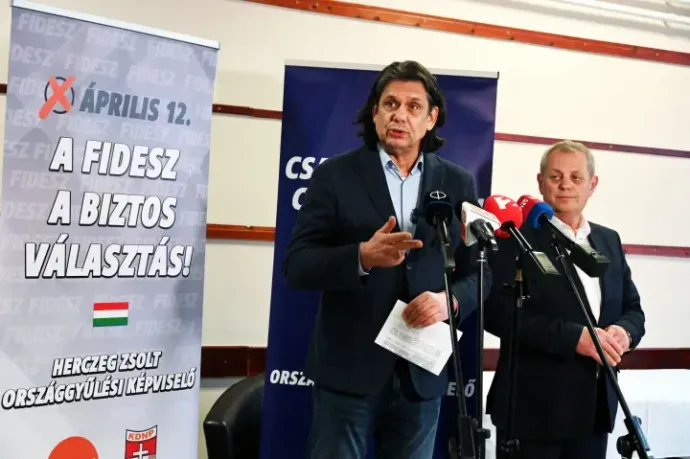
They kept making up political smears about us, and after a while, we were clumsy enough to not be able to counter the negative effects of these. The European Parliament debated the dismantling of Hungarian democracy forty-six times, but once something has been dismantled, how can one dismantle it again forty-five more times? After a while, we could no longer counteract the negative impact this spiral of nonsense had on voters’ perceptions. It wasn’t reality that changed, but the image of reality. Just because many people have an erroneous belief, it does not become reality.
We suffered a serious defeat in the election and yet, in organizational terms, Fidesz is in good shape. Our local chapters operate in more than 800 municipalities across the country, and the party has more than 27,000 members. This represents a slight decline, though it is nothing significant. Perhaps it wouldn’t have been surprising if the survey were to reveal a much more unfavorable picture about our organizational strength. This is, of course, no remedy for the election result, but I am one of those who believe that even in the 21st century, a well-functioning political organization is necessary.
We need to win more votes.
To be honest, I’m growing a bit tired of this obsession with renewal. Fidesz was founded in 1988; we’ve needed this at least six or eight times so far. I am quite certain that we will be able to address the challenges of the years ahead. There have always been both younger and older members among Fidesz’s leaders and well-known politicians; this is true now, and it will remain so in the future. It is also clear that some of the older members will reach the end of their careers in the coming years, but this is not a matter of politics, but of biology. All the conditions necessary for Fidesz’s renewal are in place, and I see a realistic chance that in the next election—the 2029 European Parliamentary elections—we will be able to continue our winning streak. We have won each time ever since European Parliamentary elections have been held in Hungary.
We’ll have to cross that bridge when we get to it. In Fidesz, we don’t hand out nominations or other positions five months in advance. I’m serving my fourth term in the European Parliament, and two of my outstanding colleagues are already in their fifth terms. So it wouldn’t be all that unusual for me to be able to embark on a fifth term as well.
For more quick, accurate and impartial news from and about Hungary, subscribe to the Telex English newsletter!