Hungarian president signs amendment to Fundamental Law ending his mandate
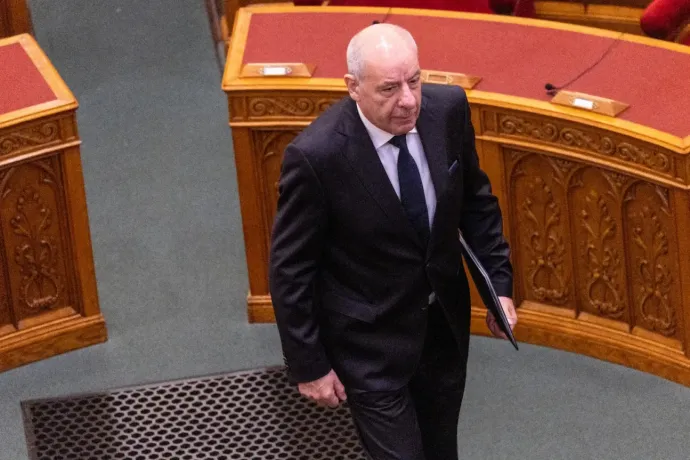



Tamás Sulyok announced on his social media page that he has signed the 17th amendment to the Fundamental Law, effectively ending his term as President of Hungary. His presidential mandate will end the day after the signed law is published in the Hungarian Official Gazette.
In the announcement, Sulyok highlighted that his entire life has been defined by his respect for and love of law. In his view, with this amendment to the Fundamental Law, Hungary has “reached a crossroads in terms of the nation’s destiny—one that transcends personal or political interests.” If the President of the Republic is faced with a dilemma such as the current one, there are two paths before them: they can fulfill their constitutional duty by signing—or they can refuse to sign, thereby committing a violation of the law.
“After carefully weighing my legal options and the dictates of my conscience, I am fulfilling my obligation enshrined in the Fundamental Law. My signing of this document is the final seal of my respect for my duties as President of the Republic and for the office of the President under all circumstances,” he said.
In his statement, Tamás Sulyok noted that his love and respect for law had defined every stage of his life—as a lawyer, a constitutional judge, as the president of the Constitutional Court, and as President of Hungary. “For me, all power can only be understood within the framework of the law.”
In his opinion, power politics is now bypassing the limits imposed by law, which will have unforeseeable consequences. He believes that what is currently happening to the office of the President of the Republic is an example of just that, and as such is unprecedented in the 36 years that have passed since Hungary transitioned to democracy.
“The President of the Republic shall protect and is obligated to protect the constitutional order against the legislature, acting within the powers granted to them by the Fundamental Law. However, with regard to the power to formulate and amend the Constitution, the Fundamental Law does not authorize either the President of the Republic or the Constitutional Court to provide such protection,” he stated.
In his view, from this it follows that the president of the republic may not refer matters relating to the content of constitutional amendments to the Constitutional Court, and no substantive review may take place.
Therefore, if the President of the Republic faces a dilemma similar to the current one, they have two options: to fulfill their constitutional duty by signing the amendment—or to refuse to sign it, thereby committing a violation of the law.
“Under the current Fundamental Law, I have no constitutional means to challenge this amendment—which violates constitutional principles but was adopted through a lawful procedure by Parliament, the body authorized to amend the Constitution.”
As he said, this is the reason he decided to sign the law. According to Sulyok, this marks the end of the democratic rule of law which was established at the time of the regime change, building on the legacy of 1956. He said that with this, the office of the President of the Republic has become subservient to the executive branch and politics, its role under public law has been diminished, its fundamental function has ceased, and it no longer serves as any kind of check or balance.
Other than ending the term of President Tamás Sulyok, among other things, the seventeenth amendment to the Fundamental Law of Hungary:
- introduces a 12-year term limit for serving as a member of Parliament;
- establishes the National Agency for the Recovery and Protection of State Assets;
- and reinstates the retirement age of 70 at the Constitutional Court, thus ending the tenure of the court's president, Péter Polt (who was appointed by the Orbán administration), and will send several other judges to retirement in the fall.
The end of Sulyok's mandate
Tamás Sulyok was elected by Parliament (which at the time had a Fidesz majority) for a five-year term in 2024 for a five-year term following Katalin Novák’s resignation; his term was supposed to last until March 4, 2029. However, in the final stretch of the election campaign, at his March 23 rally in Nyíregyháza, Péter Magyar promised that if they received a two-thirds majority in the election, they would amend the Fundamental Law and remove the “puppets” appointed by Fidesz. Already then, he mentioned Sulyok by name.
Following the Tisza Party’s two-thirds victory in April's election, Magyar immediately called on the President and other high-ranking public officials to resign and he repeated this demand the next day at his international press conference too. A few days later, he set a deadline for them, expecting them to step down voluntarily by May 31. None of them did so, so in early June, Magyar announced that they would be removed through an amendment to the Fundamental Law.
The simply worded proposal adopted on Monday says:
“On the day after the seventeenth amendment to the Fundamental Law enters into force, the mandate of the incumbent President of the Republic shall end.
According to Péter Magyar, the move was necessary because Tamás Sulyok failed to embody the unity of the nation, having instead served as a puppet of the Orbán government in everything and never speaking out publicly on important social issues. Sulyok, however, believes that this would not have been his task, as the President of the Republic must remain neutral in party-political disputes involving professional issues. “He should only intervene if a systemic disruption arises in the functioning of the democratic institutional system,” the President told Index when asked about his own role.
In recent weeks, Tamás Sulyok has expressed his constitutional concerns on several occasions and in multiple forums. He turned to the Constitutional Court, as well as the Venice Commission—the advisory body of the Council of Europe on constitutional law—for assistance, and has issued statements and given interviews protesting against the proposed amendment, which he claims “violates the principles of the rule of law, democracy, and the separation of powers in several respects” and which endangers “Hungarian constitutional democracy based on European values.” According to Sulyok, neither the undeniable democratic mandate behind the Tisza Party nor any other democratic mandate entitles the governing majority to violate fundamental constitutional principles and fundamental rights.
Last Thursday, during the protest organised in defence of the rule of law next to the Presidential Palace, the former governing party, Fidesz described the amendment as
"the end of constitutional democracy and the beginning of autocracy in Hungary”.
According to the former leader of Fidesz' parliamentary group Gergely Gulyás, the parliamentary majority is removing the president for political reasons, and if this can be done to the head of state, “then from now on, anything can be done to anyone in Hungary.”
According to Péter Magyar, however, this amendment does not grant any new parliamentary majority the authority to remove leaders it does not like at will and replace them with its own people in place of those loyal to the previous governing party. As he put it on the day of the vote: “Today’s decision authorizes us to once and for all put an end to a one-time, serious, and untenable situation, because we did not secure a two-thirds majority only to appoint new 'masters' over Hungary.”
Orbán: May God watch over Hungary!
The last barrier has fallen today,” former prime minister Viktor Orbán wrote on his Facebook page shortly after Tamás Sulyok announced that he has signed the 17th amendment to the Fundamental Law.
According to Orbán, authoritarianism is no longer a threat but a reality. “If this could be done to the President of the Republic, then no one will be safe tomorrow. May God watch over Hungary!”
A new president to be elected within a month
Parliament will elect a new president by means of a secret ballot within thirty days. The date for electing the new head of state is set by the House Speaker, and the new president will take office on the eighth day after the election results have been announced. Until then, the duties and powers of the office will be exercised by House Speaker Ágnes Forsthoffer, whose parliamentary duties will meanwhile be carried out by one of her designated deputies.
According to the Fundamental Law, any Hungarian citizen over the age of thirty-five is eligible to be elected president of the republic. For a candidate’s name to appear on the ballot, they must be nominated by at least one-fifth of the members of Parliament—that is, 40 members. This means that aside from the Tisza Party, only the 44-member Fidesz faction would be able to nominate a presidential candidate on its own; neither the KDNP nor the Mi Hazánk faction can do so without Fidesz.
Péter Magyar had previously promised that they intend to nominate a person who embodies the unity of the nation and whom the opposition members of Parliament would also support. However, he has not yet mentioned any names. He also said that the current amendment to the Fundamental Law will only create a temporary situation, and it is quite possible that the new Constitution (which the Tisza Party intends to work on for at least the next year) which will be validated by a referendum, will introduce a system of direct presidential elections.
This article has been updated.
For more quick, accurate and impartial news from and about Hungary, subscribe to the Telex English newsletter!