This is not just about the crisis of Fidesz; it also marks the end of many politicians' careers
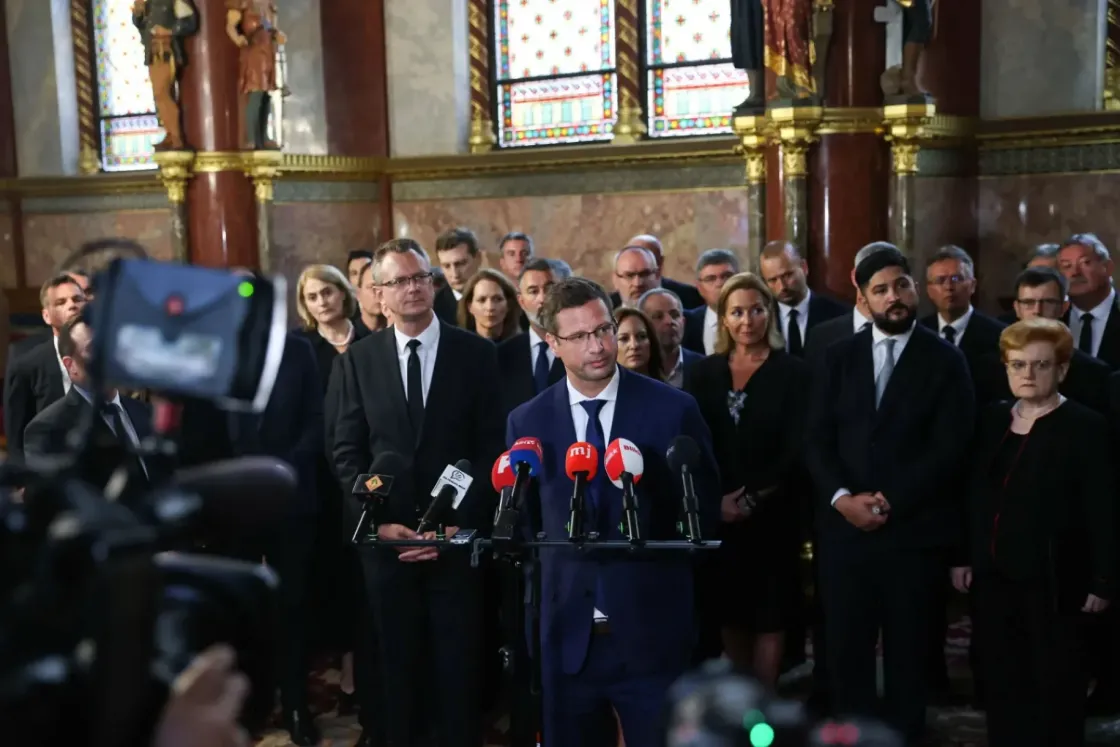


Two days after the April 12 election—which resulted in Fidesz's crushing defeat—Gergely Gulyás told Viktor Orbán that he did not want to take up his parliamentary seat in the upcoming term. However, the prime minister—who was still in office at the time—urged him to stay and even asked him to lead the party’s parliamentary group. Gulyás ultimately agreed to accept the role for no more than a year. Visibly exhausted from the campaign, Gulyás had already been planning his exit from politics and had intended to resume his career as a lawyer. Nevertheless, he complied with Orbán’s request. According to those close to him, he accepted the position with the goal of trying to stabilize Fidesz’s parliamentary group after it had been knocked out and left reeling in the wake of the April 12 election.
Just over three months of the year that Gulyás intended to spend as group leader have passed. He informed the chairman of the party that he was done and would be stepping down from his position last Friday. Then on Monday, he officially announced his resignation. Orbán actually didn’t make a big deal of the news within the party—so much so that even Bertalan Havasi, who is supposedly close to him, was surprised by Gulyás’s announcement.
Moreover, Gulyás announced his resignation on the very same day Viktor Orbán left for the World Cup and the Parliament—where the governing Tisza party has a majority—voted to amend the Fundamental Law, thereby terminating the mandates of President Tamás Sulyok and the Head of the Constitutional Court, Péter Polt, both of whom are widely regarded as Orbán’s allies. Fidesz has interpreted the amendment as the death of democracy and has sought to convey this message to the public as well. However, some political analysts have—precisely due to Gulyás’s resignation— shifted their focus from the truly unprecedented constitutional amendment to the crisis shaking Fidesz.
During our off-the-record conversations with Fidesz lawmakers, we found that the majority does not suspect any other reason or reasons behind Gulyás’s resignation than what the politician himself stated. “I can only repeat what I’ve already said on this matter,” Gulyás told Telex when approached for comment. According to him, the current amendment to the Fundamental Law marks a turning point in Hungary—a completely new reality—that cannot be ignored and must be protested against with every possible means. His resignation was his way of protesting.
Several Fidesz politicians have confirmed for Telex that the majority of the parliamentary group did not agree with Gulyás’s resignation or his justifications for it, but they accepted his “personal decision.” János Pócs, for example, told Telex that in his view, Gulyás was (and remains) a very good parliamentary group leader because his demeanor is the exact opposite of Péter Magyar’s. “He is a calm, level-headed politician,” Pócs explained, outlining why he considered Gulyás suitable for this position.
Some Fidesz MPs—and even former Fidesz politicians who left politics after April 12—believe that Gulyás has never been able to shake the feeling that he is ultimately to blame for Péter Magyar entering politics (Gulyás and Magyar used to be close friends during their college years and even afterwards) and bringing down Fidesz. Those who shared this view believed that “emotional reasons” also contributed to Gulyás’s decision, in addition to the fact that, in their opinion, their fellow politician had simply grown weary of political battles and the demands that come with leading the parliamentary group, and that the 17th amendment to the Fundamental Law may have simply come at the perfect time for him.
As part of the amendment to the Fundamental Law, a twelve-year (or three-term) term limit is being introduced for serving as a member of parliament. This means that in the future, anyone who has already served as a member of Parliament for at least that long will be barred from running in elections. This affects the opposition: most members of the Fidesz–KDNP parliamentary group and several members of Mi Hazánk will no longer be able to serve as MPs, and neither will Gergely Gulyás.
However, Fidesz MP Sándor F. Kovács was the only one who openly commented on this—or at least touched on it. “I saw the inner conflict Gergely Gulyás was going through. The Prime Minister and Gergely Gulyás used to be good friends, and Gergely Gulyás feels responsible for having unleashed such a person on Hungarian public life,” the lawmaker said. According to F. Kovács, it was evident from week to week that Gulyás felt responsible for Péter Magyar’s rise to prominence, and he found it difficult to bear Magyar’s remarks, which were often directed personally at him.
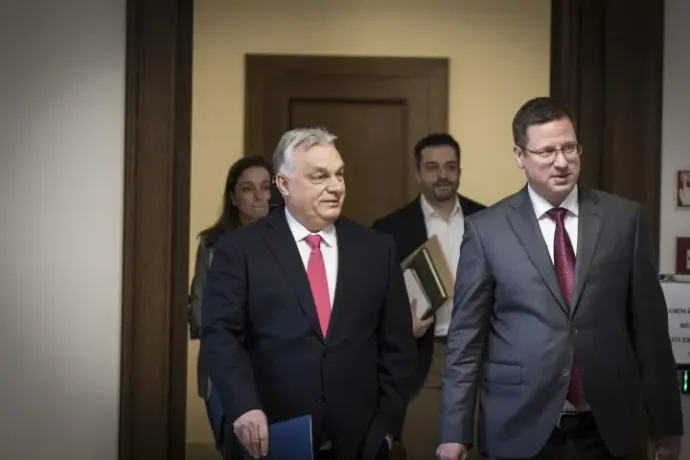
Beyond the emotional reasons, however, another Fidesz MP, speaking on condition of anonymity, used his own example to illustrate what he believes to be the main factor behind Gulyás’s resignation. This lawmaker is one of those who had envisioned a long-term political career, but because their eligibility for re-election has now been restricted—effectively depriving them of that path—they will not even be able to run in the parliamentary elections four years from now. As previously mentioned, this is also true for Gulyás. “Why would anyone strive to be in the front lines if they know their time is limited and in four years they’ll have to pursue a completely different career path?” the representative asked rhetorically, adding that they themselves are already looking ahead because they know that even though they are currently a member of Parliament, their political career has come to an end. And it’s not just them; there are plenty of others in a similar situation in the ranks of Fidesz. In their view, therefore, Gulyás ultimately made a rational decision, even though they agree that the timing of the announcement was unfortunate for Fidesz. “That was not Fidesz’s day,” said the representative.
This latter argument is noteworthy because it looks beyond what is currently happening with Fidesz. “Let’s be clear: the best word to describe what’s happening is perhaps ‘lustration’—a complete replacement of the elite. Anyone who fails to see this is naive,” said one member of the party who will be forced to leave politics in four years at the latest, and who believes that Péter Magyar’s goal is clear and unambiguous, and that it is fundamentally reshaping the political landscape, regardless of Fidesz.
The process of “lustration” referenced by the Fidesz MP is a political and legal process in which, following the fall of dictatorial regimes, public figures are vetted to determine whether they collaborated with the former oppressive state apparatus.
Although when speaking with Telex, the Fidesz MP strongly contested that the past 16 years had been dictatorial, they believe that “lustration” is still the best term for what Péter Magyar intends to carry out. The same representative believes that this lustration will also affect business figures. “Those who have played a decisive role over the past 16 years will no longer be able to have a say. They may be able to return later, perhaps in ten years, but for now they will be marginalized, ” the lawmaker explained, adding that they believe this process will definitely have an impact on the economic sector as well.
The same person said that while change can indeed occur at any time in politics, it would be naive to believe that if the current Magyar administration were to make unfavorable decisions and its popularity were to drop as a result, this would automatically benefit Fidesz—even though many within the party are deluding themselves with this hope. “We are now in the ‘Magyar era’”—they said, referring to their opinion that what is currently beginning could shape Hungarian politics for a long time to come.
Several lawmakers who spoke to Telex acknowledged that while Fidesz is still trying to find its footing, they are confident that over time the Magyar government will have to make decisions that will not necessarily be popular and will even divide the ruling party's lawmakers. However, not even the Fidesz politicians banking on a decline in the Tisza Party’s popularity ventured to predict that if the ruling party’s momentum were to falter, Fidesz would for sure benefit from it.
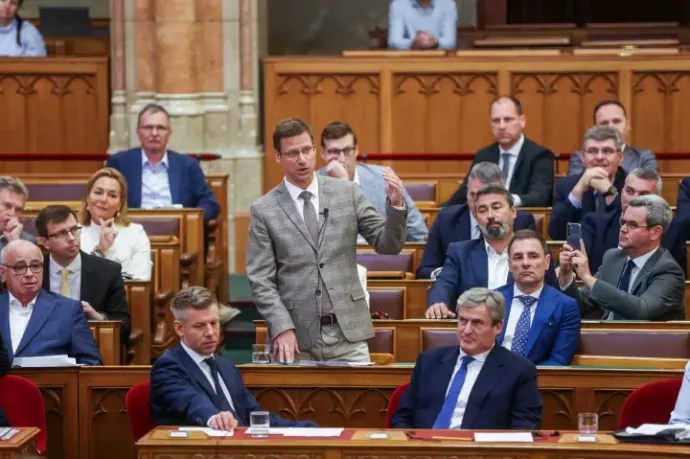
The transformation is already being felt in the economic sector, too. Over the past 16 years, many players in the business world sought to curry favor with Fidesz MPs elected in individual constituencies. The newly introduced restriction on eligibility for running for office has rendered these politicians powerless overnight. The same is true for certain confidants of the NER’s inner circle who used to be considered influential; before April 12, people would call them with all sorts of requests, but the tables have turned since the election: now, the calls of these confidants often go unanswered.
NER is short for Nemzeti Együttműködés Rendszere, meaning ’System of National Cooperation.’ The term was coined by the Orbán government after their election victory in 2010 to refer to the changes in government that they were about to introduce. It soon become a word in its own right, and has been used in colloquial Hungarian to refer to Fidesz' governing elite, complete with the politicians and the oligarchs profiting from the system.
However, not a single Fidesz politician we spoke with agreed that Viktor Orbán had abandoned them. Most understand (or at least this is what they are communicating to the outside world) why Orbán is not participating in the day-to-day battles, and they also consider it a good decision that he did not take up his seat in parliament. Several mentioned that the situation was similar after the party's defeat in 2002, and recalled that Orbán stepped back at that time as well.
MP János Pócs hinted that Orbán did not just travel to the United States for football, but was also doing political work while there, although he did not elaborate on this any further. Pócs also told our paper that Viktor Orbán knows everything that is happening within Fidesz and the parliamentary group. According to him, Orbán is currently allowing the MPs to reach their full potential, but they can consult him at any time if they want to.
For more quick, accurate and impartial news from and about Hungary, subscribe to the Telex English newsletter!