"This office was the embodiment of corruption" – Hungarian Parliament debates bill proposing dissolution of Sovereignty Protection Office
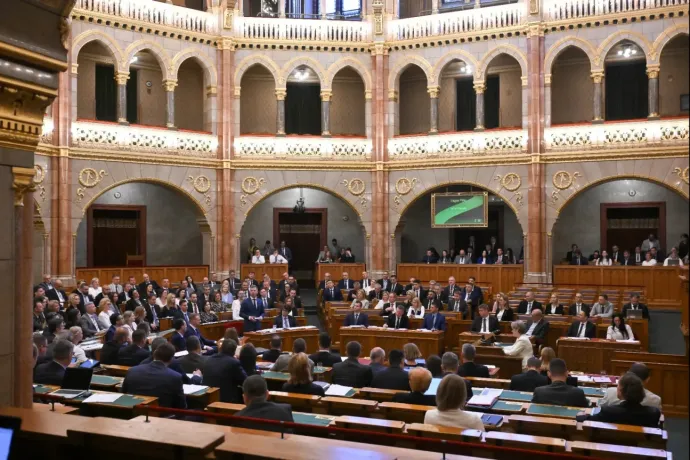


The general debate on the bill proposing the abolition of the Sovereignty Protection Office (Szuverenitásvédelmi Hivatal – SPO) at the Hungarian Parliament concluded on Tuesday. Tisza MP and the main sponsor of the bill, Márton Melléthei-Barna opened the debate by stating that the proposal does not abolish the protection of the sovereignty of the Hungarian state. Rather, it is about restoring sovereignty, returning it to where it belongs: to the people. According to Melléthei-Barna, the Sovereignty Protection Office does not perform an actual public service; it was established solely for political purposes and to exert pressure.
Tuesday’s session began with a special address by Prime Minister Péter Magyar before the agenda was presented. The Prime Minister first spoke about the bill on the dissolution of the Sovereignty Protection Office; as he sees it, the law will send “one of the most prominent cornerstones the Orbán regime used to destroy the rule of law” to “the garbage heap of history.” As for the other bill debated on Tuesday—the one against allowing political advertisements which incite hate—he said that we were surrounded by hate-mongering wherever we looked; we saw the same messages, and enemies portrayed as threats to be feared and dreaded all around us. Magyar said that the damage these inflammatory messages caused to the nation is incalculable—financially, morally, and emotionally as well.
According to Melléthei-Barna, it was not the nation’s independence that Tamás Lánczi’s office was protecting, but rather the monopoly of the former government's narrative. In a constitutional democracy, the state must not operate an institution dedicated to intimidation, so the Sovereignty Protection Office should not be fine-tuned or renamed, but should be shut down altogether. “Abolishing the Sovereignty Protection Office strengthens the country, it doesn’t weaken it,” said Melléthei-Barna, before asking the representatives to vote in favor of the proposal.
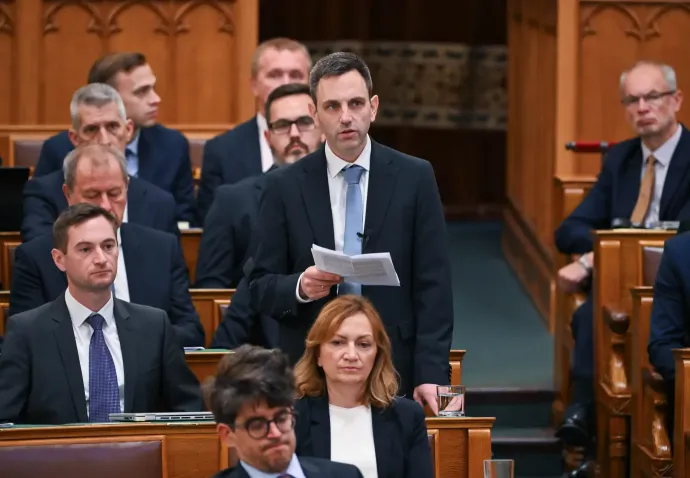
Fidesz communication director Bertalan Havasi issued a statement on behalf of the party during the debate claiming that the Tisza government “wants to dismantle Hungary’s sovereignty step by step.” For this reason, the former ruling party demands that the current government “stop dismantling the institutional framework designed to protect sovereignty.”
In his opening remarks at the beginning of the debate, Gábor Szűcs (Fidesz) said he was not surprised that the Tisza government wanted to do away with the office, since Péter Magyar had previously spoken about the need to give up a little bit of our sovereignty. Similarly to Szűcs, KDNP representative Hajnalka Juhász also said they were unable to support the proposal. According to Juhász, we must not abandon “the institutional protection of our sovereignty”; therefore, the debate should not be about dissolving the office, but rather about reforming it—even strengthening it.
Tisza MP Máté Hende argued that the SPO was never about protecting the nation, but rather the power of the former ruling parties.
“This office was the very embodiment of corruption,”
said Hende, citing as an example the more than 5 million forint (14 thousand euros) salary of the head of the office,Tamás Lánczi. István Apáti, a representative of Mi Hazánk, noted that Tuesday’s debate is very important because it is not just about the closure of the Sovereignty Protection Office, but also about the very meaning of sovereignty itself.
In his subsequent two-minute remarks, Apáti stated that, in his view, the Tisza Party is actually seeking to limit the sovereignty of local governments by proposing to lower the salaries of mayors. Tisza Party faction leader Andrea Bujdosó responded to this by commenting that the debate was not about local governments but about the dissolution of the Sovereignty Protection Office. At that point, the Fidesz representative presiding over the session, Eszter Vitályos, defended the Mi Hazánk MP, arguing that Apáti had merely broadened the debate on the issue of sovereignty. At the conclusion of the debate, the motion's sponsor, Melléthei-Barna, addressed the chamber again, reiterating that the Sovereignty Protection Office was not suitable for protecting sovereignty, but only served to intimidate civic activists and citizens.
In a previous video, (with English subtitles), we looked in detail at the work of the Sovereignty Protection office:
For more quick, accurate and impartial news from and about Hungary, subscribe to the Telex English newsletter!