No other region in Hungary's countryside has been transformed during Viktor Orbán's 16 years in power as much as the area he grew up in. The village of Felcsút and its surroundings have developed and prospered both thanks to public funds and private wealth generated from public funds. After the elections, at the end of April, we flew over the settlements in the area to take aerial photos. In this article, we show what the region looks like now, after 16 years of governance and the failed election. The photos feature the Hatvanpuszta estate and zoo, the Alcsútdoboz golf club of István Tiborcz (Viktor Orbán's son-in-law), the construction project of Orbán’s childhood friend Lőrinc Mészáros, and the sports empire that has sprung up near Viktor Orbán’s house in Felcsút.
The Hatvanpuszta estate, i.e. the Orbán family’s legacy
Archduke Joseph of Austria, the Palatine of Hungary developed the Hatvanpuszta estate—which administratively belongs to the village of Alcsútdoboz—in the 1820s as a model farm aimed at developing Hungarian agriculture.
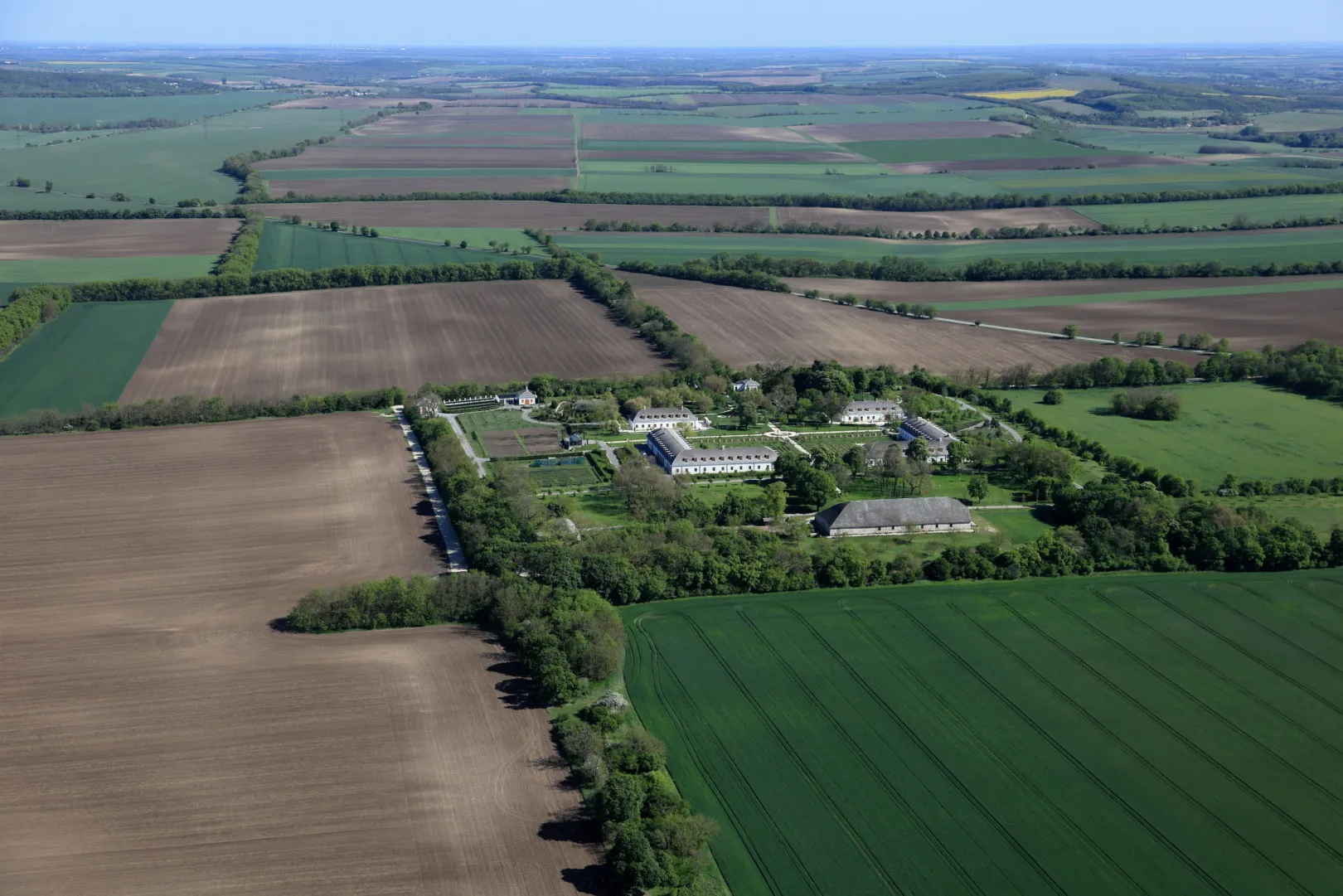
At the centre of the estate, which spans more than ten hectares, he built a classicist granary with an arched roof, along with two stables, two buildings serving as servants’ quarters, and a water tower. The complex, which is a protected historic site, was also in use during the communist era; Viktor Orbán likes to recount how he used to work there during the summer holidays while he was a student. After the fall of communism, the buildings fell into disrepair and were in a rather dilapidated state when, in 2011, following Fidesz’s first two-thirds majority victory, Viktor Orbán’s father purchased the property through one of his companies.
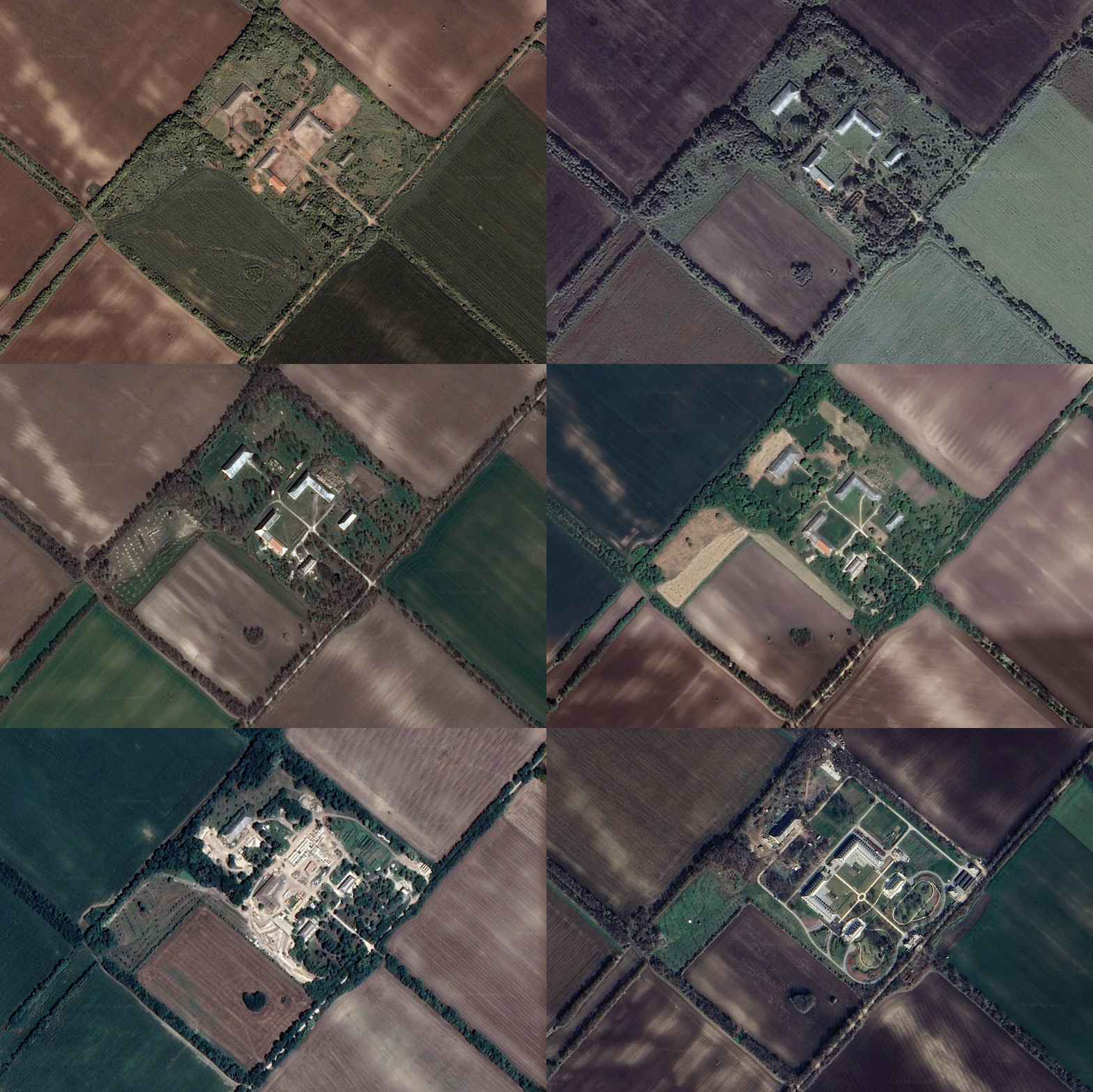
Although investigative journalist Krisztina Ferenczi, who was closely monitoring the Orbán family’s increasing wealth had written about Hatvanpuszta as early as 2011, it was Viktor Orbán who unintentionally called the wider public’s attention to the estate. In 2016, he posted a photo with his dog Nárcisz to raise awareness about animal welfare. The photo of the dog led investigative journalists to the Hatvanpuszta estate, which at the time was still being leased by Lőrinc Mészáros from the company of Orbán Sr., allegedly for storing equipment needed to cultivate the neighboring lands in his possession. At the time, the crumbling buildings were protected from prying eyes by a rusty barbed-wire fence, a worn "no trespassing" sign, and a security camera. Then, in 2019, Orbán's father, Győző registered the estate in his own name, and large-scale construction began on the site: first, the historic buildings were razed to the ground, after which new structures were built, which bore only a passing resemblance to the original ones, and which were clearly not intended to serve as stables or granaries.
How Hatvanpuszta was transformed between 2001-2024 – Source: Google Earth
Independent Member of Parliament Ákos Hadházy regularly documented the progress of the construction by taking aerial photos, and over the years, journalists have also taken drone footage of the work on several occasions. The imposing buildings were completed before the 2026 elections; only the landscapers were still at work, but aside from a few photos taken during construction, we don’t know much about what’s inside the buildings.
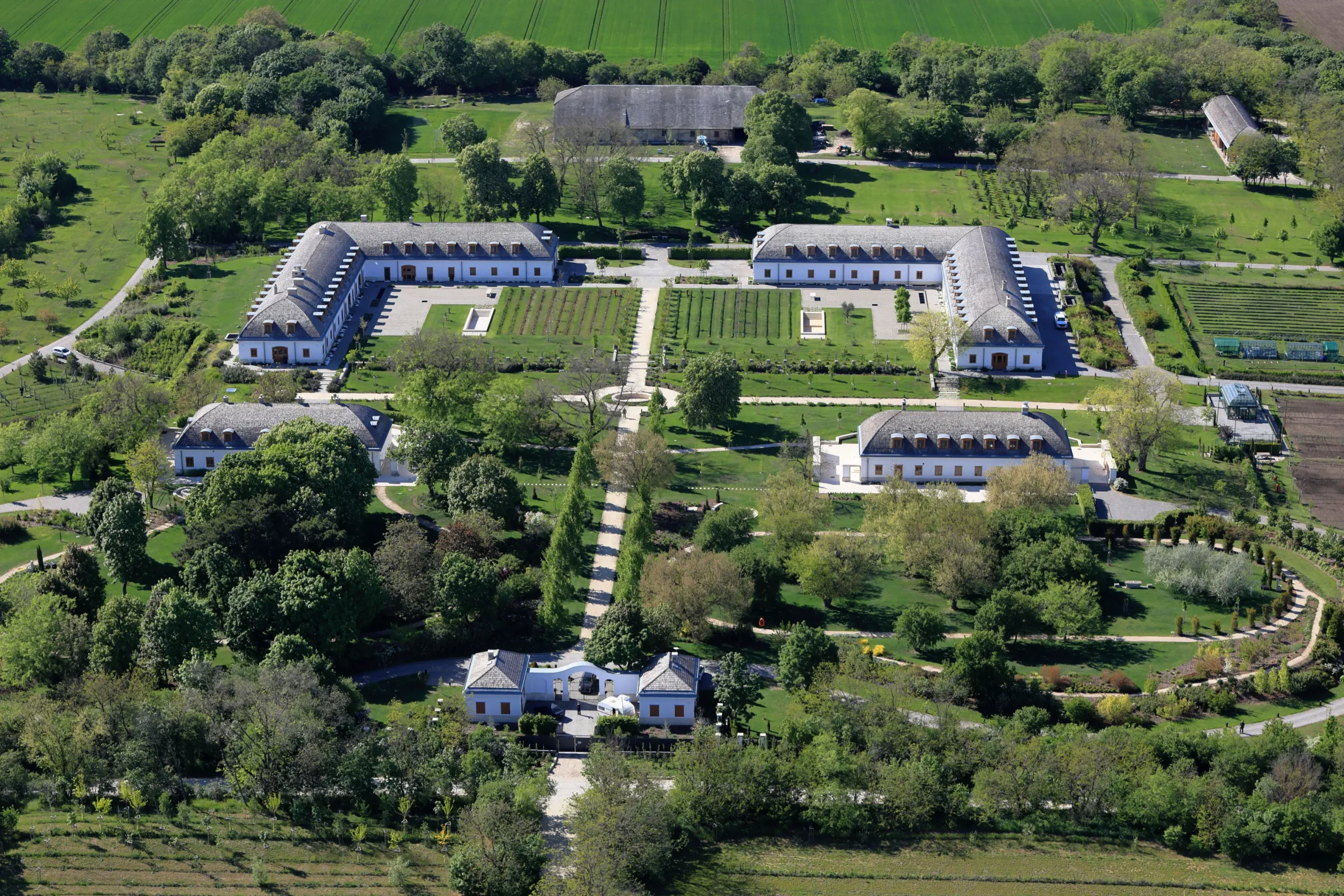
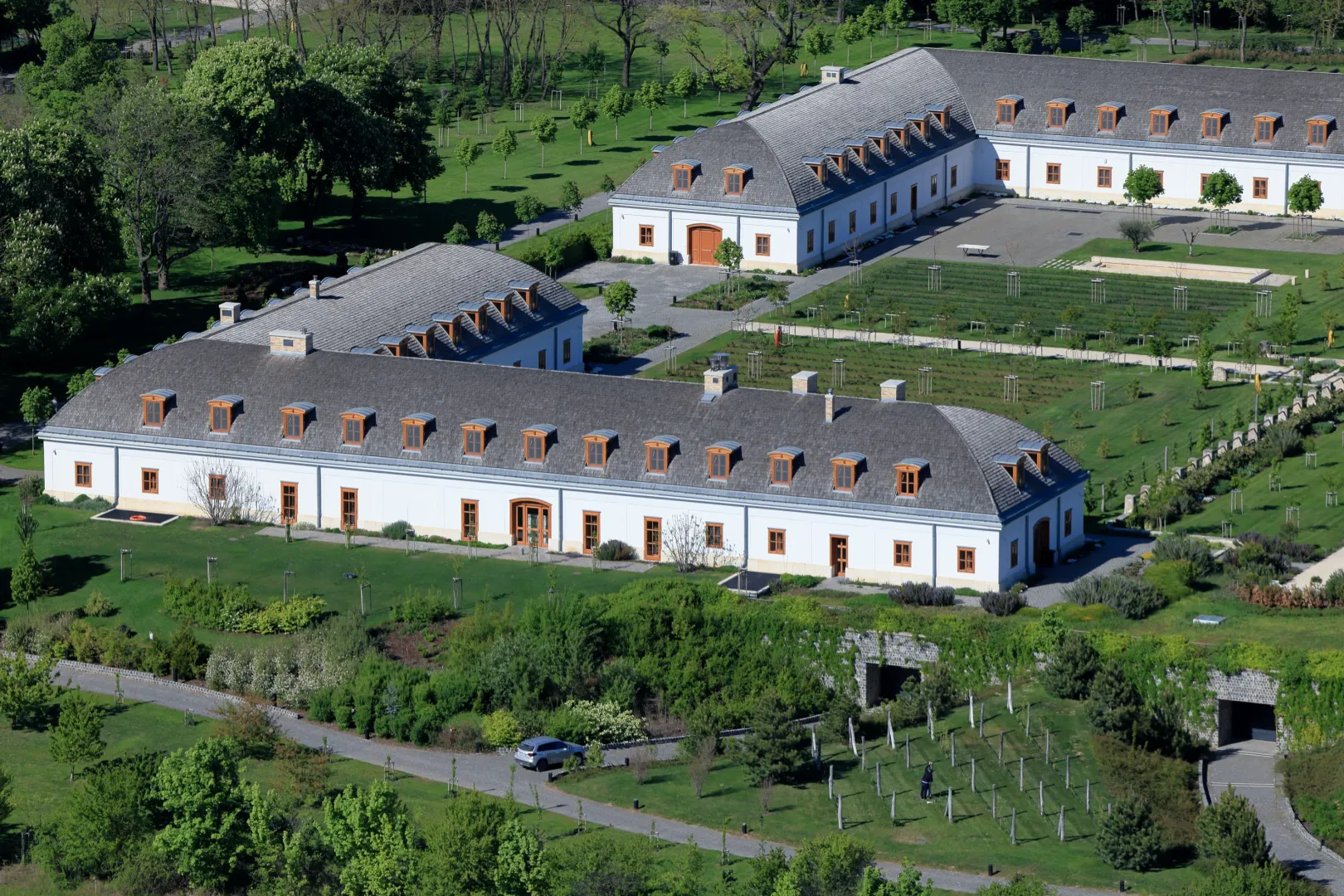
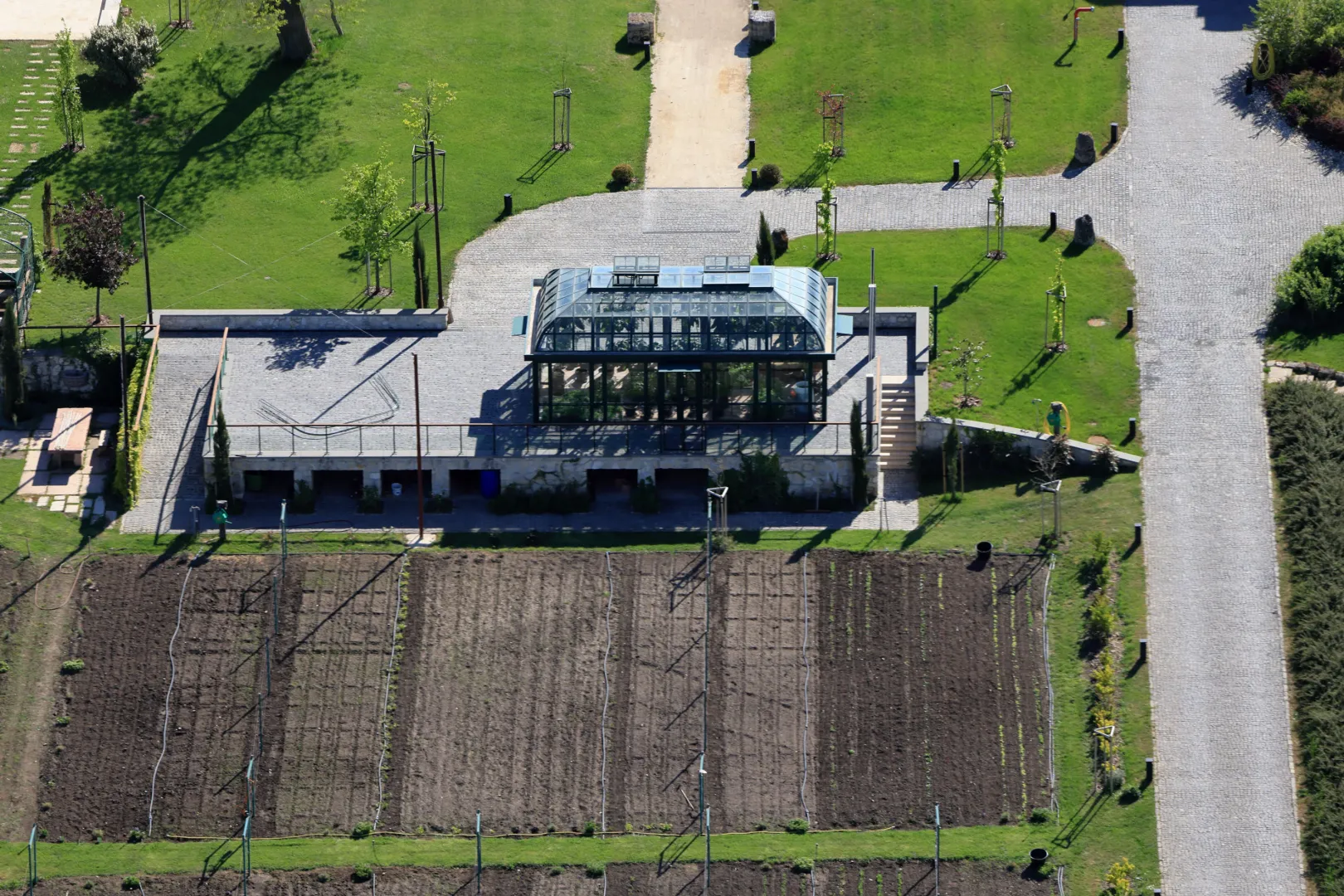
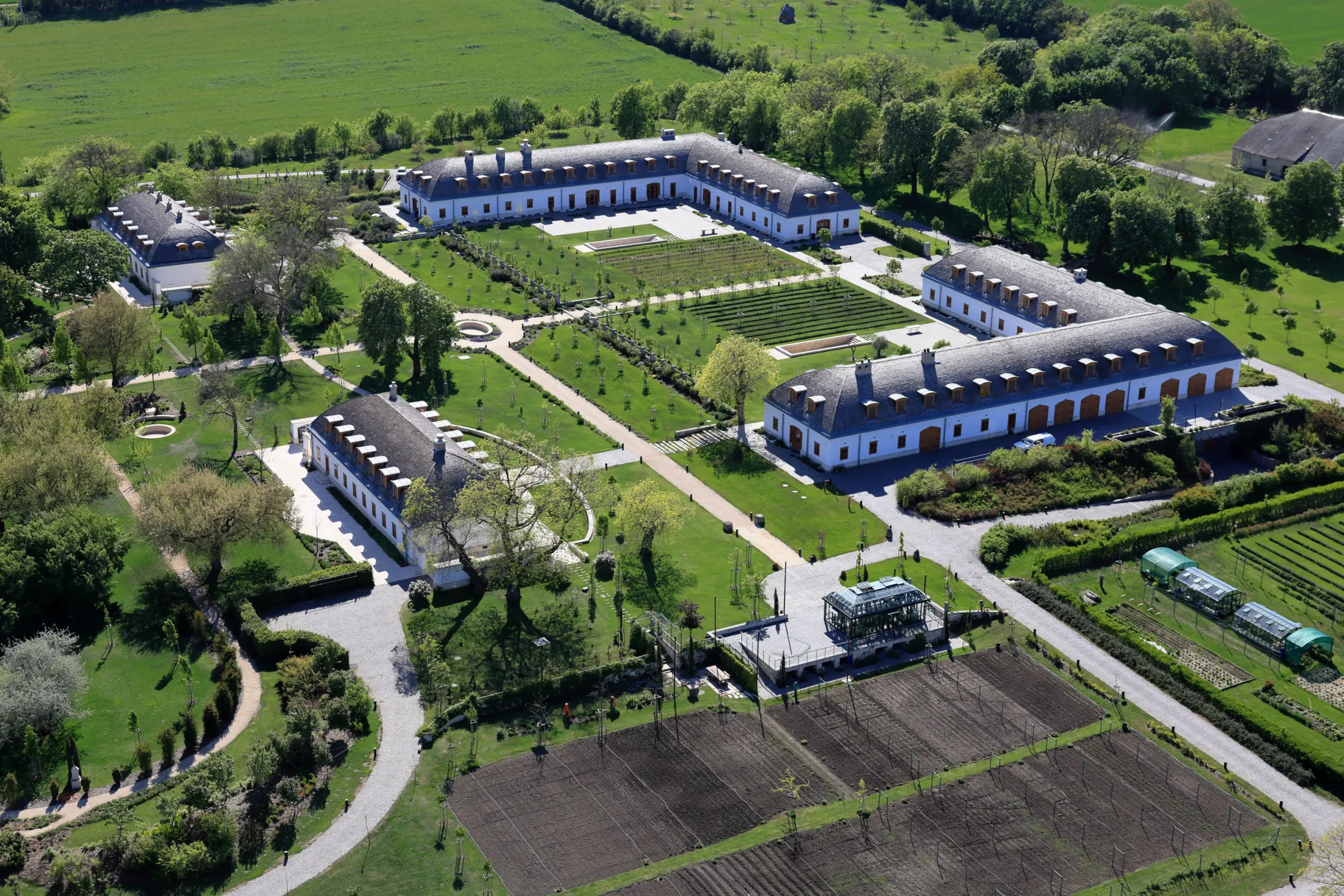
Our photos taken at the end of April show several cars parked on the estate grounds. Work is underway in the garden, but everything else seems to be finished: the orangery is filled with huge potted plants, and in the vegetable garden next to it, several rows of seedlings have already sprouted. Flowers have been planted all around the L-shaped buildings, with sprinkler hoses ready for the dry season, coiled up throughout the garden.
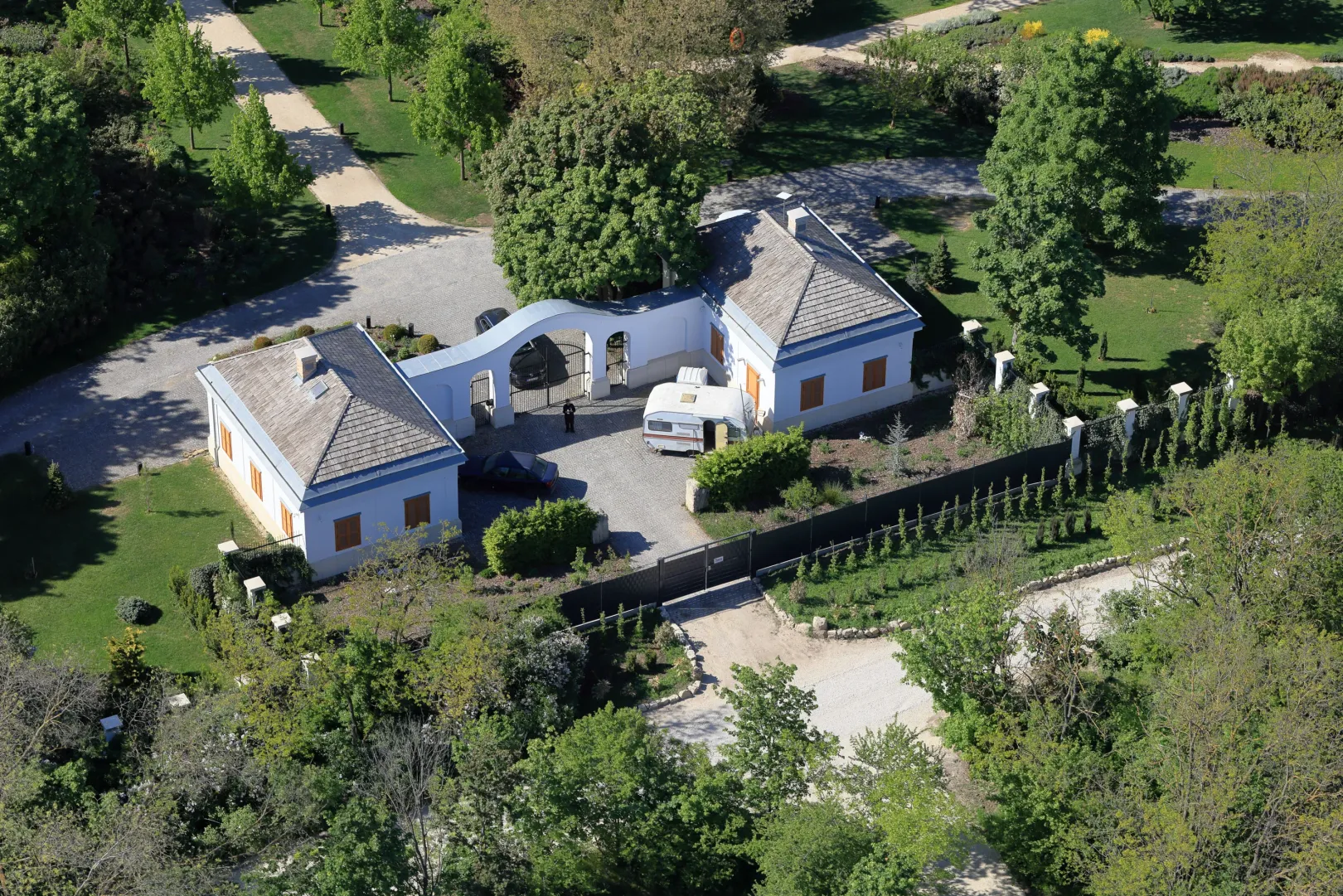
It is also clear that although there are smaller buildings—perhaps for staff—at every gate, the security guards protecting the estate spend their days in beat-up campers parked both at the main entrance and the north gate.
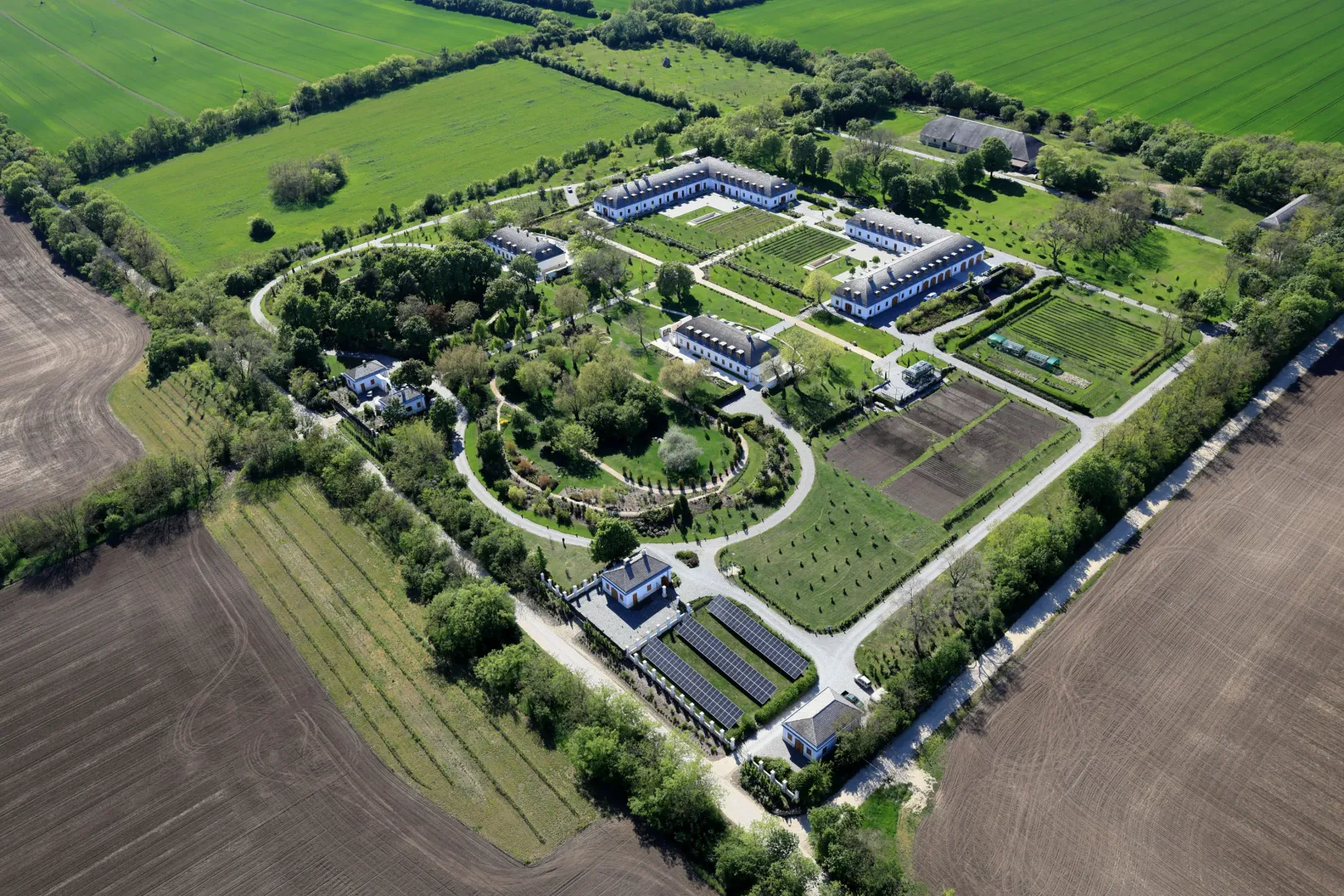
The Hatvanpuszta estate, administratively on the territory of Alcsútdobozhoz – Photo: Ferenc Sztraka / Telex
Photo: Ferenc Sztraka / Telex
Photo: Ferenc Sztraka / Telex
Photo: Ferenc Sztraka / Telex
Photo: Ferenc Sztraka / Telex
After independent MP Ákos Hadházy started organizing tours to show the public around, a tall fence was erected in front of the main entrance – Photo: Ferenc Sztraka / Telex
Photo: Ferenc Sztraka / Telex
The Vál Valley Hunting Association, i.e., the Mészáros Group’s zebras, bison, wildebeests, and antelopes
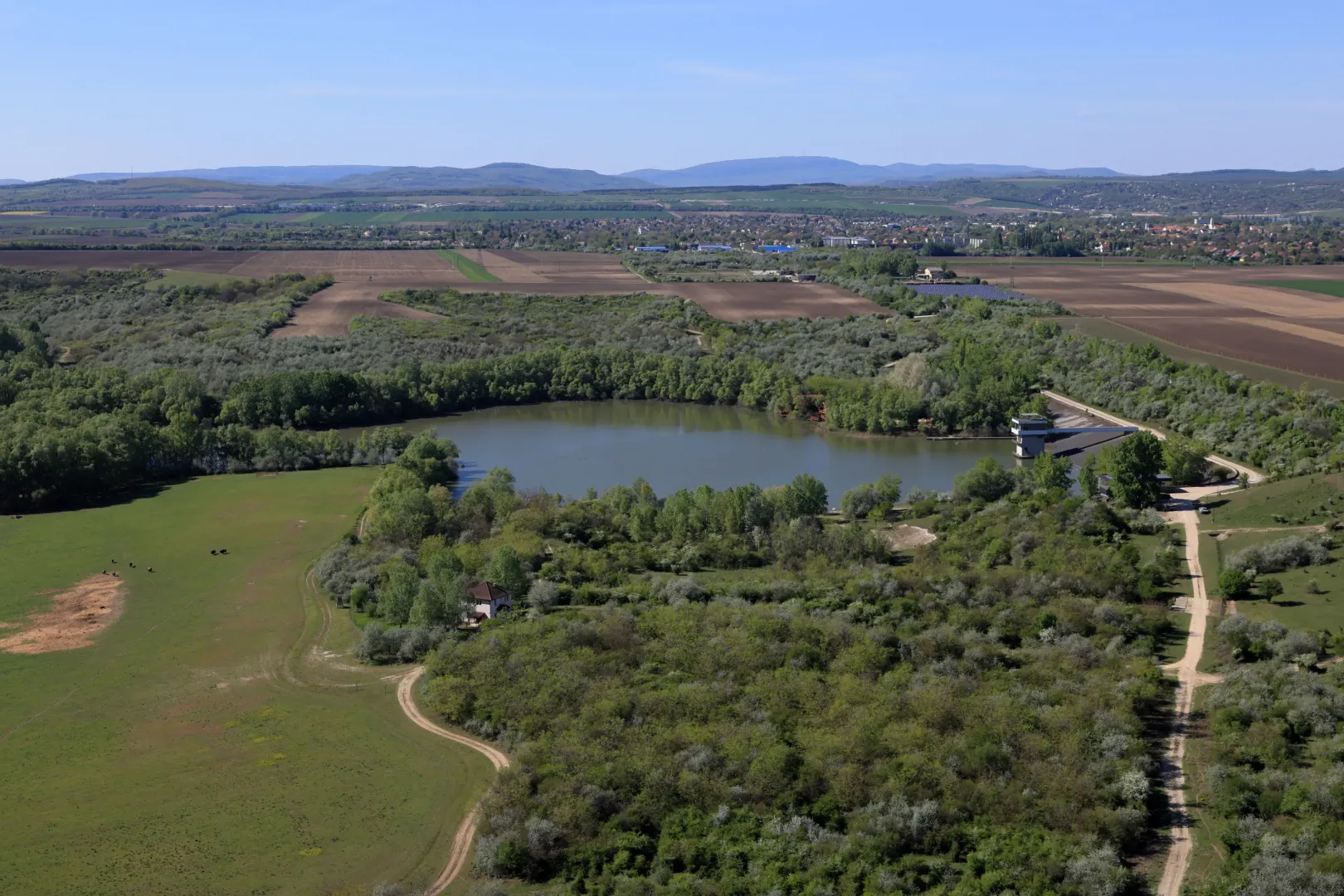
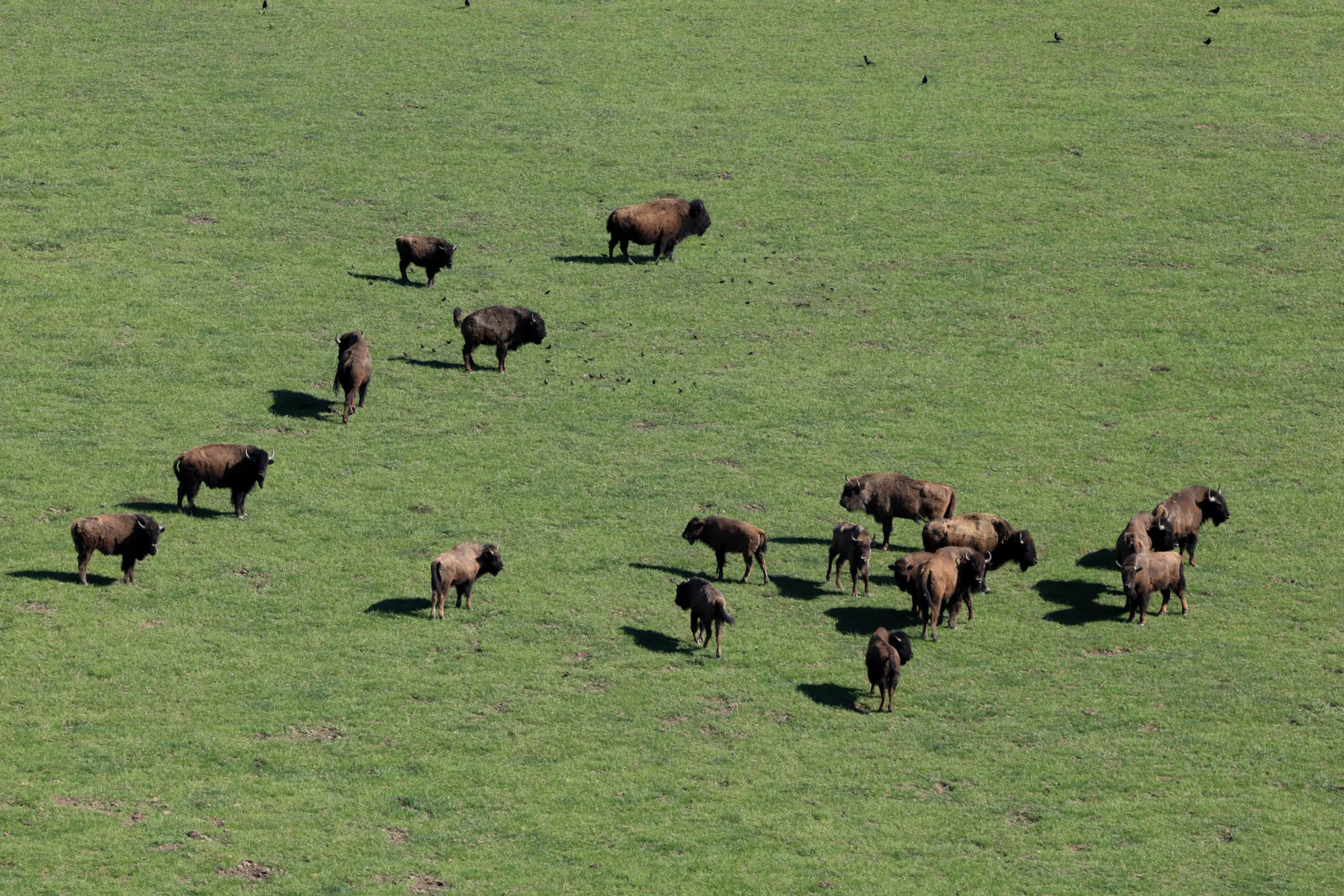
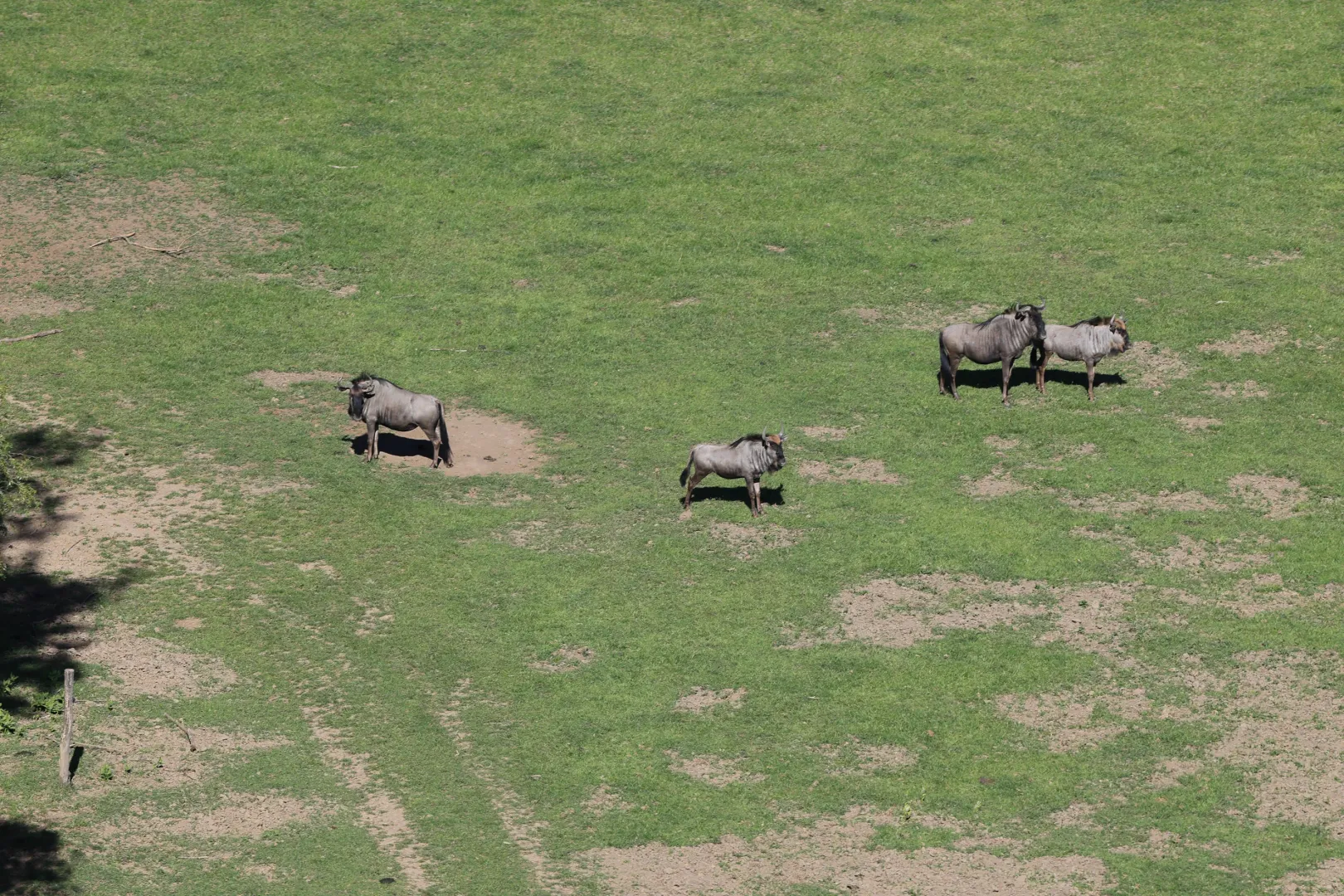
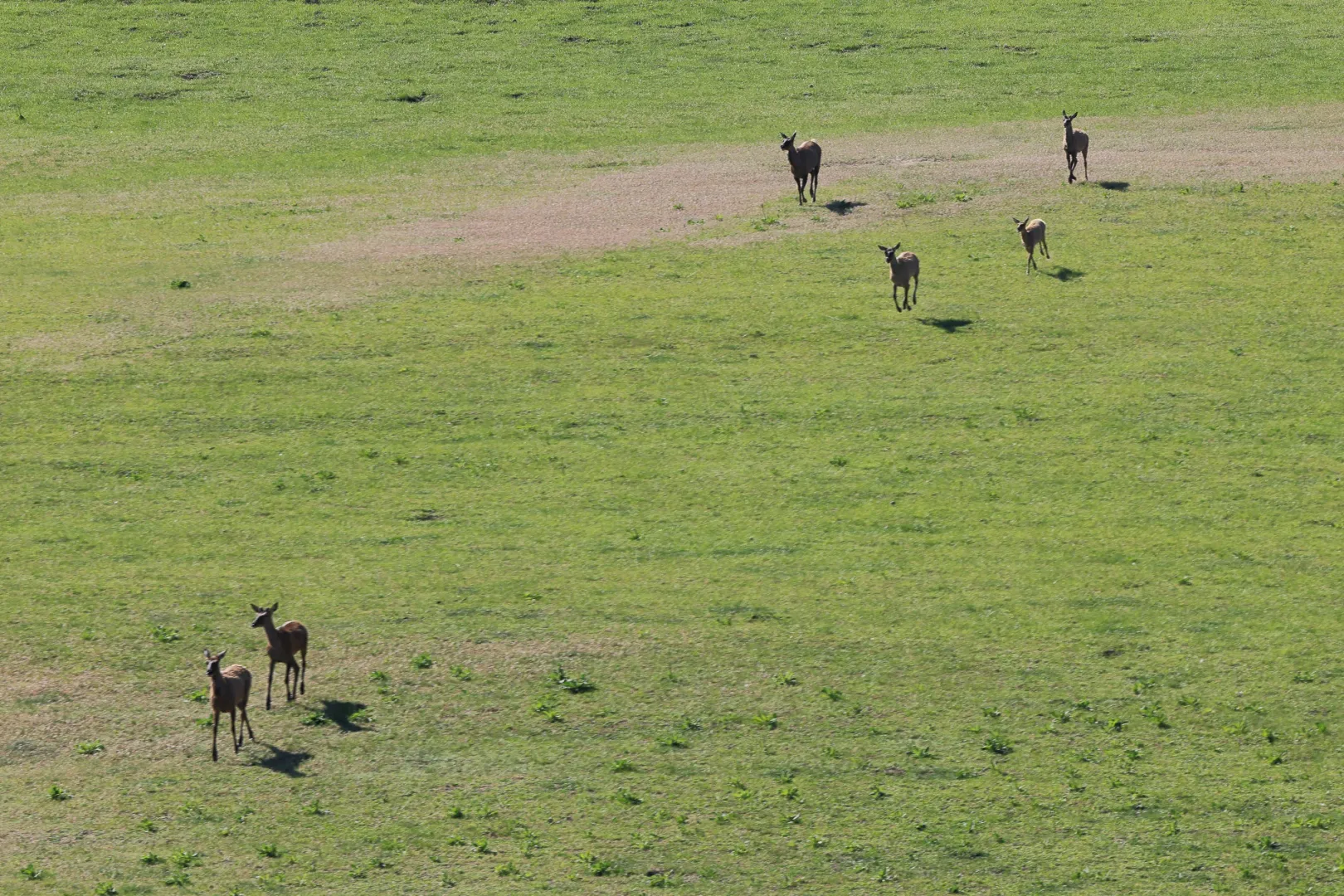
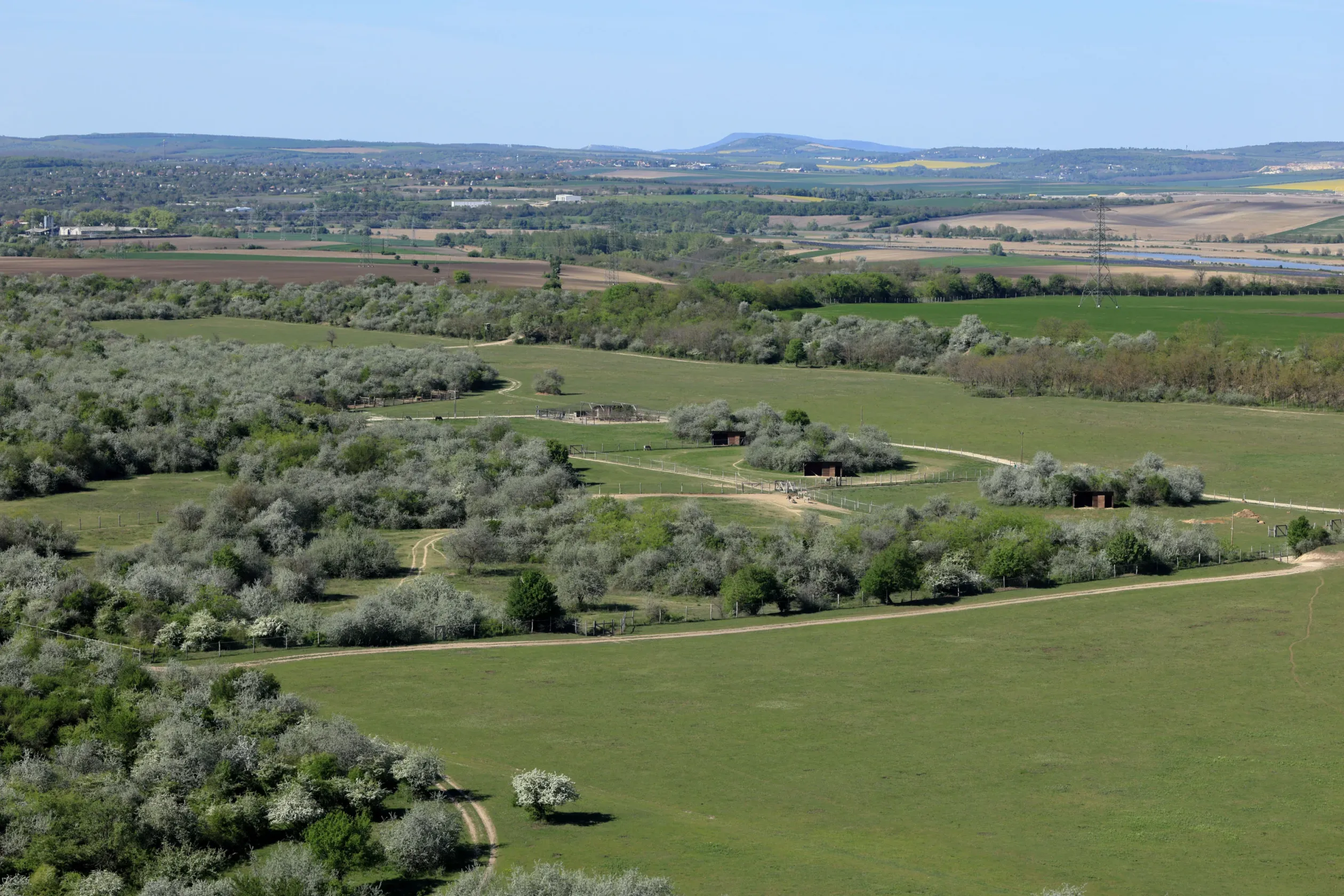
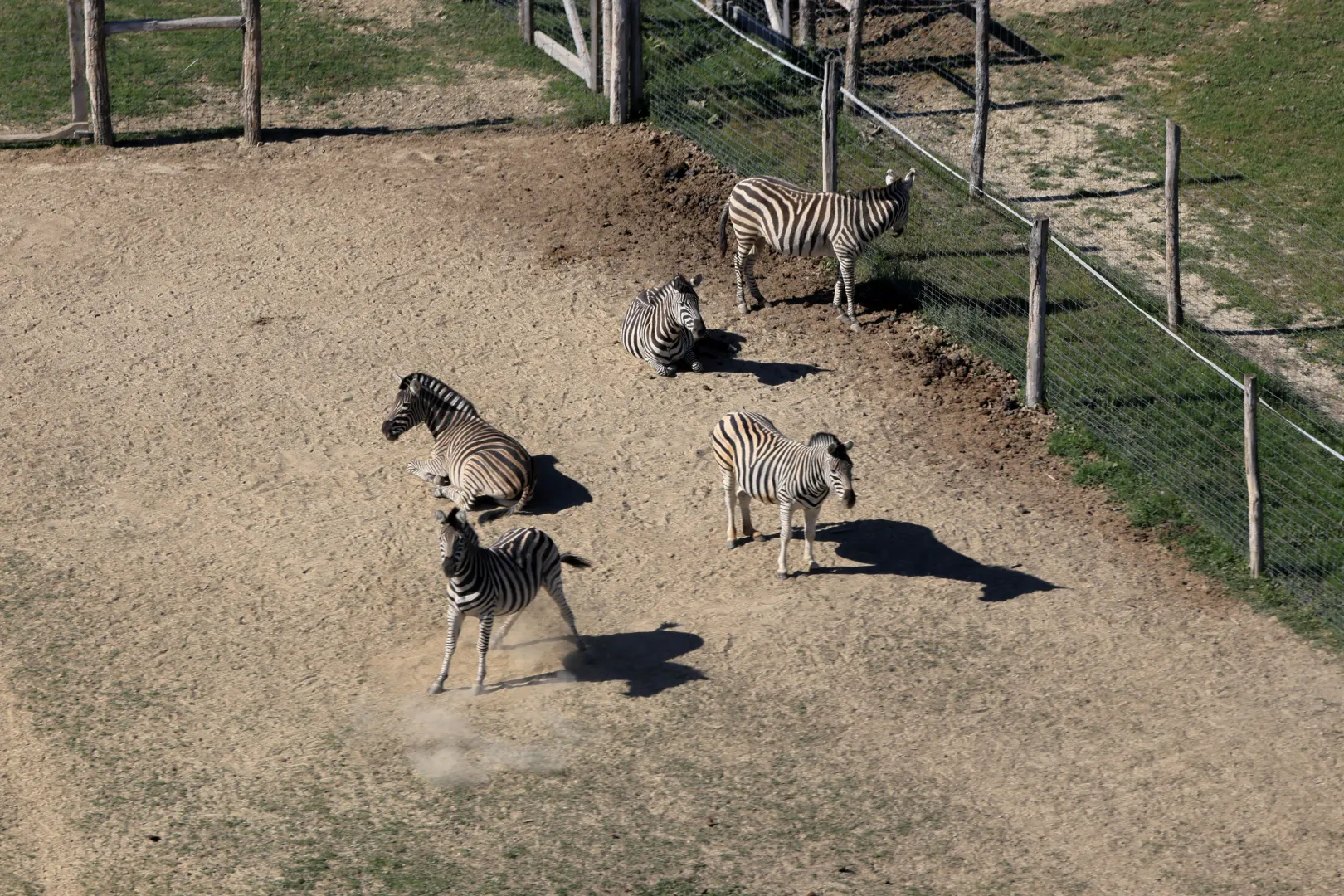
As one continues along the road that leads past the Hatvanpuszta estate, within walking distance, they will arrive to the lands where the exotic animals of the Vál Völgye Vadásztársaság (Vál Valley Hunting Association)—which belongs to the Mészáros Group—graze. Among them are antelopes, bison, and the zebras whose very existence Fidesz tried so hard to deny throughout the entire election campaign. Despite their efforts, former MP Ákos Hadházy managed to find out that they even have names: Zsebi, Pilla, Szuszi, Pizsi, Pulcsi, Bolka, Bendegúz, Tihamér, Lolka, and Pacsi. Half the herd was out sunbathing in their enclosure when we were there at the end of April. The rest were likely holed up in the stables set up in the wooded and bushy area nearby.
A herd of bison near the western shore of the lake of the Bicske power plant – Photo: Ferenc Sztraka / Telex
Bison – Photo: Ferenc Sztraka / Telex
Wildebeests – Photo: Ferenc Sztraka / Telex
Antelopes – Photo: Ferenc Sztraka / Telex
The enclosure of the zebras halfway between Felcsút and Bicske – Photo: Ferenc Sztraka / Telex
Zebras – Photo: Ferenc Sztraka / Telex
The old and new house of Lőrinc Mészáros
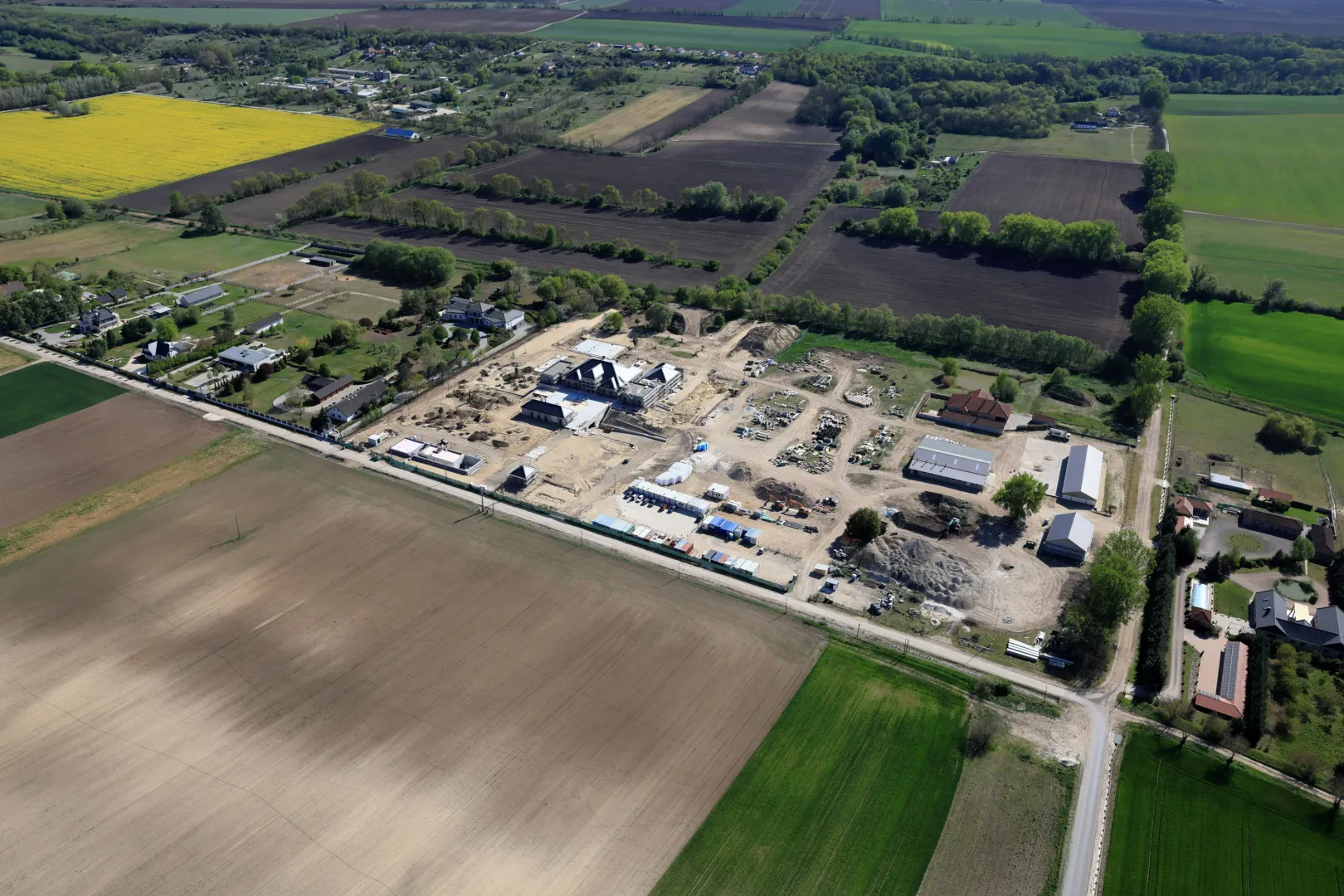
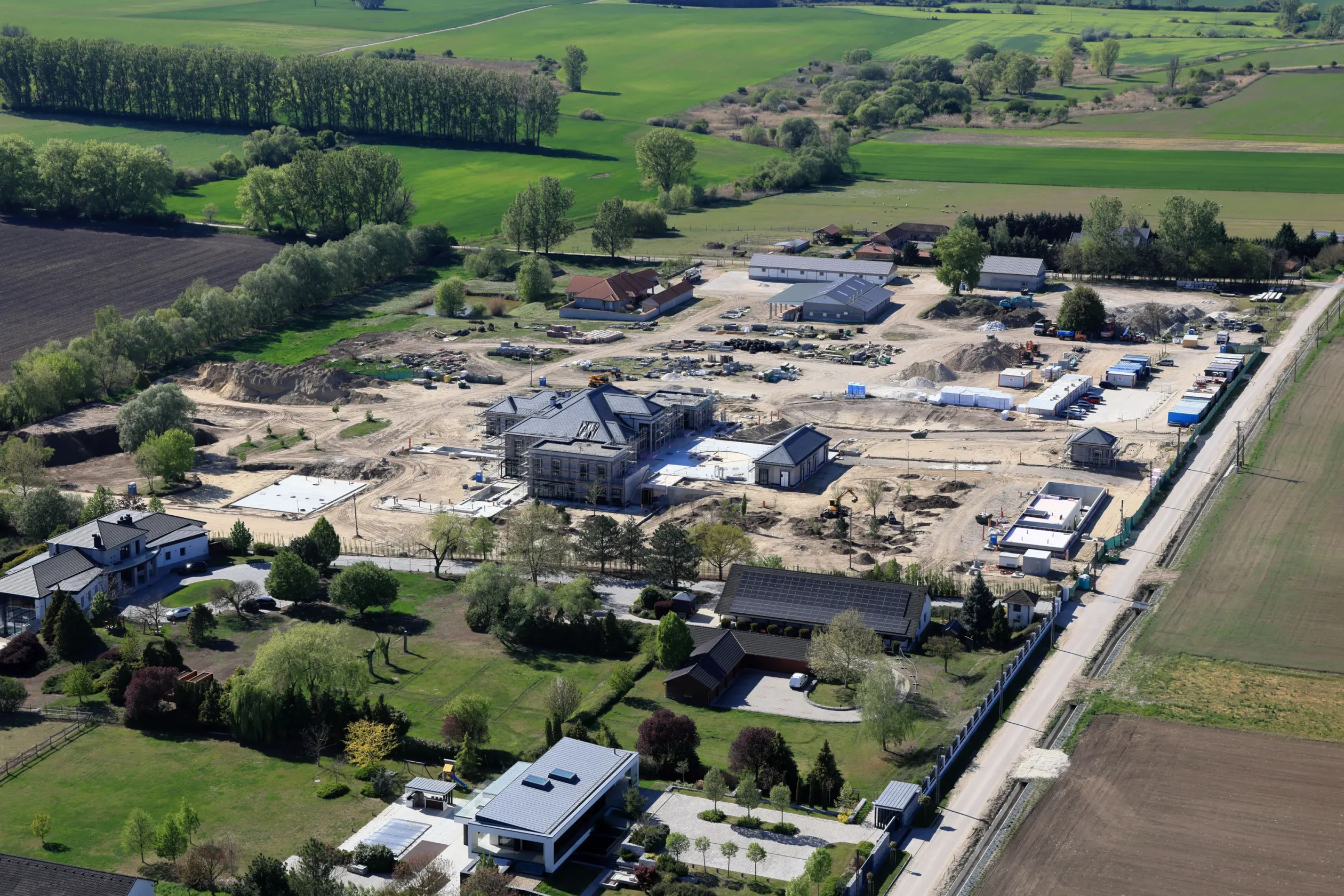
Lőrinc Mészáros became mayor of Felcsút in 2011, and in the years that followed, he acquired several properties in the village – eventually settling with his family on Szári Street. It seems they have now outgrown their first home, which was renovated in the mid-2010s, even though it could hardly be described as small: the driveway near the gate alone is bigger than an average Hungarian family home. They recently began a massive construction project on the neighboring plots they have acquired in the meantime.
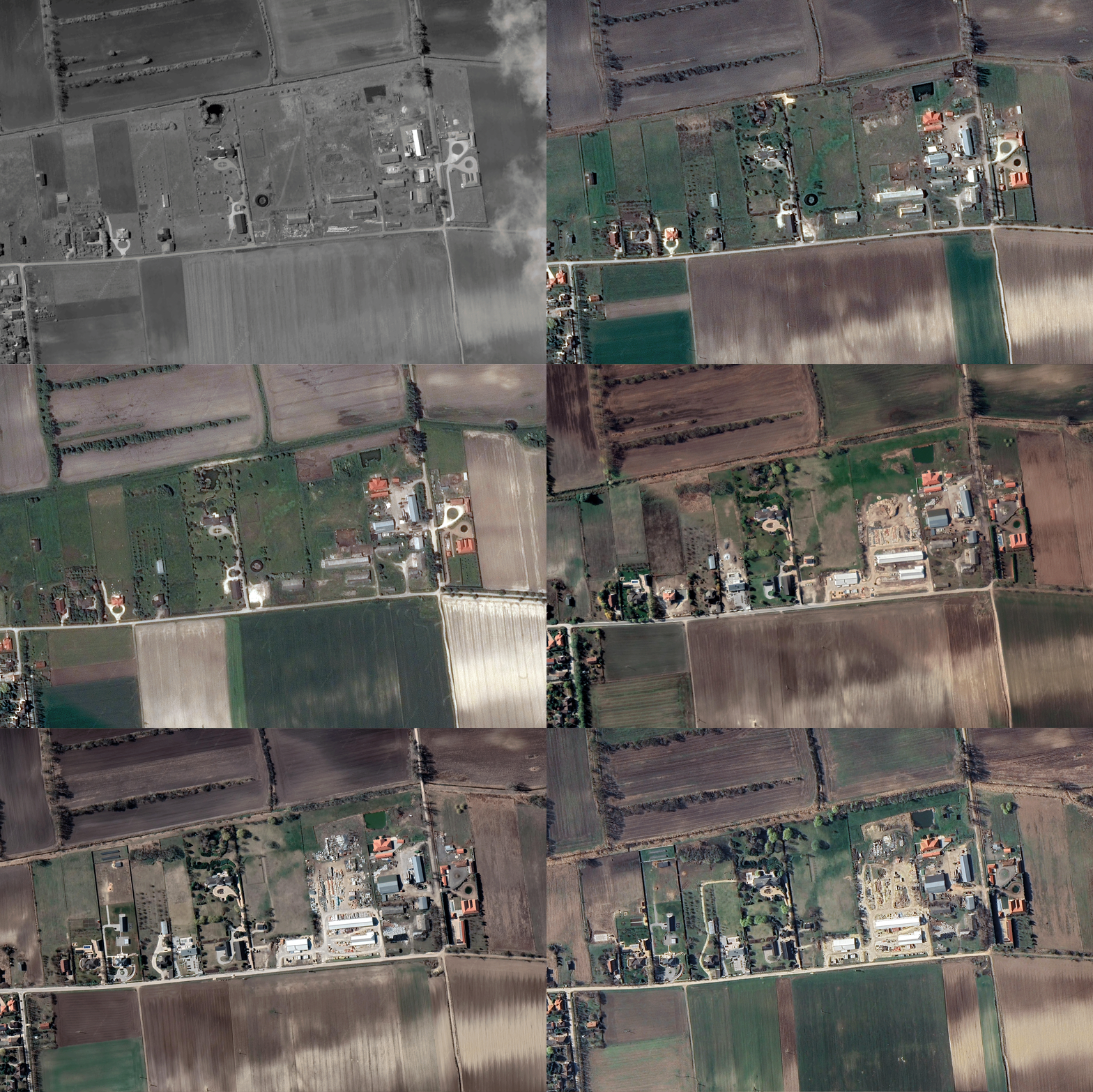
How Szári street in Alcsút changed between 2009-2025 – Source: Google Earth
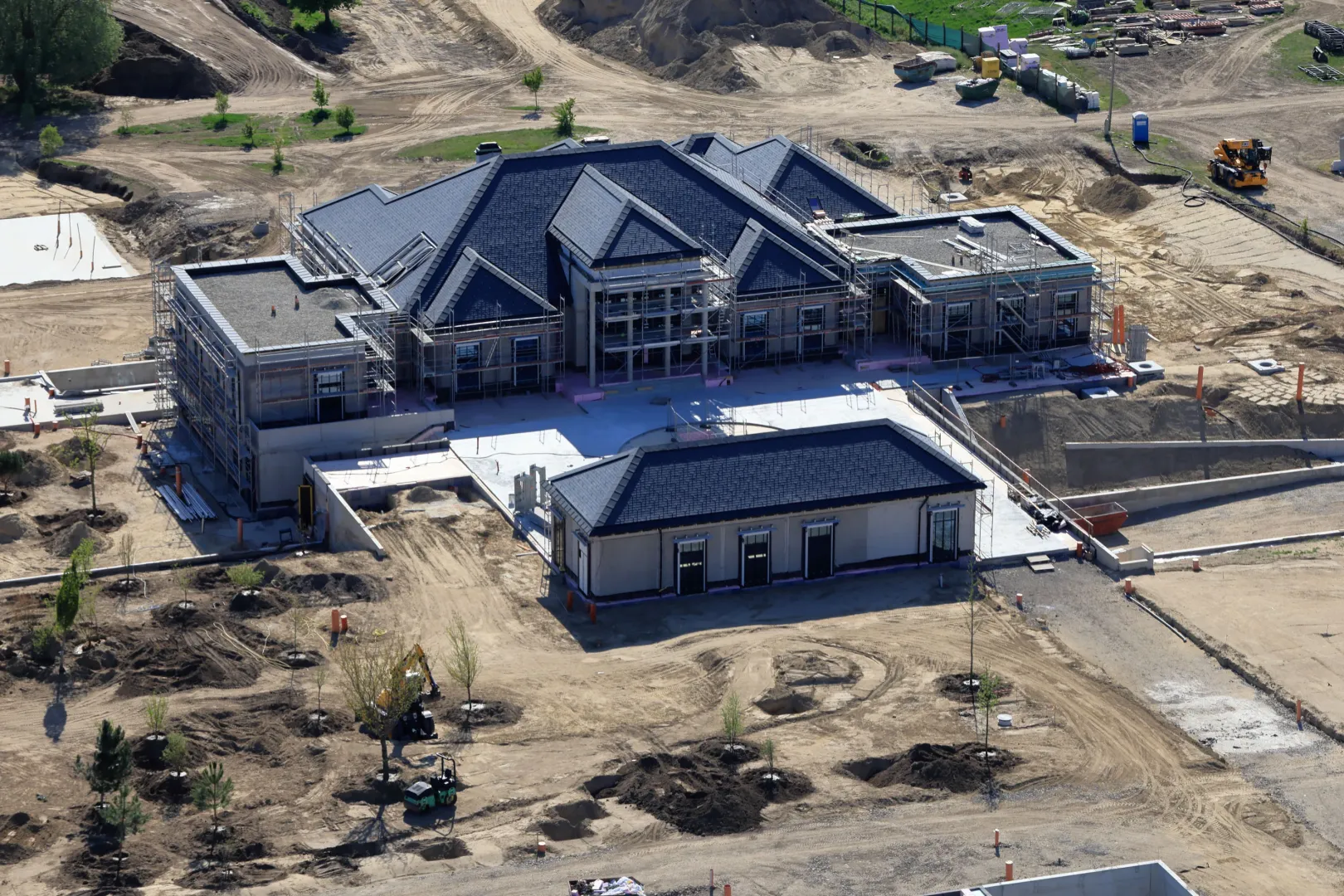
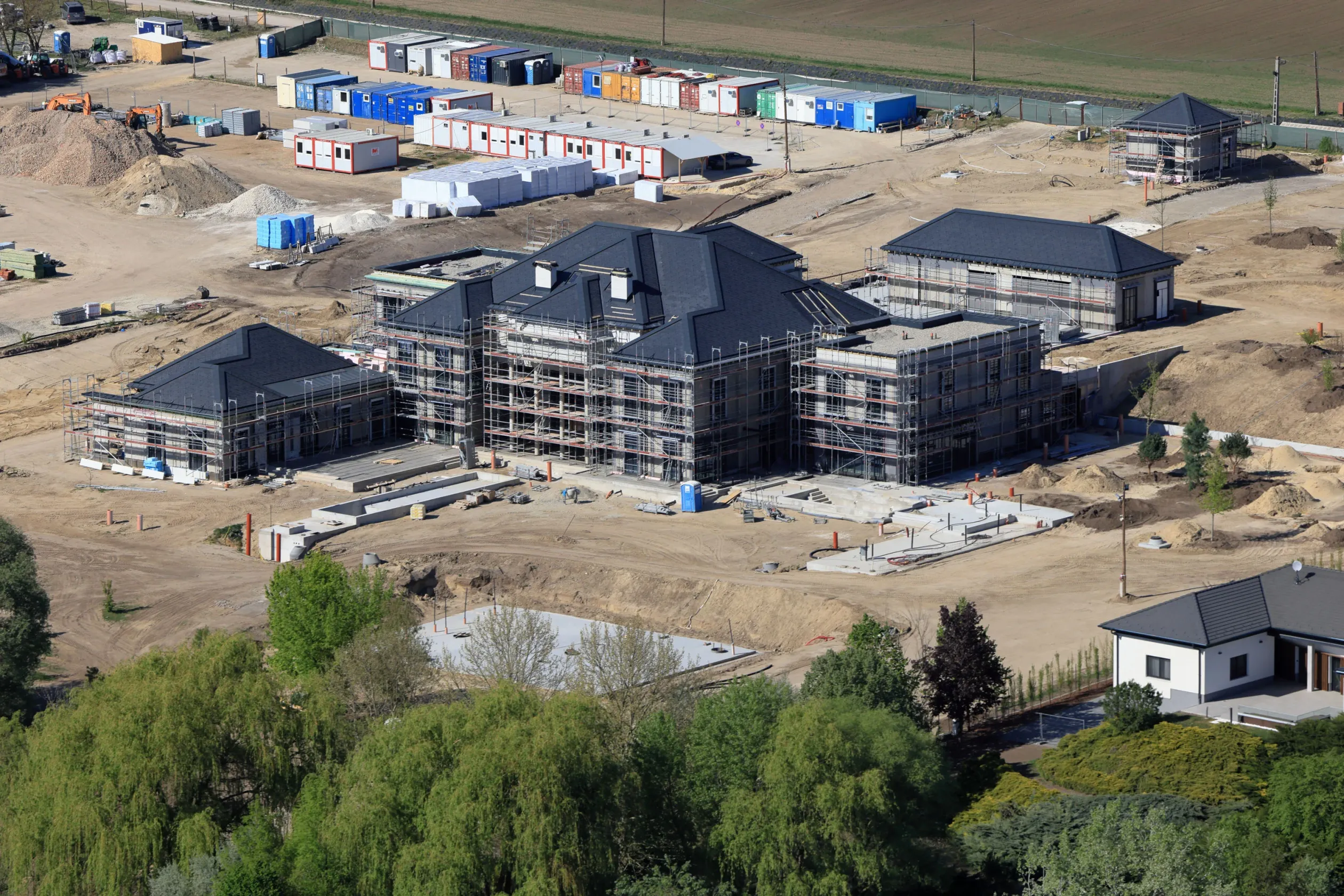
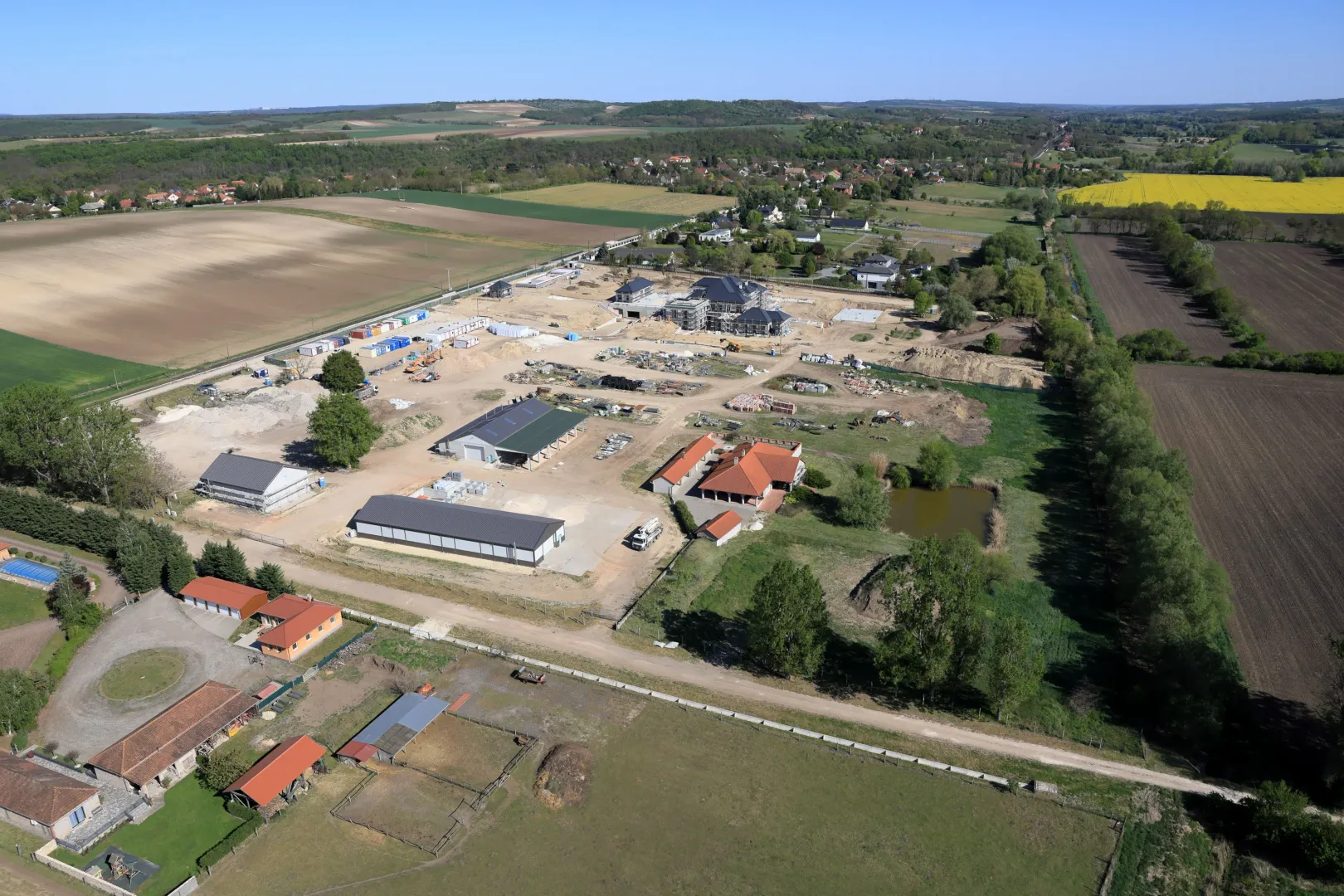
The two-story structure built from reinforced concrete, featuring a below-ground parking garage and multiple wings is still very much a work in progress; the bare walls are covered in scaffolding, and not all the windows and doors have been installed yet. There are still piles of building materials and workers’ trailers scattered around the building, but aerial photos show no signs of any current construction activity.
The old home of Lőrincz Mészáros is on the left, while the new buildings, still under construction are visible on the right – Photo: Ferenc Sztraka / Telex
Photo: Ferenc Sztraka / Telex
Photo: Ferenc Sztraka / Telex
Photo: Ferenc Sztraka / Telex
Photo: Ferenc Sztraka / Telex
Botaniq Máriavölgyi Golf Club, i.e. the golf course of István Tiborcz
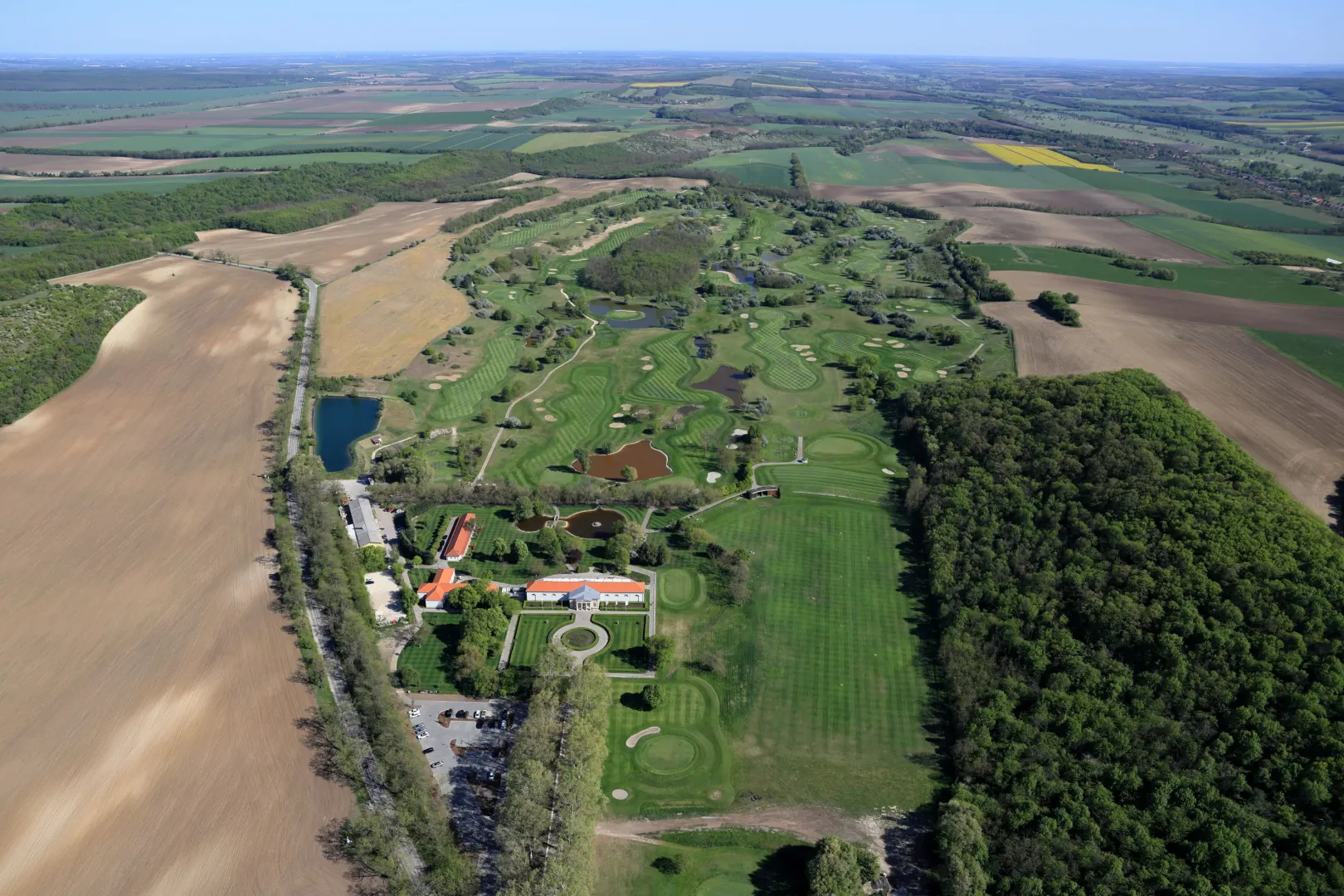
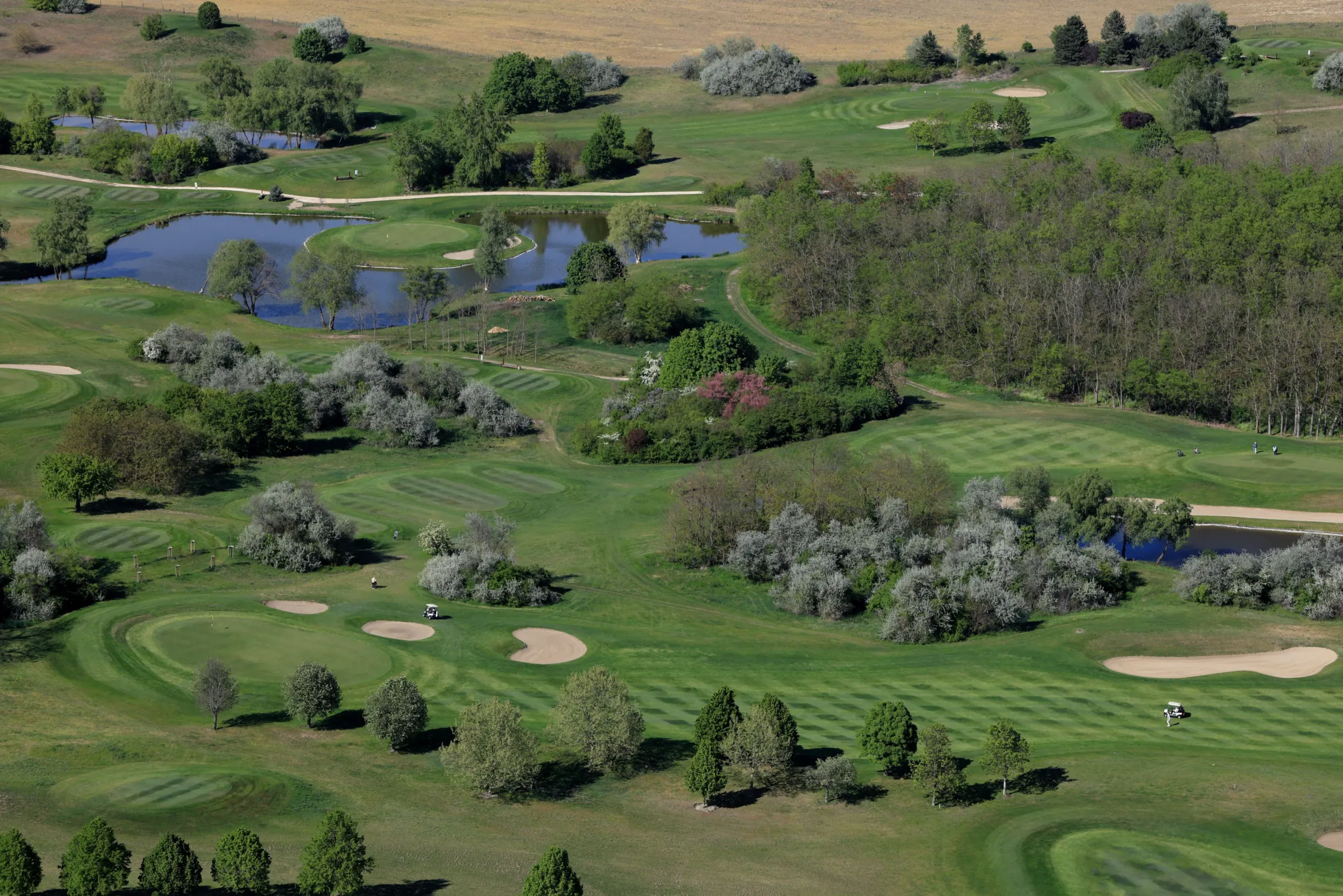
A golf club has operated since 1996 on the other side of the road connecting Alcsútdoboz and Etyek, not far from the Hatvanpuszta estate. It was founded by a Swiss-Austrian couple under the name Pannónia Golf & Country Club, and was later purchased by Sándor Csányi and his family. In 2019, this property was also purchased by the company of Viktor Orbán’s father, Győző Orbán, while Máriavölgy Zrt., the company operating the club, was acquired by the firm of Lőrinc Mészáros.
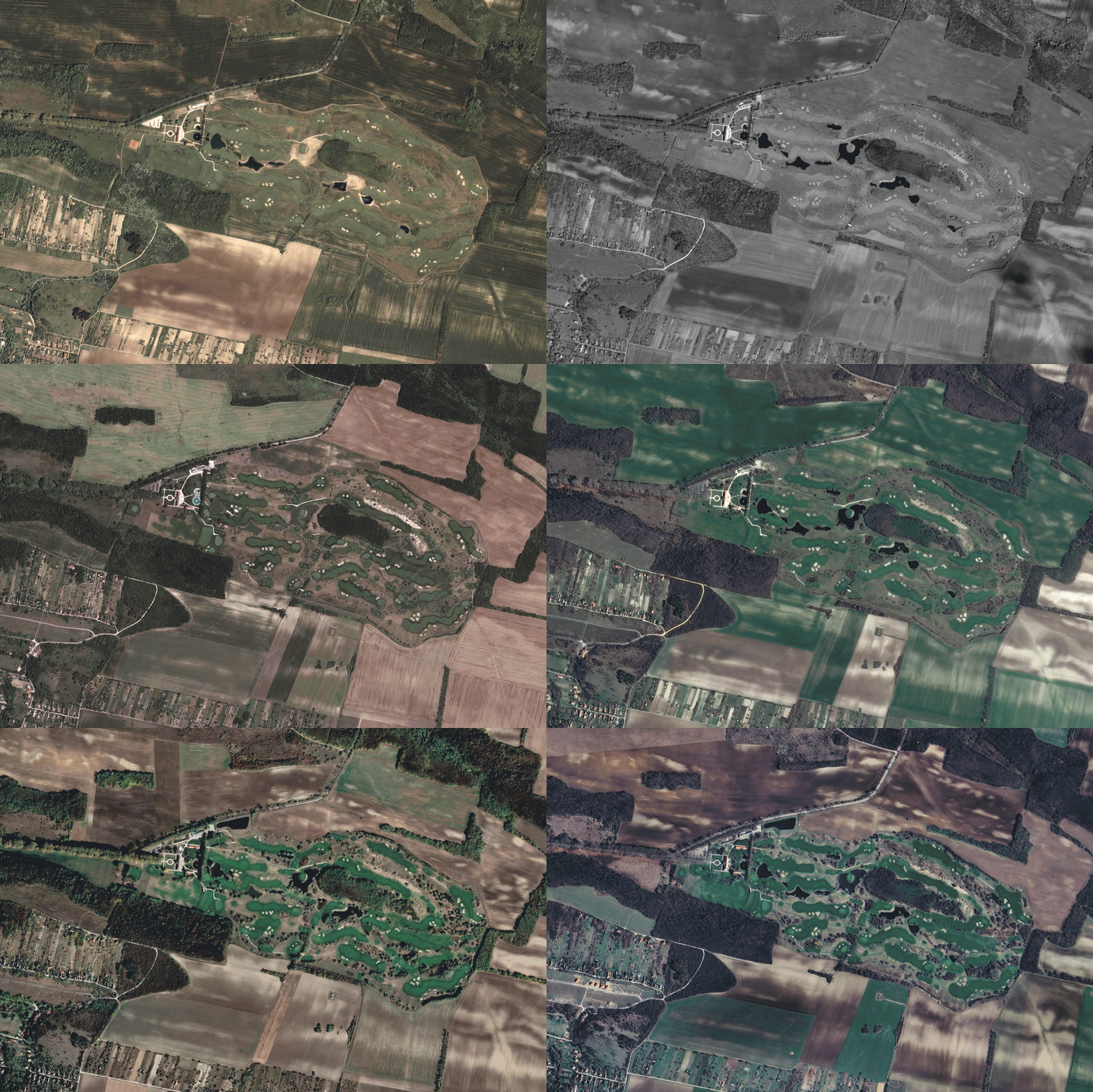
How the territory of the Máriavölgy Golf Klub changed between 2021-2024 – Source: Google Earth
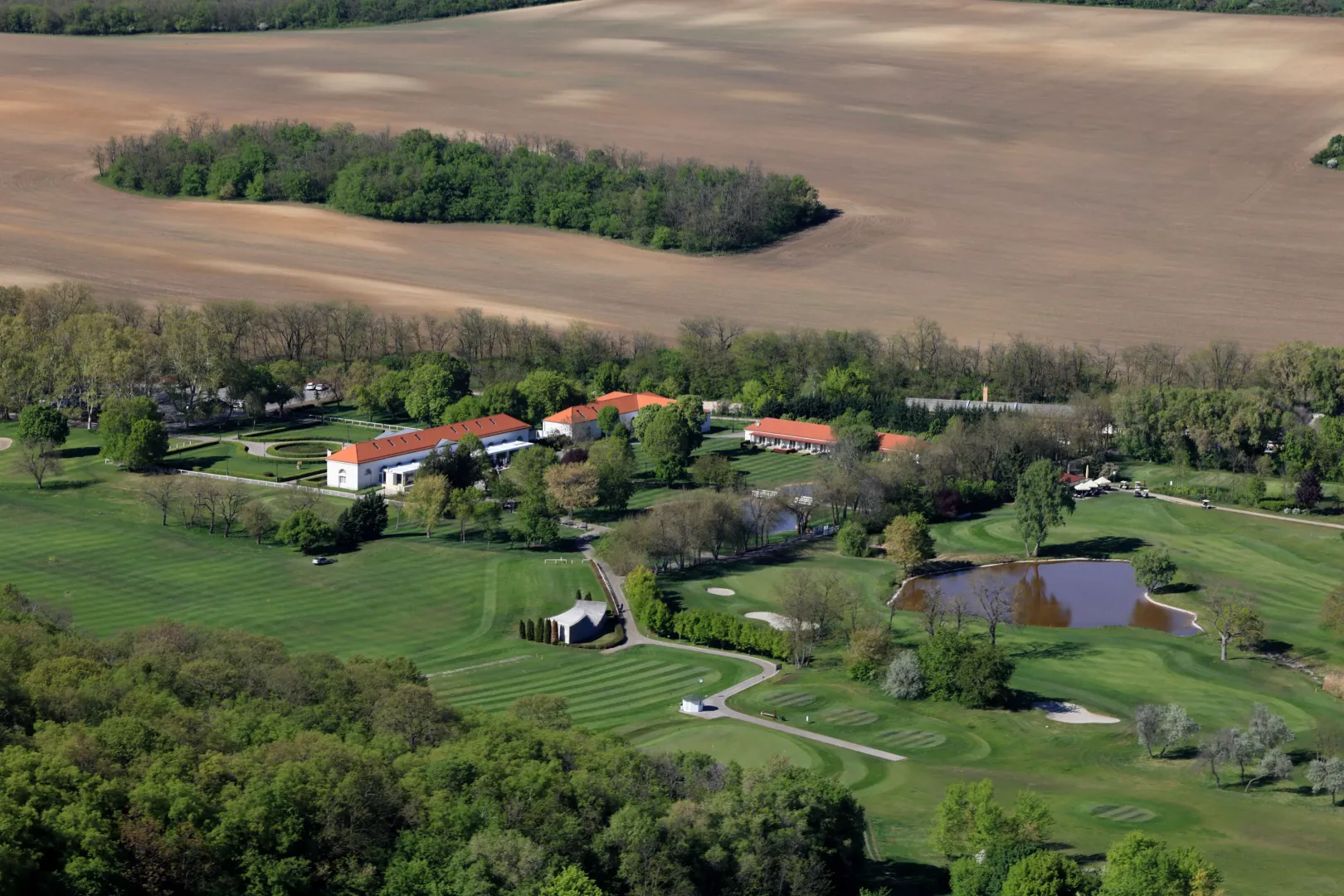
Then, in 2023, István Tiborcz’s company, BDPST, joined forces with Mészáros, and Viktor Orbán’s son-in-law promptly renamed the club. Since then, Orbán’s father has purchased additional plots of land around the golf club. The clubhouse and the restaurant that serves the course were recently renovated.
The former stables of the Habsburg estate located in Alcsútdoboz‑Máriavölgy house the main building of the Botaniq Golf Club today – Photo: Ferenc Sztraka / Telex
Photo: Ferenc Sztraka / Telex
Photo: Ferenc Sztraka / Telex
Alcsút, Felcsút, Pancho Arena, and the narrow-gauge railway
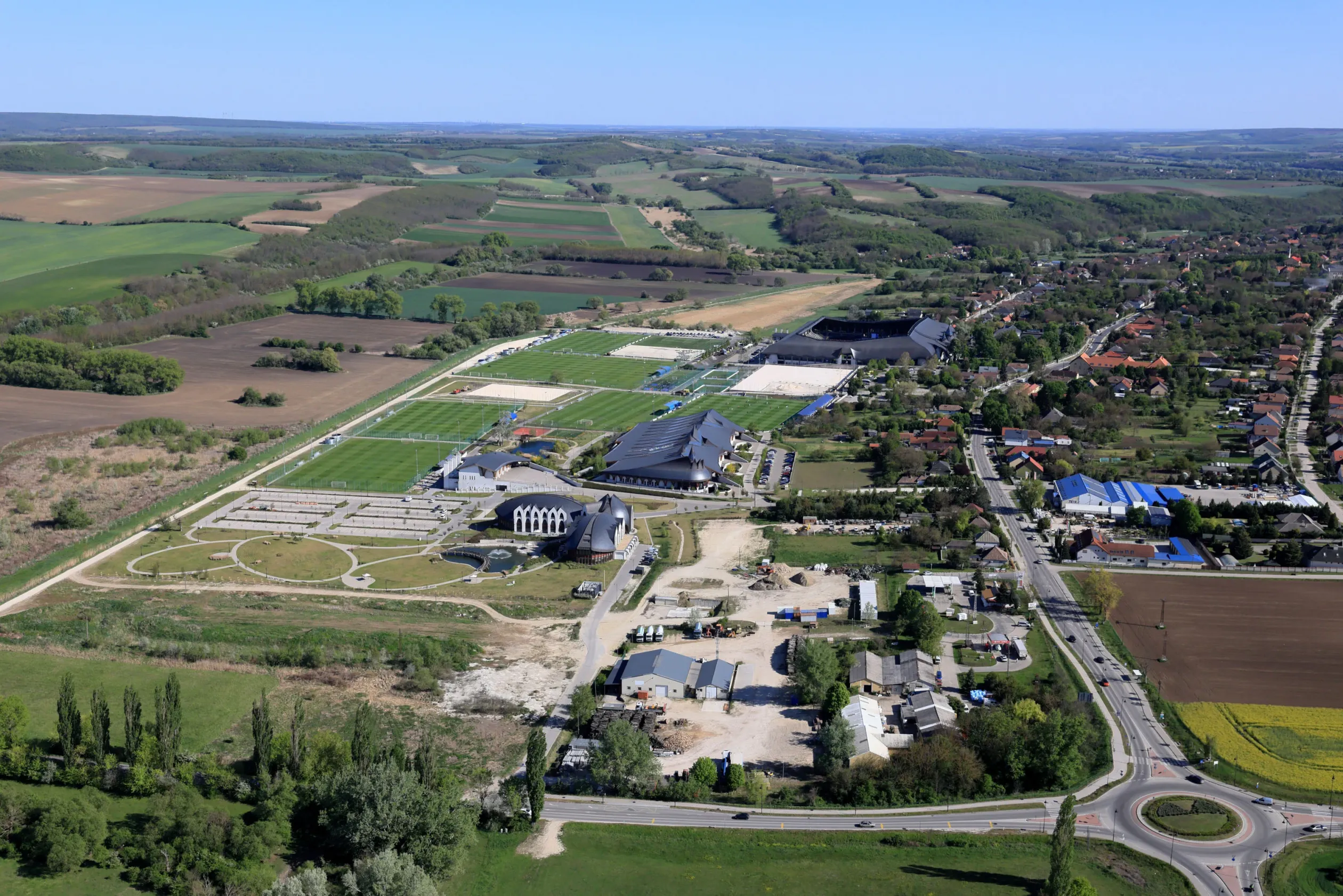
The transformation of Felcsút over the past 16 years is obvious even to the casual visitor and is noticeable even without aerial photos. Even before 2010, Viktor Orbán was the most famous resident of this village of 2,000. The prime minister purchased his house at the end of Rákóczi Street back in 2013, which he completely renovated during his years in opposition. It is safe to say that by now, almost the entire world knows that after coming to power in 2010, he had a stadium built next to his house. The Pancho Arena has become one of the symbols of the Orbán regime, and has been frequently visited by foreign journalists covering Hungarian domestic politics.
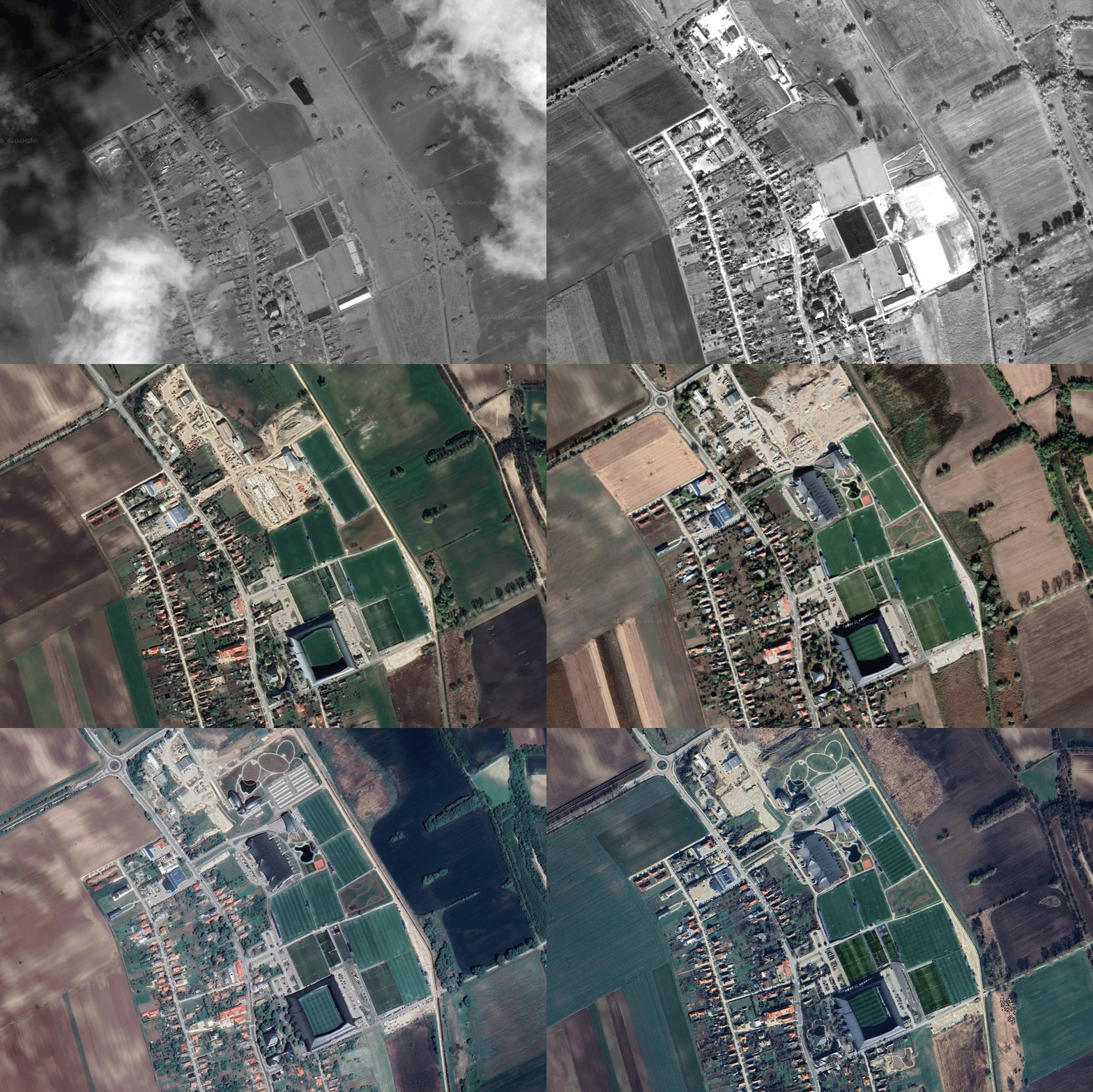
The transformation of the village of Felcsút between 2009-2024 – Source: Google Maps
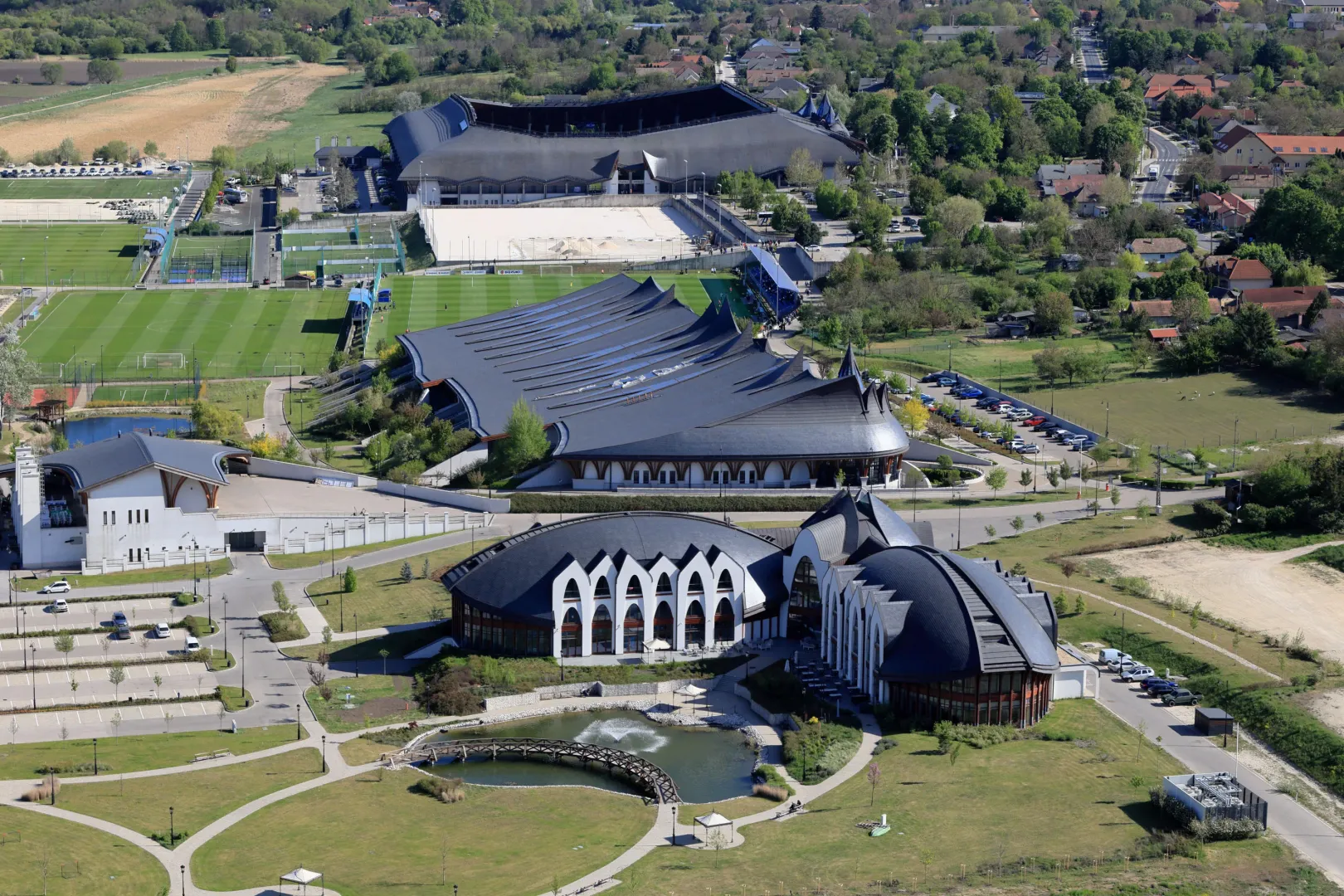
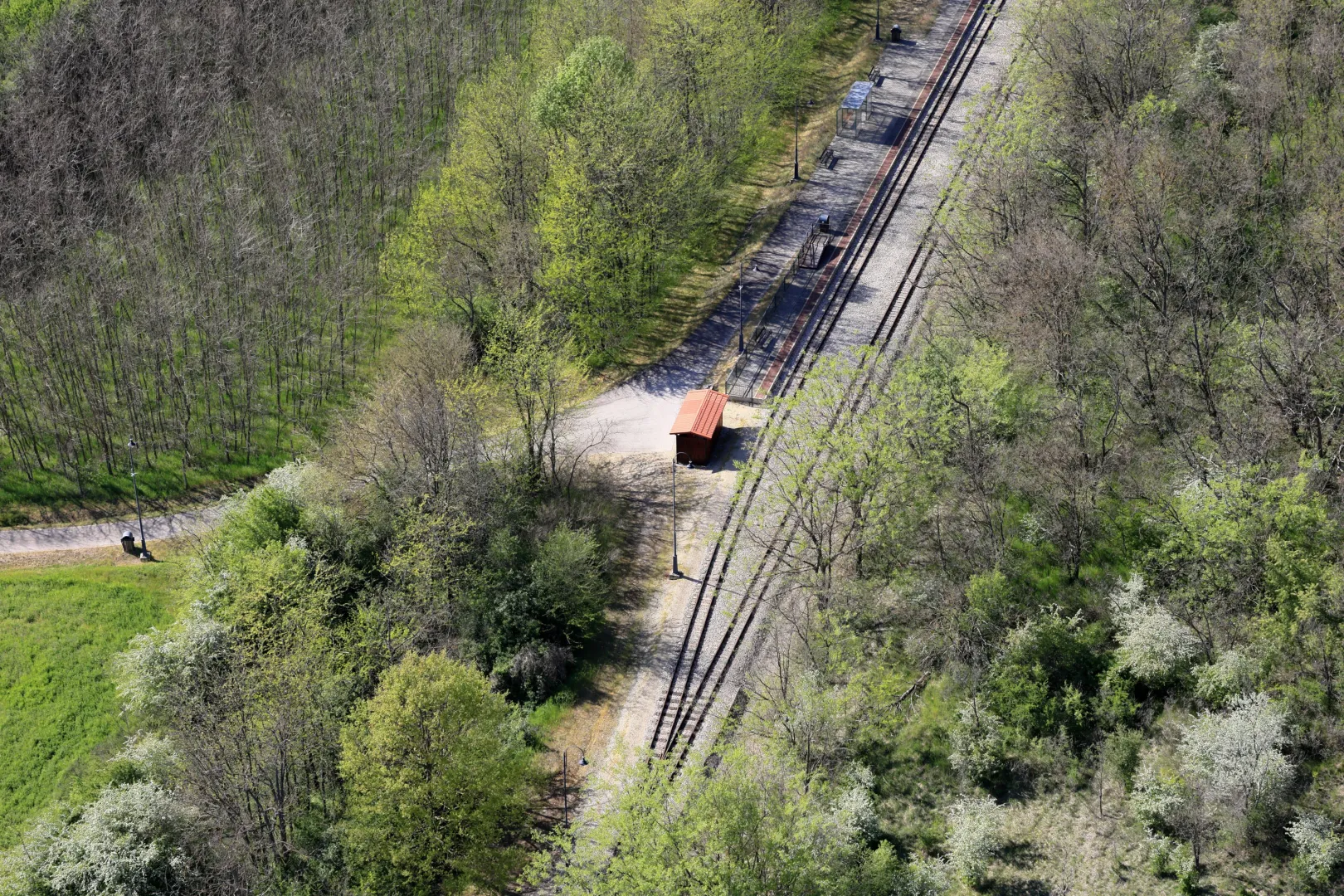
Over the years, a parking lot was built next to the stadium, followed by more sports fields; then came the sports center and an event hall of gigantic proportions considering the size of the village. Not far from the arena, at the far end of Orbán’s garden, lies the final stop of the narrow-gauge railway that departs from Alcsút.
In the meantime, the area behind his house—which still seems modest from the street—has also been expanded and spruced up. Over the years, using the neighbouring plots which were also bought up by the Orbán family, a nice little park has been developed in the area behind the house.
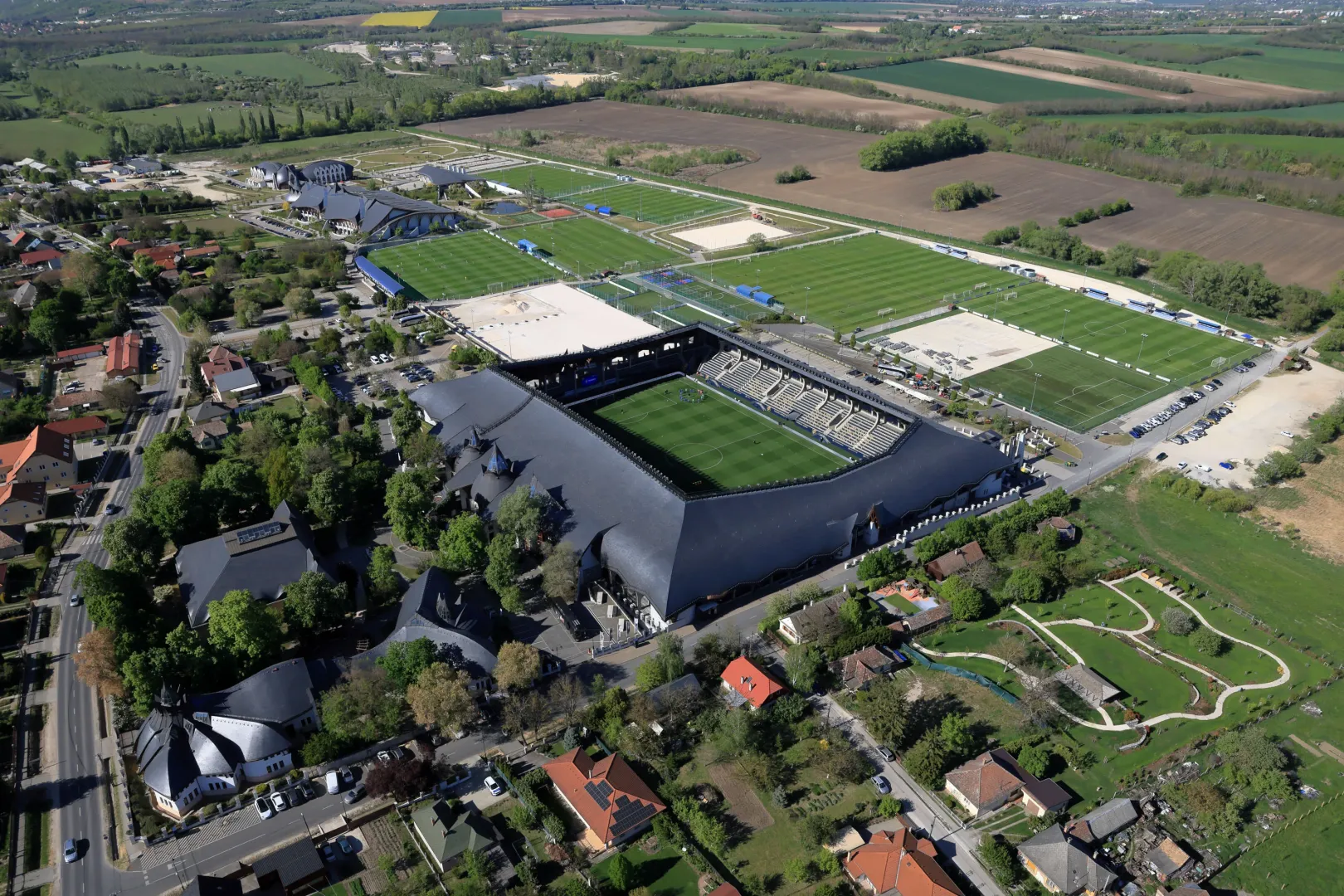
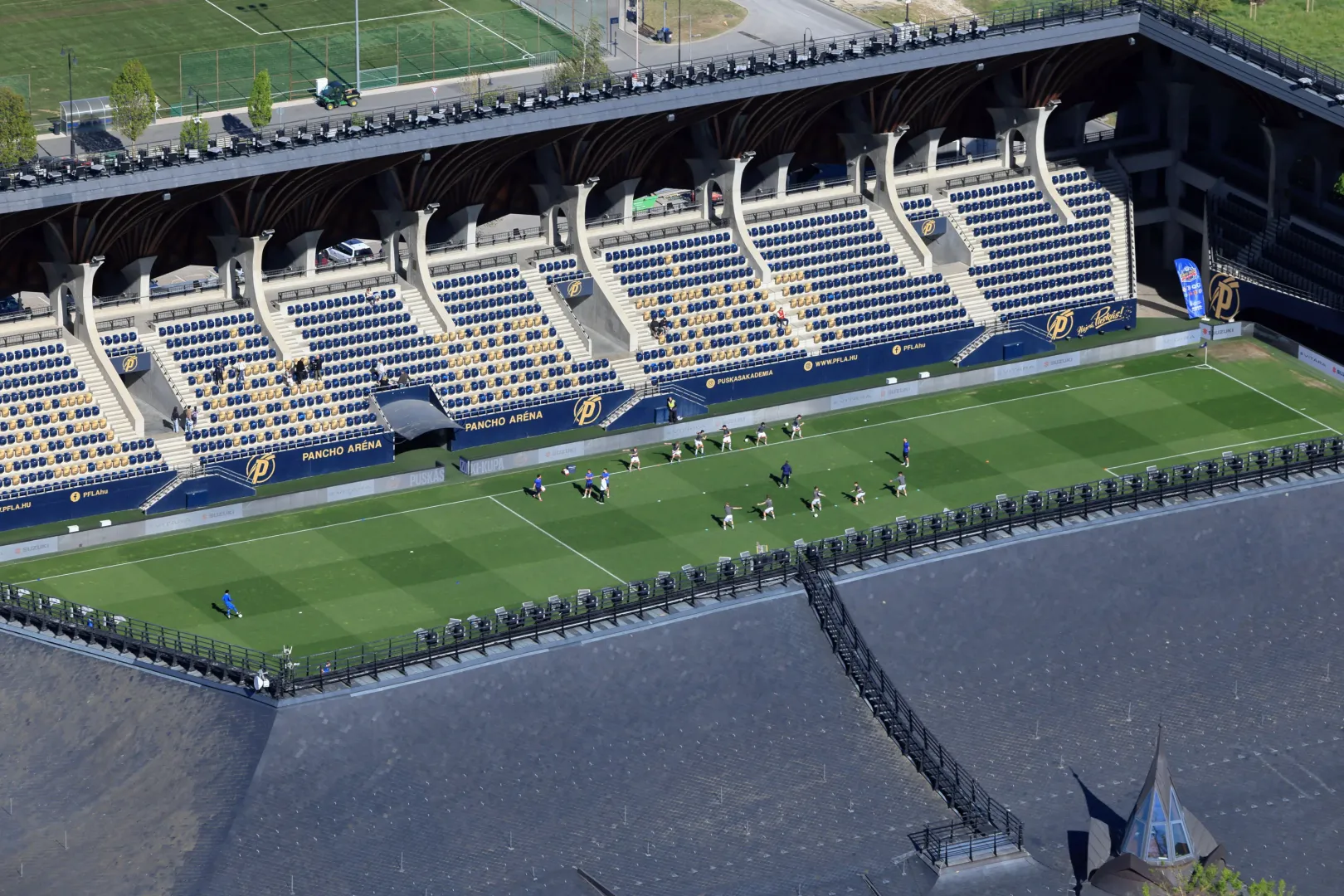
Pancho Arena, the stadium of the Puskás Akadémia FC soccer club in Felcsút, completed in 2014; with the former prime minister’s house right next to it – Photo: Ferenc Sztraka / Telex
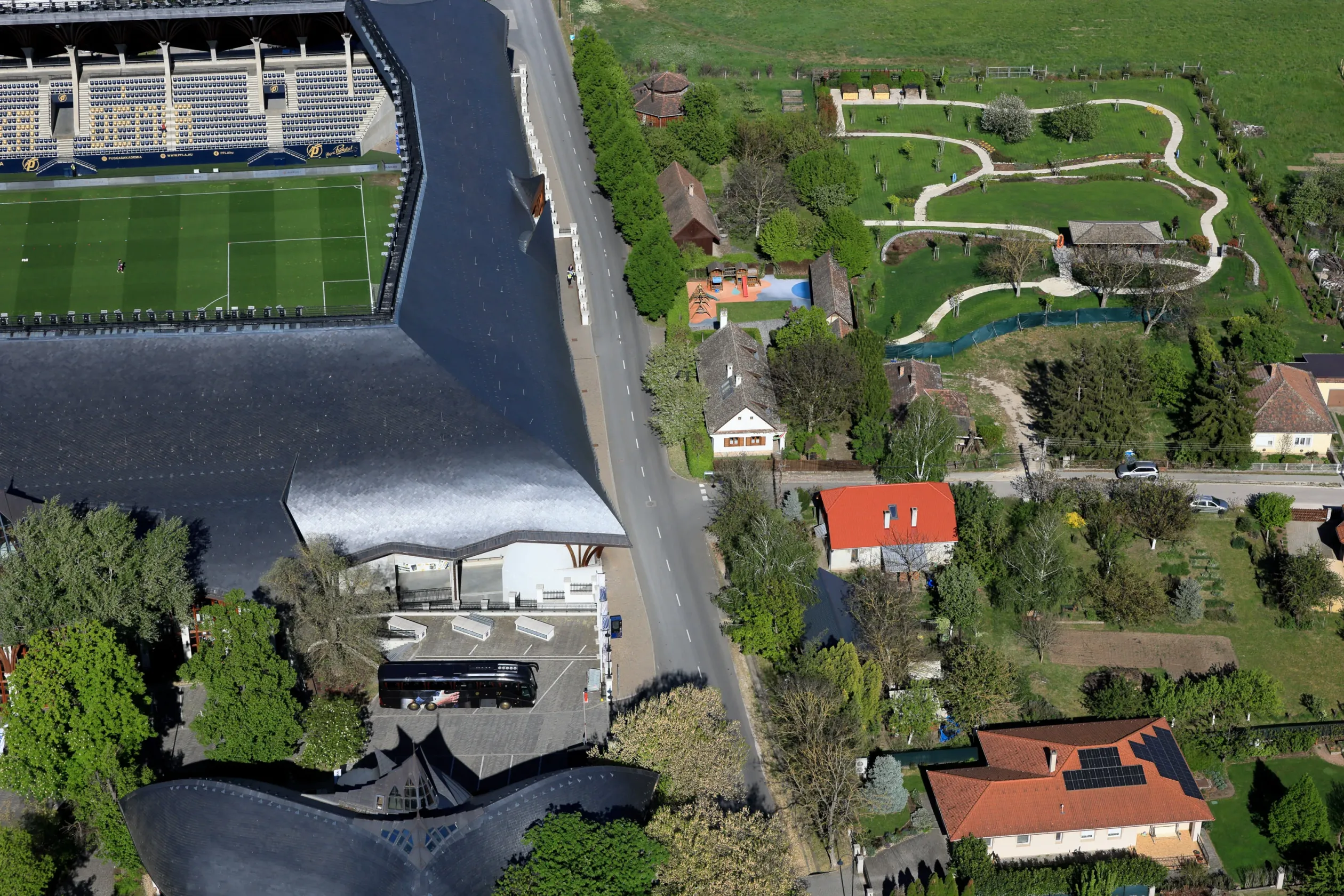
In recent years, Viktor Orbán bought up the plots near his house and developed a park in the area – Photo: Ferenc Sztraka / Telex
Photo: Ferenc Sztraka / Telex
The Pancho Hotel with the Pancho Hotel & Sports- and Event Hall, and the Pancho Arena in the background – Photo: Ferenc Sztraka / Telex
Photo: Ferenc Sztraka / Telex
The tracks of the Vál Valley Light Railway aka Felcsút Light Railway somewhere between the Puskás Soccer Academy in Felcsút and Alcsút – Photo: Ferenc Sztraka / Telex
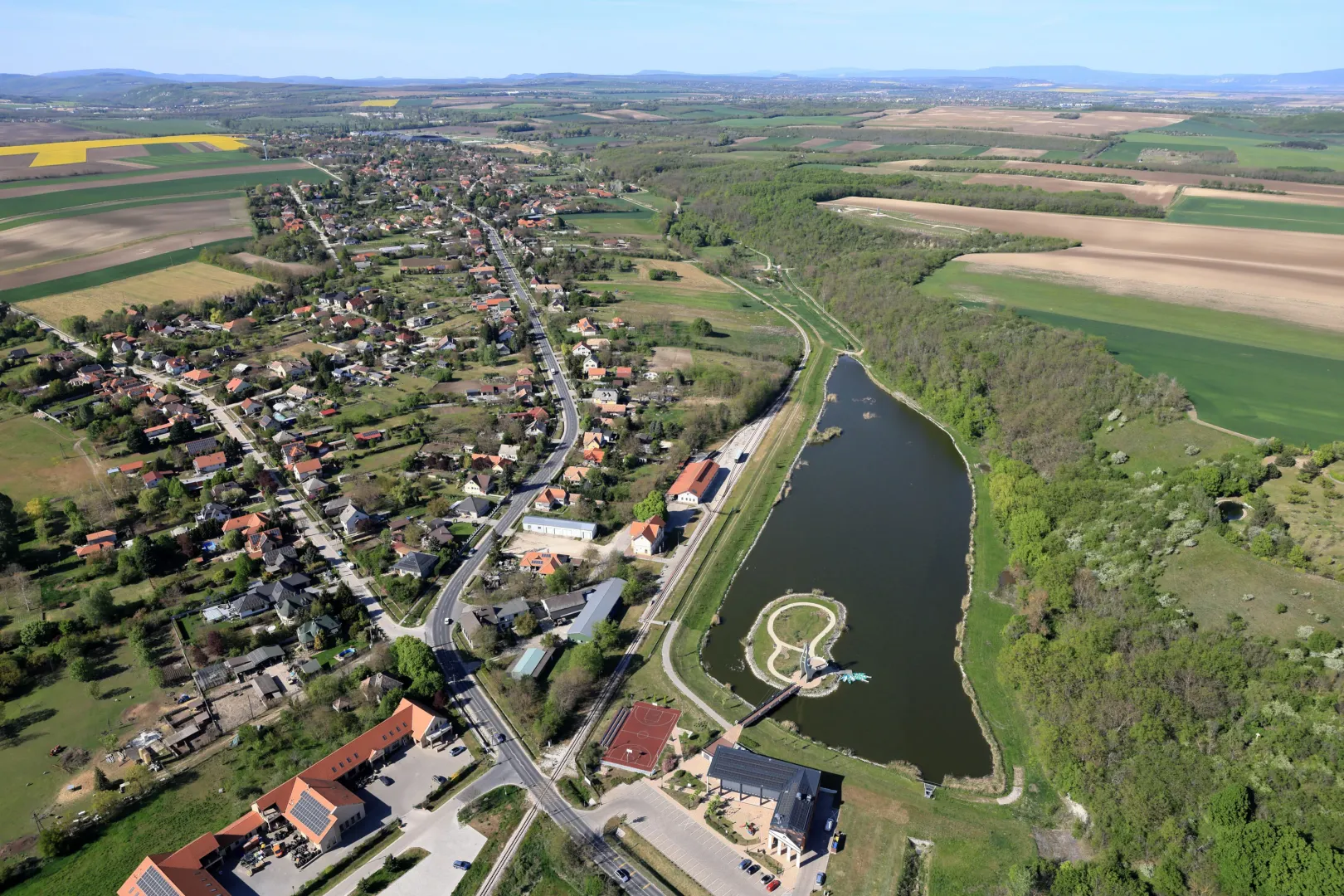
The Alcsút-Felcsút railway station on the edge of Felcsút – Photo: Ferenc Sztraka / Telex