Hungary-Serbia oil pipeline to be built by company owned by Hungary's MVM Group


Serbia would very much like to have an alternative oil pipeline. We’ve also heard a lot of talk in Hungary recently about how having two pipelines supplying a country’s sole refinery increases the security of supply.
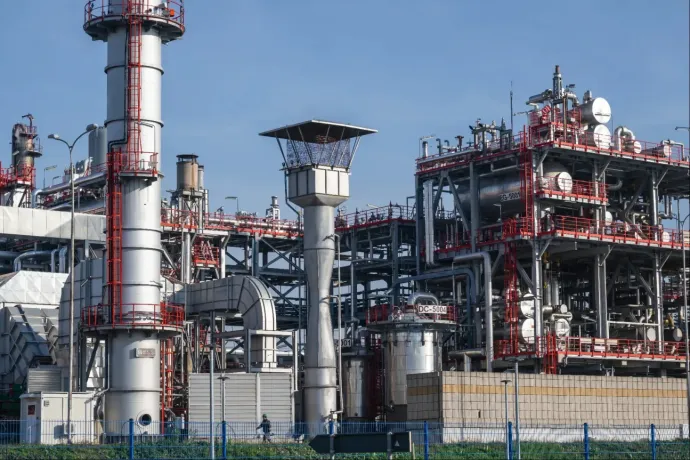
Currently, however, there is only a single pipeline supplying the Serbian, Gazprom-owned refinery in the town of Pančevo—which Hungary's Mol Nyrt. is currently seeking to acquire along with the entire Serbian oil company (NIS).
Vulnerability
The Croatian Janaf pipeline, which originates in Omišalj on the Adriatic coast thus poses a major risk to Serbia, as the country has typically consumed 4.5 million tons of oil annually in recent years, of which roughly 1 million tons came from domestic production and 3.5 million tons—or 300,000 to 320,000 tons per month—arrived via the Janaf pipeline. However, the Croatians and the Serbs are not exactly the best of friends; the Croatians have made Serbia pay dearly for its dependence on them. Moreover, when foreign sanctions hit Russian oil and Russian oil industry interests, Janaf simply stopped supplying oil to Serbia.
The idea of an alternative, a pipeline between Hungary and Serbia came up, whose major flaw, however, is that if Hungary and Serbia were to connect to the Druzhba pipeline coming from Russia, the question of whether Russian or other oil would actually be flowing through it – enough for Hungary to supply the Serbs too – would always be hanging in the air.
The announcement
After a drawn-out process, it has now been announced on the Serbian public procurement portal that the tender for the construction of the 14.5 billion dinar (124 billion forint) Hungarian-Serbian oil pipeline has been won by a consortium led by the partly Hungarian-owned MVM Južna Bačka, VG.hu has reported.
Telex has previously reported on the shady affairs related to this company. The tender for the new oil pipeline, which will run from the Hungarian-Serbian border—specifically from Horgoš to Novi Sad—was progressing slowly because a company called Millennium Team had filed complaints, but these were ultimately rejected, and the Hungarian-Serbian consortium, which was the only one that submitted a tender was declared the winner. The 113-kilometer-long pipeline will pass through the towns of Kanjiža, Senta, Ada, and Stari Bečej.
The decision was announced by the Serbian state-owned company Transnafta, which said that the winning bid met all technical, professional, and quality standards. MVM Južna Baćka is responsible for 43 percent of the entire project, including the procurement of materials and equipment, energy and automation systems, as well as several tasks related to mechanics and construction. Most of the work will be carried out by smaller Serbian companies.
The other important contract related to the project—the technical inspection—was awarded to the Belgrade subsidiary of SGS, which is owned by the Swiss company SGS Société Générale de Surveillance SA.
The Serbs are in a bind
The Serbian oil industry is in an extremely vulnerable position, and the pipeline could help remedy this. The U.S. sanctions office, the Office of Foreign Assets Control (OFAC), has sanctioned the Serbian oil company Naftna Industrija Srbije (NIS), whose majority owner is the Russian Gazprom Group, while the Serbian state holds a minority stake in the company. Hungary’s Mol, however, is very keen to become the majority owner, and negotiations have been ongoing.
OFAC announced the sanctioning of NIS as early as January 10, 2025, but the U.S. kept delaying its implementation for a long time; it finally took effect in October 2025. From then on, selling oil to NIS’s Pančevo refinery became prohibited; not only did Janaf stop supplying it, but it also became impossible to pay with Visa or Mastercard at NIS’ gas stations. After a while, they managed to secure all sorts of exemptions, allowing NIS to continue operating, but Serbia’s main problem remained: it is only supplied with crude oil via the Croatian Janaf pipeline, and on top of that, there are constant deadlines looming; the sanctioned Russian company needs to be removed from NIS' ownership structure, but it seems as though the transaction isn’t really important to either the Serbs or the Russians, so Hungary’s Mol isn’t in an easy position. To further complicate matters, Russia and Serbia, which have long been friends, haven’t been on the best of terms lately, because despite Belgrade’s denials, Moscow still believes that the Serbs are selling weapons to Ukraine through some back channels.
For more quick, accurate and impartial news from and about Hungary, subscribe to the Telex English newsletter!