Incoming Hungarian Foreign Minister would anchor Hungary in Western alliance system and eliminate dependence on Russia
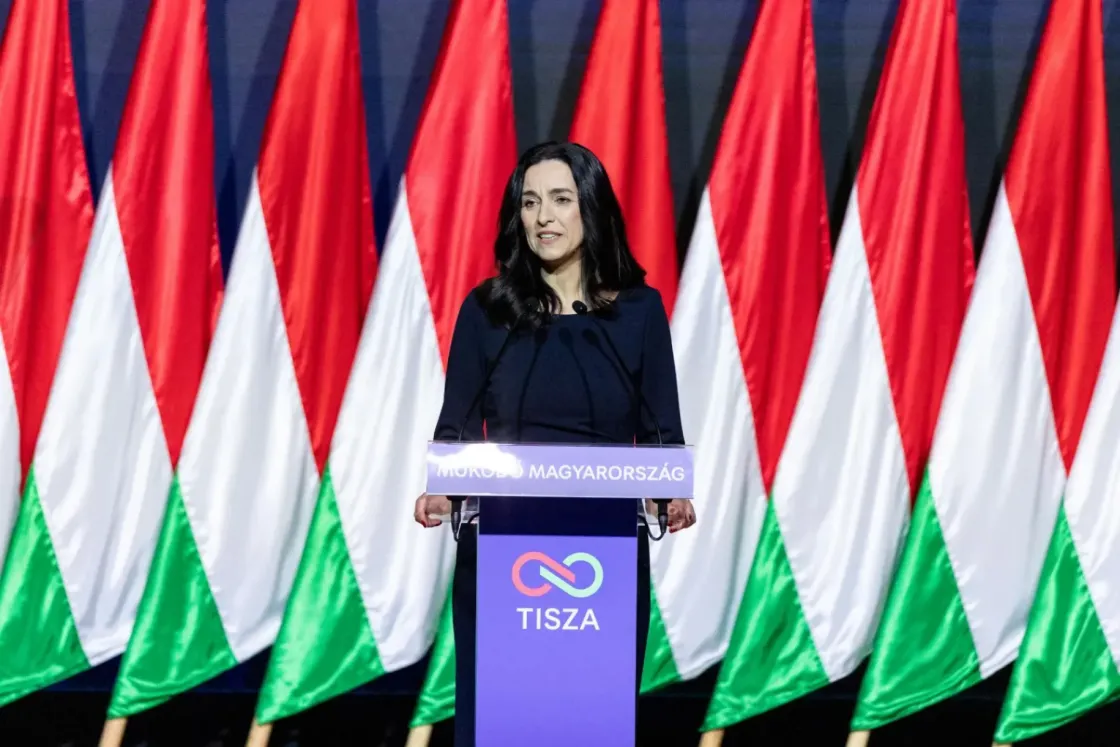


“We will anchor ourselves in the Western alliance system,” Anita Orbán said in her first interview, which she gave on Péter Magyar’s YouTube channel, after becoming the Tisza Party’s head of foreign affairs, signaling her clear Western, Atlanticist commitment. Hungary’s future foreign minister joined the Tisza Party on January 24, and Péter Magyar immediately introduced her as the party’s foreign affairs expert and the new face of Hungarian diplomacy. “My name is Anita Orbán, and I'm a no-nonsense girl from the countryside” – the politician born in Berettyóújfalu said, as a way of introducing herself. A few weeks later, she accompanied Péter Magyar to the Munich Security Conference, where the future prime minister held talks with his future European partners.
“I believe that diplomacy is not a test of who can shout the loudest. Success does not lie in being able to loudly tell others off, but in positioning the country on the international stage in a way that translates into the well-being and security of Hungarian companies and the Hungarian people,” she explained in an interview with RTL, highlighting how she would differ from the current foreign minister, Péter Szijjártó.
Born in 1974, Anita Orbán, an economist, is considered one of the most influential figures in Hungarian business. Before joining Tisza, she was the head of government relations at Vodafone Global. Early in her career, after graduating from university, she worked as a financial controller at Matáv, then moved to the United States with her then-husband, Krisztián Orbán. In Boston, she earned two master’s degrees in history and diplomacy, and then, in 2007 received her Ph.D. from the internationally renowned Fletcher School of Law and Diplomacy.
In the 2000s, she covered public affairs and politics as a columnist for Heti Válasz, and later served as a regular contributor to the weekly for several years. Within Fidesz, she was affiliated with the circle of János Martonyi, who served as foreign minister during the first and second Orbán governments (between 1998–2002 and 2010–2014).
From the mid-2000s onward, she was quite critical of the Gyurcsány government’s foreign policy, but she also opposed dependence on Russian energy, urging diversification. These views were, incidentally, fully in line with the mainstream Fidesz position at the time: in 2008, even Viktor Orbán asserted that Hungary must not become Gazprom’s most loyal customer. Based on her statements and writings from that period, Anita Orbán tended to criticize the unpredictability of Ferenc Gyurcsány’s foreign policy.
At the time, she was among the experts who feared that Russia would use energy as a weapon to advance its geopolitical goals—she wrote about this in her 2008 book *Power, Energy, and the New Russian Imperialism*, published in English and launched in Washington at the time. Anita Orbán argued that Russia was exploiting the EU’s dependence on crude oil and natural gas.
After Fidesz’s 2010 election victory, she joined the Ministry of Foreign Affairs, serving as ambassador-at-large for energy security and chair of the Energy Cooperation Committee of the Danube Countries from 2010 to 2015. She held this position during a period when the Orbán government—at least in its public statements—was attempting to diversify its energy sources due to its dependence on Russian gas.
The Orbán government eventually abandoned diversification and, starting in 2017, forged even closer ties with Russia. According to sources familiar with the internal processes at the time, Viktor Orbán had already abandoned the idea of diversification after 2010, but this only became clear to government officials working to reduce energy dependence on Russia in early 2014, when the PM announced that the Russians would build Paks II (Hungary’s second nuclear power plant). It was later revealed that negotiations with the Russians concerning Paks had already been underway since 2013.
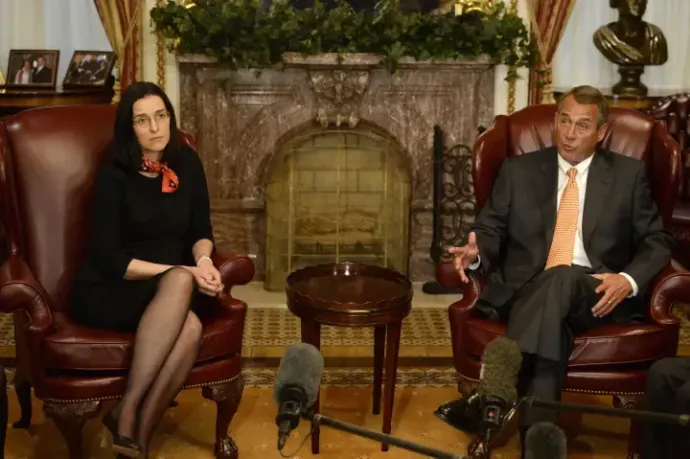
This also meant that the Prime Minister needed the “Atlanticists”—a group that included Anita Orbán—at most to maintain appearances. Following the agreement between Viktor Orbán and Vladimir Putin, János Martonyi, who was Anita Orbán’s mentor, stepped down as head of the Ministry of Foreign Affairs, so she too left the administration in 2015.
During the election campaign, she criticized Orbán’s government for its eastward orientation. In recent years, Hungarian diplomacy regularly interceded on behalf of Russian citizens targeted for sanctions by the EU, preventing targeted sanctions through frequent threats of a veto. “These vetoes have nothing to do with the national interest, but are merely in the interest of oligarchs or a third party. This is going to end. We do not want to be a stick between the spokes, but a spoke in the wheel,” she said in her first interview. “We must clearly state that Russia is the aggressor and Ukraine is the victim here,” she said, referring to Europe’s most serious conflict, in which Hungary, under Prime Minister Viktor Orbán, has been in complete opposition to the European consensus.
She also remarked that in the relationship between Hungary and Russia, there haven’t been two parties sitting on opposite sides of the negotiating table, but rather, the Hungarian government has been sitting on the Russian side. “We will shape Russian-Hungarian relations into a transparent relationship between two sovereign countries that mutually respect each other’s interests, devoid of backroom deals. All other European Union countries have succeeded in doing this, and so will we,” she told RTL.
She said that her most important task during the new government’s first hundred days will be to resolve the issue of the Beneš Decrees.
For more quick, accurate and impartial news from and about Hungary, subscribe to the Telex English newsletter!