Cabbage is the shared language of Eastern Europe
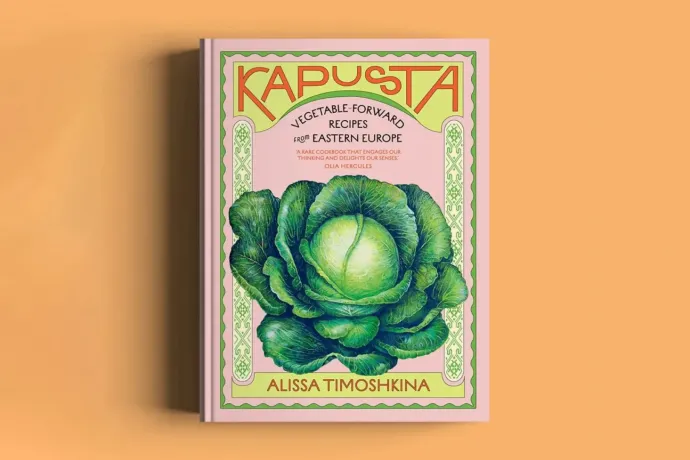
Alissa Timoshkina is a food writer of Ukrainian-Jewish descent. She was born in Siberia and lives in the United Kingdom. Her second cookbook, titled Kapusta, was published last year. The word sounds familiar to Hungarian speakers as well, as the term for cabbage is similar in many Eastern European languages, including Hungary's káposzta.
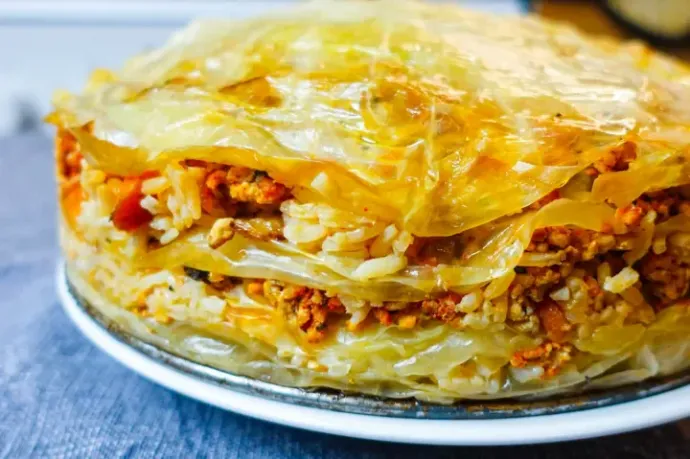
As one browses through the author's recipes, many dishes may seem familiar, and yet they are not; a vague, yet comforting feeling takes hold, like déjà vu – have I eaten this before, or is it something I could eat? The ingredients are familiar, the dishes are similar in structure to our own, yet with a slightly different composition. Cabbage casserole, but made with sweet cabbage, or with mushrooms and meat, and not in a rectangular pan but in a round cake pan. Cabbage “cvekedli”, but instead of using cubed pasta, prepared with mushrooms.
Both in this unique cookbook and in her other works, Timoshkina approaches Eastern European cuisine as a loose gastronomic kinship, which she doesn't view through stereotypes-such as it being meat-heavy or bearing the traces of the Soviet era-but rather through the commonly shared vegetables. Kapusta is also a story of a search for identity, triggered by the war in Ukraine.
We interviewed Alissa Timoshkina online about – among other things – how cooking can help process a deep identity crisis triggered by war and how to view dishes such as borscht and stuffed cabbage.
I came to the UK as a teenager, when I was 15. My first degree was in film history and I worked in film festivals and got a PhD in Holocaust studies and Soviet film history. When I moved away from home, I missed my home-made meals, and had to learn to recreate the dishes that gave me comfort. It was around this time that being into food became trendy, I began cooking more and it became my hobby.I started doing supper clubs and loved it so much that I did it at night as a passion project, along with my daytime job. I later jumped in and left my job, worked in catering, events, and then wrote my first book, about foods I ate during my childhood in Russia (entitled Salt and Time)
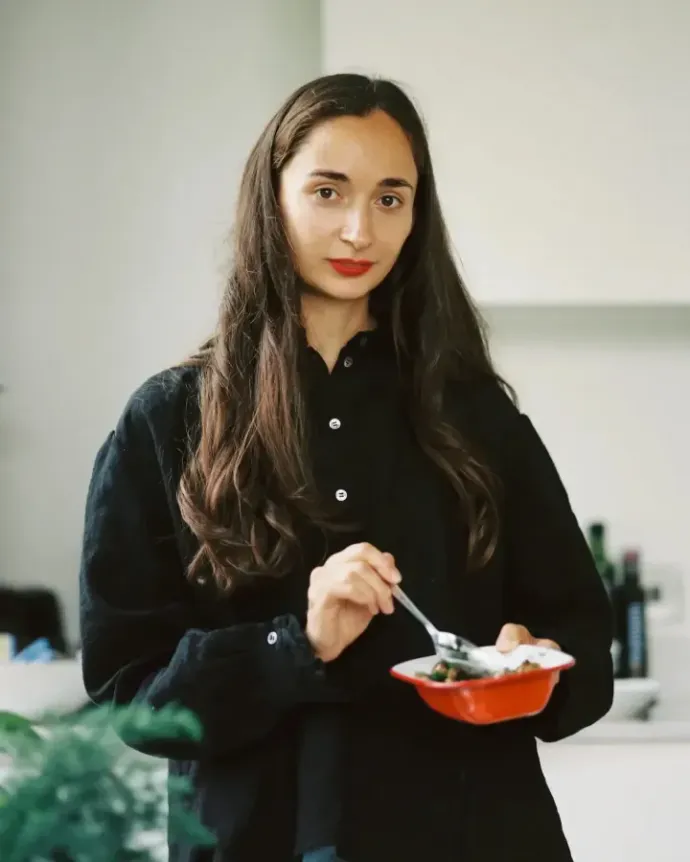
Identity is an important theme in my work, and it reflects my own experience. Sometimes I wish it wasn’t as complicated as it is. But, . . on a better day I feel it gives me so much food for thought, inspiration and intellectual energy to read more, understand more and meet more people with the same background.
I was born in the last decade of the Soviet Regime in Siberia, in central Russia which is ethnically very mixed. My Mom’s side is from Ukraine and they are mostly Jewish. My dad’s side is Ukrainian- Russian-Belarussian – so he is basically an Eastern Slav. I didn’t think about it back then, I just grew up with this mix in a Russian territory, speaking Russian and thought of myself as Russian. But my grandparents were Holocaust survivors, and my family always spoke Russian mixed with Ukrainian words. It was always there as a family legacy but I never had this Ukrainian or Jewish pride, but this kind of history was always a huge part of my sense of self and a sense of belonging to a family with the foods my grandmother made. I recognized we had family foods that others rarely knew, like gefilte fish or matzah. When I moved to the UK, these Jewish strands became more important for me, but I was never philosophically Jewish. I became a mom when I was working on my first cookbook and revisited all these recipes made by these wonderful women in my family. So the question wasn’t only how these dishes have influenced my sense of belonging, but also what kind of role I will play as a mother by using food to give a sense of identity to my daughter.
The illegal annexation of Crimea and the war in Donbass in 2014 was a wake up call for my parents, who decided to leave Russia and relocate to the Balkans. But a real turning point for me was the full-scale invasion of Ukraine in 2022. This was also a huge turning point in the wider relationship between Russia and Ukraine. In many Ukrainian communities, the word “Russian” in all its forms has understandably taken on a negative connotation, and I felt that, despite the fact that I hadn't lived in Russia for thirty years, and opposed everything Putin did, for many Ukrainians this label still affects their perception of me and my work. I realized that because of this, I had to deepen my understanding of Ukrainian history,language, culture and food;the question of regional identity that sets Ukraine vastly apart from Russia This new discourse of removing imperial label of “Russian” from Ukraine, inspired me to do that ideological-cultural shift with my own family. When I was younger I would often default to “Russian” when speaking about my family, but then it almost became so irrelevant: my grandfather was a Jew from Ukraine, who spoke with a strong Ukrainain accent and was a survivor of the Holocaust. The Soviet regime persecuted both the Jews and the Ukrainian to deny their ethnic and cultural identity. It was simply unethical to kee that label! similar can be said about other family members; just because they were forcibly removed from their native land by an oppressive regime, doesn’t make them less who they are. . The ‘Russian’ label became useless, simply because it is not representative of my family’s history. I can’t help but think of the fate of the Ukrainian children abducted by the Russians in the current war, and forcibly “Russifying” them. How would we refer to these children in a few decades’ time were they to continue living in Russia?
When the war broke out, one of my best Ukrainian friends, Olia Hercules [Ukrainian chef based in London who showcases Ukrainian cuisine in her cookbooks] and I organized a campaign called Cook for Ukraine that had a positive impact and gave us a sense of purpose and brought people together. It was also good for me to learn more about Ukrainian food and its complicated history. I understood that sometimes food is amazing because of these shifting borders and overlapping empires. That led me to my book Kapusta that expanded the scope of cuisines across Eastern Europe and made me understand how these countries and regions coexisted and went through these complex phases, which are beautifully reflected in foods. If you look at the origin of certain dishes and how their roots are crossing borders, these are stories about conflicts but also about resilience and the preservation of regional culture.
It also made me rethink what Russian food is. The imperialist label of “Russian” often wrongly applied to Ukrainian dishes like borscht, and varenyky dumplings – it was so useful to strip that away and understand that these belong to indigenous smaller communities which cooked these foods that belong to specific regions and peoples. That made me understand how important where certain foods come from is, and not in the sense of “food has to belong here” because it’s an unhelpful way of thinking, but to know how migration and history formed these dishes. Through my research I encountered many wonderful foods that made sense. All the ingredients were familiar, but how they are used is different. The soul of the food is the same, relatable and understandable, homey – which I felt especially when trying Hungarian food.
I think – specifically within the context of Ukraine and Russia – it’s a question of identity and it is political as well, because Russia has a claim on Ukraine which is totally illegal, and their arguments are based partly on examples of food. At the beginning of the war, there were these propaganda speeches about borscht and Ukrainians weaponizing it although it is the mother’s milk of Russia and all that nationalistic talk. This debate has since been somewhat defused by the fact that UNESCO has placed the Ukrainian borscht under protection. If the Russians weren’t using all of this to reinforce their own war ideology, perhaps, it wouldn’t carry such weight, but in this context, it is vitally important for Ukraine to assert that it has its own language, culture, and cuisine – things that cannot simply be swept aside and labeled as Russian.
This is an act of political solidarity to acknowledge the origin and the importance of these dishes. Of course we don’t say that borscht is not important to Russia because it is. But in many cases, it is partly because many Ukrainians, like my own family, have been relocated to Russia, bringing their food along the way, and partly because of the absurd Soviet project to bastardise many regional and national cuisines into the phenomenon of “Soviet food”.
At the end of 2021, I started research for a project which I couldn’t finish because of the war. It would have been a journey on the Trans-Siberian express through Russia. I did some interviews with different people and not a single person said “I’m Russian”. They were from Kazakhstan, Korea, Tatar, Mongolian, Jewish, Ukrainian. Lovely and diverse but it made me question what Russian cuisine actually is.
In Ukraine, borscht is very regional and seasonal, so it almost becomes just another word for soup, , it is l. What the world knows as borscht is in fact the ashkenazi version with beef and beetroot. In Ukraine it can be without beetroot, can be green, red, made with any kind of meat and even with fish, or prunes or vegan with mushrooms. The same thing goes for cabbage rolls, which is a staple of so many cuisines, from Romania to Poland. This paints a picture of borderless foods. Sometimes you can’t even tell exactly where a food originated from, because all over the world there were people who discovered that filling cabbage leaves is a great way to cook.
It’s a difficult subject because many antisemitic sentiments claim that the Jews kind of stole recipes from all over the world. To me, the close marriage of food and Jewish rituals is so unique. Obviously, all cultures have this, but for Jews, this is a lot more present and coherent. The other important thing is that Jews had a unique position in eastern European society with the travelling around, and not just because of the trading routes, but the persecution too. This had a huge impact on new ingredients, cuisines, they carried their foods with them. So I see them as culinary cross-pollinators, both within Eastern Europe but also in the global sense, putting the food of Eastern Europe on the map
There is a stereotype that Eastern European cuisine is meaty and heavy, but in Kapusta, you’ve collected vegetable-based recipes: beetroot, potato, carrot, mushrooms and cabbage. Is this then a false stereotype or did you simply want to show the other side?
I see why people would say that, and there were indeed some dishes where I reduced the pork or fat content. It’s important to know that these recipes were made for people who worked hard all day in the fields and they needed all these calories. But now we live completely different lives, so I was trying to make these foods relevant to us today. Kapusta is vegetable-forward, which means vegetables are really important in these recipes. This is also because traditionally people didn’t use meat every day, so vegetables really were the backbone of the cuisine. The book wants to show this simple, inexpensive and sustainable way of eating – when you only have a few ingredients and spices, but there are many variations you can make with them without meat.
The idea of socialist society is complicated. In theory, it’s a fascinating thing to study: communal eating, the liberation of women, or that we all ate the same food, so there was no class division based on food. In practise it was devastating because you just can’t do it in such a diverse world. It affected everyone from Poland to Hungary, through the Czech Republic to Slovakia, and there has been a huge movement to revive the pre-socialist cuisines, lost during the process of socialist food standardisation.
While it would be healthy to move back to the older simpler and more sustainable ways of cooking, these trends can take a totally wrong direction. In Russia, for example, where Soviet era is still remembered fondly to say the least, the attempts at celebrating regional pre-Soviet ways of cooking are steeped in nationalistic sentiments.
There is a festival of local food in the Urals, which celebrates regional pies, called perepechi, and dumplings. Which is a lovely thing to do, but then the entire festival was frame as “perepechi pies” being “our Russian answer to pizza!”. This immediately gave the entire affair an unpleasant nationalistic stance, and the irony of a perepechi pie being celebrated as “Russian” can’t be overlooked – the local communities are neither Russian nor even Slavic in their ethnic origin!
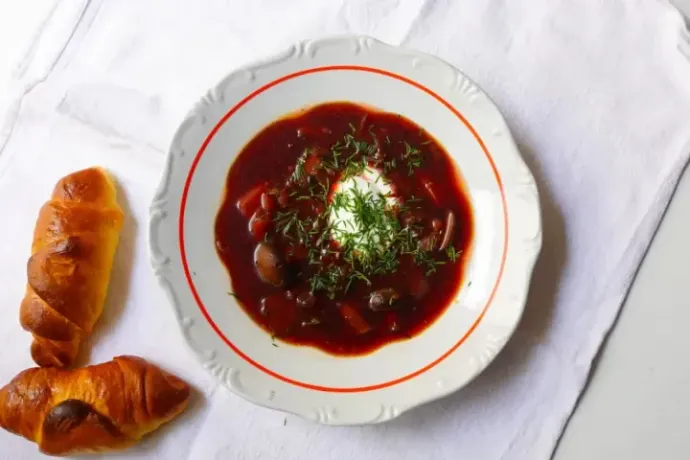
These dishes come from different countries, regions, and they are important for the people from these countries. They exist in some form across Eastern Europe and to me that’s what’s so beautiful about them. It’s as if it were a language that we all speak through these ingredients and the memories they recall for us. The book succeeded in fostering conversations in which people discussed the subtle differences in preparing shared dishes – such as stuffed cabbage – without feeling that they were losing their sense of identity through food.
Ever since I moved to the UK, cabbage has represented boring, poor foods. I wanted to show how wonderful this ingredient is. I think it really helped (not that I had anything to do with it) that for example someone decided it’s the year of the cabbage. There’s been a shift to vegetable-forward cooking, which is much closer to me than veganism or zucchini noodles, because it’s rooted in my history and it’s real. I think it hit the right nerve. Some leading publications in the UK, Vogue included, decided to name 2026 the year of the cabbage! I like to think that Kapusta has a role to play in that!