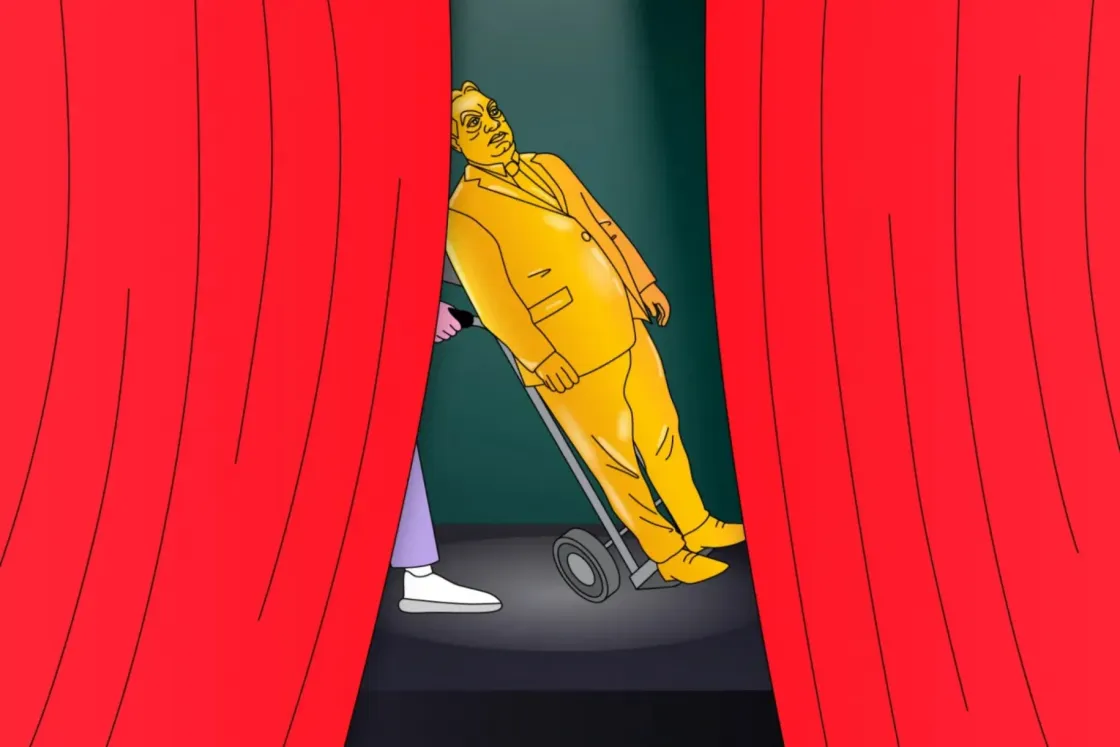

“Do not be afraid!”
On the evening of Friday, February 2, 2024, Péter Magyar shared this phrase on his social media page alongside a picture of John Paul II, just a few hours after an article about the clemency case was published on the online news portal 444. At the time, Magyar was known only to the most die-hard political enthusiasts, and no one even noticed the post until, a few days later, he walked into the independent media outlet Partizán and began criticising the Orbán regime.
Looking back from today, it’s easy to say that with his first public statement, he found the key to dismantling the system. Yet, if we are to believe him, that wasn’t his goal at the time.
For 16 years, Viktor Orbán’s regime conditioned Hungarians to be afraid. Afraid of the IMF, George Soros, foreign speculators, migrants, war, Ukrainians, and Zelensky. To be afraid that if they stand up for themselves, they might get into trouble. To be afraid that if they voice their opinions, they might lose their jobs, they won’t be given workfare jobs at state-owned companies, or receive subsidies, and the system will publicly humiliate them if they speak out.
Even after 16 years in power, Fidesz had nothing to say to the people except that if they didn’t vote for them, they would suffer financially, and if Fidesz didn’t win, their children would be taken off to war and the the money the government has been spending on pensions and utility bill cuts would be given to Ukraine if they didn’t vote the right way. What's more, the Tisza Party would even make them pay taxes for having a cat.
For years, not a single doctor spoke up—even anonymously—to say that there was no money even for the most basic supplies, that a hospital's elevator wasn’t working, or that water coming from the tap in a hospital was contaminated. Not a single child welfare worker spoke out to say that children entrusted to the state’s care were being exploited and abused in these institutions. Not a single soldier would admit that the walls in the barracks were mouldy, that troops had to buy their own equipment, and that they were fed miserable rations. For a long time, there wasn’t a single teacher who would have publicly spoken out about having to teach children things they didn’t believe in for a humiliating salary. Then, when some did, the system made sure everyone thought twice – or rather, four times – about what they said and when.
Not even members of the opposition said things like that, and much less did anyone from Fidesz speak up about any of this – until Péter Magyar, who was practically still one of them when he went to Partizán to give an interview. He criticised Rogán, but defended Orbán. Then, although he supposedly had no plans for a political career, on March 15, 2024, he promised almost exactly what the opposition parties had been saying for several election cycles, only much louder and more firmly. What’s more, he set out and tried to tell as many people as possible in person. He himself showed them the broken elevators, the trains running late, the mouldy hospital ceiling, and the toilets in child welfare institutions. And people began to believe him that this was possible.
“You should remove the laughing emoji.”
The mayor of the village of Nyírmártonfalva, famous for his canopy walkway without trees, wrote this back in 2023 to a public works employee who had responded to an acquaintance’s post (critical of the governing party) with a laughing face. That innocent emoji has since become a talking point for the entire Fidesz party – so much so that Viktor Orbán even mentioned “the laughing emojis” in his closing campaign speech, referring to how, in his view, pro-government supporters who disagree with Tisza Party supporters are being mocked in the digital world.
When the film Dynasty, produced by the investigative journalism team at Direkt36, premiered in Budapest, the audience burst into loud laughter several times at the pro-government politicians featured in the film. “Something has changed; it never used to be like this, people didn't dare laugh openly, before” a fellow journalist told me after the film. The same thing happened on social media. The laughing emoji has become a sign that fear is fading; people now dared to use it in their reactions to posts.
Fidesz, meanwhile, watched this new situation unfold helplessly. The smear campaigns did not affect Péter Magyar, and neither their Fight Club nor their Digital Civic Circles could stem the tide of laughing emojis. Meanwhile, Magyar travelled the country, spreading his message about not being afraid, and one by one reclaimed the national symbols and symbolic issues that Fidesz had monopolised for decades. He refused to let Fidesz dictate his political agenda or force him into situations from which, according to the ruling party’s spin doctors, he could only emerge as a loser. By the spring of 2025, one of the largest demonstrations of all time had already taken place at the banned Pride event, and Péter Magyar not only didn’t have to go there, but he barely even spoke out on the matter.
Orbán and his campaign team then tried to change tactics. By that point, Fidesz had only one weapon left: Viktor Orbán. They featured him every day, but the interviews' viewership showed he wasn’t even inspiring his own voters anymore. By the campaign’s final stretch, Fidesz had started copying the choreography of the Tisza Party’s events. But no matter how they lit up the background with national colours, handed out thousands of flags and torches, brought in organised chanters, and bussed in crowds to the ralllies; no matter how hard Orbán tried to rise above his own capabilities; no matter how they insisted every day with manipulated photo montages that they were the majority – perhaps even they no longer believed it themselves.
Meanwhile, over the past two years, Magyar has steadily rekindled hope within Hungarian society that Viktor Orbán’s regime can be replaced. In the final stretch of the campaign, he rubbed this in the government’s face at least five times a day. On random weekdays at noon, he spoke to crowds even in small towns.
“That’s the plan.”
This was Orbán's defensive response when the American Vice President, who had been lured here for the final stretch of the campaign, confidently declared that Fidesz would win the election. But it is not this statement that everyone will remember, but rather the gesture with which he conveyed the message, as if he himself no longer believed it could happen.
When he lost the 2002 election after four years in office, he withdrew from parliamentary politics. What his plans are now will only become clear in the coming months. When asked after Sunday’s vote how big a defeat it would take for him to step down as party leader, he replied tersely: “A big one.” In his concession speech, he did not elaborate on how big he considered the 138-55 margin to be.
For more quick, accurate and impartial news from and about Hungary, subscribe to the Telex English newsletter!