Ukrainian bank's lawyer on decree: One could interpret it as a government seizing the assets of a foreign state institution, which would be a first in legal history


"All documentation relating to the shipment was handed over to the authorities at the time of seizure, including the RBI invoice, the import license, the consignment documentation, the inventory, the currency exchange certificate, the CMR, as well as the contract between RBI and Oschadbank. These were all seized by the authorities on the spot," the legal representative of Oschadbank, the Ukrainian financial institution involved in the cash-in-transit case, told Telex in response to our inquiry.
We contacted him after the Hungarian government issued a regulation stating that the legal ownership of the assets seized from Ukrainian cash-in-transit vehicles last Thursday could not be ascertained at the scene, and that the transport of the assets was not carried out in accordance with standard international practice. According to the government decree signed by Viktor Orbán and published late Monday evening in the Hungarian Gazette, it is in the interest of national security to find out where the Ukrainian assets seized in two cash-in-transit vehicles came from, what their destination was, and what their intended purpose was.
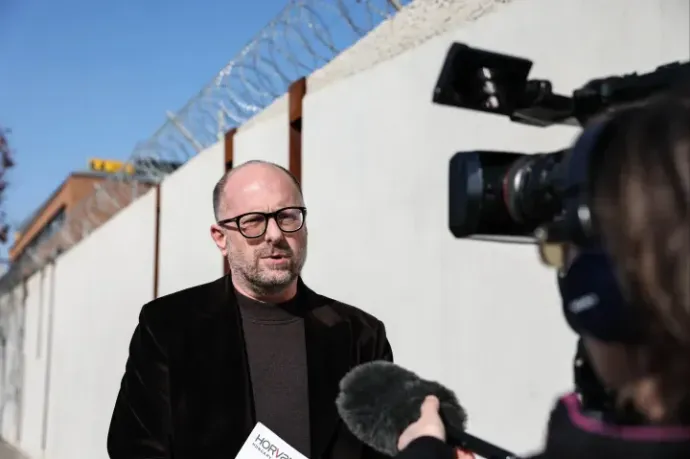
Dr. Lóránt Horváth stated that the transport complied with both Hungarian and international standards in every respect, and
"Oschadbank has been transporting funds along this route since 2022 with the knowledge of the Hungarian authorities. The transport cannot be considered out of the ordinary in terms of scale either."
In his response, the Ukrainian bank's legal representative also wrote that "by issuing the decree, the government acknowledged that there was no legal basis for seizing the assets within the framework of criminal proceedings, which is why it removed the seizure from the framework of criminal proceedings and brought it under its own jurisdiction.
One could also interpret this as the government seizing the assets of a foreign state institution, which makes it a landmark step in legal history," the lawyer replied, among other things.
While according to the Ukrainian Foreign Ministry there was no legal basis for the Hungarian authorities' interception of two Ukrainian cash transport vehicles on March 5 on the M0 ring road near Budapest, Máté Kocsis, leader of Fidesz's parliamentary group, submitted a bill on Monday in connection with the assets seized from the vehicles.
Speaking on ATV on Monday, Lóránt Horváth said that in his opinion, with the bill submitted on Monday, the Hungarian state had effectively admitted that it had unlawfully seized the assets of the Ukrainian money transport.
On Sunday, the Ukrainian Savings Bank announced its demand that the Hungarian authorities return the money and gold seized from its cash-in-transit vehicles.
For more quick, accurate and impartial news from and about Hungary, subscribe to the Telex English newsletter!