Admission to National Security Committee that warning about Russians received, but they're not in country
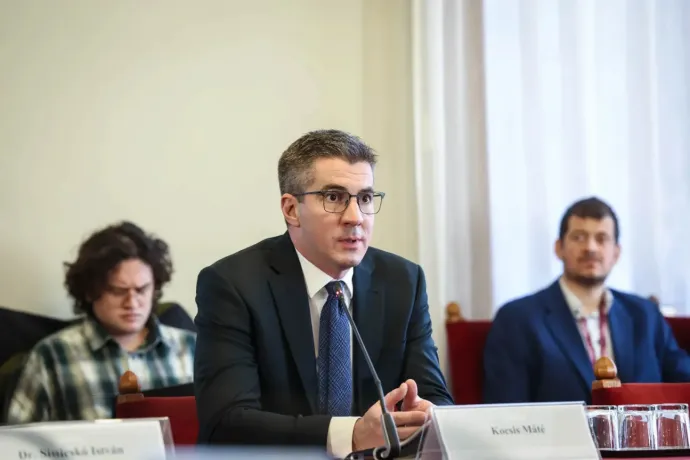


The Hungarian secret service did indeed receive a tip from one of its foreign counterparts about Russians coming to Hungary to influence the upcoming election, but after checking the information, the counterintelligence service concluded that the individuals in question were not in Hungary – at least according to what was said at Monday's closed meeting of the Parliament’s National Security Committee. This was reported to Telex by a member of the committee who wished to remain anonymous.
Szabolcs Panyi, a journalist at Direkt36, reported a few days ago that three people had been sent to Budapest by the Russian military intelligence service (GRU), with the task of influencing the outcome of the Hungarian elections, as they had done in Moldova during the 2024 presidential election. Panyi wrote that the United States had also shared confidential intelligence information about the team sent to Budapest with its allies. The committee member who spoke to Telex on condition of anonymity did not reveal which foreign partner agency had sent the warning to the Hungarians, but Panyi's information was still confirmed by the relevant authorities at the committee meeting. It was also confirmed that the Hungarian authorities are familiar with the identities of those involved.
As for Panyi's claim that a Russian team sent to influence the elections had arrived in Budapest several weeks ago, the committee members were informed that the Russians were not in Hungary, and that the Hungarians had passed this information on to the other agency – presumably American – that had sent the warning.
The interception of Ukrainian cash transport vehicles was also discussed at the committee meeting. One of the committee members told our paper that there are many unanswered questions in this case. Although they did not reveal any details, they hinted that it was legally unclear why an investigation had been launched into money laundering. According to the committee member, the government may have also sensed that the operation was not entirely legal, which is why Máté Kocsis hastily submitted a bill.
The proposal presented by Kocsis is about an "unusual amount" of cash and gold being transported through Hungary. In it, Kocsis suggested that the assets seized last week should be considered seized until the end of the proceedings initiated by the National Tax and Customs Administration (NAV). The Fidesz-delegated member of the committee said that the authorities are investigating how the purpose and use of the transported assets affect national security. However, he stated that the method of transport and the identity of the individuals involved could pose a national security risk to Hungary.
The MPs concluded the debate on the proposal within a very short time. Zsolt Molnár of the Hungarian Socialist Party (MSZP) objected to why Máté Kocsis had chosen to table the proposal now, just before the elections, and why he had submitted it so quickly. The committee's chairman from Jobbik, Zoltán Sas, also objected to the fact that the proposal had been drafted so quickly, as this meant there was no time to examine it in detail. According to Sas, the proposal also raised concerns about retroactive legislation. However, they both agreed that the matter could pose a risk to national security.
Kocsis responded to their concerns briefly, saying that although concerns about retroactive effect may indeed arise, the proposal relates to this specific case, which necessitates legislation. He apologized for submitting the proposal on such short notice, arguing that the parliament's last sitting before the elections would be on Monday and Tuesday, which is why a decision on the proposal had to be made urgently.
Kocsis's proposal was approved by the committee with four votes in favor and two abstentions, with Jobbik's Zoltán Sas and MSZP's Zsolt Molnár abstaining. The members also voted similarly on the committee's recommendation that the Parliament discuss the proposal in an exceptional procedure.
The Ukrainian Savings Bank announced on Sunday that it would demand the return of the money and gold seized from the cash transport vehicles by the Hungarian authorities. It became known on March 6 that two Ukrainian cash-in-transit vehicles had been intercepted by the Hungarian authorities on the M0 ring road near Budapest. The Hungarian National Tax and Customs Administration (NAV) announced that same day that it was conducting a criminal investigation on suspicion of money laundering in the case of the Ukrainian cash transport seized in Hungary.
For more quick, accurate and impartial news from and about Hungary, subscribe to the Telex English newsletter!