Orbán's German migrants are already eyeing Russia
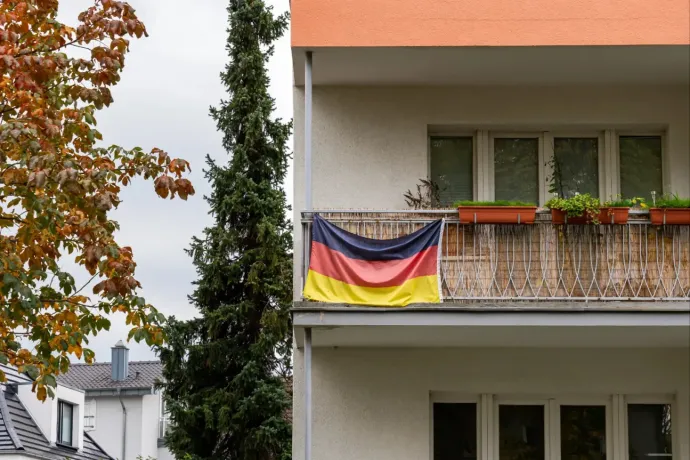

"We will not have migrants, instead we will have our Germans and French. Our only request is that they come without weapons," Hungarian Prime Minister Viktor Orbán said at his international press conference at the beginning of the year. But who are these Germans whose arrival the PM was referring to? In recent years, both the German public media and the Hungarian press have devoted a great deal of attention to the almost stereotypical phenomenon of far-right AfD sympathizers, who regard Orbán as the defender of Europe, buying houses in rural Hungary.
A soon-to-be-published study conducted by researchers at the University of Pécs (PTE) approached the topic with scientific rigor. Or rather, they examined a specific aspect of it: they wanted to know what kind of background and motivations prompted these German immigrants to settle in areas of Hungary whose population is predominantly of German descent. The project sought to understand the extent to which the so-called "Swabian villages" represent special terrain for the migration of Germans and to what extent a shared cultural heritage and linguistic proximity facilitate their integration. It is important to note that the term "Swabian" should be understood here as a collective term for ethnic Germans in Hungary. While the researchers did identify the foundations of stereotypes circulating in the media, they also found plenty of counterexamples.
Erika Hammer, associate professor at the Institute of German Studies at the University of Pécs has already given several lectures on the work carried out by the five-member research group between 2024 and 2025. She and Kyra Tomay, associate professor at the Department of Sociology at the University of Pécs, spoke with Telex about their findings.
"It was interesting to learn that a settlement's Swabian ties are not necessarily the reason for moving there. Most Germans are more likely to be surprised by the local Swabian culture after they arrive. At the same time, this background greatly facilitates communication later on, as the local intelligentsia – and often everyday people as well – speak German. The process is often reinforced by local official or unofficial real estate agents who speak German and consciously advertise on German-language online platforms," says Erika Hammer.
In her opinion, Viktor Orbán's statement quoted above glosses over the fact that the Germans arriving in Hungary are also migrants. "They too are emigrating, crossing national borders to settle in a new place. The settlers themselves also reflect on this fact, and this is evident from our research. The irony is that, in fleeing migration in Germany, these settlers often become migrants themselves. This makes them good migrants for Hungarian politics, ones to be proud of," adds Hammer.
The idea for the research came from previous field experience, during which they noticed German immigrants arriving in a traditionally Swabian environment. The results of the study have been anonymised, so the researchers could only reveal that they conducted interviews in Bács-Kiskun and Baranya counties, partly with key figures in the communities, such as the local mayor, clerk, nurse, priest, and pub owner, and partly with German immigrants and local residents living there. "Based on the overall picture, there is some basis for the stereotypes, but it is a much more complex phenomenon than what media reports suggest," Kyra Tomay told Telex.
One of the most important findings of the research is that the migration of Germans to Hungary is driven by an extremely heterogeneous group of people and a complex network of motivations. According to Tomay, the phenomenon of geoarbitrage, i.e., the fact that income from a given country is worth more elsewhere, is a key factor. Many see it as a leap in their standard of living to be able to buy their own house with a garden instead of renting an apartment. A significant proportion of the newcomers are pensioners, whose pensions are worth much more in Hungary, but even those who still work in Germany in some way find that they can get by better on their salaries here. "In addition, lifestyle migration is also an important factor: the more beautiful landscape, the favorable climate, and the more peaceful environment also appeal to newcomers," she added. They like to move to areas near waterfronts and thermal baths, which guarantee them a certain lifestyle. They are happy to choose the "countryside." However, this is not only related to the natural environment but also to real estate prices.
Erika Hammer noted that they have also identified some other patterns: the motivation and composition of newcomers has changed, especially since 2015, but most notably in the last five years. "The wave that followed the political transition – because there was also a significant influx at that time – was often made up of former Swabians who had been displaced and came back due to nostalgia.
The wave after 2015 was marked by a surge in politically motivated migration.
Many are drawn here by dissatisfaction with German immigration policy, the handling of Covid, or energy prices," Hammer summarized.
There are often financial reasons behind these motivations, such as low pensions, although these are often left unsaid. However, in the narratives of these immigrants, this is often accompanied by political overtones. They are disillusioned with German politics and the EU, they want something different, and they believe they can find it in Hungary. This also brings up identity politics, the fact that many feel they can express their German identity more freely here than at home, where, according to them, many people frown upon the display of the German flag and the singing of folk songs. This is what they find in the so-called Swabian villages here, which reinforces their feeling that "everything is better in Hungary" and that migration was a good decision.
Researchers have identified a kind of "parallel reality." Some German immigrants view Viktor Orbán as the "savior of Europe" and are strongly anti-EU and pro-Russia. "There are German migrants who are disappointed and want to leave the European Union altogether and end up in Colombia or some Asian country, for example. Many German immigrants also regard Hungary as a kind of refuge. Some of them have started acting as influencers on social media, offering cheap Hungarian real estate alongside ideological content and talking about the beauty of the country," she added.
Hammer has also come across social media posts by Germans concerned about a change of government in Hungary: some of them are already envisioning moving to Russia in the event of an opposition victory. At the same time, many are not actively involved in political issues; their immigration was simply motivated by a desire for a peaceful, better-quality life. It was also interesting to note that some of the newcomers disprove another stereotype:
Germans are less rule-abiding in Hungary.
The key figures—mayors, notaries—often complained that some newcomers are "letting themselves go" after moving here. They treat building regulations and animal husbandry rules lightly. The situation of some families with small children is particularly tense, due to the lack of vaccination certificates and their children staying out of the education system.
"I was shocked to learn that family support and child protection issues are not harmonized at the European Union level. I would like to make this the focus of my next research project and explore the topic in greater depth. But it is also very important for us to conduct a more thorough examination of the media representation of Germans settling in Hungary. It will be interesting to see what differences there are between the reports in the public media and other press outlets, for example. What is certain is that the perspectives presented in the media are overly simplistic," added Kyra Tomay. She believes that the demographic and economic situation of the host communities also greatly influences how they relate to the newcomers: "The newcomers may not represent the upper echelons of German society, but in many cases they bring money to declining villages and renovate houses. This is something that is greatly appreciated by these communities."
For more quick, accurate and impartial news from and about Hungary, subscribe to the Telex English newsletter!