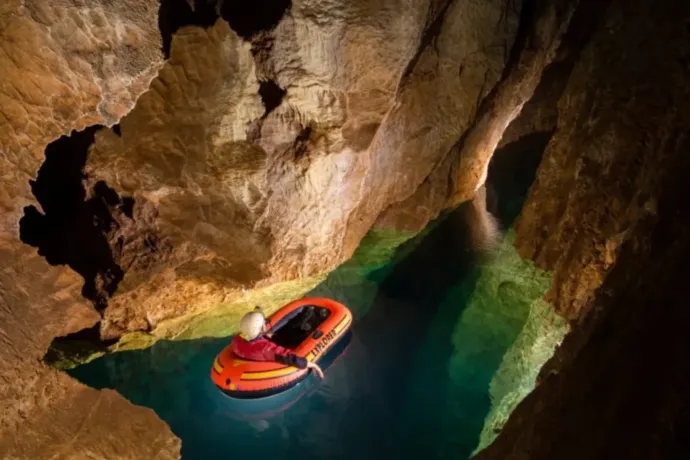

One of the jewels of the Aggtelek Karst, the Rákóczi Cave, will close on February 16 according to the Aggtelek National Park's website. The facilities necessary for visiting the cave will be renovated, so the popular attraction will definitely be closed to visitors for at least two years. According to the announcement, thorough work is needed to preserve the condition of the cave, increase safety, modernise the facilities, and protect nature, which will all take time.
The renovation is part of a €1.7 million EU-funded nature conservation project that began at the end of 2024. Four caves belonging to the Aggtelek National Park are participating in the program, as these are the most urgent cases requiring intervention.
Due to its formation and the structures developed within it, the Rákóczi 1 cave, located within the former Tornaszentandrás mine (Tornaszentandrás), is world-famous.
The Béke Cave (Jósvafő, Aggtelek) is one of the most beautiful and significant caves in Hungary. One of the things in need of renovation here is the steel bridge built over the area called Hell's Abyss (Pokol-szakadéka).
The Vass Imre Cave (Jósvafő) is a typical seasonal spring cave. Thanks to the scientific research that once took place there, it is perhaps the most scientifically researched cave in Hungary.
The Szabadság Cave (Égerszög) is the third longest stream erosion cave in the Aggtelek Karst, and since its discovery in the early 1950s, it has been one of the best and most consciously protected caves in Hungary.
The main tasks of the renovation are as follows: securing cave entrances, necessary stability measures; installing structures (e.g., ladders, bridges) to protect the caves and cave sections that are particularly sensitive to trampling.
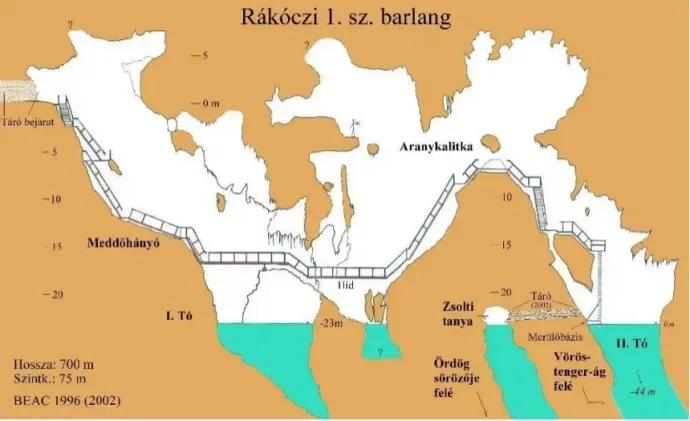
Source: Aggtelek National Park
In addition, they will modernise the technical facilities of the caves (e.g., damaged, technically obsolete cave closures or those that do not meet nature and landscape protection requirements), and remove or replace corroded, accident-prone, and obsolete iron and other structures once installed in the caves, and renovate the lighting system.
Aggtelek National Park was established in 1985 as the first among Hungary's national parks, with the express purpose of protecting the unique geological natural values, surface formations, and underground caves found here. The unique underground natural treasures found here, the caves of the Aggtelek Karst (together with the caves of the Slovak Karst), were added to the UNESCO World Heritage List in 1995. There are 293 caves in the Hungarian part of the World Heritage Site, with a total length of 53 kilometres. Twenty-five of the caves enjoy increased protection, while another 29 fall into the category of distinguished protection.
For more quick, accurate and impartial news from and about Hungary, subscribe to the Telex English newsletter!