Vasarely memorial year opens in Pécs with rarely seen works on display
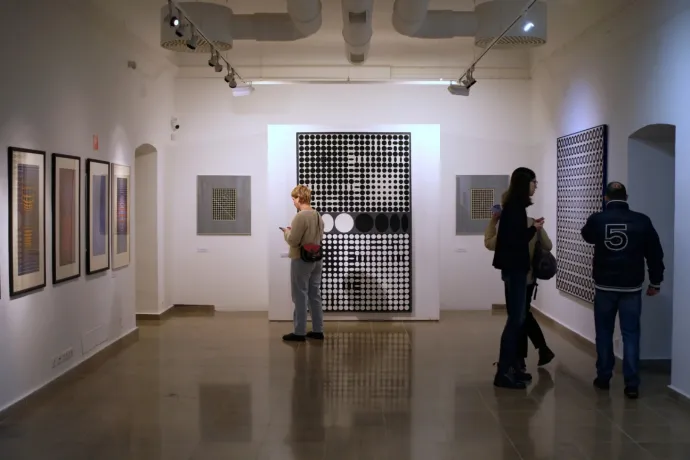

The just opened Victor Vasarely exhibition in Pécs is featuring a fresh concept and is supplemented with some of the artist’s works not usually on display. The exhibition was put together to mark the 120th anniversary of the artist's birth and will be open until April. Being one of the city's most visited museums, the Vasarely Museum is currently undergoing renovation, so the nearby Gallery of Contemporary Hungarian Art serves as the temporary venue for the works of Victor Vasarely. It is in fact a double anniversary, as the collection donated to the city of Pécs by the world-famous artist, considered the father of op art, opened in 1976. There is a whole host of programs related to the memorial year, as we previously reported.
The exhibition's curator, András Nagy said that the newly opened exhibition is very audience-friendly, because the works are not displayed in chronological order, and the artist's early constructivist pieces and his graphic designs for advertising are not included, while several pieces that are normally kept in museum storage are now on display. The art historian added that although the zebra motif, which is used as the emblem of the exhibition and is of particular importance in Vasarely's oeuvre, is currently politically charged, (due to sightings of zebras near the luxury estateOrbán claims is his father’s) he is certain that the works will outlive the current political symbolism.
According to Gábor Bertók, director of the Janus Pannonius Museum, the museum's 50th anniversary is a milestone, but also provides an opportunity for renewal. The reconstruction of the Vasarely Museum will allow the works to return to an environment that befits them. The exhibition is expected to reopen at its usual location on April 9, the artist's birthday.
Speaking at the opening ceremony, mayor of Pécse Attila Péterffy said that Victor Vasarely's art has had and will continue to have a major impact on architecture, design, and digital culture. The city not only cherishes Vasarely's experimental, creative spirit, but also consciously carries it onward. The series of events planned for the year is the result of cooperation between local institutions, and the hope is that it will have an impact beyond the walls of the museums.
This year, the city is going to name a square after Vasarely, who was born in Pécs, and a large-scale contemporary exhibition at the Zsolnay Quarter's m21 Gallery will examine how the legacy of op art lives on in 21st-century visual and light art. Additionally, the Zsolnay Festival of Light, held each summer and the autumn Design Pécs festival will also be reflecting on Vasarely's work this year.
We covered Vasarely's significance and the controversies surrounding his legacy in a series of articles on Telex, which can be found here.
For more quick, accurate and impartial news from and about Hungary, subscribe to the Telex English newsletter!