How Hungarian poultry conquered the market of one of the world's richest countries fifty years ago


Kuwait became independent in June 1961, which neighboring Iraq didn't recognize until months later, in October. The British continued to maintain a military presence in the region, but parliamentary elections were held already that year and the country's constitution was also adopted.
Kuwait embarked on a new path and was considered the most open and liberal country in the region at the time, even the poet Ahmed Matar emigrated there from Iraq. The small country started large-scale developments, completely reformed public education, founded a university in 1966, increased welfare spending, and made healthcare and even telephone calls free of charge. They also spent lavishly on infrastructure, and built a modern, high-traffic port.
The state of 16,000 square kilometers became one of the world's most important oil-producing countries in the early 1950s. The first oil well was struck in 1938, production began in 1946, and some 700 wells have since been drilled. Thanks to oil, by 1973, Kuwait catapulted itself into becoming one of the world's richest countries. However, due to its desert climate, it was forced to import almost everything, so countries on all five continents competed for this small but affluent market.
Hungary also entered the competition. Fifty years ago, in the autumn of 1975, the Days of the Hungarian Economy were held, where twenty-two socialist companies of varying sizes introduced themselves, with the pharmaceutical industry also eager to venture into a new region. Hungarian ship cranes and Ikarus buses were already present in the region at the time. (Ikarus buses also managed well in the heat of Africa and were proven to withstand desert conditions.)
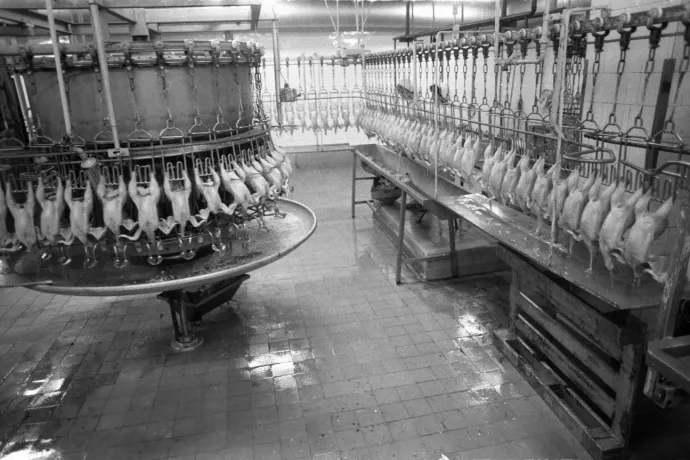
Hungarian products represented two percent of Kuwait's imports, with trade between the two countries amounting to USD 20 million. We even managed to become the market leader in one area: of all the poultry available in the country, Hungarian poultry was the best-selling one in Kuwait.
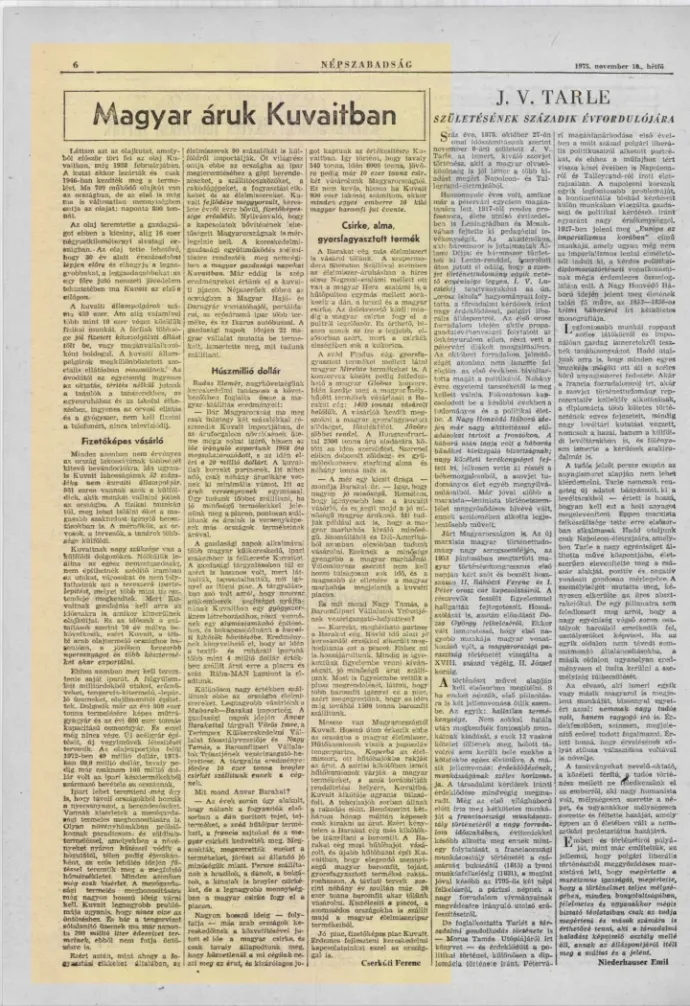
"The Brazilians, Danes, Bulgarians, and Chinese also supply broiler chickens, but Hungarian chicken sells in the biggest quantities on the market," Anvar Barakat, whose company is still in operation today, told Népszabadság at the time. Barakat also provided precise data: in 1974, 540 tons, in 1975, 6,000 tons, and in 1976, 10,000 tons of chicken were purchased from Hungary, but he did not rule out the possibility of this figure doubling.
It was around that time that Kuwait's population surpassed one million, of which 459,000 were Kuwaiti citizens, so it is easy to work out that this meant ten kilograms of Hungarian chicken per person per year. This means that Hungarian chicken was most probably served in every Kuwaiti household.
The canned goods of Globus from Kecskemét were also popular, but according to contemporary reports, although Hungarian honey was of good quality, the locals were not particularly enthusiastic about it. The quality of beef was also first-rate, but it was cheaper to obtain it from South America, so more people chose it over the Hungarian beef.
And as for how the poultry reached Kuwait, given that air transport was not yet at an advanced level at the time and the country did not even have an international airport? Refrigerated trucks transported the goods to the port of Koper in today's Slovenia, where they were loaded onto ships. These ships docked in Syria, where more refrigerated trucks awaited them and transported them on to their final destination in Kuwait.
The economic ties between the two countries have remained strong, with trade amounting to $33 million in 2022.
For more quick, accurate and impartial news from and about Hungary, subscribe to the Telex English newsletter!