

Fidesz MEPs have requested a written answer from the European Commission on how it is possible that "universities, students and researchers are being punished" because of "the Commission’s political disputes with the Hungarian government". The group's statement called on the EU body to immediately withdraw the restrictive measures introduced last winter.
Last December, EU member states banned new financial commitments from all EU programmes towards trusts and institutions run by foundations. This included the Hungarian universities which recently underwent a model change and became foundation-run institutions, run by a board of trustees. At the suggestion of the European Commission, the ministers concluded that these foundations weren't operating transparently enough, and having policy-makers sitting on their boards was a conflict of interest. At the same time, the Hungarian government failed to address the Commission's objections, which had been made public months earlier. Universities that have switched to foundation-based operation are mostly affected by the ban in two programmes: the Horizon Europe research cooperation and the Erasmus+ educational exchanges.
Fidesz says it is unacceptable to discriminate against Hungarian students and researchers and to disregard the opinion of the rectors of Hungarian universities.
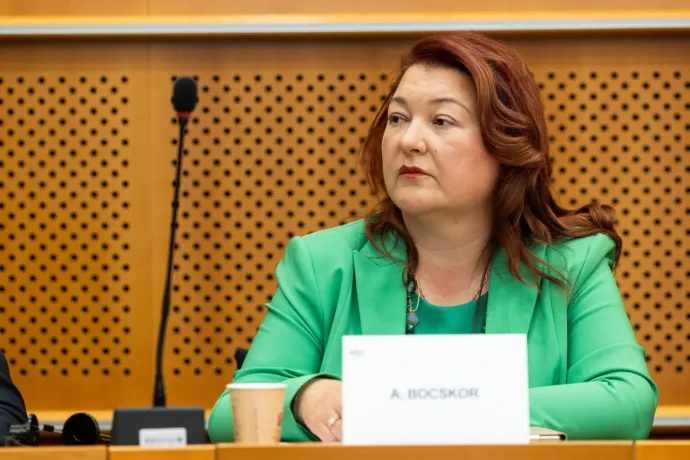
MEP Andrea Bocskor said "it was shocking how vague and cynical the answers they received to their questions were. At the same time, it has become clear that the European Commission isn't accepting responsibility for the restrictions imposed on Hungarian students and researchers.
We demand the only possible solution to the situation: the European Commission should immediately lift the punitive measures imposed on Hungarian students and researchers."
The European Commission says the government has neither provided evidence nor requested a review
Although neither the questions nor the Commission's reply are quoted in the statement, they are available on the EP website. Five Fidesz MEPs have written about discrimination against Hungarian universities. They say that they were contacted by Hungarian students who had applied to a university years ago and were denied their basic EU rights overnight, without any time left to prepare, and they would now like to know how they can exercise these rights. The MEPs asked whether the Commission agrees with penalizing the students and which core value of the EU was the basis for downgrading them to second-class citizens.
The Commission's answer states that the decision is aimed at protecting EU taxpayers' money.
The measures can be lifted once the Hungarian government has “demonstrated that it has remedied the situation that led to their adoption. So far Hungary has not made any formal proposal to that effect.”
Hungarian universities that weren't included in the model change are not affected by the ban. The Commission is ready to continue the dialogue with the government, and "taking the necessary measures is up to the Hungarian authorities".
It looks increasingly certain that Erasmus+ will be in trouble
In its response, the European Commission indicated that the ban hasn't had any practical impact on the current Erasmus+ exchanges. They failed to add, however, that contracts for the period starting from the next academic year should be signed by mid-July. The lifting of the ban is therefore urgent, but Regional Development Minister Tibor Navracsics, who has been working on the issue since December still hasn't been able to achieve this. The parties had originally wanted to reach an agreement by the end of March, but this didn't happen. At the time, following the European Commission's indication, Tibor Navracsics said that he didn't see any problem with "delaying the adoption of the bills" considered important "by one or two days" in order to ensure that they were properly drawn up.
However, the draft legislation aimed at remedying the objections was only sent out in May, and according to Portfolio, some of the things required by the Commission were missing from it. According to a recent Népszava article, for example, there is still no agreement on the criteria for selecting candidates for trusteeships.
All this is a serious problem because the Fidesz MEPs asked the Commission to lift the ban in vain, as it is up to the Hungarian government to initiate the lifting of the ban, with the final decision taken by the Council of Member States after the Commission's evaluation. This process could take months to complete under the current regulations. According to Népszava, the European Commission would be willing to speed things up and postpone the deadline by a few weeks. Nevertheless, it is becoming increasingly certain that the model-changing universities are running out of time.
The universities concerned have already complained of losses amounting to millions of euros in connection with the Horizon Europe research proposals. For now, they are able to participate in these as associate members, since the Hungarian state has compensated them with HUF 5 billion in funding. They will in theory be able to recover these funds from the EU later. At the same time, the model changing universities claim that the other applicants don't even include them in the tenders, which are typically open to several cooperating institutions.
For more quick, accurate and impartial news from and about Hungary, subscribe to the Telex English newsletter!