Former governor of Hungarian central bank in custody
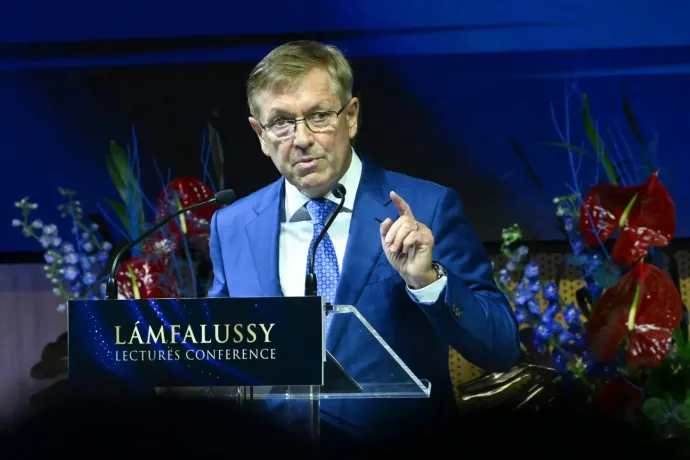

György Matolcsy, who served as governor of the Hungarian National Bank (MNB) for twelve years—from 2013 to 2025—was taken into custody early Wednesday morning. This is the first time in Hungary’s history that a former governor of the central bank was taken into custody, and it is quite a rare occurrence in Europe as well-although both Slovakia and Latvia have seen criminal proceedings initiated against governors of their respective central banks. As far as Matolcsy is concerned, at this time, only the grounds for the charges are known and it is unclear exactly which of the several cases connected with him were the reason for his detainment. His detention, however, is the latest development in a scandal involving hundreds of billions of forints in public assets, whose fate remains uncertain.
According to our information, Matolcsy was one of several people taken in by investigators on Wednesday. The senior executive of a company linked to both the former governor of the central bank and István Száraz was one of them. According to Matolcsy's attorney, Pál Bátki, the former MNB governor is suspected of economic fraud causing significant financial loss and of using forged private documents, and the Prosecutor General’s Office has carried out coordinated investigative operations at multiple locations.
The Hungarian independent press has been covering the irregularities of the system established under Matolcsy’s presidency for more than ten years. During this time, they have exposed numerous suspicious transactions: these include the fate of the 266 billion forints (€650 million) funneled into foundations; billion-forint contracts awarded to friends of the governor’s son, as well as luxury real estate in Dubai and Greece. Former independent Member of Parliament Ákos Hadházy repeatedly published photos showing the family’s lavish lifestyle to highlight the Matolcsy circle’s accumulation of wealth: He reported on a watch worn by Ádám Matolcsy’s wife worth nearly 29 million forints (€79 thousand) and the luxury hotel in Saudi Arabia where a single night cost 1.4 million forints (€3.800). He also revealed that the family was using a villa in Buda previously owned by one of the foundations of the central bank as a private residence. A Porsche linked to the family, worth 60–80 million forints, was at one point photographed in Dubai.
However, although the deals worth billions of forints and the details of the lavish lifestyle enjoyed by the Matolcsy circle repeatedly made headlines, there were no substantive legal consequences resulting from these scandals for several years, and Matolcsy was able to serve out his second term despite these revelations. The process finally accelerated in two stages: first, it was Matolcsy’s March 2025 departure from his post and the findings of the State Audit Office that brought about a turning point; followed by the government change in April of this year, which gave the investigation new momentum.
However, to understand how Viktor Orbán’s former right-hand man went from leading the central bank to being escorted to the office of the chief prosecutor, we need to go back in time more than a decade.
“György Matolcsy is my right-hand man. There is no amount of money anyone could offer me that would make me willing to give up my right-hand man."
György Matolcsy had become one of Viktor Orbán’s most trusted confidants long before he took the helm of the Hungarian National Bank. At the time of Hungary's transition to democracy, he worked on the economic program of MDF (Magyar Demokrata Fórum, the first party to govern Hungary (1990-1994) after the first democratic elections), but by 1998 he was already shaping Fidesz's economic policy ideas; he became Minister of Economy in the first Orbán government, then returned in 2010 as Minister of National Economy. Orbán was so committed to him that when speculation about his dismissal began in the fall of 2010, Orbán openly stood by him: “György Matolcsy is my right-hand man. There is no amount of money anyone could name for which I would be willing to give up my right-hand man.”
Three years later, Orbán entrusted his right-hand man with leading the Hungarian National Bank, but the decision was by no means met with unanimous approval: investors feared that appointing a minister known for his unorthodox economic policies could jeopardize the central bank’s independence.
When György Matolcsy took over as head of the Hungarian National Bank in 2013, he steered the institution towards areas that had previously had little to do with the traditional responsibilities of central banks.
Between 2013 and 2016, the central bank established six foundations named after the goddess Pallas Athena, transferring to it a total of 266.5 billion forints from its own assets—funds which were partly generated by significant exchange rate gains made on MNB’s foreign exchange transactions, additionally bolstered by the conversion of foreign currency loans into forints in 2014. The central bank sold the foreign currency acquired when the forint was stronger to the banks at a weaker exchange rate, thereby making a significant profit. According to the official justification, the foundations were established to promote education on economy, research, and financial literacy; however, their activities soon extended to far beyond these objectives: they used the MNB’s funds to purchase real estate, to finance book publishing and university programs, while also investing a significant portion of the assets on the grounds that the returns from these investments would ensure their long-term sustainability.
Right from the start, there was a basic problem with the system: while the foundations received their funds from the central bank, those within the MNB argued that the transferred assets had “ceased to be public funds.” In 2016, the debate escalated to the point where the Fidesz majority in Parliament attempted to pass a law restricting the transparency of the foundations' financial management, a move that was ultimately blocked by the Constitutional Court. Ten years later, the issue came up again-this time during a parliamentary committee hearing on the case of the MNB, where Lajos Kósa, who was Fidesz's faction leader at the time, claimed that the text of the controversial legislative amendment had been sent to him from the central bank, and that he had endorsed it without ever having read it.
This was not merely a legal dispute, as it determined whether the public would be able to find out how the hundreds of billions were being spent and who was receiving contracts from the foundations. The first major scandal erupted almost immediately after the Constitutional Court’s decision made the contracts public: it turned out that the MNB’s foundations had subsidized the operation of a recently established news site, Vs.hu with nearly half a billion forints—a fact which even the editorial staff were unaware of. Most of them resigned following the revelation, and the publication effectively collapsed. At that point, it was already clear that an unhealthy, opaque system had been built around the foundations, in which the use of public funds could be intertwined with the interests of business figures close to the central bank’s leadership. However, it took nearly a decade of investigative work done by journalists and the opposition to uncover how this system operated, as well as to identify how the players were connected and where the money flowed. Because this was just the tip of the iceberg.
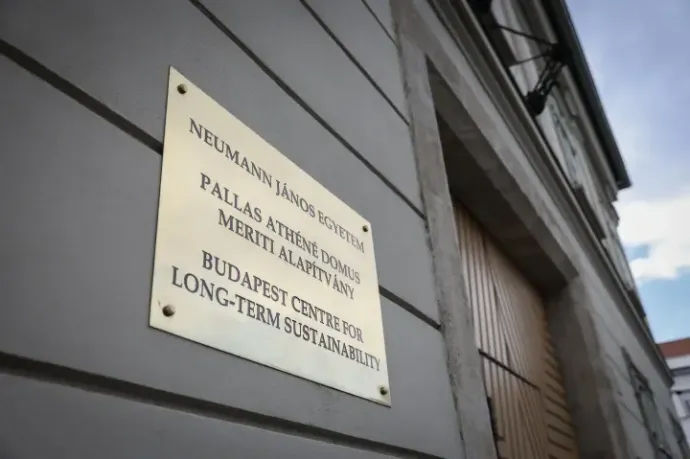
After a while, the six foundations were merged, and their assets were transferred to the Pallas Athéné Domus Meriti Foundation (PADME). The management of these funds was entrusted to Optima Investment Ltd., which was tasked with preserving and increasing the foundation’s assets. Over the years, however, Optima developed an increasingly complex system of investments, channeling the funds through Hungarian and foreign companies as well as private equity funds. A significant portion of the assets eventually ended up in two foreign real estate companies: the Polish firm GTC, which owned, among other things, office buildings and shopping centers, and the Swiss firm Ultima Capital, which dealt in luxury real estate. Documents obtained by Telex revealed how Optima drifted into an increasingly severe financial crisis: it started investing hundreds of billions in Swiss luxury real estate, even though it did not have sufficient funds to do so, and therefore-in addition to the foundation’s assets-attempted to finance its ventures with loans. But the expected profits failed to materialize, the repayment of the loans was jeopardized, and the Swiss lender demanded immediate repayment. Optima was ultimately able to avoid collapse with a 170-million-euro loan from MBH, while the value of its investments fell significantly.
The primary problem with the foreign real estate investments was that the foundation—originally established for educational and scientific purposes—had taken on a serious financial risk with public funds. Moreover, given Optima's complex network of companies, it became increasingly difficult to track exactly where the assets were located, how much they were worth, and who was responsible for decision-making related to the investments. After a while, it was no longer only the central bank’s original 266.5 billion forints circulating within this system, but the foundation operating Kecskemét's Neumann János University also committed a significant portion of its assets to Optima by purchasing a total of 127.5 billion forints worth of the company’s bonds.
Unimaginable luxury and a lack of transparency
The money of the central bank’s foundations was not only used for risky foreign investments, but friends of György Matolcsy’s son, Ádám Matolcsy also received contracts worth billions. One of them was István Száraz, who has interests in the communications, IT, and financial sectors, as well as Bálint Somlai, whose company, Raw Development, carried out the renovation of MNB’s headquarters in Budapest's Szabadság Square. The project originally had a budget of roughly 55 billion forints, but ended up costing more than 100 billion forints, while more and more details about the lavish lifestyles of the business circle that had grown wealthy from contracts with the central bank kept emerging. Companies linked to Ádám Matolcsy purchased luxury real estate in Dubai; his circle started flaunting exorbitantly expensive sports cars, luxury watches, and exotic vacations; and Telex also uncovered a villa linked to him on the Greek island of Mykonos. The property, named Villa Nicole after his wife is worth as much as two billion forints. The building was almost completely remodeled after the purchase, and the multi-million-euro renovation was carried out by the company owned by Bálint Somlai, which had previously earned significant revenue from the renovation of the MNB headquarters.
Despite the series of scandals, György Matolcsy completed his second term as central bank governor, and even as he was leaving, he spoke proudly of his achievements. Reflecting on the central bank's twelve years under his leadership at his farewell ceremony in late February 2025, he described the season as a true golden age and claimed that the MNB's measures accounted for half of Hungary's GDP growth. In Telex's documentary, however, we showed that the performance of the Hungarian economy in no way reflected Matolcsy’s triumphant assessment, and that Hungary—despite significant EU subsidies—was unable to come anywhere close to catching up with more developed European countries.
Just a few months before Matolcsy’s departure, Viktor Orbán referred to him as an “epochal economist” who, in his view, had saved hundreds of thousands of people from the trap of foreign-currency loans.
Matolcsy was replaced by former Finance Minister Mihály Varga, who, upon taking office, emphasized the importance of transparency and responsible management and indicated that he would scale back activities that fell outside the scope of traditional central bank duties. Shortly after the leadership change, it became clear that there were indeed good reasons for this.
It was only somewhat later that it was revealed that Matolcsy and his team had a big trick up their sleeves even for the final days of his term as central bank governor: On February 28, 2025, right before Matolcsy’s departure, Optima Investment Ltd.—which managed the foundation’s assets—transferred the shares of Optima Investment Fund Management to the private equity fund called Közép-Európai III. Magántőkealap under a contract described as a “securities loan.” Behind the complicated company names, however, stood a familiar figure: the private equity fund was managed by Quartz Befektetési Alapkezelő, whose majority owner was István Száraz, a longtime friend of Ádám Matolcsy.
Under this arrangement, it was not the foundation’s assets themselves that were sold. Instead, the ownership rights of the company which played a key role in managing those assets would have been transferred to the private equity fund for several years.
Additionally, the documents obtained by Telex revealed that, in parallel with this, preparations were underway to restructure the investor base of the private equity fund, and Bálint Somlai’s company was already included in the plans. Matolcsy could thus have stepped down from the helm of the central bank while ensuring that businesspeople belonging to his son’s circle of friends would continue to exert significant influence over the asset management of the system he had built.
However, the plan was thwarted by the arrival of Mihály Varga: after the new governor of the central bank took office, the foundation’s former board of trustees stepped down, and the controversial contract was terminated within a few days. Varga and his team, however, were not satisfied with simply reversing the transaction: they launched an investigation and, in April, filed a criminal complaint. Quartz later tried to explain the transaction by claiming that it intended to provide professional assistance to Optima; however, documents obtained by Telex suggested that the ownership restructuring was likely planned well in advance.
By then, the State Audit Office had already launched an investigation into the management of the foundation’s assets, and it soon became obvious that the system—which had been created with an initial budget of 266.5 billion forints—had far more serious problems than what could be resolved by simply canceling a single contract.
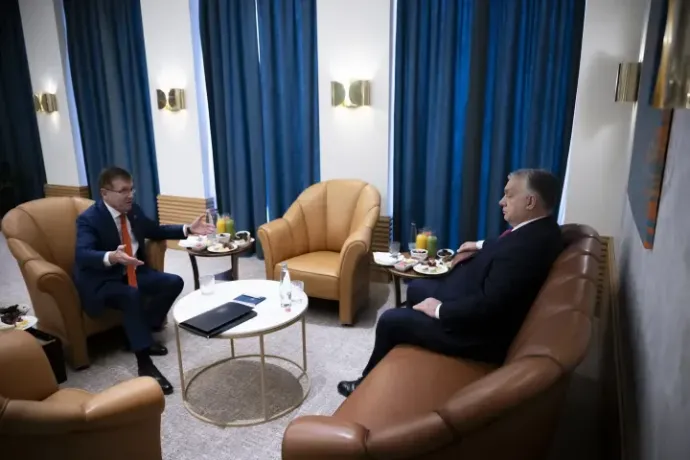
State Audit Office reports published on March 19, 2025, revealed that the deficiencies in the management of the foundation’s assets were extremely serious, and that the risks associated with investments worth hundreds of billions of forints were not adequately assessed. According to the auditors, Optima made decisions which could have led to massive losses, while neither the value of the investments, nor the financial situation of the companies behind them was sufficiently transparent. Moreover, the problem extended beyond the central bank’s foundation: in addition to the 127.5 billion forints from the University of Kecskemét, MBH Bank’s 170 million euro loan was also linked to the same investment system, meaning that its collapse simultaneously put the funds of multiple institutions at risk.
The report also indicated that much of the foundation’s assets were not simply tied up in underperforming investments, but were held in complex corporate structures which made it extremely difficult to quickly withdraw funds. A huge discrepancy was found between the investments’ book value and their actual market value, while Optima was also supposed to repay its debt to the University of Kecskemét and the bank loan it had taken out. The financial statements ultimately revealed that the foundation’s investments had resulted in a loss of approximately 270 billion forints in assets—meaning that virtually the entire original endowment of 266.5 billion forints had been lost. As of the end of 2024, only 13 billion forints of the foundation’s own assets remained, and there was barely nine million forints in cash on hand.
There was silence for a year and a half…
And then, the State Audit Office (ÁSZ) filed a criminal complaint, and a few days later, the National Bureau of Investigation began investigating whether there had been any criminal activity in the use of the foundation’s funds, while the new leadership of the central bank started to review transactions from the previous years one by one. The authorities were therefore faced with several interconnected questions at once: who decided on the risky investments, who was supposed to oversee them, and how much damage had actually been caused to public assets.
However, the investigation remained in the preliminary phase for months, and no charges were filed. By the spring of 2026, the case was already more than a year old, and yet, it was still unclear what conclusions the authorities had reached about the individuals personally responsible for the most critical decisions.
The turning point finally came after the change of government in April 2026, when the Office of the Prosecutor General decided that the Central Investigative Prosecutor’s Office would take over one of the most important investigations of the case from the police. The prosecutor’s office cited professional reasons for the move, which allowed investigators to continue their work under the direct supervision of prosecutors.
Results were quick to follow: in May, prosecutors first seized documents from the State Audit Office, then, in collaboration with the police, they conducted searches at 17 legal entities, taking with them hundreds of boxes of documents and a massive amount of electronic data. By that time, the authorities were already investigating 97 individuals, 36 companies, and 11 private equity funds; combined with the previous measures, they had seized or frozen 91.8 billion forints in cash and securities.
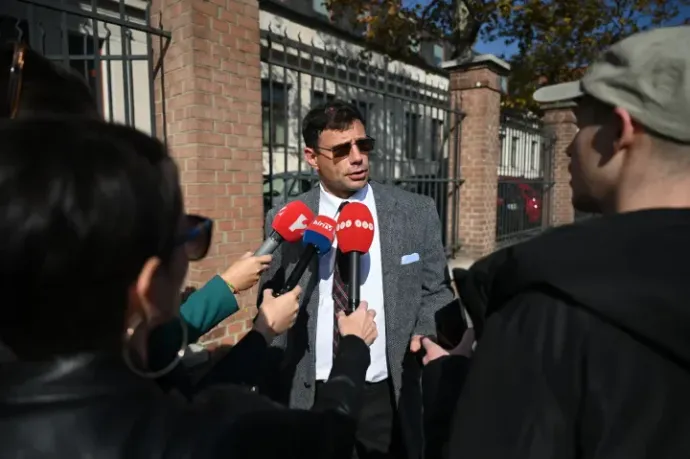
However, they still did not reveal who they considered responsible for what had happened, while members of the public were growing increasingly impatient for news about specific suspects. More searches were conducted in business circles linked to Matolcsy in September, but at that time the prosecutor’s office still said that no one had been questioned as a suspect in relation to the case of the foundation. Although Matolcsy had to appear before investigators in September, it was in connection with a separate proceeding, examining whether the former leadership of the Hungarian National Bank (MNB) had unlawfully exerted pressure on Erste Bank. The former governor of the central bank denied the allegations against him and was released after questioning.
The breakthrough finally came early Wednesday morning, when György Matolcsy was taken into custody as part of a coordinated operation by the Central Investigative Prosecutor’s Office. However, the charges outlined by his attorney include crimes other than the misappropriation of public funds cited by the prosecutor’s office as the basis for the investigation: Pál Bátki spoke of economic fraud causing significant financial loss and the use of forged private documents. This raises the possibility that the charges are linked to the major scheme described above, which was timed for the very end of his term.
It is therefore possible that the former governor of the central bank was not detained specifically because of the hundreds of billions of forints worth of losses to the foundation’s assets, but rather because of a transaction carried out in the final days of his term, through which one of the key asset management companies could have ended up in his son’s business circle.
What is already certain, however, is that Viktor Orbán’s former right-hand man—who headed the Hungarian central bank for twelve years—will now, a year and a half after his departure, not only have to answer the questions of a parliamentary committee or those brought up in yet another newspaper article, but those posed by investigating prosecutors.
Following a request from the Central Investigative Prosecutor’s Office to issue an international arrest warrant for two individuals implicated in the MNB case, the police also issued arrest warrants for Ádám Matolcsy and György Stofa. The son of former central bank governor György Matolcsy is wanted on charges of economic fraud.
György Stofa is also wanted on suspicion of economic fraud; he is connected to the MNB case and the Matolcsy family in several ways. In 2024, he became a member of the management of the Warsaw-based GTC Group, which manages the real estate investments of the MNB foundations, and until early 2025, he was head of Optima Zrt., which manages the funds of the MNB foundations.
We previously covered the MNB case in a detailed video, which you may watch below:
For more quick, accurate and impartial news from and about Hungary, subscribe to the Telex English newsletter!