Tisza's first-time MPs: They didn't enter Parliament to just push buttons, but the long sessions can be challenging
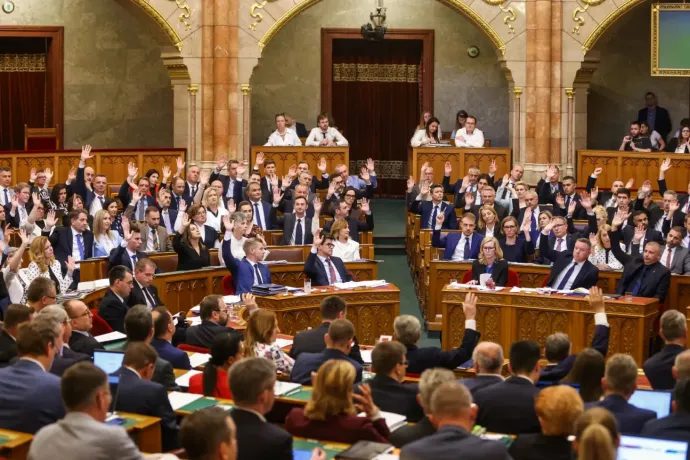


Before entering politics, Ernő Csatári, the Tisza Party's representative from Siófok, spent fifteen years working in tourism, managing a café and a hotel. He is used to being on the go, but says that serving as an MP is much more intense than what he did before. He gets in his car early each Monday morning, so he can arrive in Budapest in time for the faction meeting. The plenary session usually begins soon after it and can last as late as 11 p.m. But his work for the day doesn’t end there. He catches up on the day’s emails and prepares for the next day’s plenary session into the night. The Economic and Energy Committee and the Tisza Party’s Economic Cabinet— both of which he is a member of—meet on Wednesdays. He spends the rest of the week in his constituency, attending events, holding office hours, and meeting with the mayors of the towns in his district.
The Tisza Party entered the 2026 election with candidates who, for the most part, were completely new to politics. Doctors, entrepreneurs, teachers, lawyers, and economists ran against Fidesz’s well-known and experienced representatives. Throughout the campaign, Péter Magyar emphasized that their candidates were ordinary people just like the voters, and unlike Fidesz politicians, they would truly serve the people.
After their election victory, Tisza’s newly elected members of Parliament had four weeks to prepare for the completely new task ahead of them. They prepared for their work in Parliament through training sessions, legal counseling, and study materials provided by their parliamentary group. In the nearly two months since the new Parliament was formed; there have been 15 sessions lasting a total of nearly 90 hours. We asked some of the Tisza MPs about how they’ve managed to adapt to their new jobs. One representative we spoke with left a career in teaching to become a lawmaker, while another plans to draw on their experience in tourism now that he’s a politician.
She was elected, so she'll give it her all
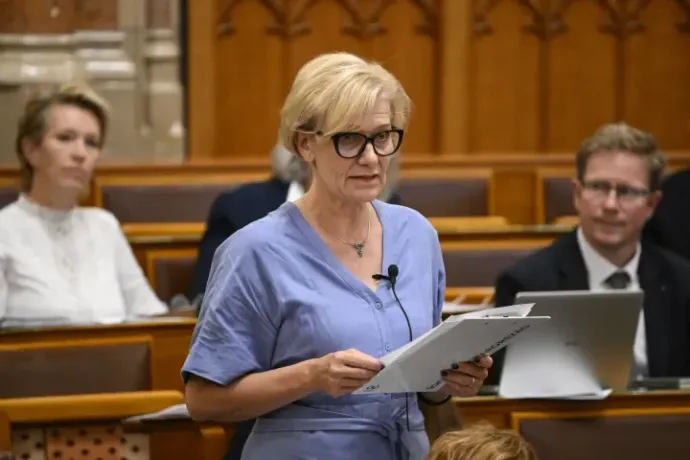
Anna Müller worked as a mathematics and chemistry teacher for 35 years; she had five years left until retirement. Even a year ago, she would not have imagined that she would become a member of Parliament. “But that’s how life turned out— I was given an opportunity to contribute to change.” As she puts it, since she’d decided to become a representative, she wants to dive right in and devote all her energy to her new calling.
She’s no longer only known for defeating Fidesz’s Balázs Németh in Budapest’s 15th district. Her speech in parliament, in which she spelled out the problem with the system for evaluating teachers to KDNP's Bence Rétvári, went viral on social media. After her remarks, several people stopped her on the street to congratulate her. “A police officer came up to me and told me that they’ve been watching my speech every day since because it was so good to see me explain the situation in education point by point. It probably had such a big impact on him because our experience under the previous system was very similar.”
Müller explained that the reason why she was so passionate while speaking was that the KDNP faction leader had only provided a boilerplate victory report in response to questions about the subject.
“Each of us comes from their own field of expertise. Everyone's work experience is reflected when they speak in Parliament—that’s a huge difference compared to the politicians of Fidesz.”
The transition wasn’t easy; the first two weeks were especially difficult. She had a routine as a teacher, but everything in Parliament was new, and it took some time before she found her footing. She wasn’t used to sitting in so many long meetings—some of the plenary sessions lasted 8 to 10 hours.
As a teacher, she loved being around children and found the school environment inspiring; she had to be open-minded and up-to-date in order to properly interpret the children’s feedback. There were hardly any days when she didn’t feel productive. “In class, I see results immediately. I see how the children respond to me, or they tell me when an interesting experiment went well.” Measuring productivity in her work as a representative is more difficult, although in the past fifty days they’ve already made many decisions which will serve the public interest, she notes.
Of course, there are also similarities between the two jobs. They do their work for people in both; the point isn’t self-fulfillment, but helping others. As for the style of the parliamentary debates, she said that she had some doubts about Péter Magyar’s strongly worded speeches.
She later came to understand the Prime Minister’s frustration better, for example, when he talked about how billions of forints had been wasted on unnecessary and pointless things under the Fidesz government. “It’s not easy to sit back and passively listen to the opposition constantly repeating the same topics: migration, sovereignty, Brussels, and the ‘successes’ of the past 16 years.”
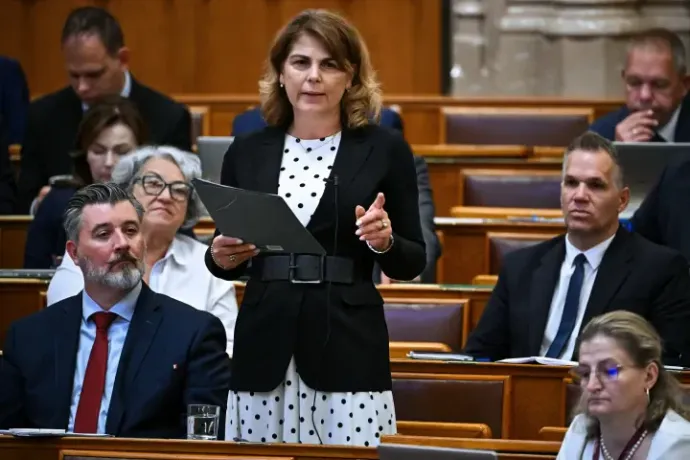
Dóra Szűcs originally earned a degree in Hungarian and English language and literature, and is a high school teacher, journalist, and economist. She worked as a language teacher for more than 15 years; after 2010, she focused on developing digital educational content and online learning platforms, and was the co-founder and owner of the digital education platform Okos Doboz. She joined the Tisza Party quite early and led their team responsible for education starting in September 2024; she later served on the Tisza Party’s policy-making cabinet, where she was responsible for education. She entered Parliament via the national ticket, securing the prestigious 19th spot on the list. Péter Magyar personally asked her to serve as an MP, which she accepted without hesitation.
Throughout her career, she has held positions related to public service and social dialogue. In this aspect, her work in parliament is similar, though it requires a different attitude, she says. As a company executive, she was the one to set the direction; while as a member of Parliament, she must align herself with the political and professional direction set by her group. Plenary sessions really put one’s tolerance for monotony to the test, since there are certain topics one is more interested in than in others. She wasn’t surprised by the tone used in parliamentary debates; in her opinion, what goes on in the Hungarian Parliament is peanuts compared to the British Parliament.
She has spent a lot of time working among diplomats and high-ranking international politicians, which is why she isn’t particularly impressed when seeing politicians who have played a defining role in the country’s life over the past 16 years in person. “At times it’s a little surreal to bump into them, but it's also frustrating, because they still haven't realized they're in opposition, and they're saying the same things they used to say when they were in government. They expect Tisza to solve the very problems they themselves are responsible for.”
Szűcs found adapting to the formalities of parliamentary work relatively easy because, as she put it, she had worked “under strict protocol” before. It was nonetheless moving for her to preside over the first meeting of the Education Committee, of which she is chair.
“We should keep in mind that for 16 years there was no Education Committee, which is why leading it is such a beautiful challenge.”
Pál Czakó Czirbus came from the financial sector, where he spent nearly twenty years working at various financial institutions and companies. He also spent a few months at Szerencsejáték Zrt. He has been working with Tisza since September 2024; he initially served as Péter Magyar’s chief of staff and was there when the party chairman visited children’s homes. He later chaired the ethics committee of the Tisza islands (the Tisza Party's regional chapters) and was also responsible for the party’s international Tisza islands initiatives, which included visiting the Hungarian diaspora with Anita Orbán. During the final stretch of the campaign, he helped organize the Tisza Party's volunteer “election scouts", whose task was to report any irregularities during the election. He entered parliament from the 105th place on the national list. If the Tisza Party had not secured a two-thirds majority, he would have just missed out on his seat.
He says that the time since the government change has been more or less enough for him to get a general grasp of how the legislative process works and to learn his way around the Parliament building. Czakó Czirbus admits that the long plenary sessions can be challenging.
“The lengthy back-and-forth is entertaining, but that’s followed by hours of sitting in otherwise uncomfortable seats while listening to complex legal texts. Sometimes I think to myself: Good heavens, there are still more than 1,400 days of this term left. But when I see that voters like what we’re doing, something clicks, and it doesn’t seem so daunting anymore.”
In his view, the term “lawmaker” has become rather pejorative, and it’s Tisza’s responsibility to change that. He himself used to see lawmakers as boring bureaucrats who, on top of that, were also corrupt.
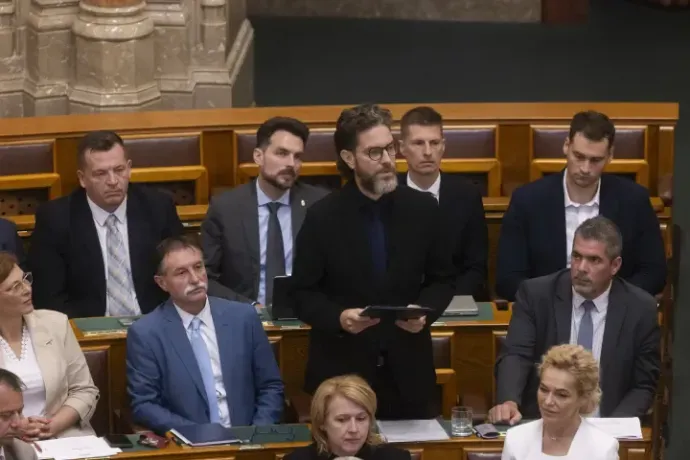
Czakó Czirbus said that, having come from a multinational corporate environment, he’s still trying to find his voice and figure out which issues he can credibly represent in Parliament. He believes other Tisza representatives feel the same way. They’re still learning how to be true to themselves in their new roles; many members of the faction haven’t spoken up yet. Although he disagrees with 99 percent of what they say, he acknowledges the rhetorical and oratory skills of those in the Fidesz faction—he and his fellow Tisza MPs might as well learn a thing or two from them. “They’re black-belt politicians—seasoned, speaking off the cuff, able to fill every minute of the allotted time.”
Gone are the days when a member of Parliament ruled like a petty monarch
MPs are primarily visible in Parliament, but they have responsibilities outside the plenary sessions as well. This is especially true for independent MPs, who must also attend to matters related to their constituencies—for example, they are responsible for keeping in touch with mayors. Mondays and Tuesdays are largely taken up by the plenary session, whilst Anna Müller spends the second half of the week in her constituency and attends to her tasks related to committee work. She is invited to countless events; during the recent heat wave, she joined volunteers from her district’s Tisza Islands to distribute water, and on another occasion, she met with a group of mothers raising children with multiple severe disabilities. She has also held consultations with the heads of public education institutions in her district recently.
Ernő Csatári from Siófok recently held talks with 24 mayors at once. He would like the mayors to speak openly with one another about the problems facing their communities. At the recent meeting there was some tension when it became clear that certain municipalities had received an unjustifiably large amount of state funding, while others had received an unfairly small amount. “They need to clearly identify the 3–4 biggest problems in their community, so they don’t end up submitting a grant application for a fitness park when there are hardly any young people living there.”
According to him, Tisza wants to put an end to the system in which members of Parliament rule like petty monarchs, determining how state subsidies are allocated.
“They should have realised by April 12 at the latest that a new world is coming—the days of backroom deals are over.”
He explained that from now on, as representatives, they will have no say in the distribution of grant funds, but they will be able to see exactly how much funding each municipality has received, and they will be tasked with monitoring how the funds are spent.
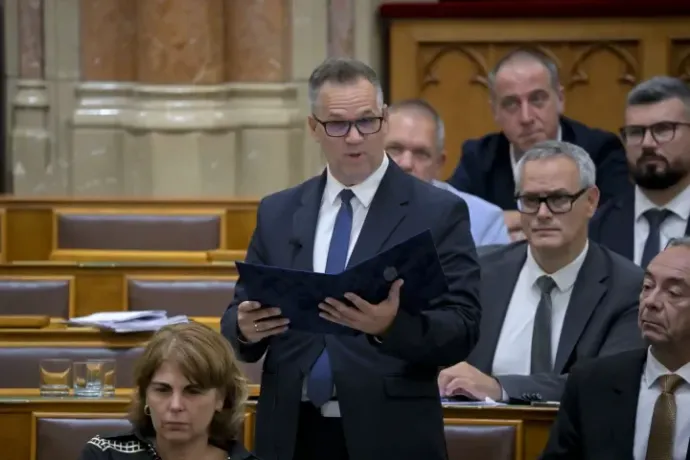
Another representative from outside of Budapest noted that the work of an MP is much more intense and turbulent than he had previously imagined. There will not really be a summer recess in Parliament—at most, one week. He spends the first half of the week in Parliament and then makes rounds in his district.
Mayors are constantly calling to tell him about the problems in their settlements. The biggest problem is the lack of funds; local governments are in dire straits financially, with 70–80 percent of municipalities struggling to survive. As a member of Parliament, his job is to relay these problems to the government. Given the poor state of the budget, it will certainly take time before the financial difficulties of local governments can be meaningfully addressed. In this situation, he considers it a good message that one of the first measures taken was to reduce the salaries and expense budget allowances of lawmakers. “Voters can see that the country is in trouble, and in times like these, everyone is doing their part to save money. It sets a good example that we started with ourselves.”
We can speak up if we disagree with something
The Tisza faction usually meets right before Monday’s plenary session. “These meetings allow for completely normal dialogue, and we often have in-depth debates,” said Anna Müller. Anyone can voice their opinion and criticism, which she finds inspiring. As a teacher, she has always encouraged her students to be critical and to dare to disagree, because that’s how progress is made. “We can speak up if we disagree with something. The goal isn’t to have 141 people in parliament who just push buttons.”
Pál Czakó Czirbus also noted that during the faction meetings, they are able to ask members of the government about current issues and proposed legislation.
“There are objections, and Péter Magyar actually likes being challenged.”
The limiting of MPs’ terms was also a subject of discussion at the factions' meetings. Under the 17th amendment to the Fundamental Law, a person may serve as a member of parliament for a maximum of three terms. Anna Müller said that both pros and cons were raised, but they ultimately agreed that this measure was necessary. Commenting on the term limit itself, she said that she has yet to meet a Tisza lawmaker who wants to serve as a representative for the rest of their life. In her view, they are not seeking to get rich off politics; they can return to their own professions at any time if they can no longer serve as representatives.
Ernő Csatári made a similar argument. In his view, the restriction on the number of terms a representative can serve could not have come as a surprise to anyone, because it logically follows from restricting the number of terms a prime minister can serve. Even a member of parliament can become complacent in their work; it’s possible that they too might lose touch with reality after a certain amount of time, he said, arguing in favor of the restriction. “Each one of us accepted the role of parliamentarian with this in mind. Ninety-nine percent of us came from the private sector; we can go back to our old jobs at any time.”
Czakó Czirbus also agrees with limiting the term of office to 12 years, because getting too used to being part of the legislative machinery can be dangerous. And for those who want to stay in politics even after three terms, there will still be countless opportunities for serving their country.
Anna Müller believes that in time, it will become clear what specific results she can achieve as an MP. For now, the most important thing is for the government to take the necessary measures needed for bringing home the frozen EU funds. Dóra Szűcs also noted that, unlike in the specialized committees, representatives have little influence on the course of the plenary sessions. She would like the Education Committee to serve as a place where professional and advocacy organizations can voice their opinions. For their most recent meeting, they invited representatives of the two biggest teachers' unions, but they are also planning thematic sessions where, for example, they would invite the new president of the Hungarian Academy of Sciences.
It was also at their most recent session that they discussed the bill aimed at abolishing the current, much-criticized system for evaluating teachers (introduced during the.Fidesz-KDNP administration). There was a heated debate, but the discussion was generally constructive; Fidesz members ultimately abstained from voting. “I would like the Education Committee to have significant weight and influence.” In the long term, her goal as a representative is to ensure that education about healthy living, digital literacy, and media literacy finally becomes integrated into public education.
For more quick, accurate and impartial news from and about Hungary, subscribe to the Telex English newsletter!