The EU's next seven-year budget could really bring the V4 together; according to Fico, they have common interests
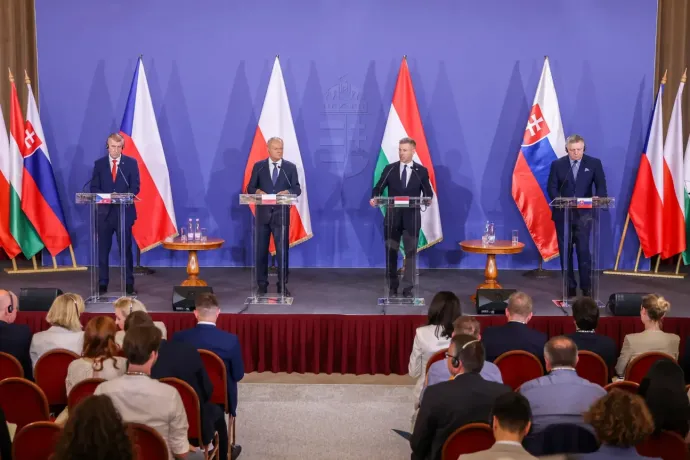


The V4 group, established in 1991, has had a difficult few years. Although Viktor Orbán’s government has verbally advocated for the Central European cooperation, its relationship with Poland became strained after the 2022 Russian invasion of Ukraine. The unity of the V4 was also hampered by the fact that the countries were often led by prime ministers and presidents with differing political orientations. Although a meeting of heads of state was held at the end of 2025 in Esztergom, there had not been a formal V4 meeting of heads of government in years.
Even during his campaign, Péter Magyar indicated that he wants to revive the Visegrád Four and would even like to expand it to include other countries in the region. The four leaders held a brief meeting last week in Brussels, after which the Hungarian government announced that "The four heads of government agreed that it is important to revive the Visegrád cooperation, since it serves as an influential platform for consultation within the 27 member states of the European Union,” and confirmed that the other leaders had accepted the Hungarian invitation to meet in Gödöllő.
Hungarian Prime Minister Péter Magyar opened the press conference which followed their Tuesday meeetings by quoting what Donald Tusk had said in Brussels referring to the renewed cooperation between the four countries: “The V4 is back!”. He thanked the heads of government for the opportunity to meet at the historic location of the Grassalkovich Palace. He recalled that the Visegrád Four was established 35 years ago, and noted that they are now in fact celebrating this anniversary.
“The leaders from thirty-five years ago recognized that our countries have more in common than what divides them,” and that it is easier to succeed when working together.
In Magyar's view, today, each of the four countries is committed to strengthening this cooperation. They are aiming to build a V4 that is capable of delivering tangible results and which speaks with a strong, unified voice in European decision-making.
“Central Europe is one of the most dynamically developing regions of the EU today,” he continued. They also discussed the EU’s new seven-year budget and agreed on the importance of cohesion policy and a common agricultural policy. Magyar also mentioned that he had presented the other leaders with a plan for a high-speed railway line connecting Warsaw, Prague, Bratislava, and Budapest.
He said that they had discussed the importance of cultural and civil society cooperation within the Visegrád Group and thanked Fico for presenting the Slovak presidency’s program, which all members support. They agreed to resume regular consultations of the V4 ahead of EU summits, to “represent Central Europe together” in Brussels and elsewhere. “The heart of Europe beats in Central Europe today,” he said, repeating a previous statement. “Hungary is happy to return to the V4 cooperation", and our partners can always count on us, Magyar said in closing, and added that following the press conference, the heads of government would continue their discussion.
Fico: We have similar views on cohesion and a common agricultural policy in the EU
Slovak Prime Minister Robert Fico was next, and began by expressing his gratitude that the meeting could take place. He then spoke about the priorities of the Slovak V4 presidency. “The Slovak presidency will take place during demanding and difficult times,” Fico said, noting that they will have to respond to serious challenges—challenges that EU member states must also address. He pointed out that the V4 countries represent 65 million citizens.
“One success of the V4, for example, was the resolution on illegal migration,” said Fico, who believes that illegal migration must be a key focus of the cooperation between the V4 countries. He said he would like the V4 countries to coordinate their positions ahead of European Council meetings.
He then listed the four fundamental pillars of the Slovak presidency. Strengthening competitiveness is the first of these, which, according to Fico, they also intend to prioritize in the EU’s new budget. In his view, cohesion should not be pitted against competitiveness.
He said that at last week's meeting of the European Council, there was a serious debate about China, but “whining dominated the discussion.” In his opinion, the price of electricity must be reduced across the entire EU. He cited Mario Draghi’s report, which identified high energy prices as one of the EU’s most pressing problems.
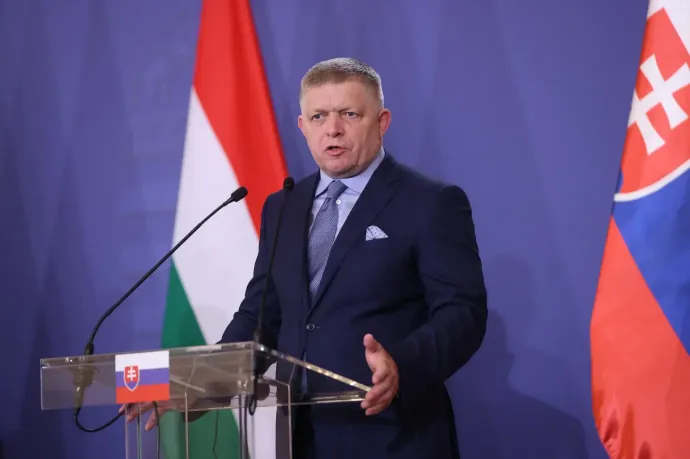
He said that he believes the V4 countries need to treat EU enlargement as a priority, mentioning Montenegro, Albania, Serbia, and Ukraine by name. He said it would be good if current EU member states could share their positive experiences with the candidate countries.
According to the Slovak Prime Minister, joint defence is also a priority. He also mentioned the migration pact, with which, in his view, every V4 country has problems. He believes that the first significant step in V4 cooperation was taken last week at the informal meeting in Brussels, and added that he would like to welcome the other heads of government to Slovakia sometime in the future.
Fico noted that their views on cohesion and a common agricultural policy are similar, as they believe it is necessary to support the eastern regions. For this reason, in the future, they intend to invite people who can provide input on these subjects, and the Irish prime minister could be such a person for example, given Ireland’s upcoming presidency.
He said that the Austrian and German chancellors have also been mentioned as potential future guests to discuss energy prices and migration. He already knows of at least 3–4 topics that he will be able to discuss within the V4+ framework.
Babiš: I have a good feeling about this
Czech Prime Minister Andrej Babiš was the third speaker. “I trust that we will cooperate perfectly,” he said, adding that “these four countries represent the future of Europe". He agreed that energy prices, carbon dioxide quotas, and financial frameworks are the key issues at this time. He mentioned that they had also touched on the upcoming NATO summit in Ankara, and said that he looks forward to cooperation and believes that coordination will return to the way it was before. Finally, he expressed his gratitude for the fact that “we are once again rowing in the same boat.”
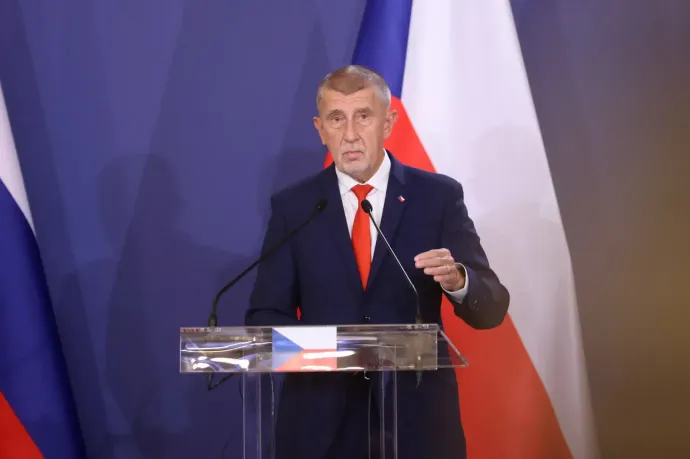
“I’m confident that there’s chemistry between us, ” the Czech Prime Minister Andrej Babiš said in relation to his expectations for future V4 cooperation. “I have a good feeling about this,” he concluded.
Tusk: This partnership is based on loyalty
“Thank you for bringing back hope,” Polish Prime Minister Donald Tusk said. According to him, the V4 countries do not agree on every issue—there have always been certain differences—but at its foundation, this is a partnership based on loyalty, he said, noting they have often been able to influence EU decisions.
Donald Tusk stated that "If we always understand that what unites us is stronger than what divides us, then Europe will begin to listen to us",
and Hungary’s current energy could be one of the catalysts for this.
He recalled that when the V4 showed solidarity, it “offered a ray of hope” to candidate countries, so it could once again serve as a guide for those who find themselves at odds with the EU, with the Germans, and the French. Tusk believes that if they return to mutual loyalty, then “the V4 will also become one of the greatest powers".
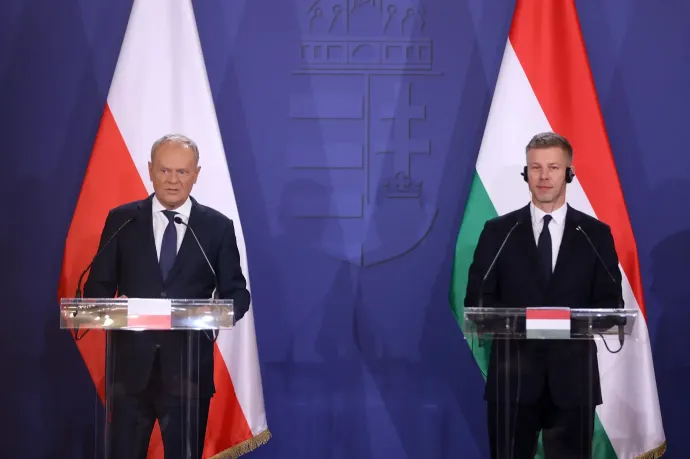
The Polish politician shared a few personal thoughts, recalling that for a long time, he and Viktor Orbán were a united front. “I haven’t changed my views on these issues since then, but Viktor Orbán has changed his views significantly,” which is why I was no longer able to cooperate with him. He believes that this is one reason why Hungarians expressed their view – which he shares – so strongly: although the V4 heads of government may disagree on certain issues, there are certain lines which, if crossed, make cooperation impossible. Now, despite these differences, they will be able to cooperate, he said.
Among the questions from the press, STR asked whether Robert Fico and Péter Magyar had agreed on a specific date for a bilateral meeting and whether a joint decision had been reached about the Beneš Decrees. Robert Fico said that they had not addressed bilateral issues at this time, and that such matters would be discussed during bilateral meetings.
Magyar also commented on this, saying that there would be a longer bilateral meeting when they would work on finding mutually acceptable solutions.
For more quick, accurate and impartial news from and about Hungary, subscribe to the Telex English newsletter!