Felvidék–what's behind the term that has once again put Slovak-Hungarian relations on edge?
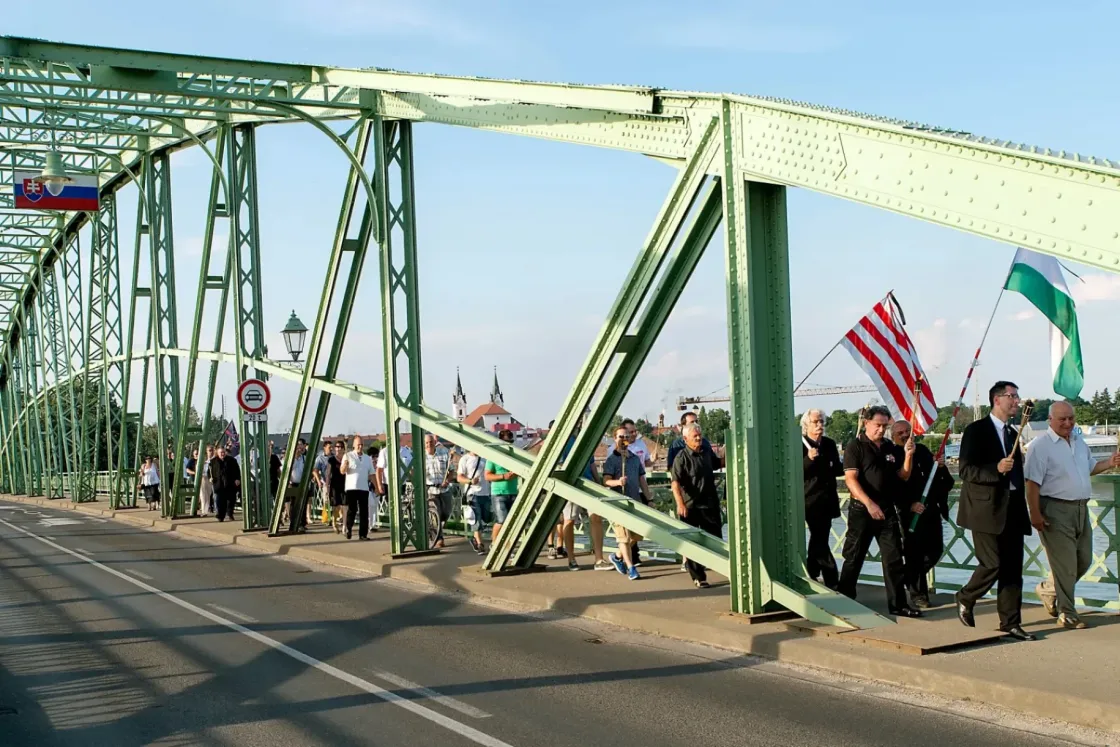


‘Even now, there are criminal proceedings underway in Slovakia over the use of the term “Felvidék,”’ János Fiala-Butora, a senior research fellow at the Institute of Legal Studies at ELTE’s Research Center for Social Sciences, told Telex. In his capacity as a lawyer, Fiala-Butora has defended several people facing charges in such cases. The lawyer considers these lawsuits—many of which were initiated following complaints by Slovak organizations—to be absurd. The term “Felvidék” came into the spotlight of the increasingly tense Hungarian-Slovak relations after Péter Magyar used the phrase “the Hungarians of Felvidék,” which provoked a sharp backlash from Slovak politicians.
"There can be no provocative laws that undermine the foundations of the rule of law and democracy, which are perceived as an open threat by the Hungarians of Felvidék" – Péter Magyar, then the leader of an opposition party and a Member of the European Parliament wrote on January 6. He addressed the letter to Slovak Prime Minister Robert Fico, and also left a separate slot for the signature of then-Prime Minister Viktor Orbán. The occasion was the enforcement of the Beneš Decrees in land expropriation cases in Slovakia.
Slovak President Peter Pellegrini was the first to respond to the open letter, calling it offensive that Péter Magyar referred to Slovakia as “Felvidék.” In a video, Pellegrini said: “I don’t think this is going to help calm tensions, because we are still Slovakia. The Slovak Republic, not Felvidék. Even with that letter, they have shown how much they respect us.”
László Gubík, president of the Alliance of Hungarians (Magyar Szövetség) in Slovakia, responded to Pellegrini’s video on Facebook on January 12. In his post, he wrote: “Felföld (Upland) was a term used to refer to the northern counties of a large, unified Central European state and the system of fortifications built to protect them and their population (including Peter Pellegrini’s ancestors). Thus, in this sense, it is not at all offensive to use the term ‘Felvidék’ (Highlands or Upland) in colloquial speech to refer to Slovakia’s current territory, and the paranoia triggered by this regional concept is completely unjustified. It would be good to calmly discuss this as well, before some smart aleck decides that this should also be punishable by six months in prison.”
Péter Magyar remained undeterred by the criticism coming from the Slovak leadership. Following the election, on April 21, now as the prime minister-elect, he reported that he had spoken with Robert Fico by phone. “I made it clear to him that we can only discuss any policy issues after we have received a guarantee that Slovakia will repeal the legislation threatening Hungarians in Felvidék with imprisonment, and if they commit to ensuring that in the future, the lands of our fellow Hungarians in Felvidék will not be confiscated by citing the Beneš Decrees, which are based on collective guilt,” he said, using the term Felvidék once again. This made it clear that Magyar remains willing to pursue a confrontational policy against the Fico government, which is likely to play the “Hungarian card" on the domestic front, which we wrote about in more detail here.
On the Slovak side, smaller parties have started to stir up fear. Rudolf Huliak, a politician from the small party called Rural Party and Minister of Sports, announced on April 30 that he would reinstate conscription because he fears Péter Magyar’s government will occupy his country. He reached this conclusion based on Magyar's repeated use of the term "Felvidék." “After Orbán, here is another Hungarian nationalist who can’t contain himself. It seems that the reintegration of Slovakia’s southern territories into Hungary remains one of the primary goals of Hungarian politics” – Huliak stated, ignoring the fact that the Orbán government was actually criticized by many for being overly cautious on this and for not doing anything on the Beneš cases. According to Huliak, the main opposition force, Progressive Slovakia, which welcomed Péter Magyar’s election victory, would even be willing to hand southern Slovakia over to Hungary.
Andrej Danko, Deputy Speaker of the Slovak Parliament, announced on April 29 that he would submit a resolution calling on the new Hungarian Prime Minister, Magyar, to refrain from using expressions which call into question Slovakia’s statehood. The politician from the Slovak National Party was especially critical of the use of the term “Felvidék.” Tibor Gašpar, another Deputy Speaker of Parliament, also criticized Magyar’s choice of words, which he said could pose a threat to Slovakia’s sovereignty.
“This is a very sensitive issue for most Slovaks.”
A discussion titled "The Prerequisites for Reconciliation Between Hungarians and Slovaks" was held last week at the Pest campus of Budapest's Corvinus University, where Michal Vašečka (Bratislava International School of Liberal Arts) and István Kollai (Budapest Corvinus University) discussed the possibilities for reconciliation between the Slovak and Hungarian peoples. The usage of the term Felvidék was also among their topics.
Before the lecture, Vašečka told Telex about the Polish term Kresy, which is a similar concept to that of Felvidék. The territory of Poland, established after World War I, extended further east than it does today; the term Kresy was at the time used to refer to the eastern border region inhabited by Belarusian, Ukrainian, Lithuanian, and other populations. According to Vašečka, the concept of Kresy essentially separated “us” from “them”; it was a transitional region between western, Catholic Poland and eastern, Orthodox Russia. After the Second World War, the Soviet Union annexed the region.
“We have old reflexes, like hearing the term 'Felvidék'" said Kollai, who believes the term has negative connotations among Slovaks. It reminds people of the assimilation efforts of the 19th century; for them, the conflict has a quasi-spiritual nature. According to Vašečka, Felvidék is proof that the meaning of the same word can vary depending on the context. “This is a very sensitive issue for most Slovaks,” because they do not understand the Hungarian meaning. Slovak politicians aren’t manipulating the situation; they simply don’t understand the context, Vašečka argued.
Here, he returned to his point that it is necessary to understand the other side’s grievances and show empathy. He recalled that when he told his students about how the Beneš Decrees had affected Hungarians, they were shocked because they had no idea. There must be mutual understanding of what Apponyi’s assimilation policies meant for the Slovaks and what the disenfranchisement under the Beneš Decrees meant for Hungarians at the time. During the discussion, Vašečka and Kollai agreed that the rapprochement between the two peoples should be pursued through education.
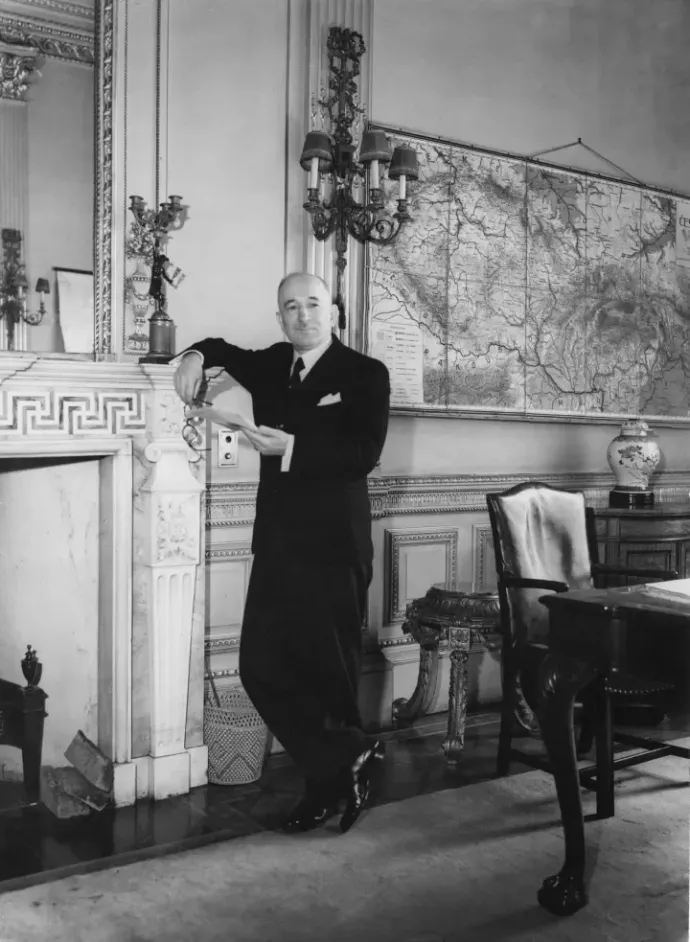
It is worth noting that a historical-geographical distinction also exists in the Slovak language. While the Hungarian language uses the name “Magyarország” for both the old kingdom that existed until 1918 and the current country—which lost two-thirds of its territory under the Treaty of Trianon—Slovak uses two different words for these. Uhorsko is the name used for Hungary prior to the Treaty of Trianon, while, Maďarsko is used for the country in the era after that. According to Vašečka, it is precisely the “ungarus”—that is, a kind of narrow Central European identity—that could be common to the two peoples, who are, incidentally, also genetically related to each other in terms of what are known as haplogroups.
“I have to take their grievances and traumas into account”
“For Slovaks, the term 'Felvidék' clearly has the potential to be provocative,” since there are those who believe that everyone in Hungary wants to reclaim Felvidék, Veroni Gyenge, a Hungarian slam poet based in Slovakia, told Telex. “That’s why I have to think 36 times before using that word,” continued the artist, who is also active in the Slovak cultural scene. In her view, even among the more liberal segments of Slovak society, “Felvidék is considered a curse word. If I want to communicate with Slovaks", she said, “I have to take their grievances and traumas into account.” “I really sense that there is this slight insecurity about identity among Slovaks,” and they equate the words Felvidék and Slovakia, even though the two do not mean the same thing.
She often feels as though she should start everything she says by explaining that although she is Hungarian, she does not want to see the country's borders changed.
Veroni Gyenge usually tries to describe Felvidék to Slovaks as a linguistic region, not a territory: “I usually say that this is the word that connects me to a Hungarian living in Rimavská Sobota, while I live in Bratislava.” Slovaks translate Felvidék literally as “Upper Region,” which, in her view, makes it sound even more like it’s the upper part of Hungary.
She has developed many strategies around this topic; for example, she told the Slovaks that they could refer to the Slovaks in Hungary as people from the “lower region.” But the average person's knowledge on this is limited, and “it might be brand-new information to them that they too have a minority” in Hungary. The Slovaks’ knowledge about Hungarians is also minimal; Veroni Gyenge has often been asked when she moved to Slovakia. In her opinion, the whole debate is like a clash of traumas; many people don’t even want a dialogue—they are simply offended.
“Absurd measures even by Slovak standards”
According to János Fiala-Butora, the term “Felvidék” is a “harmless, neutral ethnographic expression,” just like those used by Hungarians in Transylvania (in Romania) or Vojvodina (in Serbia). At the same time, based on Fiala-Butora’s own memories, the use of “Felvidék” was not widespread among Hungarians in Slovakia before 1989. However, Slovaks later began to associate its use with the Hungarian right wing.
“I consider it a contrived thing that the idea about ‘Felvidék’ being offensive has become widespread,” because it calls into question the very existence of Slovakia.
This did not emerge organically; it was politicians who began to stoke it. According to the lawyer, it is interesting that although former Prime Minister Viktor Orbán had consistently used the term “Hungarians of Felvidék” in the past, this did not bother Robert Fico. Now that Orbán is no longer prime minister, the term has suddenly started to bother the coalition parties. According to Fiala-Butora, however, the term “Felvidék” should have no place in diplomatic relations.
Of course, there are extremist, revisionist Hungarian organizations, which consistently refer to Slovakia as “Felvidék.” Slovak organizations have responded to this by reporting anyone who uses the term “Felvidék.” Such proceedings were also brought against the mayor of Dunajská Streda, but he was acquitted. Proceedings were also initiated against Hungarian MP Örs Orosz over the translation of a book written by a Slovak author, titled “Historic Monuments of Felvidék.” They are trying to strip Orosz of his parliamentary immunity based on the opinion of a “scandalously incompetent” Czech expert who claims that using the term Felvidék “is suitable for stirring up extreme views.” Fiala-Butora added: “I don’t think the punishment itself would deter anyone; these are absurd measures even by Slovak standards.”
“The kind of reaction the Slovak state has given was calculated, rather than the result of spontaneous outrage,” said Fiala-Butora. In his view, these debates should be conducted in a constructive manner, and not through criminal law. The debates could lead to a change in the context in which the term is used. “The Slovak state’s attitude may have a small impact on this,” but it is not the punishment that will deter people from using it. The lawyer understands that the Slovak Parliament has not yet voted on Deputy Speaker Danko’s proposal to condemn the use of the term “Felvidék,” but that is irrelevant anyway. After all, “the Slovak Parliament has no jurisdiction over how Péter Magyar communicates.”
For more quick, accurate and impartial news from and about Hungary, subscribe to the Telex English newsletter!