Orbán’s foreign policy master plan meets reality
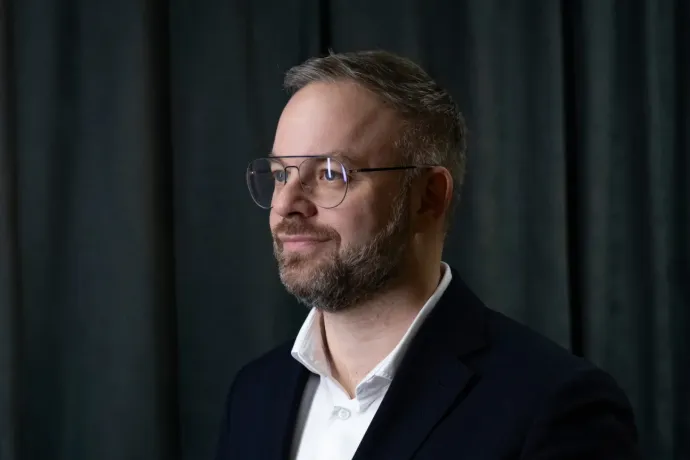


The Orbán government's foreign policy strategy is based on the theory of "connectivity," so much so that the Prime Minister's political director has even written a book extolling its brilliance. Thus far, this approach has led to the drying up of EU funds, and now it appears that the oil will soon run dry as well. For the time being, it is unclear what makes this master plan so ingenious.
Huszárvágás (translated into English as Hussar Cut, the Hungarian term "huszárvágás" denotes a quick, courageous, surprising, and risky act, decision, or solution that suddenly resolves a complex problem). This is the Hungarian name Balázs Orbán chose for the foreign policy strategy that not only he, but also the Prime Minister is proud of. As the Prime Minister's political director modestly put it in an English-language interview, the English equivalent of huszárvágás could be "master cut." And as for what it is: a light, decisive, courageous, surprising move, he explained with visible pride.
This self-assured attitude may be familiar, as the PM himself has often referred to the "Hungarian resourcefulness/street smartness" which he believes can also be useful in diplomacy.
This is what Americans have described as: "the Hungarian is the one who enters the revolving door behind you, but exits before you." It undoubtedly sounds good, because it suggests a kind of intellectual superiority, resourcefulness, and self-confidence.
According to Balázs Orbán, the term "hussar cut" is fitting for their strategy because what Hungary is doing on the international stage is bold and surprising. This is because they dare to maneuver on the international stage, which may appear complicated from the outside, but if one digs deeper, it makes sense and can be successful, they argue.
As Orbán explains in his book, in a world that is becoming increasingly divided into blocs, Hungary must remain open, it must reject bloc formation and act as a bridge between East and West – this is roughly the essence of the book's message. Part of this strategy is the idea that international politics has no moral dimension. There is only self-interest, or as the PM himself put it: every nation has the right to consider itself the center of the universe.
It was with reference to this strategy that the Hungarian government has repeatedly emphasised that it holds a different position on the Russian-Ukrainian war, and this was also the main justification for why we have been at war with Brussels for years.
But it is not enough to proclaim courage and boldness; one must actually be courageous. Courage begins when we take a bold step and, if there are consequences, we accept them with the same courage, admitting that yes, this is because of us. And as it stands now, there are two specific issues where we can clearly see that the courage and boldness proclaimed by Balázs Orbán evaporated in an instant: one is the subject of EU funds, and the other is Russian oil.
With its strategy built on the hussar cut, the government has managed to bring about a situation where neither of the two is currently coming. It can, of course, defend itself by saying that Brussels is deliberately messing with them, just like Ukraine, but that does not change the bottom line.
Because the bottom line is that with this strategy, the Hungarian government has taken on conflicts with the EU and Ukraine, while avoiding conflicts with Russia, which is what led to this situation.
The path that led to this point was not the result of random pottering about, but rather a series of conscious political decisions and statements. There was a system to it, even if it seemed crazy at the time and still seems crazy now. It even had a name: connectivity, the art of being on good terms with everyone, the flaw of which is that there are some who were left out, and we are on especially bad terms with them – such as Ukraine, or Brussels as a whole.
So far, the policy of connectivity does not seem to be a resounding success. If we accept the Ukrainians' argument that the Russian strike has rendered the Friendship oil pipeline unusable, then the question arises: what has the government gained from its pro-Russian policy if Russian oil is not coming because of the war started by Moscow?
Or what have we gained from our policy of going it alone with Moscow if the Russians, who have started a bloody war against Ukraine, will only supply us with natural gas if our policy is favorable to them and if we spectacularly break the unity of the EU in the process? If we are susceptible to blackmail, or if Hungarian voters are susceptible to blackmail, then what exactly have we achieved with the "master plan"?
If, on the other hand, we accept Viktor Orbán's claim that the Friendship pipeline is operational and that the Ukrainians are only blackmailing us out of self-interest, even then this bold move does not seem like a winning strategy. Because if that is the case, then it is merely a reaction to the foreign policy that Viktor Orbán's government has been pursuing for years.
What’s more, the Orbán government’s outrage that another country might align oil supplies with its own interests seems all the more laughable given that Hungarian foreign policy and economic strategy are themselves based on prioritizing self-interest. And it is this same foreign policy that rejects hypocritical do-goodery, proudly proclaiming that there is no moral dimension on the international political stage. In other words, according to the worldview espoused by Balázs Orbán and Fidesz, it is perfectly acceptable for one state to blackmail another if it serves its interests. That is, if it is stronger or in a position to do so. Viktor Orbán has already done this a few times, for example when he threatened to veto the sanctioning of the KGB-linked Patriarch Kirill, citing religious freedom.
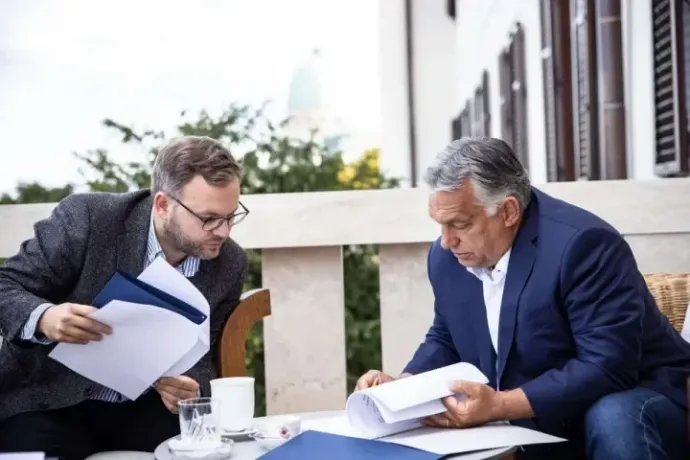
The connectivity strategy devised by Balázs Orbán and his colleagues would be successful if it were to actually work in the current crisis situation, and not just on paper. If such blackmail (assuming that it really is blackmail) could be easily neutralized with a single stroke. If, for example, connectivity did not mean dependence on Russian energy, and we did not have to worry about oil not coming from the east. If our relationship with Zagreb were all right, or at least if we were striving towards it being so. Otherwise, the whole theory is nothing more than meaningless political bullshit.
However, there is no sign that the formula is working, beyond Fidesz trying to gain political advantage from the Ukrainian-Hungarian conflict in the final stages of the election campaign, as it has done many times before with various perceived or real opponents.
And this is not just about oil. In terms of "bringing home" the EU funds, it does not appear that the daring approach of a "hussar cut" has been even slightly successful.
Last April, Gergely Gulyás, Minister of the Prime Minister's Office, said that if an agreement on EU funds is reached by the end of 2026, the country will suffer "no damage whatsoever." However, at the beginning of the year, Hungary had already lost more than €1 billion (nearly HUF 400 billion) from three EU-funded programs. The government tried to downplay the situation, saying that the money could still be recovered. The European Commission, however, considers the 400 billion forints, which was due at the end of 2024, to be irretrievable.
The billions in EU funds that have been permanently lost and the uncertainty surrounding energy supplies from the East prove that the "Hussar Cut approach" did not liberate the country, but pushed it between a rock and a hard place instead. The principle of "being on good terms with everyone" has in practice led to the loss of trust from our strategic partners, while dependence on the East has resulted in vulnerability rather than security.
Rather than having the revolving door close behind us, the true masterstroke would have been to establish ourselves a position where we would not have to fight for mere survival every time we entered or exited.
For more quick, accurate and impartial news from and about Hungary, subscribe to the Telex English newsletter!