

The US Department of Justice released three million pages of documents from the Epstein files on Friday evening. The materials mention Prince Andrew, Elon Musk, and Miroslav Lajčák, advisor to the Slovak Prime Minister, who stepped down after the documents were made public.
Besides foreign politicians and celebrities, we also found several links to Hungary in the documents. Hundreds of them mention Hungary, Budapest, Hungarian individuals, and even Viktor Orbán. To be fair, it should be noted that the reason why the number of documents mentioning individuals related to Hungary or the country itself is so high is because most of the messages exchanged by the billionaire accused of sexual offences appear in the investigation files that have now been made public, in a variety of formats, two or three times.
Visits to Budapest
The mentions of Hungary are not vague. As evidenced by his emails, the billionaire may have visited Budapest on several occasions. We found references to this in Epstein's letters to Haakon Gundersen, a Norwegian film producer with ties to Hungary.
The nature of the relationship between Epstein and Gundersen – who has worked as a producer on several Hungarian films in recent years – is unclear, but based on their correspondence, it appears to have been of a hierarchical nature.
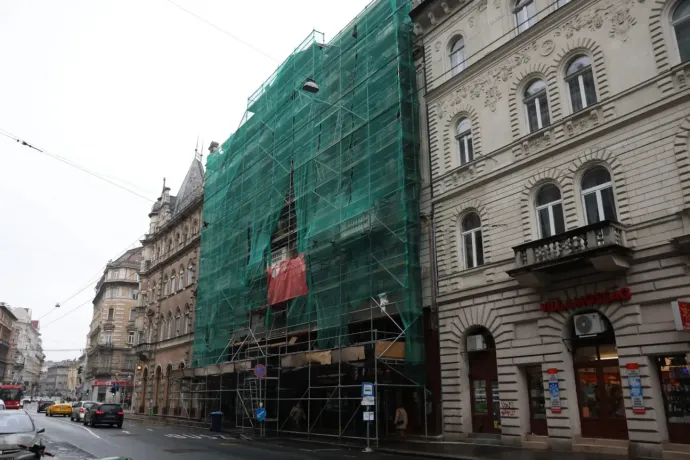
Budapest first came up between the two of them in October 2016, when Epstein told Gundersen to transfer ownership of an apartment in Budapest owned by his company to a certain "Edward." A message exchange from January 2017 reveals that the apartment is located at 70 Király Street. According to the Hungarian National Company Register, Gundersen's production company, Alphaville Virtual Studios Kft. is still registered there.
In emails from early 2017, Epstein asked Gundersen to "sell the apartment immediately."
He then inquired when Gundersen would be able to sell the apartment and for how much. The producer replied, “within 4-6 weeks, for €240,000.”
This was followed by less frequent and even more terse exchanges in the subsequent months. Epstein sent Gundersen the following emails mentioning Budapest:
- March 30, 2017: "I'm sending someone to Budapest."
- August 9, 2017: “I will be in Budapest.”
- January 4, 2018: “?? Should we file papers against you?” Epstein wrote after apparently not receiving the title deeds to the Budapest apartment that Gundersen had promised him eleven months earlier.
- March 8, 2018: “I'm in Budapest. Coming to see you.”
- June 22, 2018: “I'm in Budapest. What apt?”
It is not known how many days Epstein spent in Budapest or how he spent his time here. After this, Epstein and Gundersen did not mention Budapest in their emails to each other again, but the apartment on Király Street came up in Epstein's other correspondence.
Update: After the publication of our article, the production company of the Norwegian film producer sent us a press release, stating that there was no relationship between Jeffrey Epstein and Haakon Gundersen.
"Haakon Gundersen has never entered into any agreement, participated in any project, or established any business relationship with Jeffrey Epstein. Jeffrey Epstein never visited any property or company owned by or associated with Haakon Gundersen," they said in the statement.
"Jeffrey Epstein was introduced to Haakon Gundersen as a potential contact who could secure Silicon Valley investors for him, but this never materialized. No money was collected, received, or promised. The projects that were to be financed never materialized. Despite this, Jeffrey Epstein made threats and demanded money from Haakon Gundersen. The threats were never carried out, and no money was paid," the statement concluded.
The documents released on Friday include Epstein's correspondence with Norwegian diplomat Terje Rød-Larsen, who also had financial ties to Epstein and is mentioned 9,700 times in the newly released documents. In January 2019, the two exchanged messages in which Rød-Larsen asked for someone's address in Budapest, and Epstein gave him the address of the apartment on Király Street.
CEU and Orbán also mentioned
But this was not the only exchange between the two concerning Hungary. A year and a half earlier, Rød-Larsen wrote to Epstein about CEU's (Central European University) move from Budapest to Vienna:
“As you saw, my good friend Sebastian Kurz (31 years old!) was elected Austrian chancellor and will soon form his government. I texted him last week, and I think we are now in an excellent position to help CEU move from Budapest to Vienna. I have some great news about the situation from the highest circles in Hungary. I am having lunch with Michael Ignatieff, the university’s rector, in London next weekend.”
In addition to Rød-Larsen, Epstein was also in contact with their mutual acquaintance, Leon Botstein. Botstein has been president of Bard College, an American university focusing on the humanities, since 1975, and also chaired the CEU board of trustees until 2022.
Documents released on Friday reveal that Epstein was invited to the Hungarian Consulate in New York in 2013, where a dinner was to be held in Botstein's honor. However, one of Epstein's assistants reminded the billionaire a week before the dinner that he was scheduled to be in Los Angeles that day. So Epstein probably didn't attend the dinner.
However, the businessman didn’t only cultivate a close relationship with liberal intellectuals, but with explicitly conservative figures as well, such as Donald Trump's former advisor, Steve Bannon. According to the documents, the former head of the right-wing news portal Breitbart News had close ties to Epstein. Bannon appears nearly 3,000 times in the Epstein files, having exchanged messages with the billionaire on an almost daily basis.
In one of the messages, a month before the 2018 Hungarian elections, Bannon bragged that in addition to several European far-right parties (such as the French National Front, the Italian Lega, and the German AfD), he was advising Viktor Orbán. Bannon seemed optimistic about the EP elections scheduled for a year later. In a message to Epstein, he wrote that the parties he supported could win as many as 200 seats in the 2019 elections, which would mean that “we can prevent any cryptocurrency law or anything else we want.”
Networking
References to Hungary mostly appear in messages from foreign individuals with loose ties to the country, but Epstein himself was in email contact with at least one well-known Hungarian figure.
In March 2012, John Brockman, who was at the time the literary agent of the world-famous physicist and network researcher, recommended the work of Albert-László Barabási to Epstein. Epstein replied on the same day that he would be happy to meet with the Hungarian professor, who was conducting research at Northeastern University in Boston, but the meeting never took place.
Two years later, another acquaintance enthusiastically recommended Barabási to Epstein. Joshua Cooper Ramo, vice president of Kissinger Associates, wrote that he had met the Hungarian physicist the week before and was completely fascinated by his knowledge, so he recommended that Epstein meet him too. "I'm in," Epstein replied.
At the end of April 2014, the billionaire contacted Barabási by email to find out when they could meet in New York. The physicist replied that he had no plans to travel to New York in the near future, but gave details of when he would be in Boston and Budapest in the coming months. Epstein replied that he would visit Barabási in Boston in June, but this did not happen in the end, and Epstein and Barabási never communicated again.
In response to Telex's inquiry, Barabási wrote that he was unaware that his name appeared in the documents released on January 30 and stated that he found Epstein's crimes unacceptable and that he deeply condemned them. He said that
he had never met the billionaire, and apart from a brief exchange of letters in 2014, there was no further communication or meeting between them.
Barabási was not the only Hungarian scientist whose work Epstein expressed interest in. The documents include an invoice showing that in 2005, the billionaire sent a package to János Kornai, a Hungarian economist and winner of the Széchenyi Prize. Kornai died in 2021, and there is no mention of the package anywhere else in the documents, nor is it known what was in it.
Hungarian girls
However, many of the references to Hungary in Epstein's correspondence were not related to scientists or politics, but to Hungarian girls. There are numerous exchanges in which Epstein was commenting on girls – including several Hungarian ones – whose photos had been sent to him by unnamed individuals.
Daniel Siad, who worked as a model scout – or claimed to be one – appears nearly 2,000 times in the documents. In one of his emails to Epstein in 2009,
he asked the billionaire for money to spend the next few months in Slovakia, the Czech Republic, Poland, and Hungary, where he wanted to look for girls in "small villages."
Siad concluded his letter by: "I will make you a great surprise when you come to Paris".
Epstein and Siad were in contact for years. In a message from 2015, for example, the businessman asked what had happened to "the Hungarian girl." There is also a reference to a certain "Daniel" and his Hungarian girl or girls in several messages.
"Daniel" is also mentioned in Epstein's correspondence with a Hungarian girl. The girl sent pictures and videos of herself to Epstein, and after the billionaire expressed interest, she wrote that she had broken off her relationship with "Daniel's friend," who treated her like a dog. Epstein then asked her what she wanted for her birthday, and she replied that she wanted money.
Two Hungarian top models, Barbara Palvin and Enikő Mihalik are also mentioned by name in the billionaire's emails, albeit only in a few short exchanges. In a 2013 email, businessman Tancredi Marchiolo asked Epstein if he knew a model named Barbara Palvin in New York, but Epstein replied that he did not.
Enikő Mihalik was mentioned in 2017, after the billionaire asked an acquaintance if he had seen any cute girls at the Dogpound, a popular New York gym. The recipient, whose name was redacted in the document, replied yes, mentioning that one of the girls was "Enikő Mahalik." "All the girls had insane bodies (except Eniko)," the email states.
Jeffrey Epstein was convicted in Florida in 2008 for solicitation of prostitution. According to the charges at the time, he also sex trafficked 14-year-old girls, but he was released after serving less than 13 months. He was arrested again in 2019 on much more serious charges, but he hanged himself in his cell while in custody.
The article was updated after publishing with the statement of Haakon Gundersen's production company.
For more quick, accurate and impartial news from and about Hungary, subscribe to the Telex English newsletter!