
Child protection has again become a hot topic in Hungary, but this time, it is not because of the governing parties, Fidesz and KDNP launching a referendum on the subject like before. In fact, the governing parties haven’t been the ones setting the tone this time around, but have found themselves needing to address the severe shortcomings of the country’s child protection system.
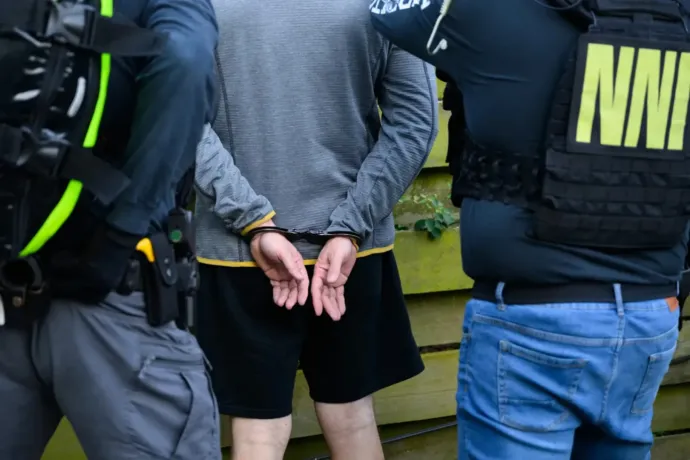
It all started at the end of May, when Hungarian police arrested the former director of a juvenile detention facility and his partner, who also grew up in the care of the state. The duo is suspected of human trafficking, forced labor, while the man is also charged with multiple counts of abuse of public office and the misuse of a firearm. There is reasonable suspicion that as the head of the facility, Péter Pál Juhász employed his partner in the institution, although her real job was entirely different: together they had coerced two adult women from difficult backgrounds who were financially and emotionally dependent on them into prostitution and made them hand over their earnings.
Soon after he was arrested, it emerged that Juhász had been appointed to the post in 2011 by a Fidesz politician, who was serving as department head in the Ministry of Human Resources at the time. The appointment happened despite the fact that Juhász had previously been forced to leave two jobs due to reports of an “improper relationship” with some of the minors in his care and that the then head of the Municipal Child Protection services had warned the department head against placing Juhász in this kind of position.
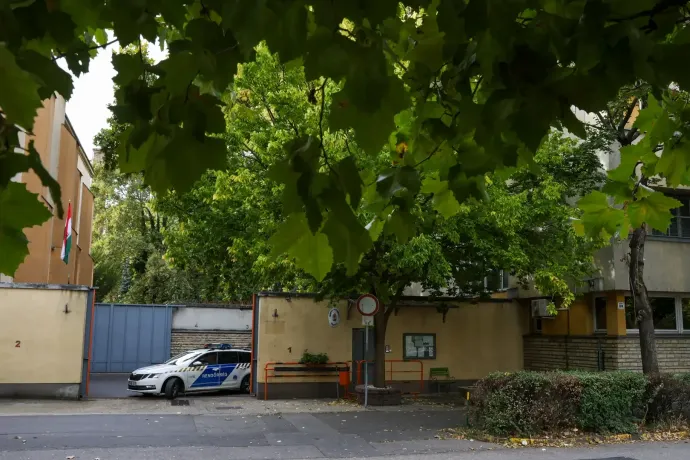
When this information became known, naturally, it upset the public, and speaking on behalf of the government, Gergely Gulyás, Minister of the Prime Minister’s Office said: “He made a mistake, it was not the right decision, and of course we accept political responsibility for things that happened 14 years ago too; the government of that time accepts responsibility.” While Gulyás’s seeming admission of responsibility may have sounded convincing to some, it was not clear exactly what “accepting political responsibility” meant in this case, and it hasn’t been clarified since.
It also did not bode well for the government that this was not the first case in recent years to shed light on the severe shortcomings in the country’s child protection system, which none of the Fidesz-led governments since 2010 have tried to address. The best known case was the clemency scandal which probably presented the most serious challenge for the governing party during its past 15-years of governance, and which also led to the resignation of President Katalin Novák and Justice Minister Judit Varga. The fact that all of this happened against the backdrop of huge campaigns built around Fidesz’s commitment to “protect our children” only increased the sensitivity of the subject.
Naturally, it was clear that with Gulyás’s admission, the government would have liked to close the matter and move on to other things. Some opposition parties, however, initiated establishing a board of inquiry in the parliament’s judiciary committee, but the Fidesz majority voted against it, and the buck seemed to have stopped there.
But then in September, months after the early summer arrests, Válasz Online interviewed a child protection expert who used to lead the office overseeing children’s homes in Budapest and who implied that years ago, Péter Pál Juhász had been involved in the sexual exploitation and human trafficking of girls from another institution. The expert also recounted that he and a colleague had informed the police about their suspicions at the time and were told that the police were already aware of Juhász’ activities and assured them that they would put an end to them soon. But nothing ended up happening and the expert said – without providing any proof – that he believed this was because “two very high-ranking officials” were protecting Juhász, adding that “they used to take boys to one of them, and girls to the other”.
Naturally, people began speculating and even naming names of high ranking politicians on social media – without any substantial evidence, but the mainstream media refrained from mentioning any names. A former MP turned influencer, however – coincidentally also named Péter Juhász – published a recording on his YouTube channel where an unidentified man claims that ten years ago “a very high ranking politician” used to pay regular visits to yet another children’s home (where he used to work, outside of Budapest), where he engaged in sexual acts with underage boys in a darkened room. According to him, the boys later recognized the man based on his voice as “Uncle Zsolti” when they heard him speak on television.
It was shortly after this that an opposition MP speaking in parliament called on the government to give an explanation for all the information about abuse that has been surfacing in relation to various children’s homes. He called on Sándor Pintér, Minister of Interior, to “tell us what is going on in child protection, not only in the juvenile detention center, but in many other places as well. And tell us who Uncle Zsolti is!"
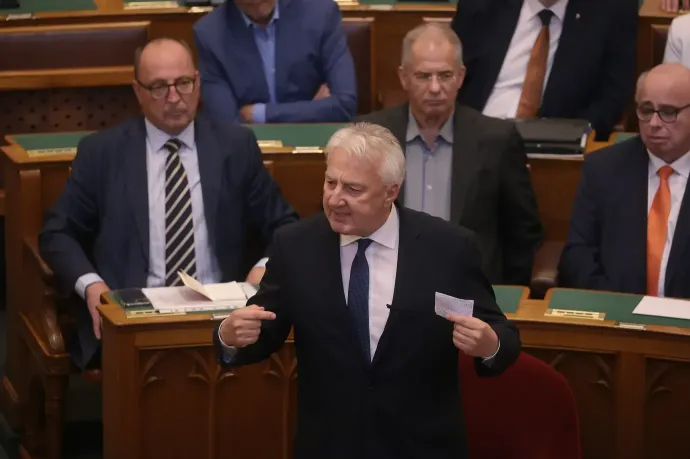
Several MPs from the governing parties, and even the Prime Minister himself spoke up in response, but Deputy Prime Minister Zsolt Semjén of KDNP (the party of Christian Democrats, Fidesz’ coalition partner) felt he needed to say a few words too.
He said the whole thing was a “diabolically constructed attempt at character assassination,... the blood libel itself...a blatant lie, a slander without any basis...You don't have to agree with my political views, but there has been nothing as vile as this in Hungarian politics since the regime change.” He concluded by declaring: “I have never been involved in any kind of sinful activity.”
Semjén taking to the floor was seen by many as a political mistake, especially given that the police have said that so far they have found no proof whatsoever either that Juhász was protected by high ranking officials, or of the involvement of any government members in the human trafficking and sexual exploitation case. Additionally, the case from outside of Budapest, in relation to which a certain “Uncle Zsolti” is mentioned, only surfaced very recently. Although he likely had different intentions with it, by speaking up on the topic, he actually pulled the case onto Fidesz.
The government was quick to react. The Justice Minister prepared a report on the case in record time, insinuating that a foreign intelligence service was likely also involved in the “unprecedented attack on the Hungarian government”. The supposed foreign intelligence link is that one of the men who named politicians in a social media post had ten years ago briefly worked for a company which was (unbeknownst to him) founded by former MI6 officers. Máté Kocsis, Fidesz’s faction leader actually called it “an attempted coup” and promised “a legal and political retribution the kind of which hasn’t been seen in Hungarian politics before”.
Another thing the Deputy PM stressed in his speech was that the authorities have been investigating the activities of the former director of the juvenile detention facility and those of his partner for ten years and continue to work “feverishly” on the case to this day. Critics have, of course, been quick to point out that this is an extremely long time, especially when compared with the two days it took the Justice Minister to prepare his report.
Meanwhile, the former juvenile detention center director and his partner remain in custody, and the police have handed the investigation over to the Public Prosecutor’s Office, and Fidesz has made it clear that “there will be severe legal consequences” to the false accusations of pedophilia.
Whatever the truth, it has by now become abundantly clear to the Hungarian public that the system of child protection is in dire need of reform. Several influencers and activists have been using their platforms to speak up for the thousands of children stuck in a system which seems to have failed them on multiple fronts.
The Tisza Party, which quickly became the biggest opposition party in the country, has been very outspoken on the subject. Over the summer, they organized a conference on child protection, and they recently announced a national consultation which will include the question: “Do you support the Tisza government launching an independent inquiry into the child abuse cases of recent decades, while simultaneously strengthening the child protection sysstem?”
Despite all this, early this week, in the parliament’s budgetary committee, the governing parties’ MPs voted down a proposal that would have put the possibility of increasing the funds spent on child protection on the parliament’s agenda. The proposal submitted by opposition MPs included the potential for raising the salaries of those working in child protection and increasing the budget allocated for the feeding of children cared for by the state.
A few days later, however, at Thursday’s government briefing, Minister Gergely Gulyás announced that "important decisions are about to be made in relation to child protection", and added that the government will be allocating an additional 17 billion forints (slightly more than 43,5 million euros) to the state welfare system before year’s end, which may be used for modernization and increasing the wages.
For more quick, accurate and impartial news from and about Hungary, subscribe to the Telex English newsletter!