Hungary's parliamentary parties each had their own take on 1956
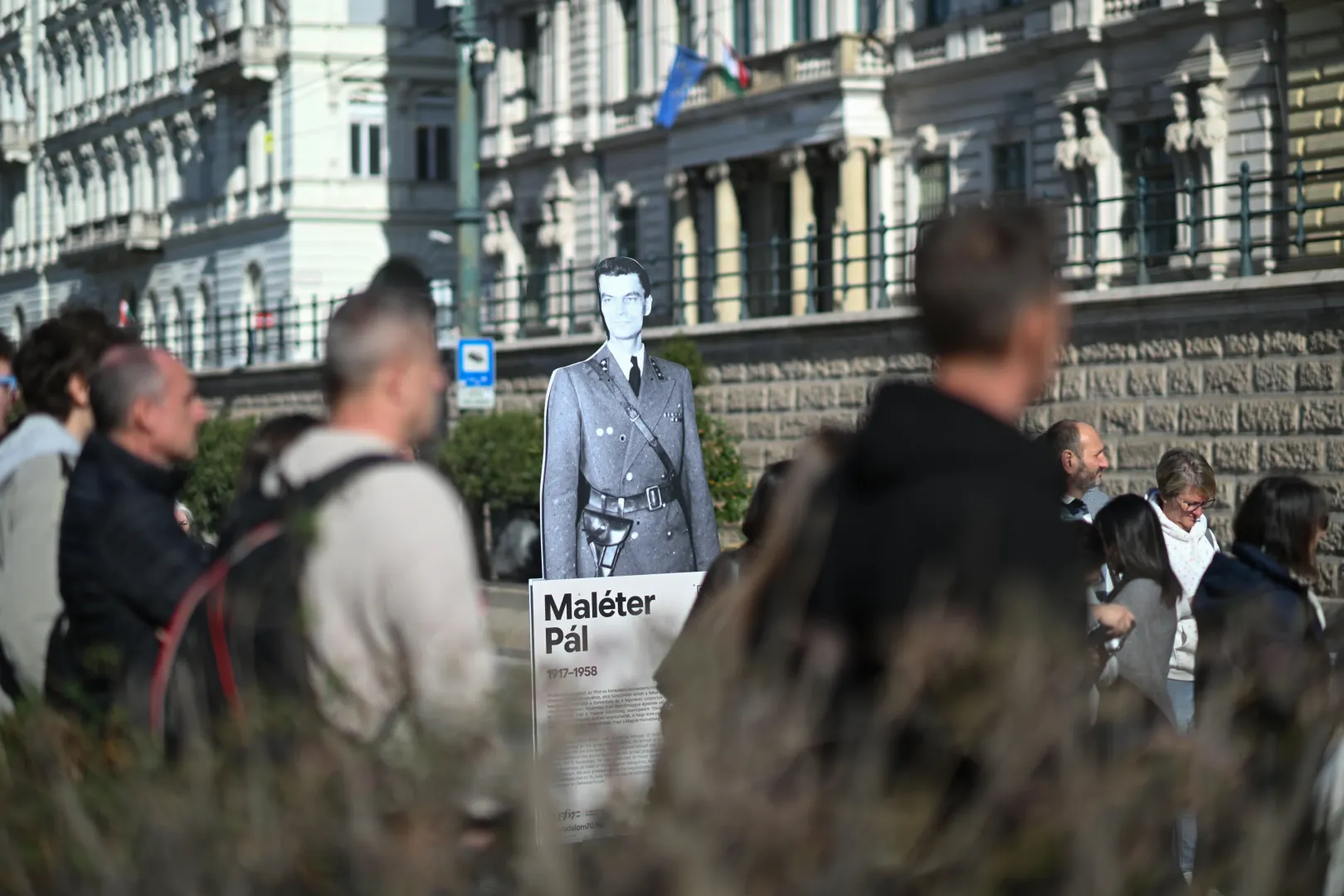
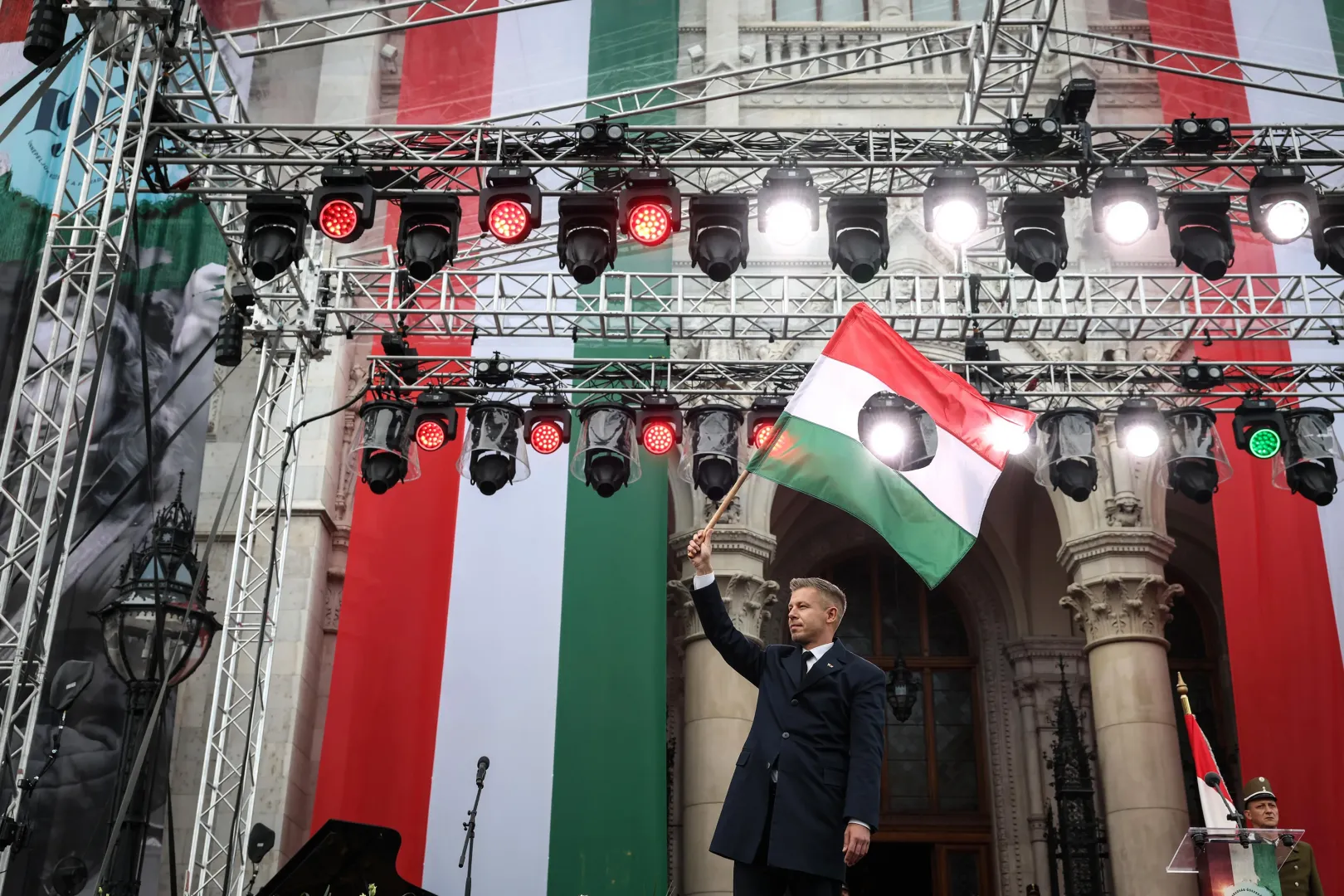
“For many years they lied to us, claiming that the national holiday belonged to only one political side, but that’s over now,” Péter Magyar said in his address on October 23, as he greeted “the now truly independent Hungary.” Meanwhile, Viktor Orbán was photographed in Paris, so Fidesz celebrated without him. According to the former governing party, in a free country, those in authority do not threaten anyone with arrest, and there are no political prisoners—thus, the coming years will be fraught with struggle and immense hardship. The 70th anniversary of the Hungarian Revolution of 1956 in pictures.
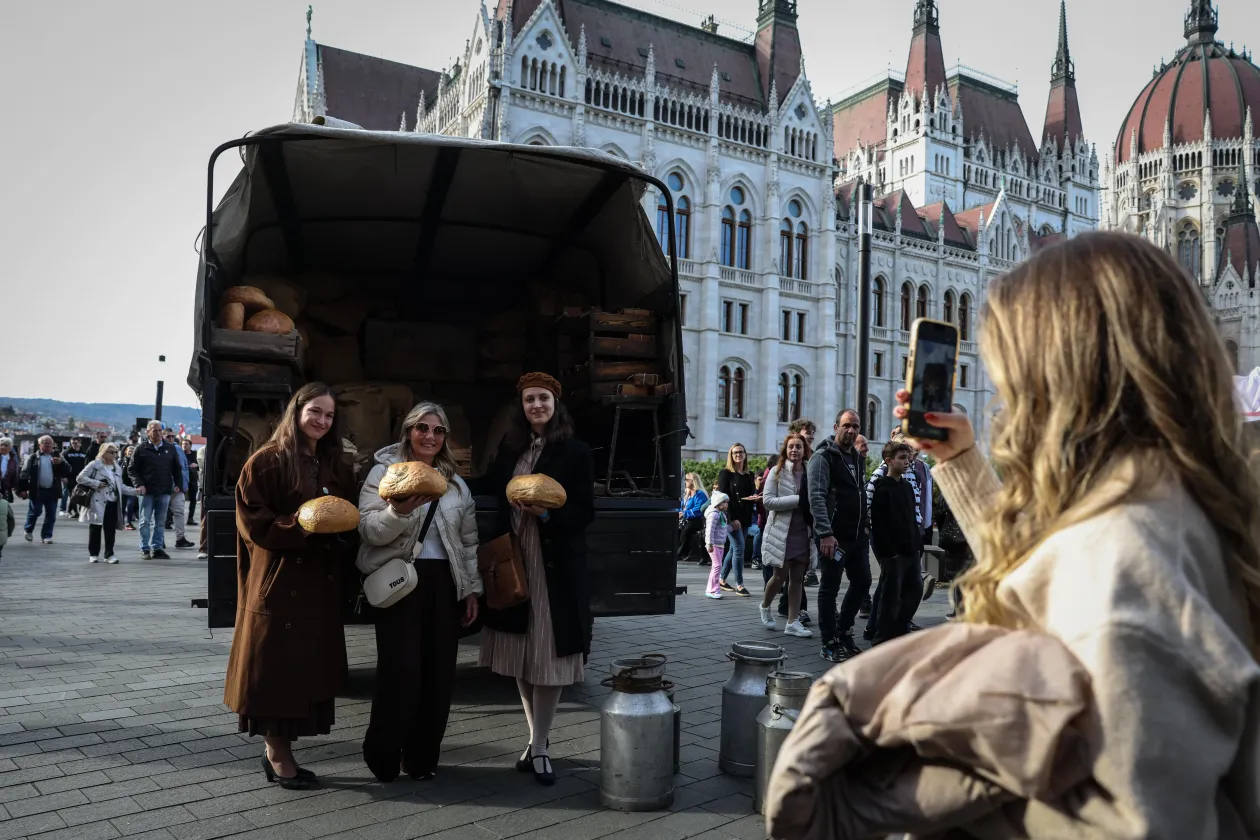
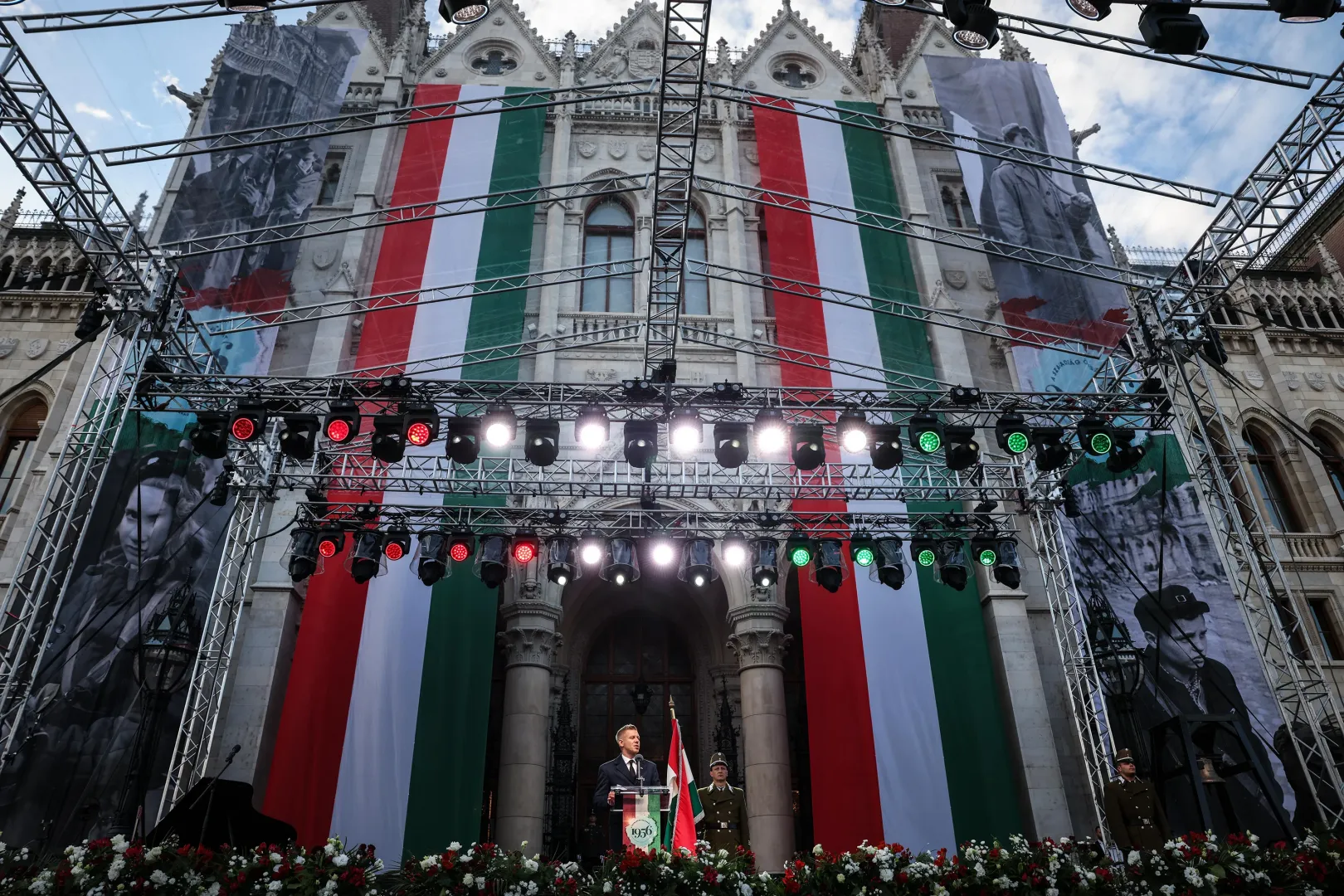
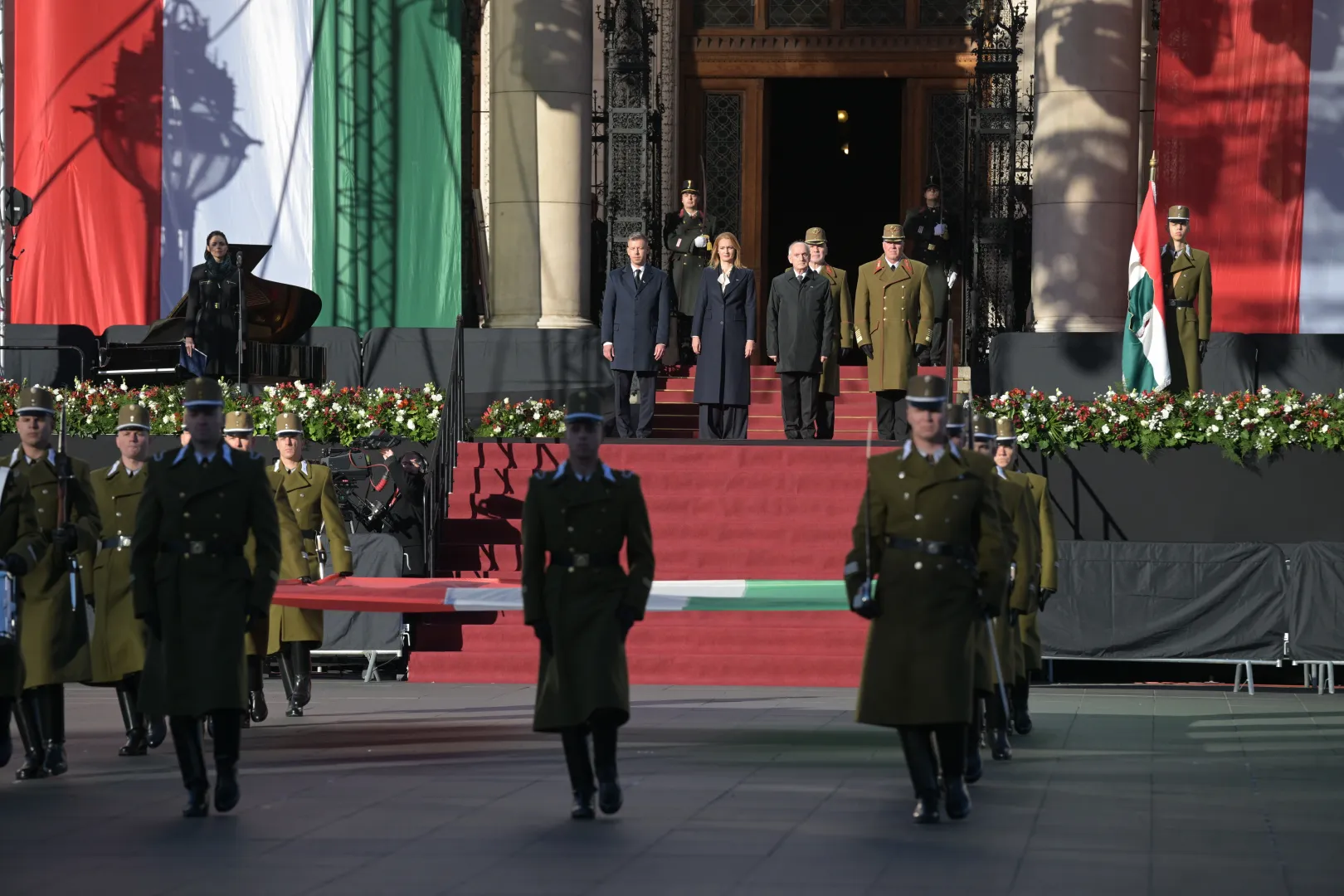
In keeping with tradition, the events on October 23rd began with a flag-raising ceremony in front of the Parliament building, followed by a military parade.
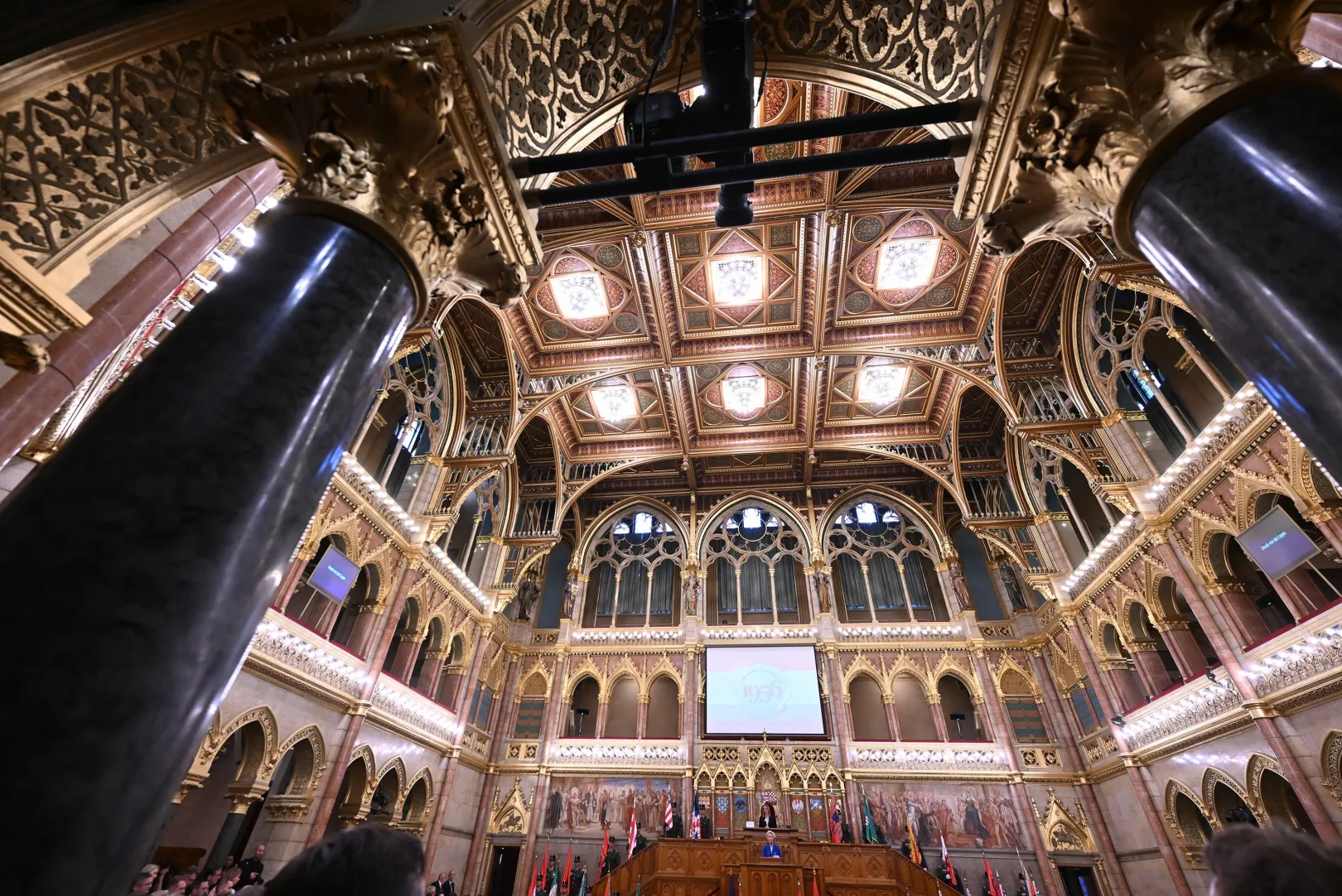
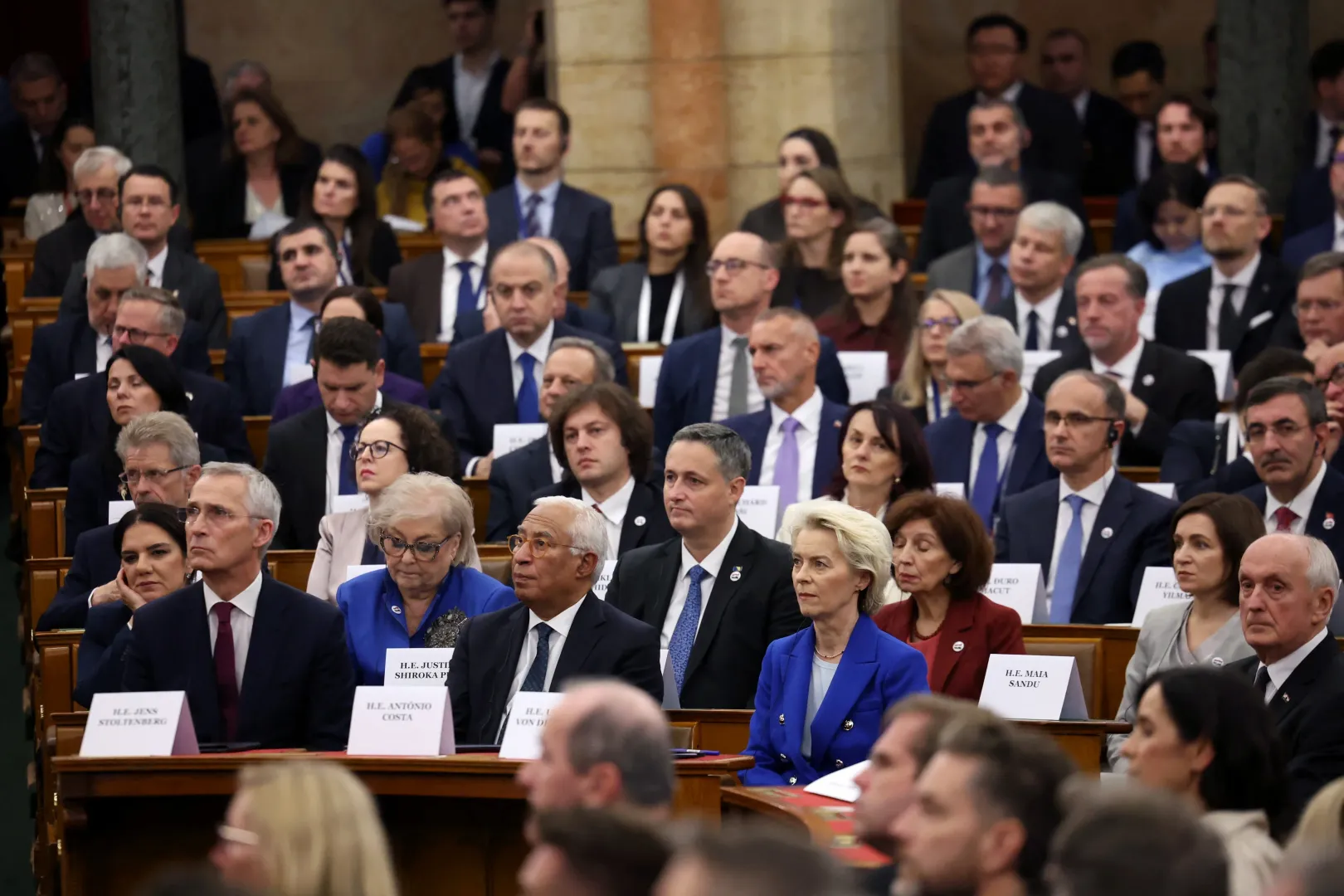
António Costa, President of the European Council, Ursula von der Leyen, President of the European Commission, and Jens Stoltenberg, Norway’s Minister of Finance and former NATO Secretary General, were also in attendance at the Parliament’s formal session, where House Speaker Ágnes Forsthoffer said: “Today, the heart of the world beats in Budapest". According to President András Baka, the presence of foreign guests made the commemoration particularly meaningful, as the 70th anniversary of the Hungarian Revolution is of global significance and at the time, the revolution also contributed to the creation of European unity.
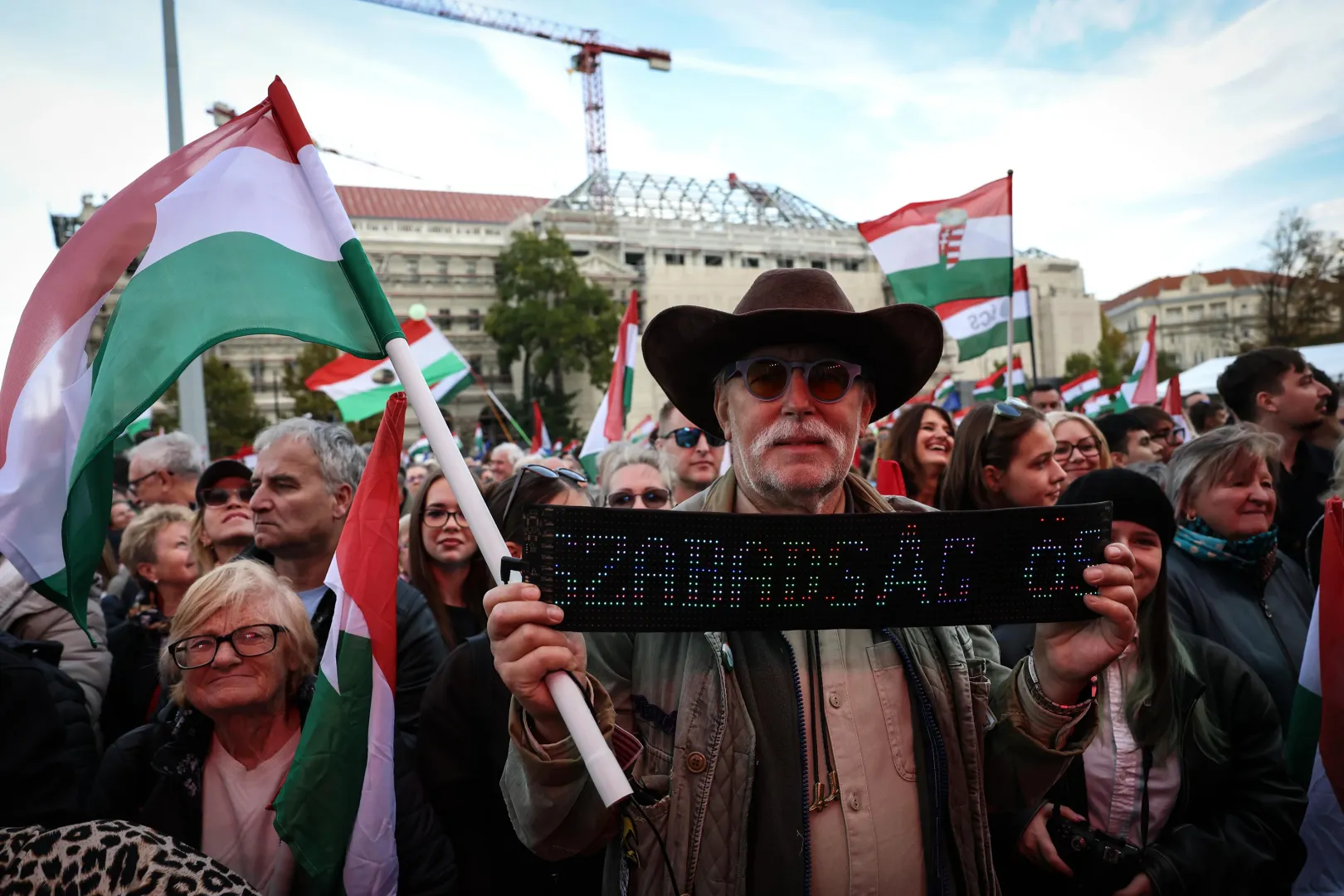
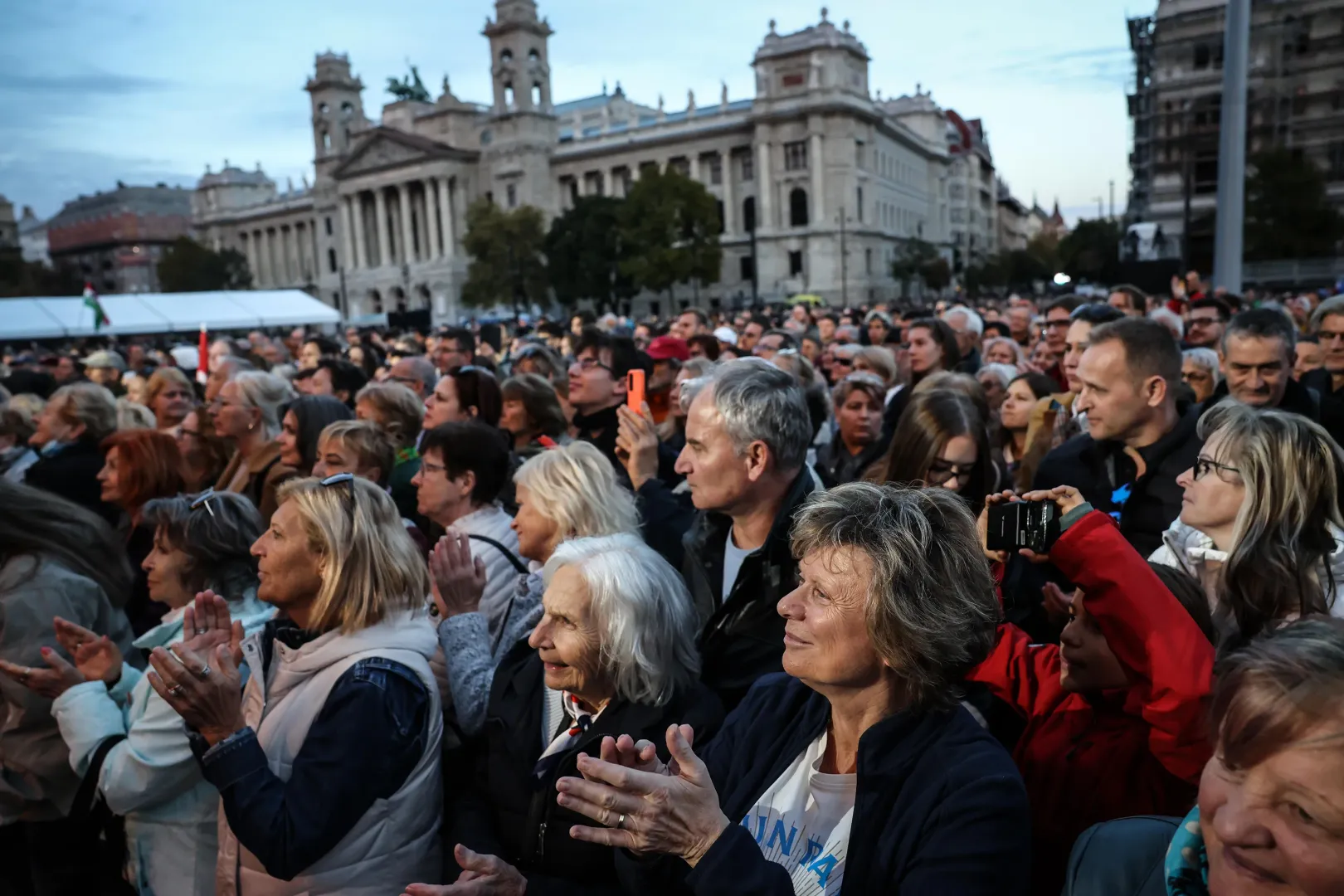
During the state ceremony at Kossuth Square, the revolution that broke out 70 years ago was commemorated with fifty-six bell chimes. Just before Péter Magyar’s speech, Gripen jets flew over the square. “Anyone who makes excuses for an aggressor or would subject the nation to foreign empires has failed to understand the message of 1956,” Prime Minister Péter Magyar said in his nearly one-hour speech. He said there were thirteen glorious days when Hungarians united as one and demanded: “Russians, go home!” He also spoke about how “for many years they lied to us, claiming that the national holiday belonged to only one political side, but that is now over.” He said it would be good to leave our children a country we can be proud of. “This is our homeland, and we will do anything for it,” he said.
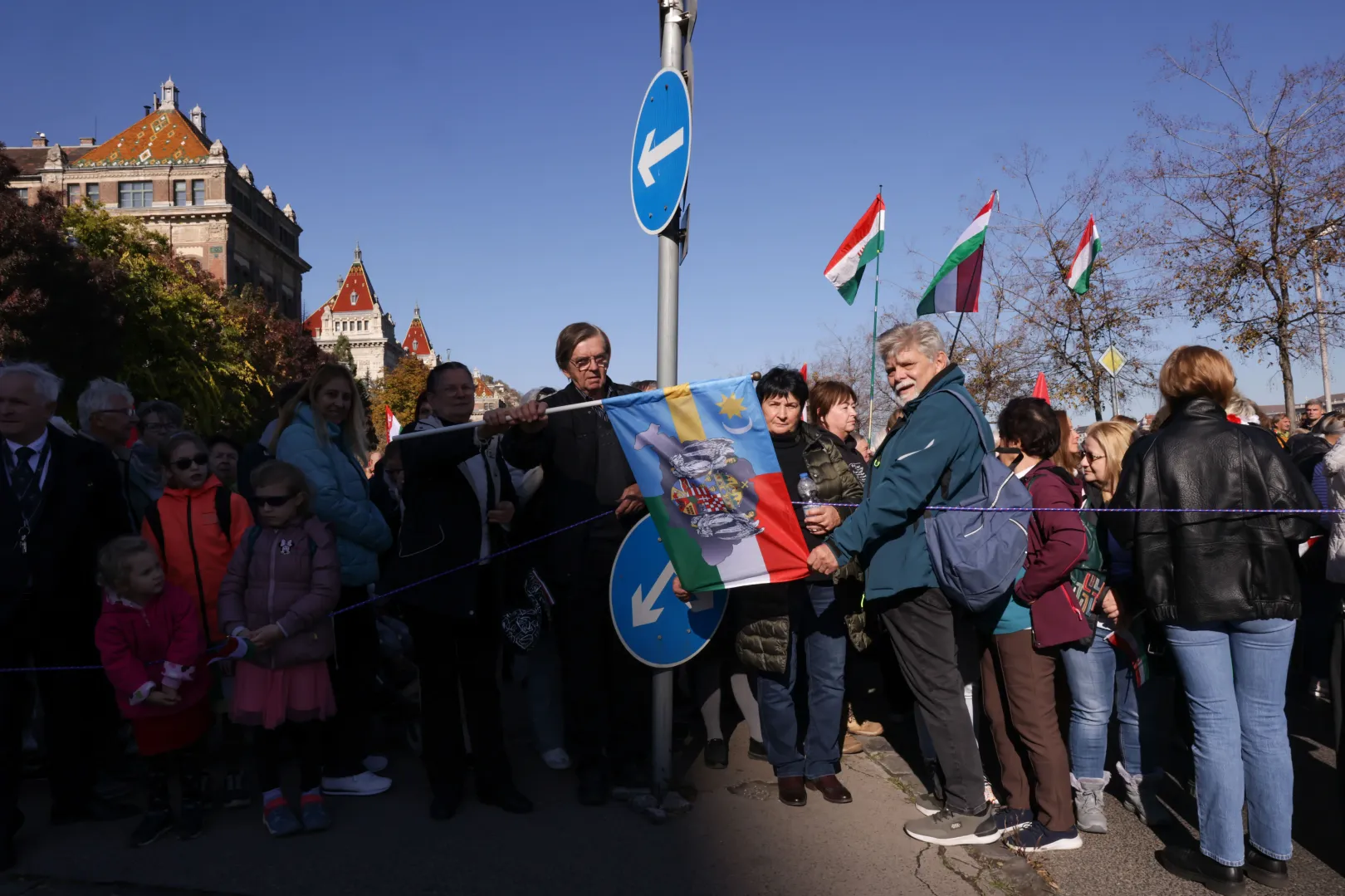
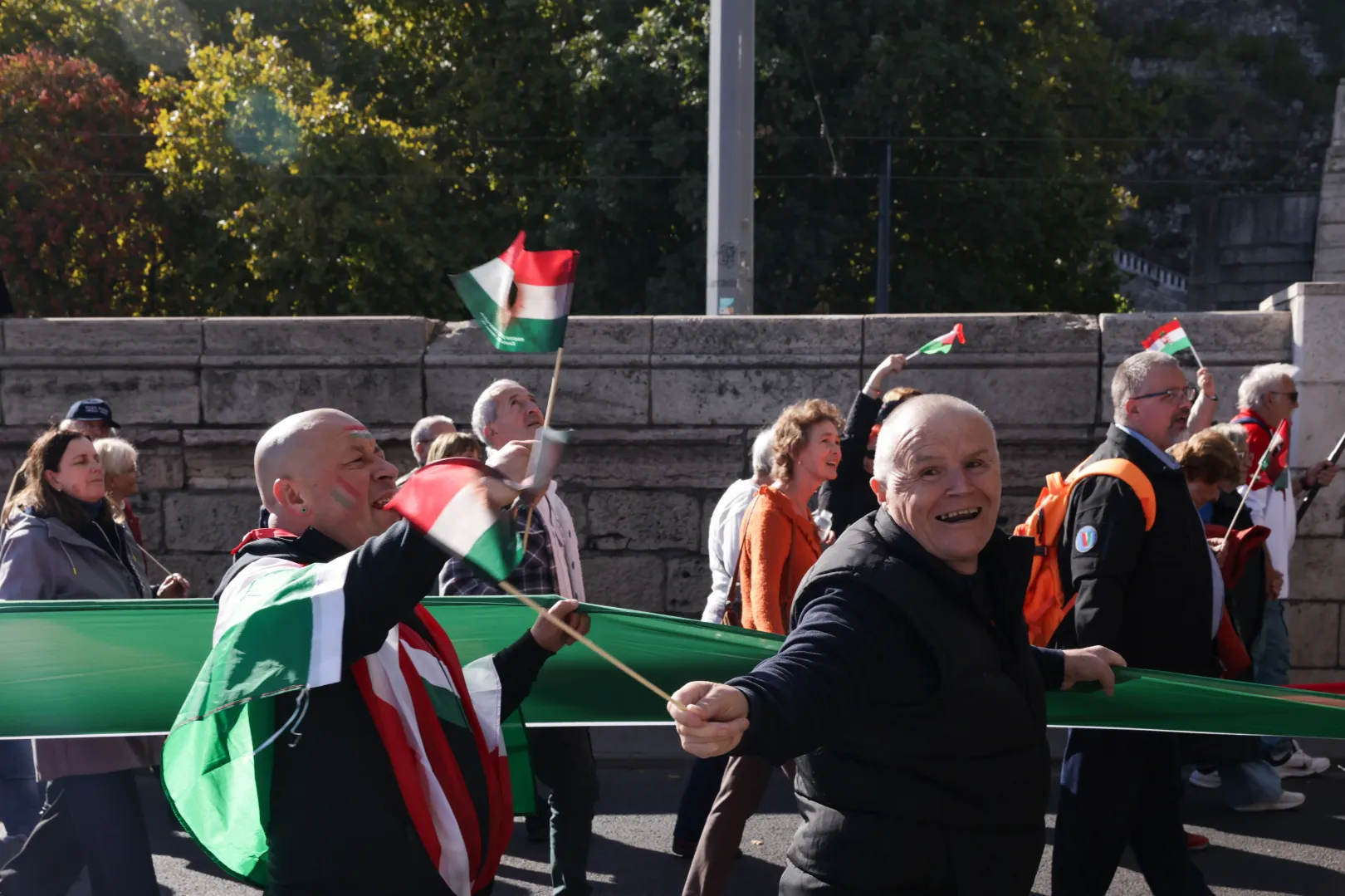
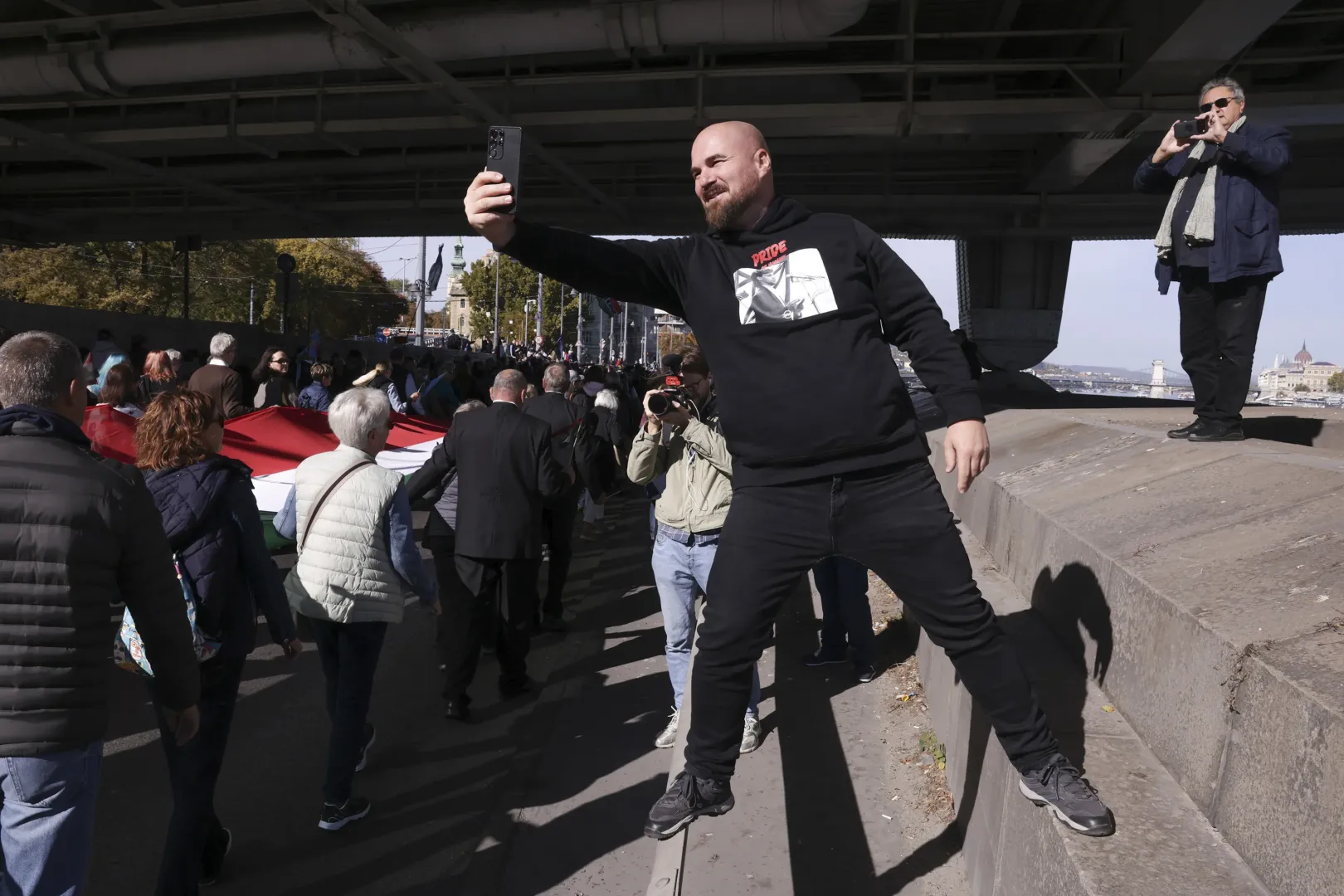
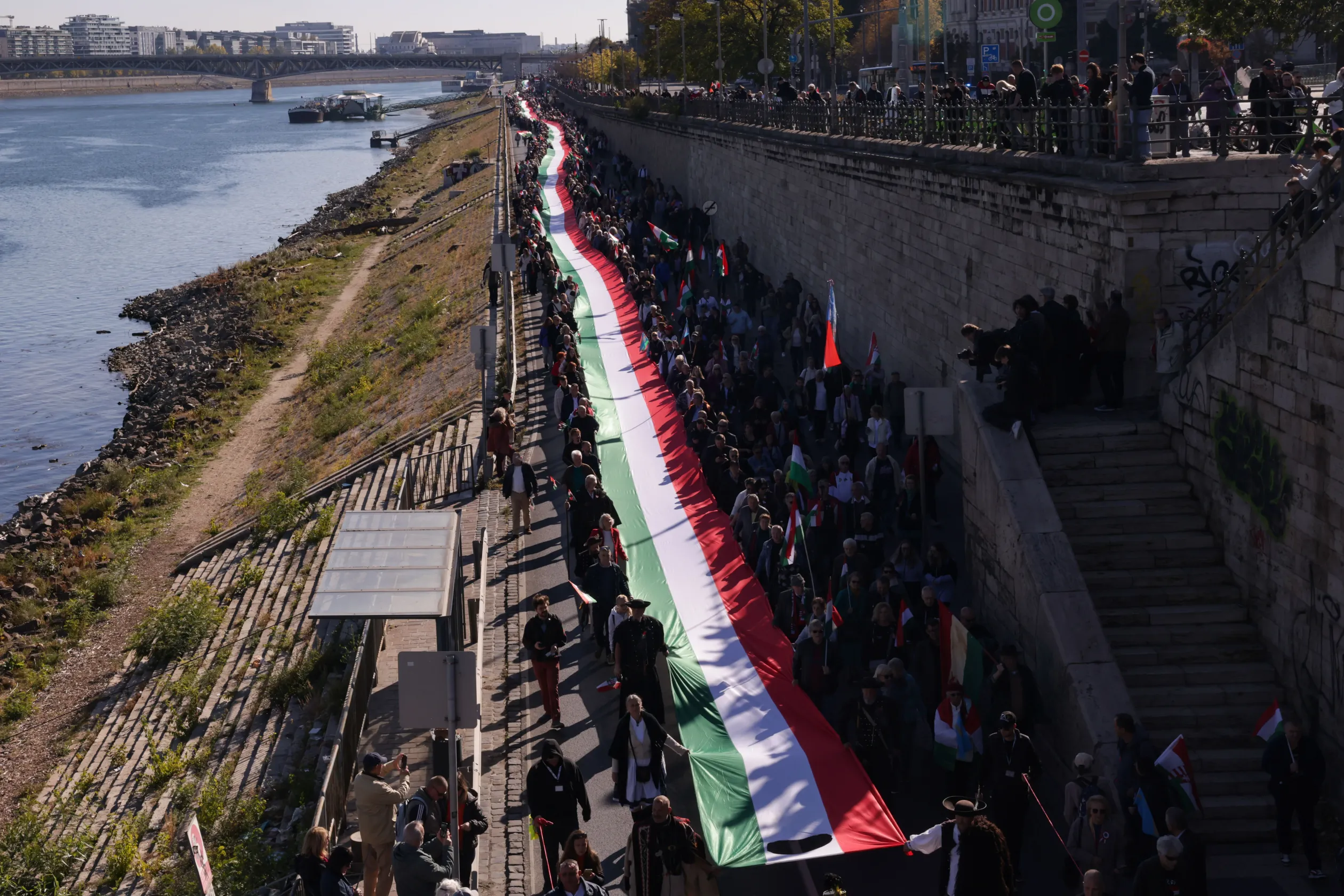
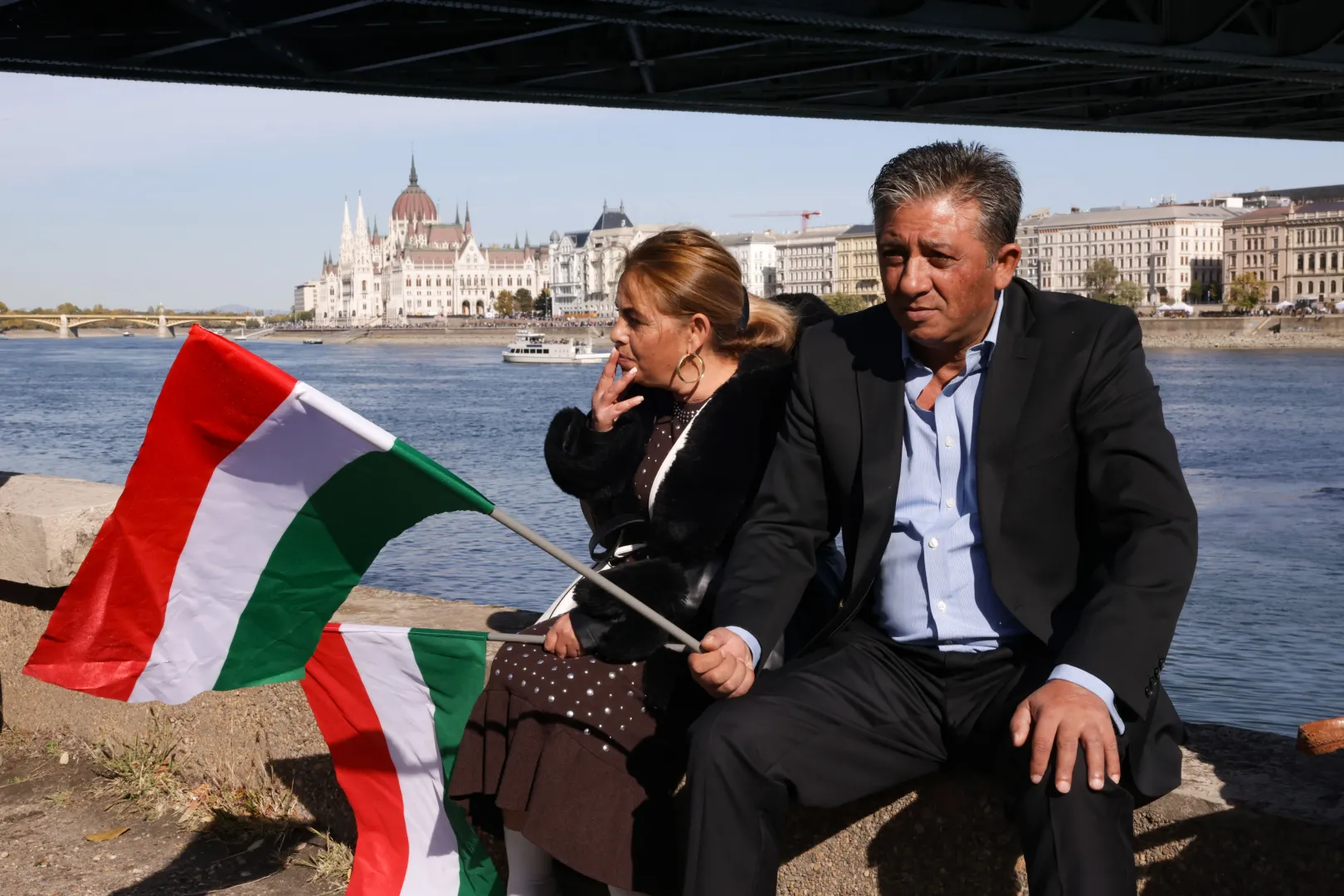
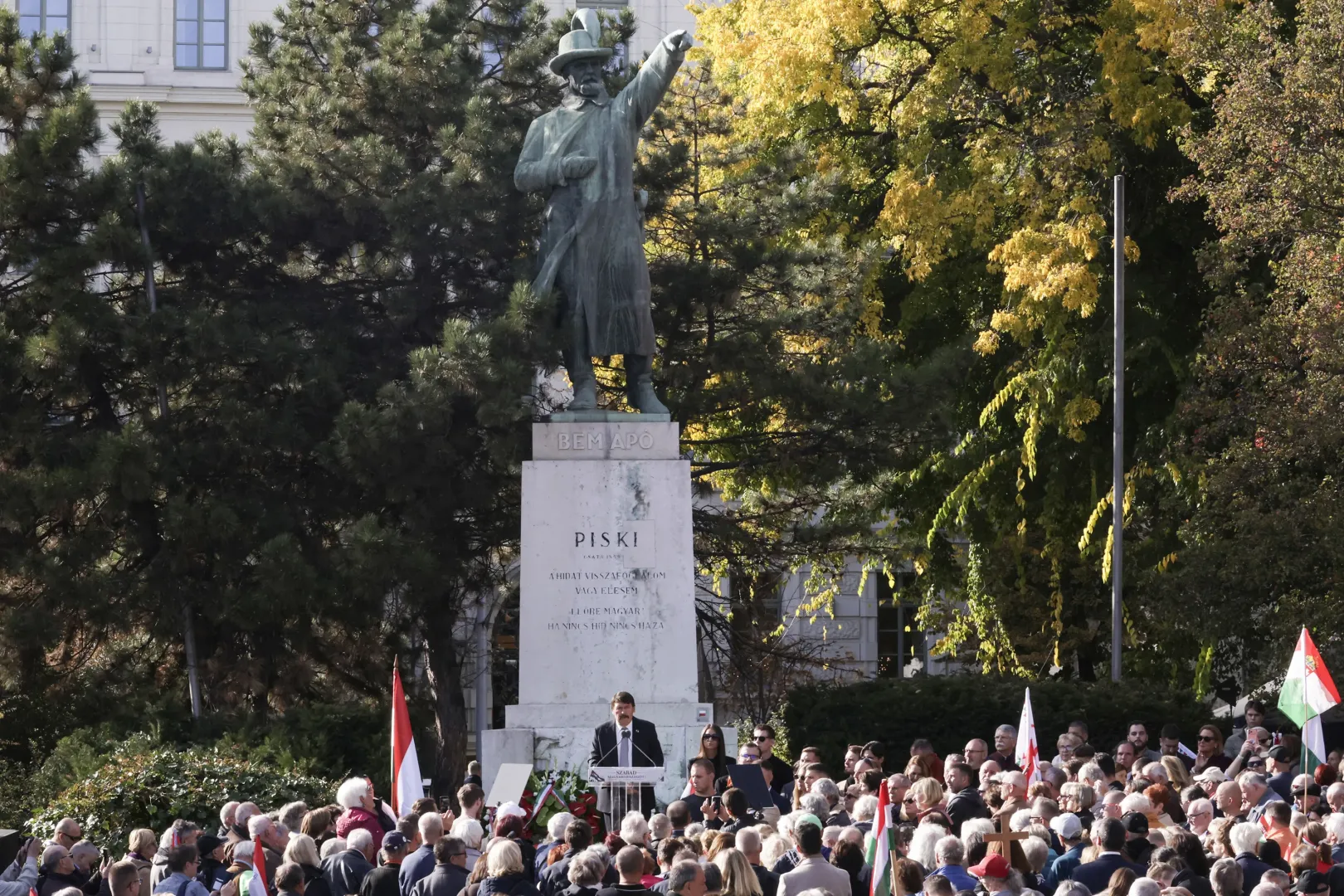
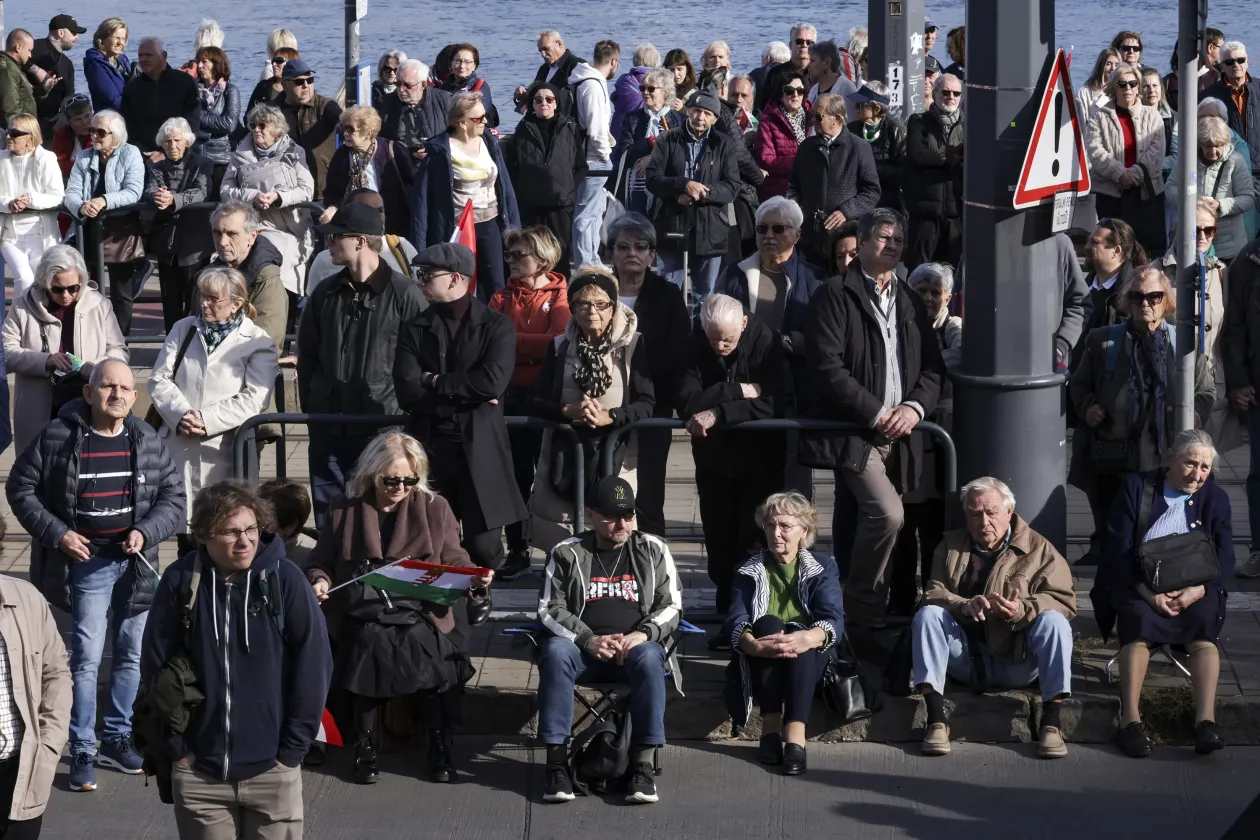
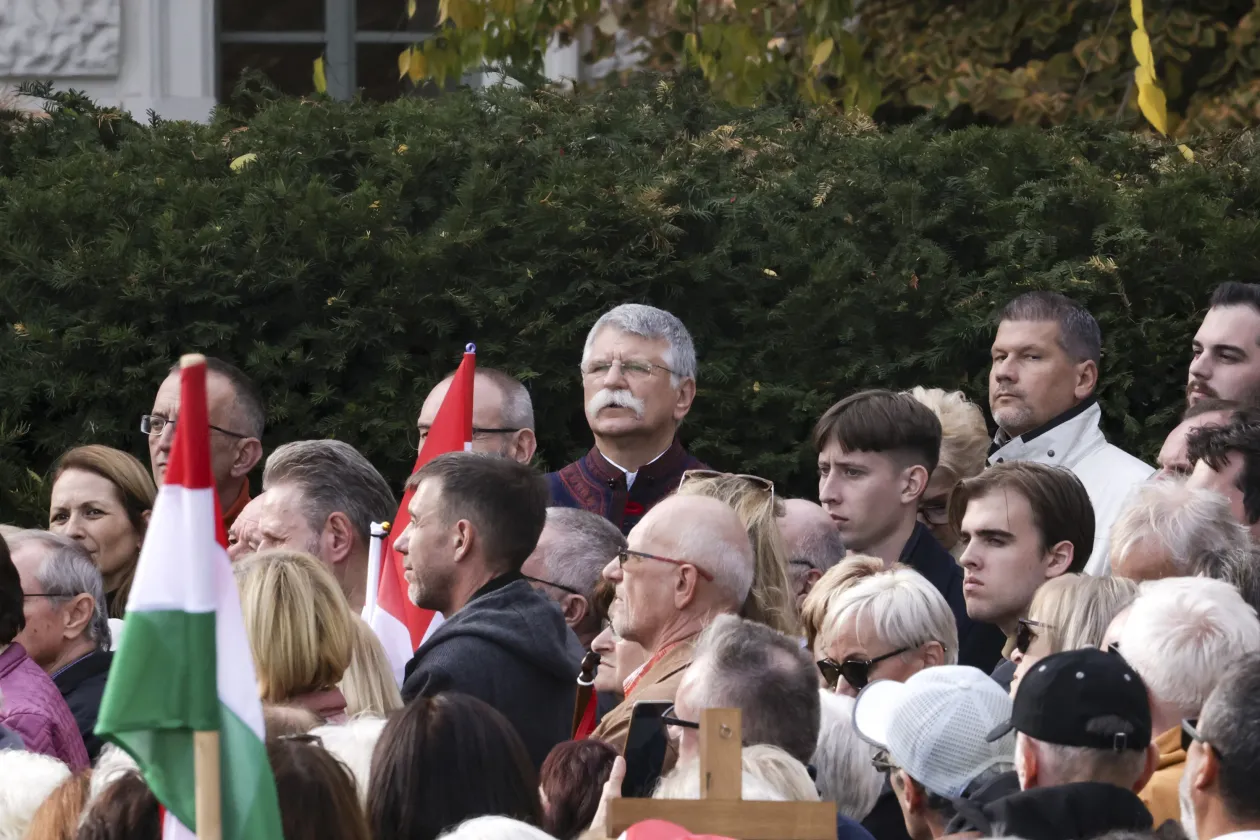
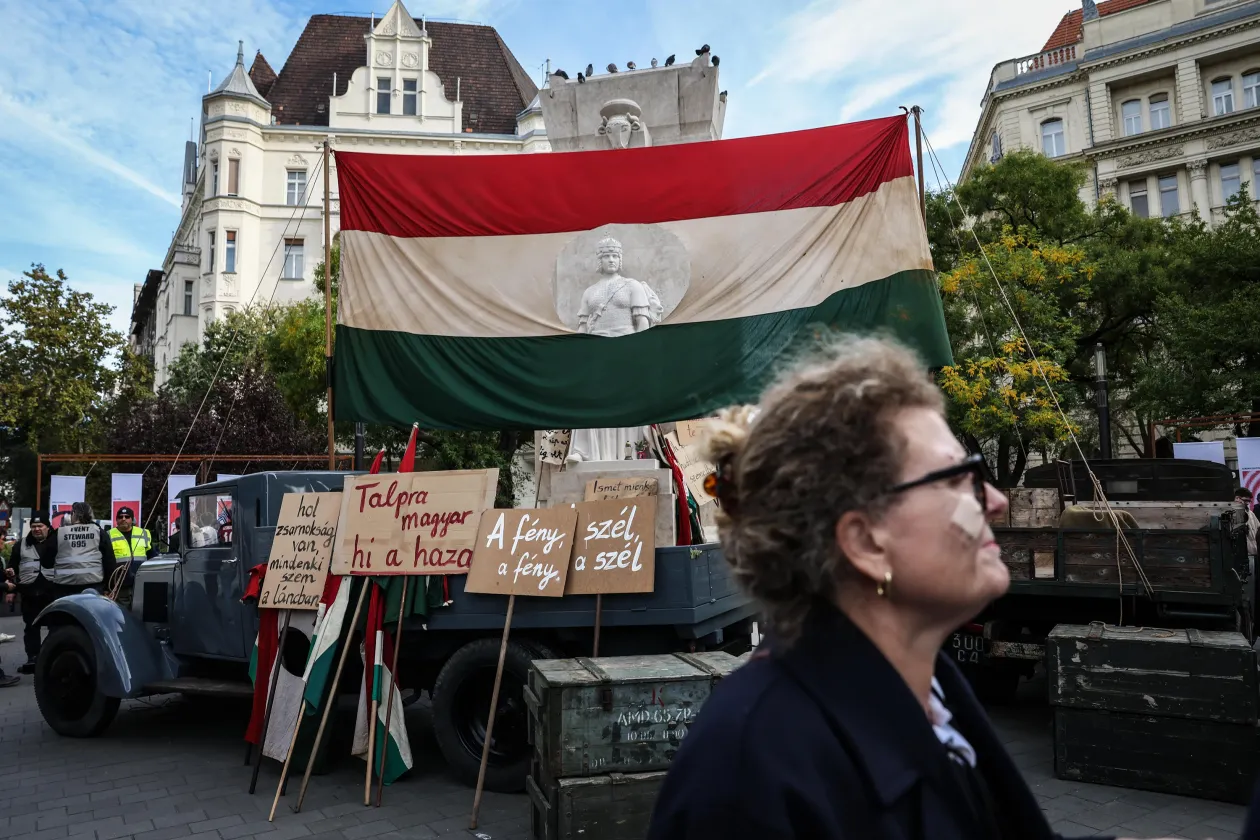
Fidesz supporters organised a “Flag March”; the procession set off around noon from in front of the University of Technology and Economics to the sound of horsewhip cracks. It was led by a man dressed as a hussar, followed by men dressed as betyárs (19th century social bandit), and finally the participants of the march, who carried a 1,848-meter-long Hungarian flag. For a while, they marched along the lower embankment of Buda in complete silence. Then they began to sing patriotic songs. By the time they reached Bem Square, the crowd that had gathered was bigger than those seen at any of Fidesz’s rallies in recent months.
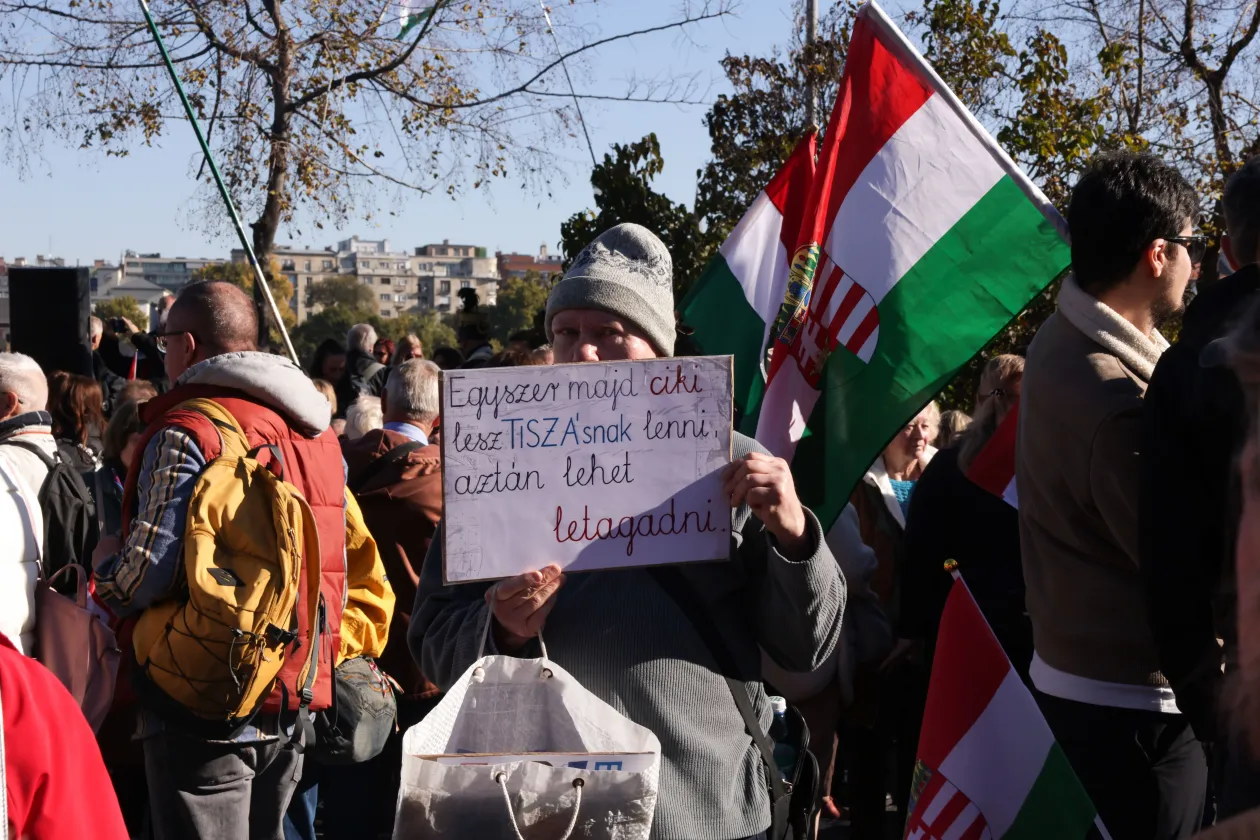
Unlike in previous years, this time, Viktor Orbán did not deliver a commemorative address. Instead, he was sitting at a hotel terrace in Paris while his Facebook page live-streamed the event from Bem Square. There, speakers included Fidesz' parliamentary group leader János Bóka, former president János Áder; and historian Mária Schmidt. According to Áder, if he had to sum up in one word what people had had enough of in ’56, he would say “lies.” Dictatorship instead of democracy, servitude instead of freedom, poverty instead of prosperity, and a new nomenclature instead of equality. János Bóka spoke about there being no political police in a free country, and said that in such a country, those in power do not threaten anyone with arrest, no one is paraded in handcuffs at the behest of the authorities, and there are no political prisoners. In a free country, there is no attempt to eliminate the opposition. During his speech, Fidesz participants clashed with a few counter-protesters, who had to be protected by intervening police. Telex's reporters were also attacked.
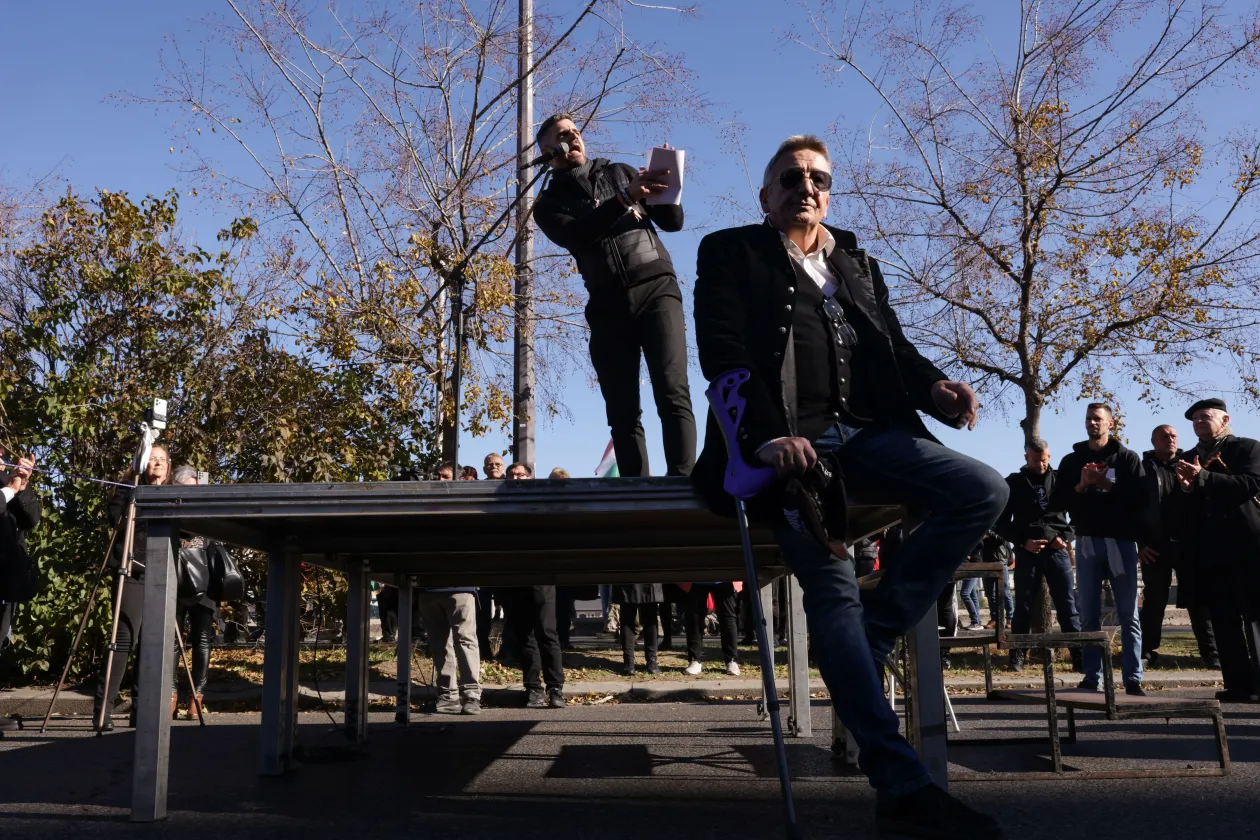
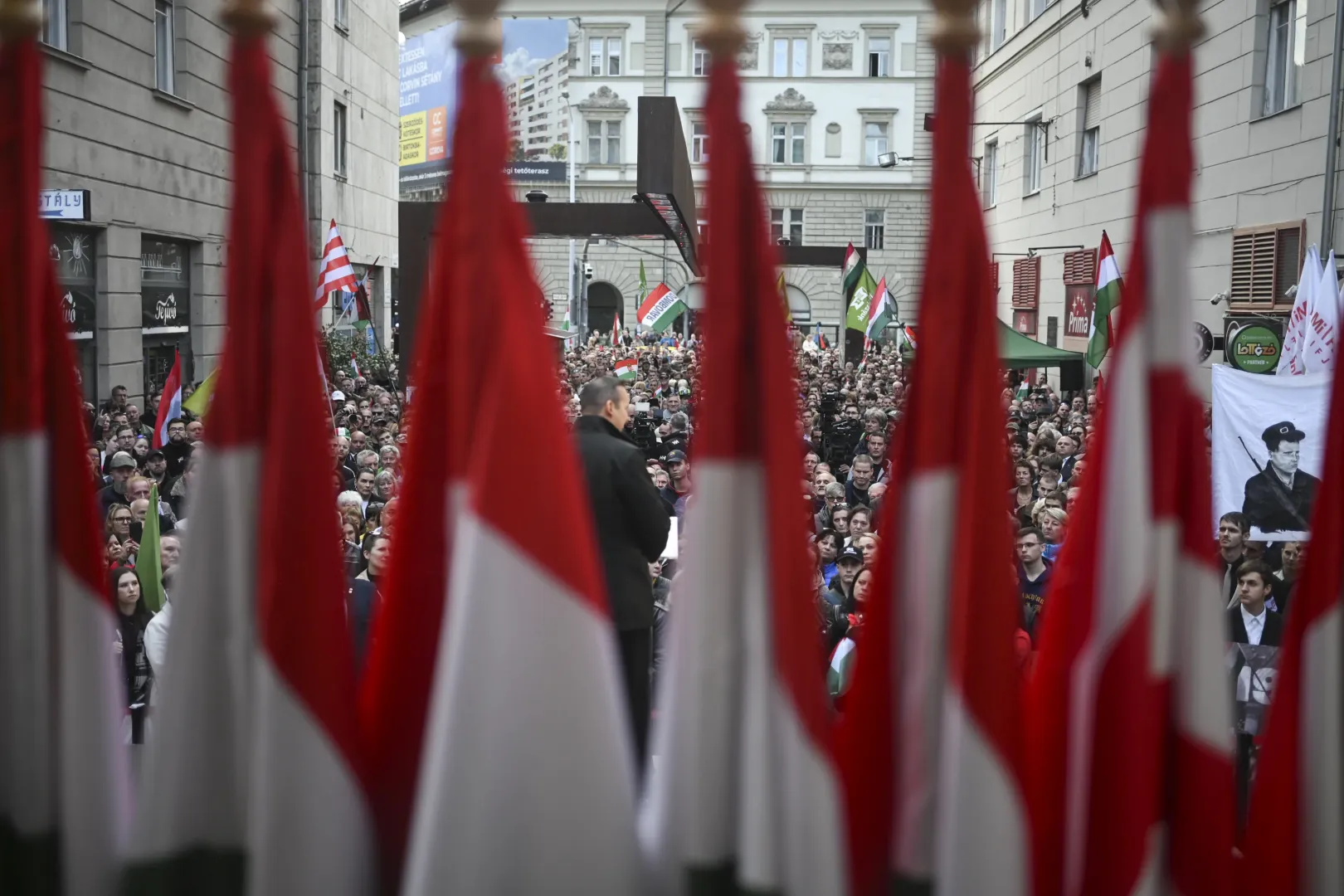
Mi Hazánk and its affiliated organizations held a commemoration at Corvin Köz, marking not only the 1956 uprising but also the 20th anniversary of the storming of the public television headquarters in 2006. Speakers included Előd Novák and László Toroczkai. The speeches mentioned the secret elite, globalists, LGBTQ lobby groups, and interference in elections, but the names of Ursula Von der Leyen and Péter Magyar were also mentioned numerous times.