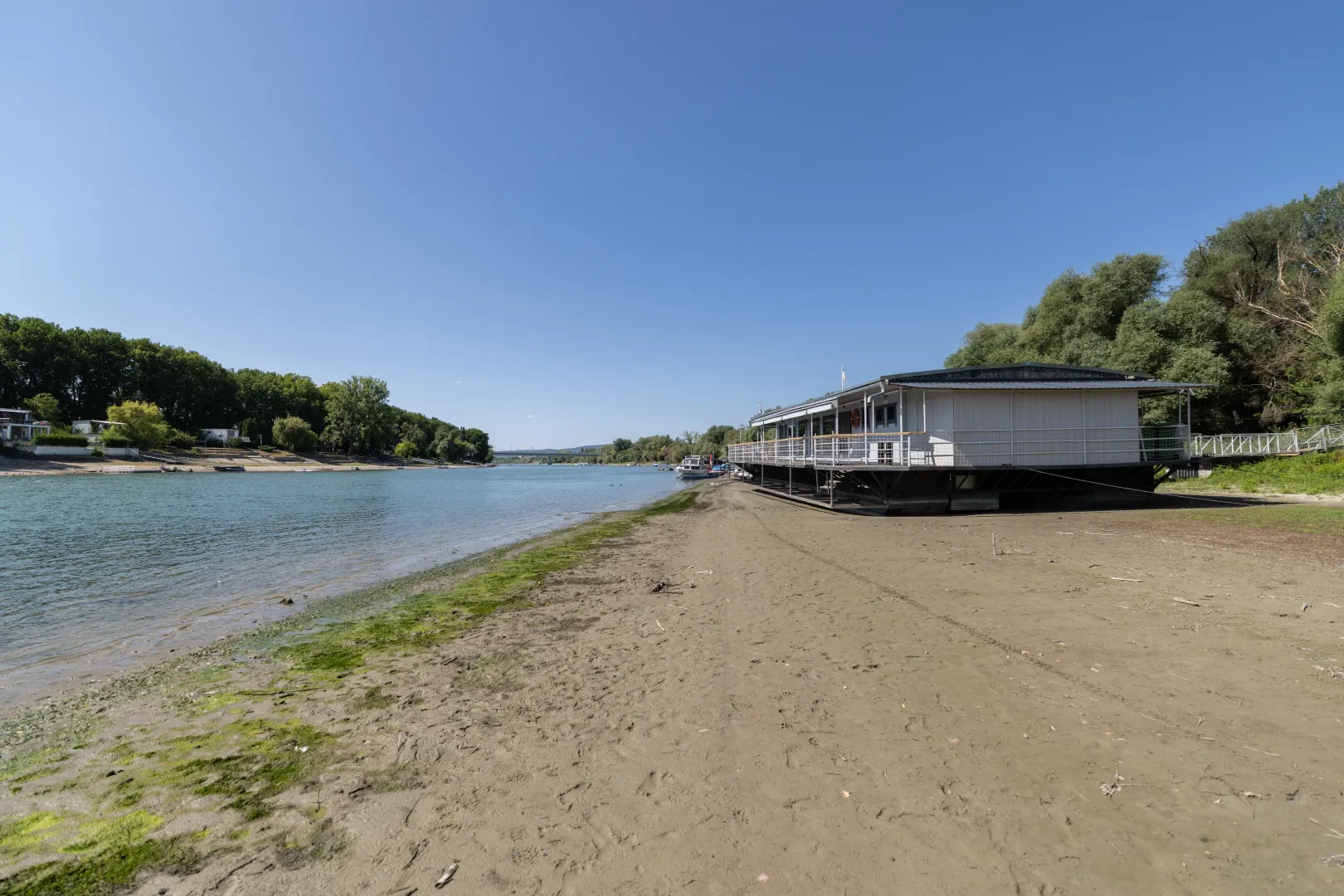
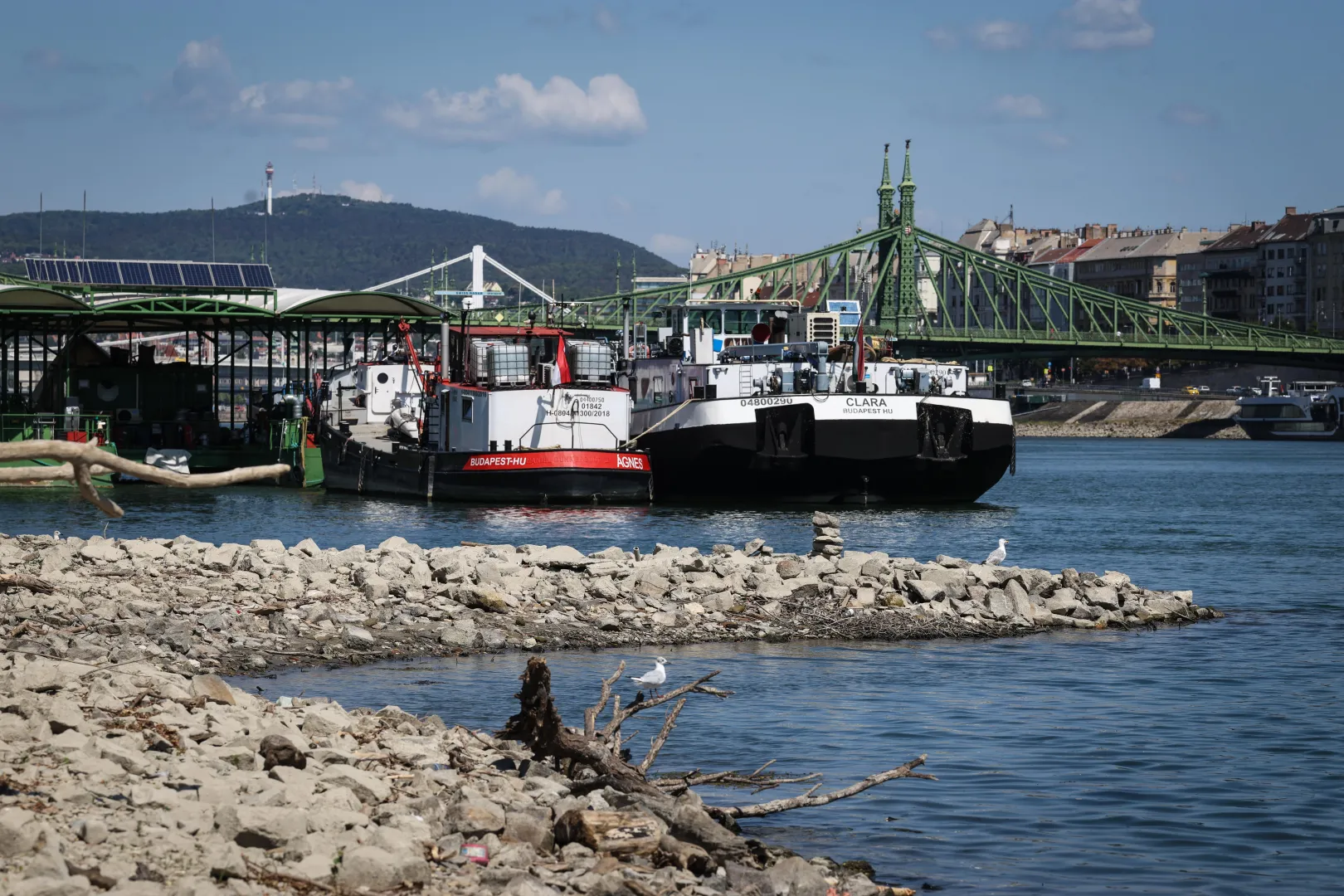
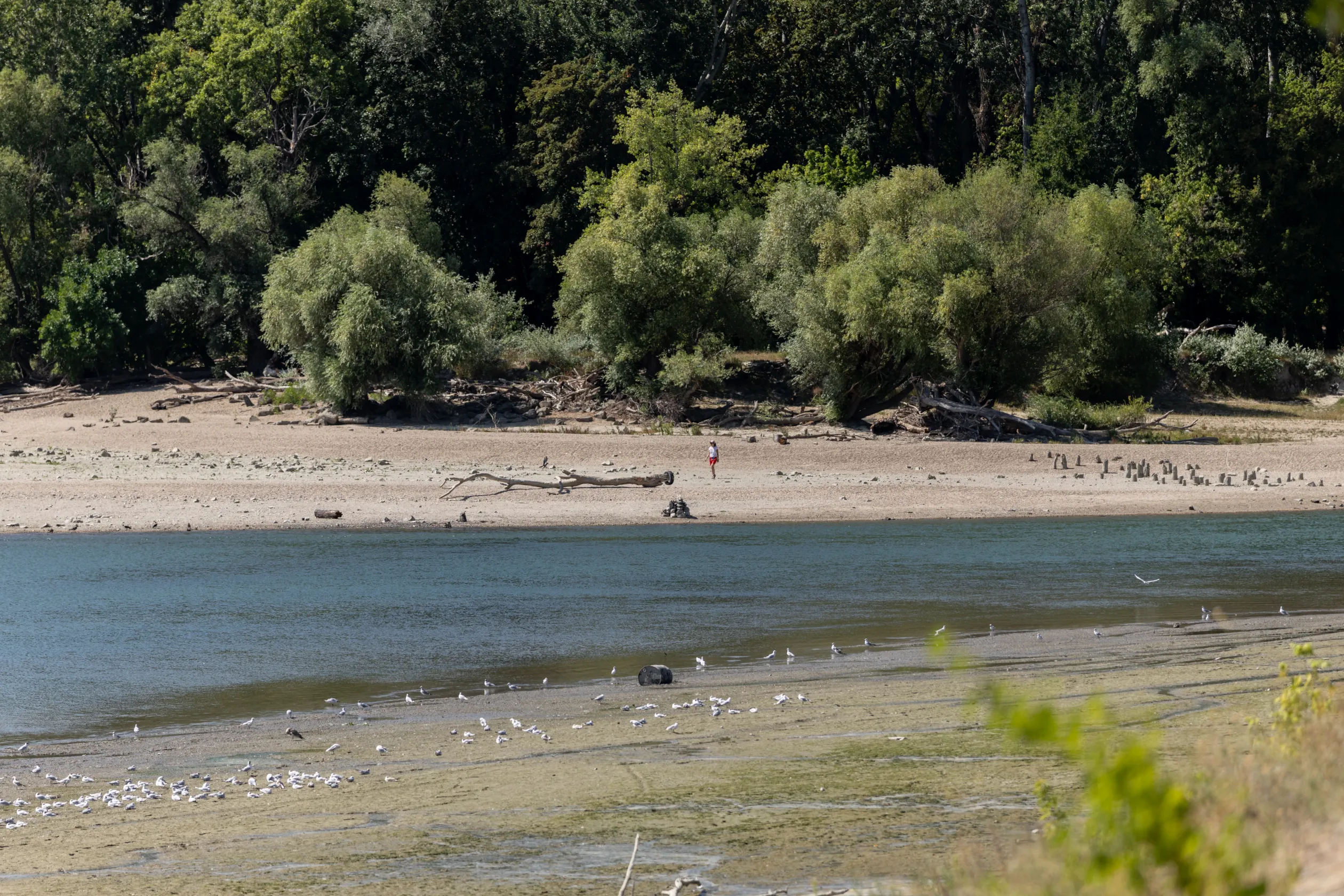
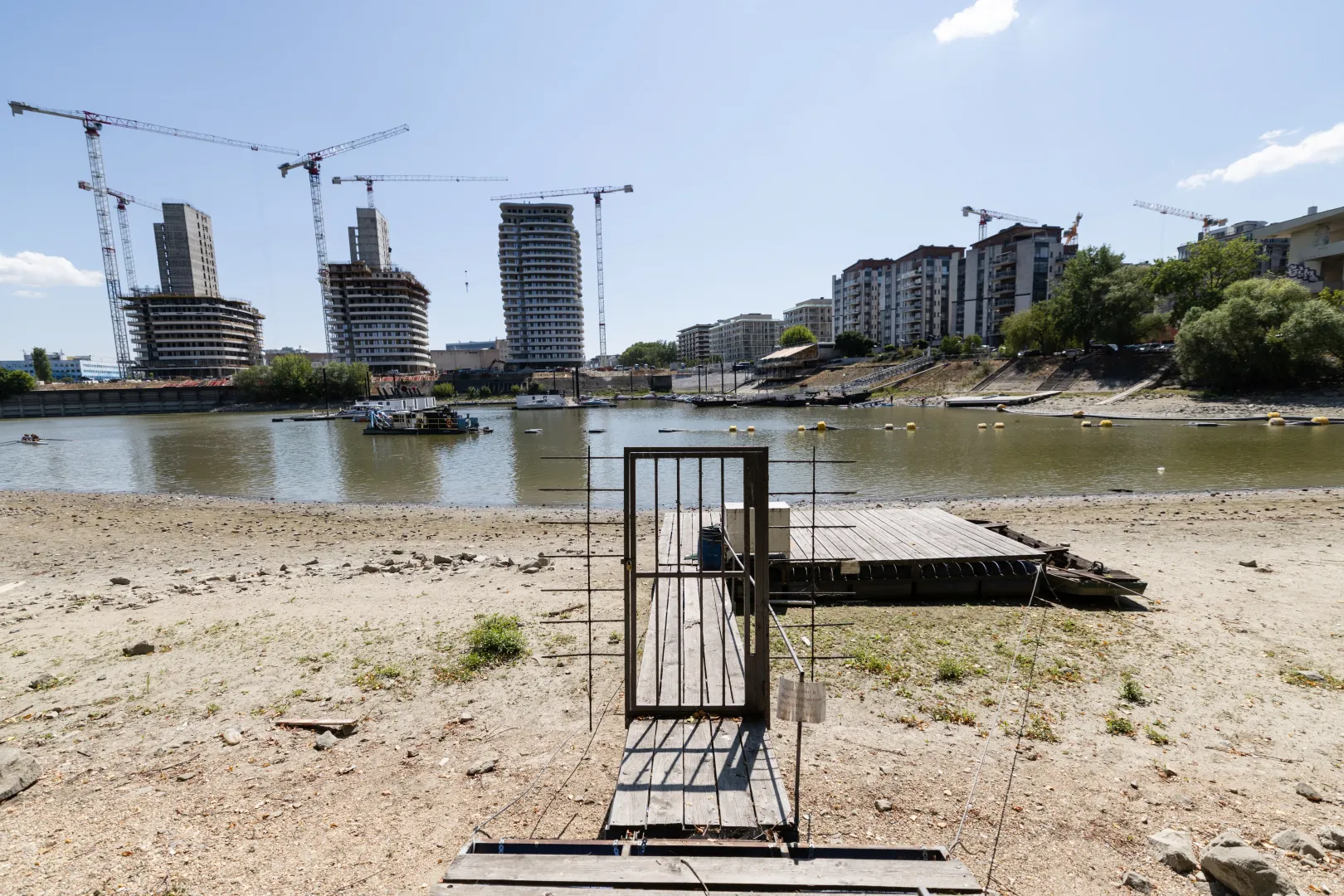
Danube at historic low in Budapest
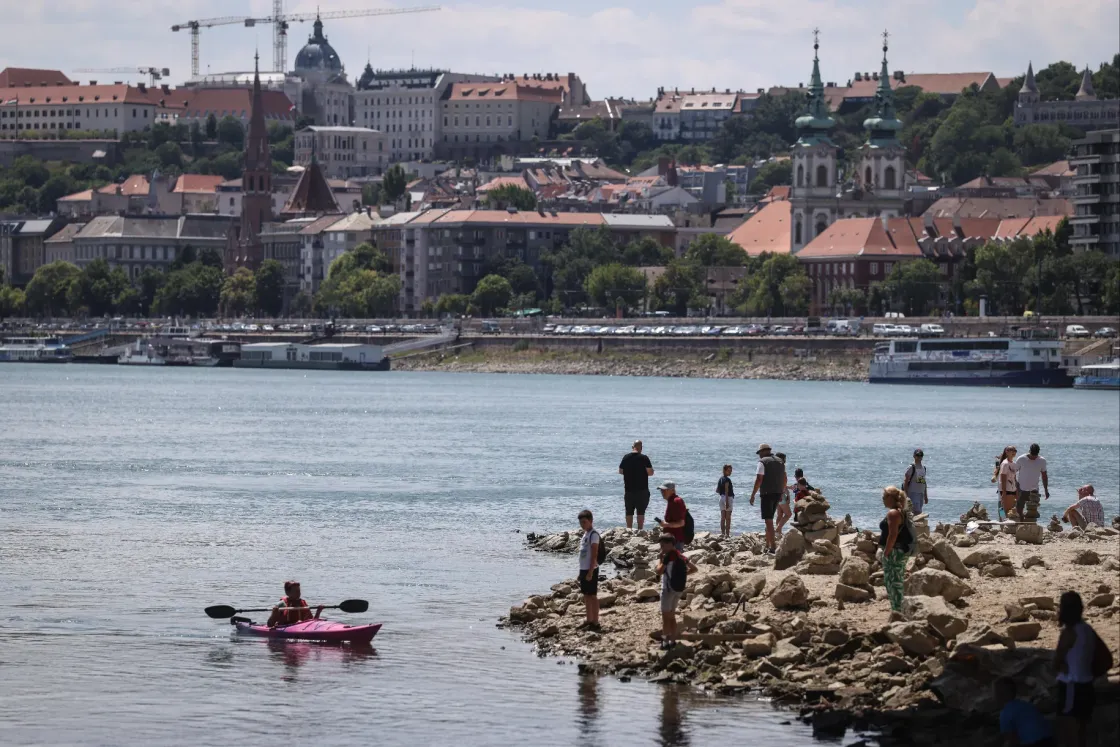



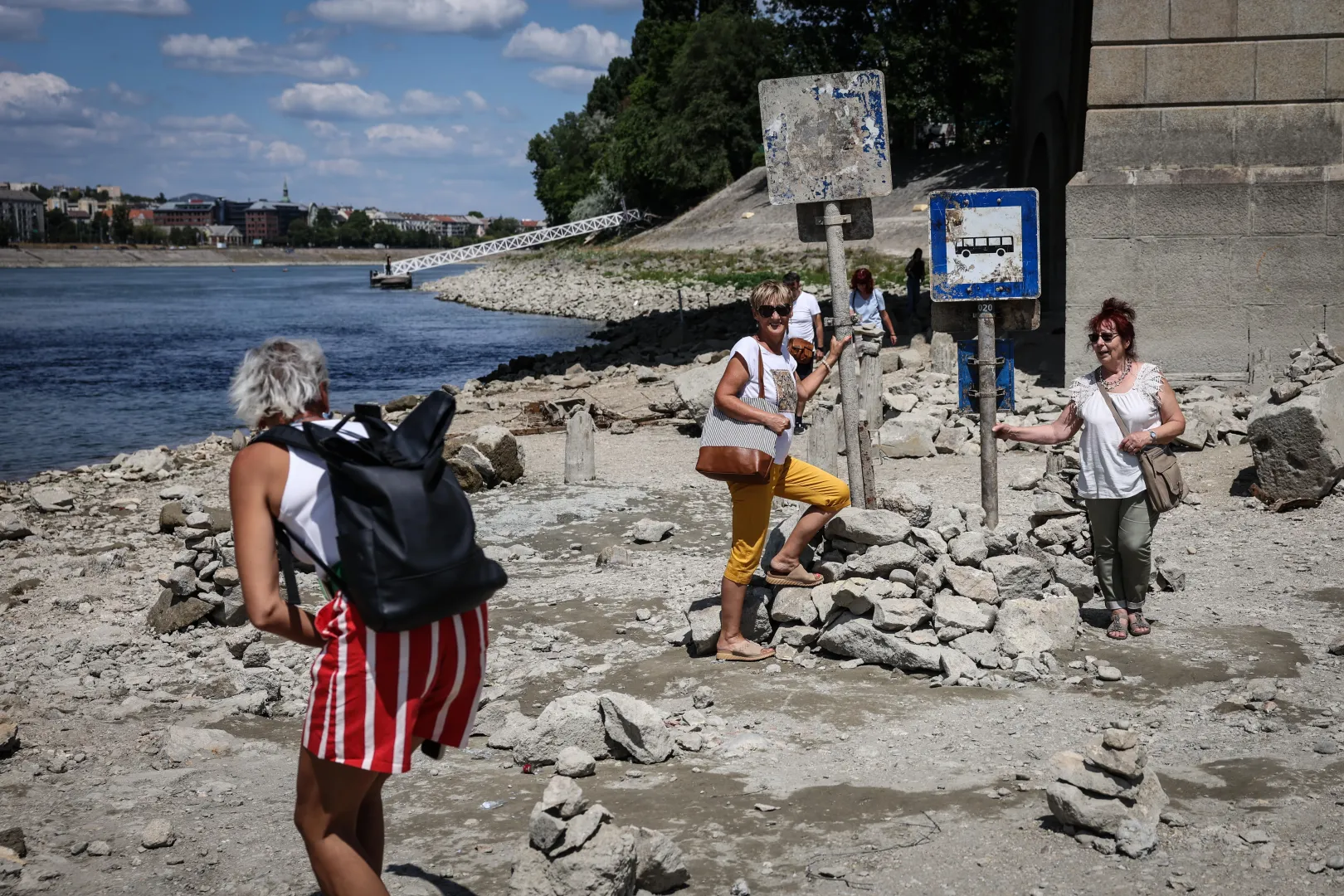
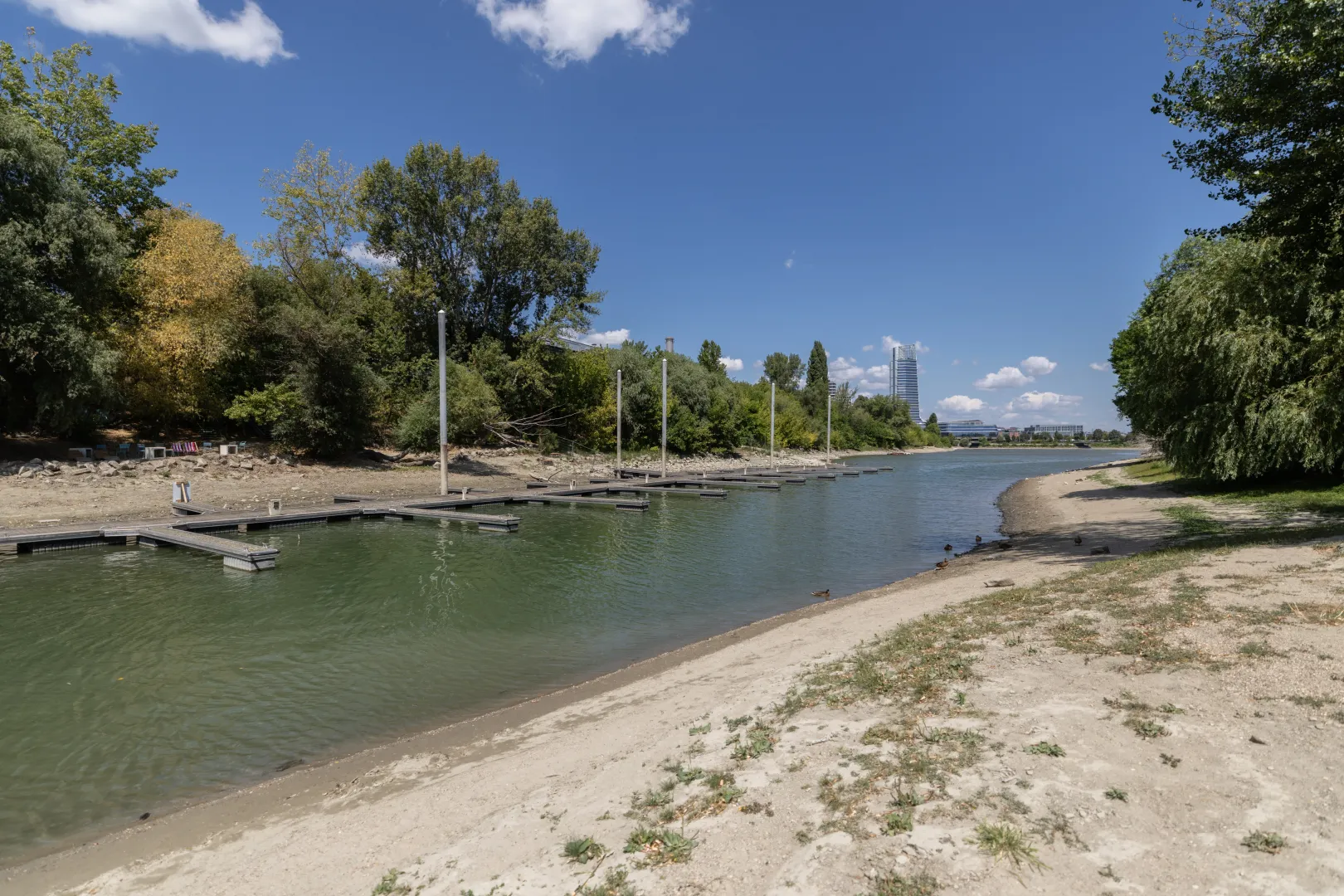
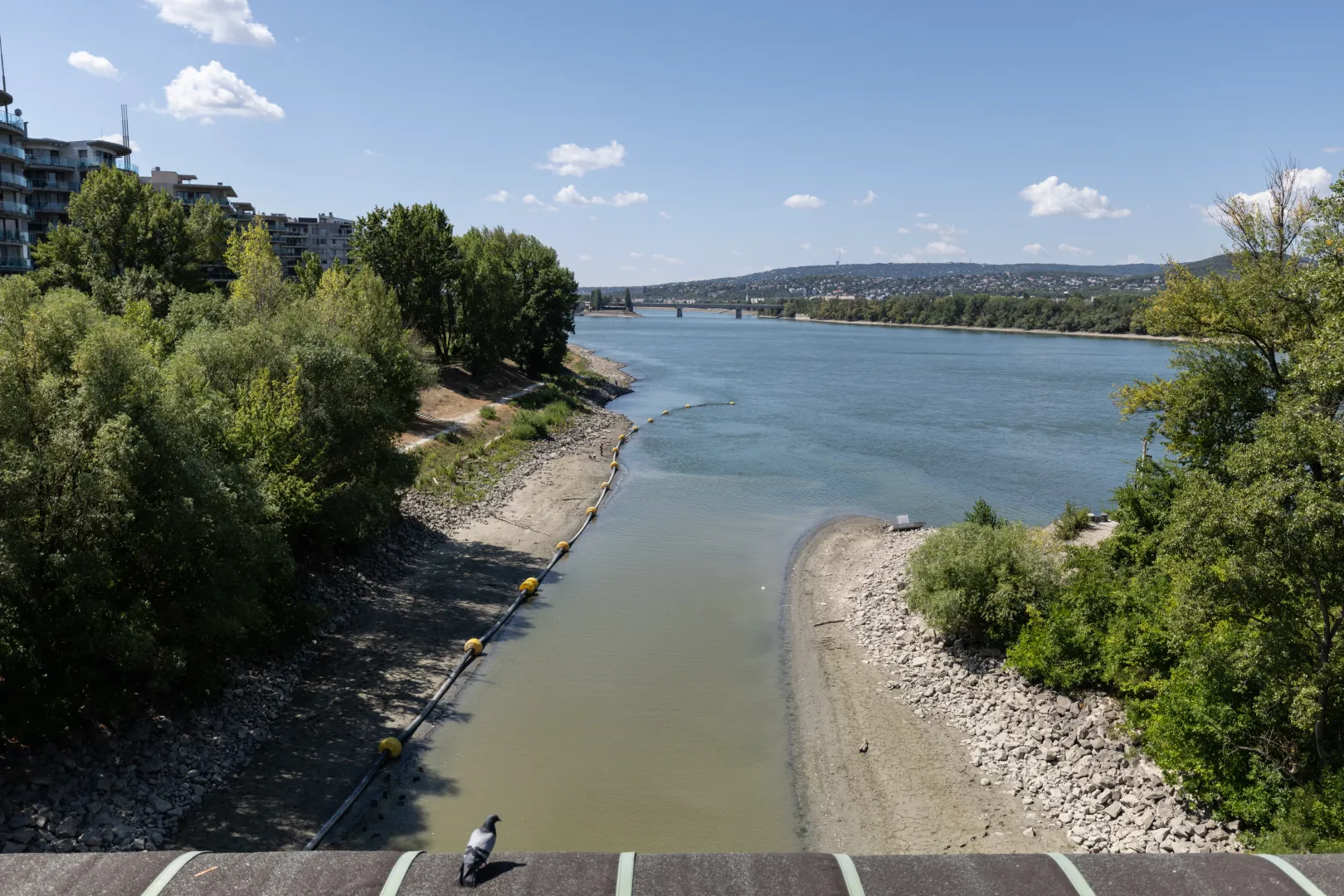
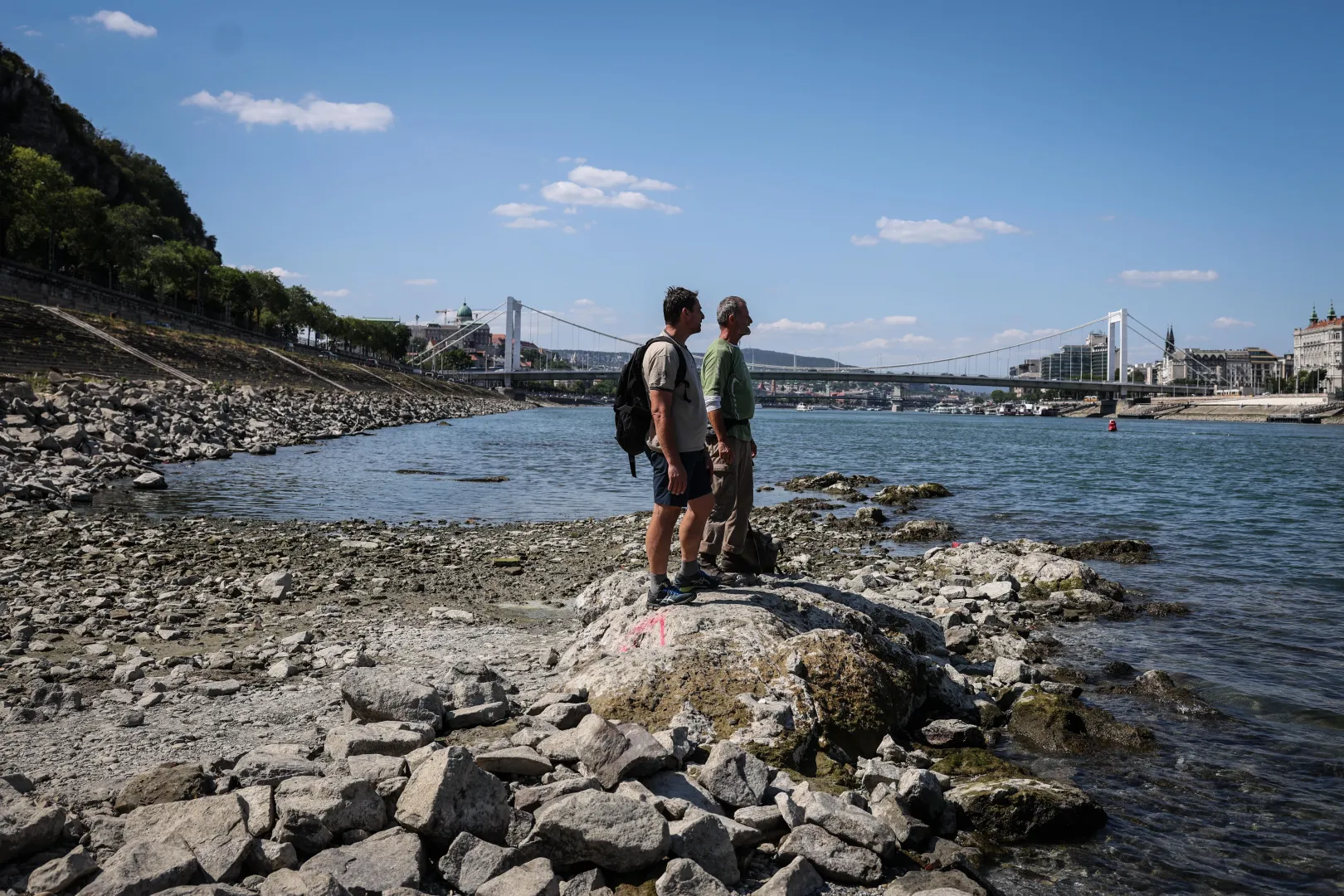
The water level of the Danube river-which flows through ten countries-reached a historic low in Budapest this week: due to prolonged high temperatures and the lack of significant rainfall, the water level at Budapest stood at 30 centimeters at 9:00 a.m. on Tuesday, and later dropped even further to 28 centimeters. By the afternoon, the temperature of the water near the riverbed had climbed to 24.3 degrees Celsius. As the water level continued to drop, throughout Monday and Tuesday, Telex photographers documented the conditions along the river in Budapest.
Never before has the level of the Danube been this low in the Hungarian capital, as the previous lowest level ever recorded at Budapest was 33 centimeters on October 25, 2018. Due to the shallow water, there are currently several sections of the river where neither cargo nor passenger ships can pass, which necessitated introducing restrictions on the section running through the capital. At the same time, the output of the Paks Nuclear Power Plant has also been reduced.
The president of the Hungarian Cycling Club, Gábor Dezső Kürti took advantage of the unique situation and rode his bike from Budapest to Vác on Tuesday-travelling inside the dry riverbed the entire time.
Due to the extreme drought, Minister for the Living Environment László Gajdos has ordered an extraordinary level of readiness in sixty-six of the country’s eighty-four water scarcity management districts. “This means that experts from the Water Management Authority will carry out drought relief measures at the highest alert level across 74 percent of the country,” he said.
This situation is not unique to Hungary, however. Along the section of the river flowing through neighbouring Croatia, the low water level has exposed a World War II bomb and the remains of a ship that sank a century ago.
Based on forecasts, water levels are not likely to improve anytime soon, as significant rainfall is not expected anywhere in the Danube’s watershed in the days ahead. The situation at Lake Velence is similarly dire; its water level continues to break negative records, even making it possible to walk right across it weeks ago. In addition to the Danube, the level of the Tisza River is also nearing record lows, while a considerable part of the country is experiencing moderate to severe drought, and another heat wave is on its way.